

 Tiếng Việt
 日本語
日本語 한국어
한국어 中文 (中国)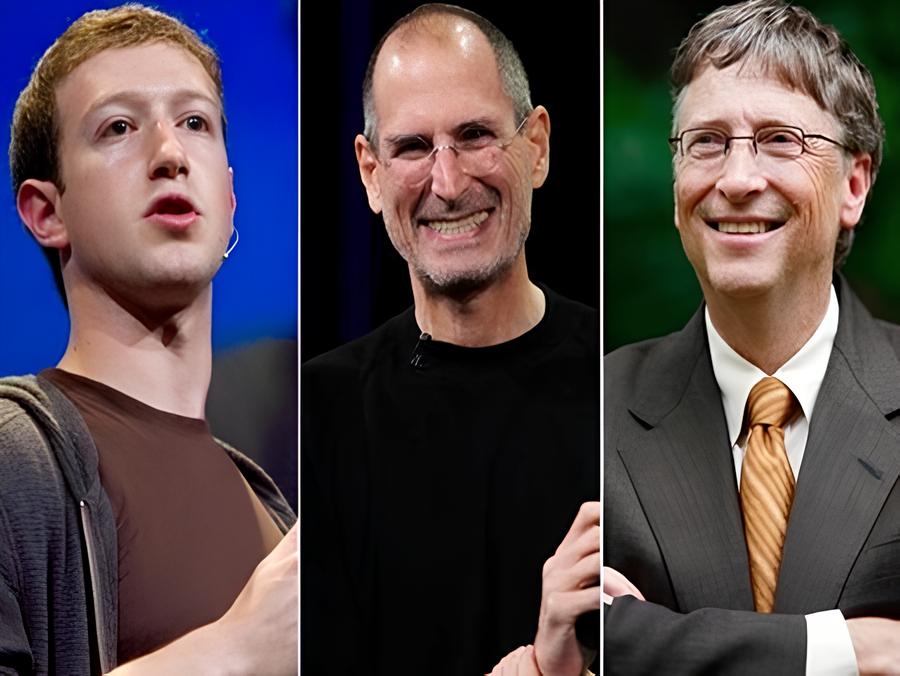
For decades, the stories of billionaire dropouts have been told and retold as a defining truth of modern success. Bill Gates dropped out. Steve Jobs dropped out. Mark Zuckerberg dropped out. Every time the value of education is questioned, these names are invoked as compelling evidence that a college degree is unnecessary for greatness.
These narratives dominate self-help books, motivational videos, startup podcasts, and inspirational speeches. They plant a seductive belief in the minds of millions of young people, especially those from disadvantaged backgrounds, that boldness alone is enough, that dropping out can be a shortcut to wealth and greatness.
But what if these stories are only half-told?
An appealing myth, a harsh reality
No one denies the brilliance of Gates, Jobs, or Zuckerberg. Yet the most critical parts of their stories are often omitted or deliberately blurred: their starting positions, their privileges, and the social foundations that cushioned their risks.
Social scientists call this survivorship bias. We focus on the few spectacular successes while ignoring the millions who dropped out, took risks, and failed, ending up burdened by debt, unstable labor, or generational poverty.
The real question is not whether they dropped out, but what they dropped out of, under what conditions, and at what level of risk.
They didn’t drop out of college, they walked away from Harvard
Bill Gates left Harvard while studying mathematics and computer science, one of the most elite intellectual environments on the planet. Admission alone placed him among the top fraction of global talent.
Mark Zuckerberg followed a similar path. Before Facebook, he was already a prodigious programmer, courted by Microsoft and AOL as a teenager. Harvard did not make Zuckerberg brilliant; it validated his intellect and connected him to networks unavailable to most people in a lifetime.
Steve Jobs was different but no less privileged by circumstance. He grew up amid the early days of Silicon Valley, surrounded by engineers and innovators. While he did not graduate from college, he was educated by the epicenter of 20th-century technological innovation itself.
When they left academia, they did not step into uncertainty. They exited environments that had already shaped their mindset, standards, and networks.
They weren’t penniless, they had massive safety nets
Perhaps the least discussed yet most decisive factor is family background.
Bill Gates was born into affluence. His father was a prominent lawyer, and his mother served on corporate boards with direct ties to IBM, connections that helped Microsoft secure its historic contract.
Mark Zuckerberg grew up in a wealthy intellectual household. His parents, both doctors, financed his early ventures, hired private programming tutors, and could absorb failure without catastrophe.
Elon Musk, often added to dropout mythology, also did not emerge from poverty. Raised in a well-off family, he had early access to education, technology, and global networks.
Their common trait was not reckless courage but financial and social insulation. If they fell, they did not hit the bottom.
They didn’t drop out to find a path the path was already open
Another dangerous misconception is that these figures left school blindly.
Gates left Harvard after Microsoft had a product, customers, and most critically, a contract with IBM. This was not gambling; it was optimizing time for a highly probable outcome.
Zuckerberg left when Facebook already had hundreds of thousands of users and early investor interest. Failure would not have destroyed his future.
Contrast this with a struggling student who drops out due to frustration or social pressure. These are entirely different realities.
One is a choice made from abundance.
The other is a risk forced by scarcity.
The names history doesn’t tell
The greatest danger of the dropout myth lies not in the successful few but in the invisible many.
Countless failed startups, abandoned dreams, and young people returning to the labor market with incomplete education are never mentioned. Studies consistently show that, across countries, college graduates earn significantly more over a lifetime than those without degrees.
Education does not guarantee success, but it reduces the likelihood of irreversible failure.
The real issue is not education, but who can afford to fail
When the wealthy fail, it is experience.
When the poor fail, it is catastrophe.
The difference is not ambition, but the cost of mistakes. Privilege allows repeated attempts. Poverty allows none.
For those without safety nets, education remains the most reliable pathway society has devised—not perfect, but stabilizing.
The real lesson behind famous dropouts
These stories are not arguments against education but testaments to the power of knowledge, environment, and networks.
Highlighting “dropping out” while hiding everything else sells an incomplete dream—one that can become a trap.
Conclusion: Learn the context, not the myth
Billionaire dropouts are exceptions born of extraordinary circumstances. Their success came not from leaving school, but from what they had accumulated before leaving it.
For most young people, especially those without privilege. Education remains the fairest entry ticket into opportunity. Not magical, but necessary.
In an unequal world, reckless advice is not inspirational, it can be destructive.

ARTICLES IN THE SAME CATEGORY
Memory Is Not a Camera: Understanding It Correctly to Argue Less with Ourselves
When Attention Is Fragmented: How to Regain the Ability to Focus in a Distracted Life
Healthy Boundaries: How to Protect Yourself Without Becoming Cold
Knowing What Is Right Is Still Not Enough: Why It Is Difficult for People to Change Their Habits
Familiarity Is Not the Truth: Recognizing Reasoning Traps in Everyday Life
A Wise Pause: How to Make Decisions When You Cannot Yet Know the Future for Certain
ARTICLES IN THE SAME GENRE
Tam Cam Part 2: The Vengeful Spirits of the Palace
Tam and Cam: The Palace Intrigue and the Original Ending – Part 1
The world is never short of those who judge others by their material possessions; however, the most concerning poverty of all is the lack of wisdom and self-cultivation.
Stay Away from Foolishness: Seven Forms of Self-Deception and the Path to Awakening
Letting Go of Attachment to Overcome Anxiety: When What Exhausts Us Is Not Life Itself, but the Way We Hold On to It
Drinking Tea or Living Life: When People Get Lost in Material Glamour and Forget Themselves