

 Tiếng Việt
 日本語
日本語 한국어
한국어 中文 (中国)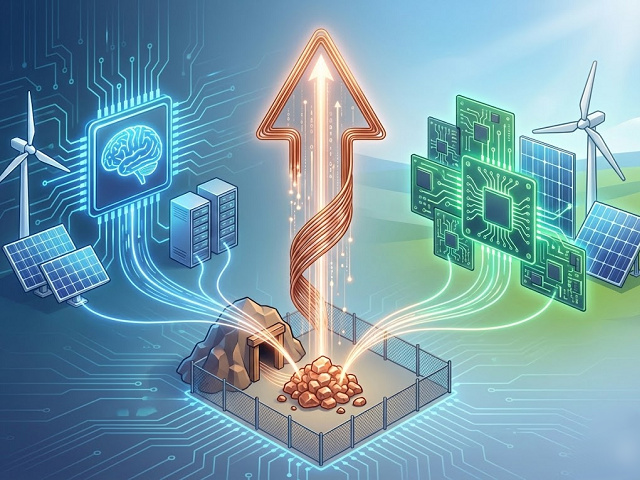
FROM AN ANCIENT METAL TO A MODERN GEOPOLITICAL CENTERPIECE
In human history, copper once defined an entire era. The Bronze Age marked a leap from stone tools to metal, transforming production, warfare, and social organization. Later, iron became the foundation of industrialization, powering railways, steamships, factories, and modern weaponry. But in the 21st century, the world is no longer driven primarily by heavy mechanical industry. It is powered by electricity, data, and digital connectivity. In this context, copper — one of the best conductors of electricity — is stepping into a role comparable to that of iron in the 19th century and oil in the 20th.
If oil was the lifeblood of the industrial economy, copper is becoming the nervous system of the digital economy. Every flow of electricity, every data center, every EV charging station, every offshore wind turbine depends on copper. As artificial intelligence, cloud computing, and the energy transition accelerate, copper is no longer just an industrial metal; it is becoming a strategic resource. And once a resource becomes strategic, it inevitably enters the arena of great-power competition.
COPPER IN THE INFRASTRUCTURE OF THE AI AND INDUSTRY 4.0 ERA
The rise of AI and Industry 4.0 is driving a massive surge in electricity demand and power transmission infrastructure. AI does not exist in a vacuum; it lives inside enormous data centers where tens of thousands of servers run continuously. These facilities consume vast amounts of electricity and require dense networks of copper wiring, busbars, transformers, and cooling systems.
Every advance in AI — from large language models to high-performance computing — means more data centers must be built. That translates into invisible “forests of copper” embedded in walls, floors, and electrical systems. Without copper, even the most powerful processors would be useless blocks of silicon, unable to connect to power sources and transmission networks.
Beyond AI, the global wave of electrification is pushing copper to the center of modern infrastructure. Electric vehicles use significantly more copper than internal combustion vehicles, from battery wiring and electric motors to control systems and charging infrastructure. Renewable energy is also extremely copper-intensive. Offshore wind farms require undersea cables stretching for tens or even hundreds of kilometers. Distributed solar power demands denser connection networks than traditional centralized power plants.
All of this points to a clear reality: copper is the foundational material of the digital and electrified world. The more advanced technology becomes, the more copper it requires. This is a crucial distinction from many other technology materials that can be partially substituted. For large-scale electrical transmission, copper has almost no direct rival at comparable cost and efficiency.
FROM INDUSTRIAL METAL TO STRATEGIC RESOURCE
For decades, copper was seen primarily as a barometer of global economic health. Today, it is increasingly viewed through the lens of national security. Major economies now understand that without stable copper supplies, they face serious risks to high-tech development, defense industries, and energy infrastructure.
A large share of global copper reserves and production is concentrated in a few regions such as Chile, Peru, and the Democratic Republic of Congo. The Escondida mine in Chile, the world’s largest copper mine, alone has a significant influence on global supply. This geographic concentration creates clear geopolitical risks. Political instability, labor strikes, tax policy changes, or environmental regulations in a major producing country can shake the entire market.
In this environment, major powers like the United States and China are not only competing over chips, AI, or satellites. They are also quietly competing to secure long-term access to copper. This competition takes the form of overseas mining investments, bilateral resource agreements, financial support for smelting and refining projects, and efforts to build politically aligned supply chains.
As a result, copper is following a path similar to oil’s transformation from a purely economic commodity into an instrument of power. Whoever controls the copper supply chain will have a major advantage in building the digital, energy, and defense infrastructure of the future.
THE RACE AMONG SUPERPOWERS: COPPER, RARE EARTHS, AND OIL
The 20th century was defined by wars and crises centered on oil. In the 21st century, rare earth elements emerged as bottlenecks in high-tech supply chains. Yet rare earths are mainly needed for permanent magnets, specialized motors, and advanced electronics, while oil is primarily a fuel. Copper, by contrast, is present in nearly every layer of modern economic infrastructure.
The difference lies in scale. The world can reduce oil dependence by shifting to renewable energy, but that transition itself increases copper demand. Some rare earths can be partially substituted in certain applications, but replacing copper in large-scale power transmission at reasonable cost is extremely difficult.
For this reason, copper sits at the intersection of two mega-trends: the energy transition and the digital transformation. This gives it dual strategic importance. Competition among superpowers is therefore not only about who builds the most advanced AI systems, but also about who secures the material backbone that makes AI and an electrified economy possible.
A NEW GLOBAL ORDER SHAPED BY TECHNOLOGY RESOURCES
As major powers invest heavily in controlling copper mines, expanding domestic smelting capacity, and forming mineral alliances, the world may witness the emergence of a new order. In this order, mineral supply chains will become increasingly shaped by geopolitical considerations.
Countries rich in copper resources could see their strategic importance rise, much like oil-producing nations in the last century. Conversely, countries that depend heavily on imports but fail to secure long-term partnerships may face supply disruptions that directly affect their industrial and technological growth.
This shift could lead to the formation of mineral blocs, where copper becomes part of “resource diplomacy.” Trade agreements, investment deals, and even security partnerships may increasingly include provisions related to copper mining and processing.
NEW DEMANDS, NEW APPLICATIONS, AND NEW INSTABILITIES
As copper becomes central to the AI and Industry 4.0 era, the world will see an explosion of new demands and applications. Smart cities with dense sensor networks, electrified transportation systems, edge data centers, and fully automated factories all require complex electrical and connectivity infrastructure built on copper.
This trend will also spur innovation in copper mining, recycling, and efficient usage. Recycling technologies will become more important than ever, since copper can be recycled almost indefinitely without losing its properties. Countries that lead in copper recycling may reduce their dependence on raw ore imports.
However, opportunity comes with instability. Copper prices could become more volatile if supply fails to keep pace with demand, putting pressure on infrastructure costs and high-tech manufacturing. Renewable energy and EV projects could be delayed if raw material costs surge unexpectedly. At the geopolitical level, disputes over mines, extraction conditions, and environmental standards may intensify.
Moreover, expanding copper mining brings environmental and social challenges. Large-scale mining consumes water and energy and can create conflicts with local communities. This adds another layer of instability, where the push for green and digital technologies collides with sustainability and social equity concerns.
THE COPPER AGE OF THE DIGITAL WORLD
Overall, the world is entering a period in which technological power is determined not only by algorithms and chips, but also by access to the foundational physical resources that make advanced systems possible. Among these resources, copper stands out as a critical link.
If iron laid the foundations of industrialization and oil fueled the century of the internal combustion engine, copper may become the defining metal of the AI era, electrification, and global connectivity. Competition for copper among superpowers is therefore not just a matter of commodity markets. It may help shape a new global development trajectory, generate waves of new demand and innovation, and at the same time introduce unprecedented economic, environmental, and geopolitical instability.
In this landscape, copper is no longer just the familiar reddish metal inside electrical wires. It is increasingly becoming one of the pillars of power in the 21st century.

ARTICLES IN THE SAME CATEGORY
Decluttering Digital Life to Regain Focus and Peace
When a Day Ends Properly, the Heart Feels Lighter
Living Mindfully in an Age of Information Overload
Silence in Modern Life and How to Find Peace Again
The Art of Making Sound Decisions Amid Too Many Choices
How to Regain Your Focus on a Day Full of Notifications
ARTICLES IN THE SAME GENRE