

 Tiếng Việt
 日本語
日本語 한국어
한국어 中文 (中国)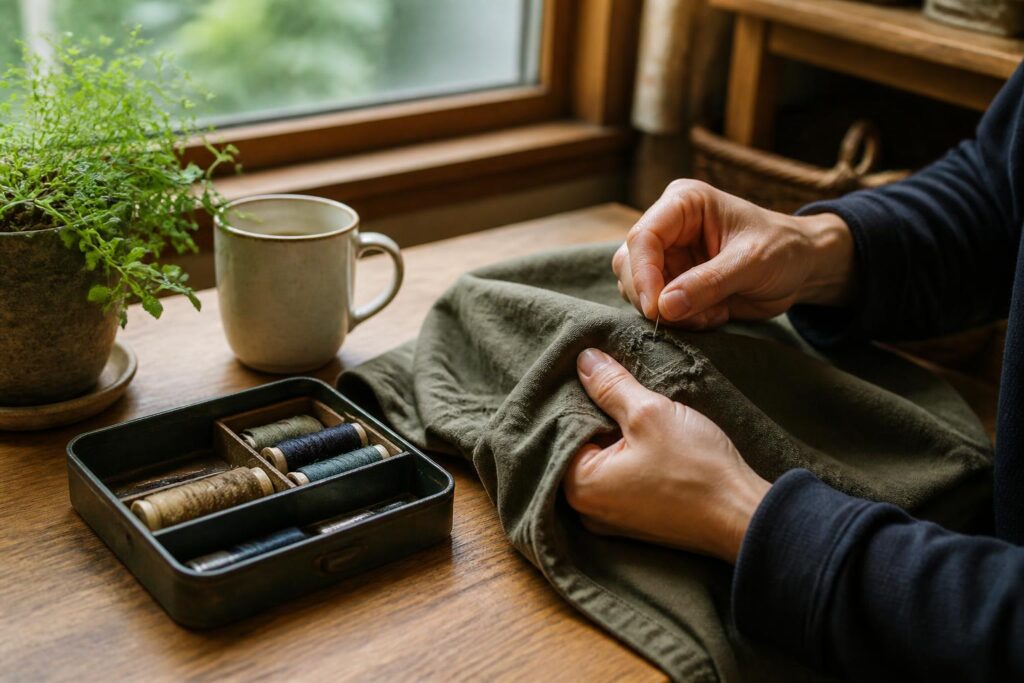
Some household items are no longer as intact as they were on the first day, but they have not lost their value. A chair with peeling paint, a shirt with a worn collar, a pot with a loose handle, or a flickering desk lamp may all be considered old-fashioned, outdated, and ready to be replaced. Yet before deciding to throw them away, we can pause and ask a simple question: has this item truly reached the end of its usefulness, or does it simply need to be cared for properly?
That question is not only about repairing an object. It touches on how people view wear and tear, the traces of time, and the value of things that are no longer perfect. In modern life, when buying something new is sometimes easier than repairing something old, choosing repair becomes a conscious act. It is a way to conserve resources, reduce waste, and remind ourselves that not everything damaged needs to be discarded.
The Habit of Replacing Things and Forgetting Their Value
Replacing something is not always the wrong choice. Some devices are too old, no longer safe, or unable to meet practical needs. However, the problem lies in the fact that we sometimes replace things too quickly, before even understanding why they no longer work well. A fan running weakly may only need to be cleaned. A stuck zipper may need just a small component replaced. A shirt torn along a seam may continue accompanying us for many years if it is carefully sewn back together.
When we become accustomed to throwing things away, we can easily develop a similar reflex in many other areas. We lose patience with a relationship experiencing difficulties, quickly give up on a skill before we have had time to master it, or assume that a difficult period means all our previous efforts have become useless. Of course, objects and people cannot be placed on the same plane. But the habit of dealing with inconvenience by immediately eliminating it can affect how we face things that need time to recover.
Repair forces us to observe more closely. We have to find out which part is broken, where the cause began, and whether it can be fixed with a small action. This process slows down the decision, but that very slowing down helps us distinguish between something that has truly lost its value and something that simply needs attention.
Repairing an Object Is Also Repairing the Way We See Things
A new item often brings a feeling of cleanliness, convenience, and excitement. In contrast, a used item carries traces of time. A scratch on a tabletop may bring back memories of old study sessions. A chipped cup may have been a gift from a relative. A faded shirt may have been worn on a memorable trip. The value of these objects lies not only in their materials or function, but also in the stories they preserve.
Not every old household item needs to be kept. A home with too many things will become cramped and difficult to care for. Nevertheless, decluttering only truly has meaning when it is carried out after thoughtful consideration, rather than based on boredom with the sight of something or influenced by consumer habits. Repair helps us reconsider our relationship with objects. We begin to recognize the efforts of the designer, the manufacturer, the people who transported the item, and those who used it before us.
Behind a shirt are fabric, water, energy, labor time, and many processes that buyers rarely see. Behind an electronic item are extracted materials, assembled components, and a long transportation chain. When an object is discarded merely because of a minor defect, all those resources are also treated lightly. Repair cannot solve the entire problem of consumption, but it creates a more mindful attitude toward decisions about buying and discarding.
The Value of Knowing How to Do Small Things
Many people are reluctant to make repairs because they think they are complicated and require tools or specialized skills. In reality, not every item should be repaired by oneself, especially electrical equipment, gas-related appliances, or objects that could cause danger. In such cases, seeking help from someone with expertise is a necessary precaution. But for simple tasks such as sewing a loose seam, tightening a screw, replacing a button, cleaning a filter, or gluing down a lifted corner, we can absolutely learn step by step.
What is valuable is not only the final result. When we repair an item with our own hands, we have the opportunity to practice patience and the ability to accept unsuccessful attempts. The first stitches may be clumsy, the paint may not be even, or the replacement part may not fit perfectly. These imperfections do not necessarily make the work meaningless. They show that we have devoted time and effort instead of leaving everything to the purchase of something new.
In a life that often prizes speed, small skills such as repair bring a sense of agency. We are no longer entirely dependent on buying another product whenever something goes wrong. We know how to examine, learn, and make a more suitable choice. This sense of agency can extend into other areas: caring for the home, managing finances, learning a new skill, or resolving a disagreement within the family.
Repair Does Not Mean Stubbornly Holding On
Appreciating old objects does not mean having to keep everything at all costs. Some items are so badly damaged that repairing them costs more than replacing them, or continuing to use them could be dangerous. A severely deformed pot, a device with deteriorated electrical wiring, or an item that is no longer suitable for its intended use needs to be assessed realistically. Frugality only has meaning when accompanied by safety and reason.
Therefore, repair should not become a rigid principle. What matters is that we do not make decisions in haste. We can consider three questions: does the item still meet its main purpose, can the current problem be fixed safely, and is the repair cost reasonable compared with the remaining value of its use? In addition, we should also consider the possibility of reusing part of it, giving it to someone else, or taking it to an appropriate collection point if it can no longer be used.
This way of considering things helps distinguish appreciation from clinging. Appreciation means fully recognizing an object’s value before making a decision. Clinging means allowing regret to make the living space feel burdensome. A healthy way of life needs both abilities: knowing how to care for things that can still be restored and knowing how to let go of what has completed its role.
From the Home to How We Treat Ourselves
Old household items sometimes remind us of a truth that modern society often tries to hide: everything can wear down. The body changes, abilities change, relationships go through different stages, and personal plans rarely remain as they were at the beginning. If we accept only what is new, smooth, and perfect, we will easily feel disappointed when we encounter our own natural limitations.
Knowing how to repair an object does not automatically make a person more patient with themselves, but it can create a familiar image of recovery. A crack that has been treated does not disappear completely, yet the object can still continue serving daily life. A patched shirt may not look as it originally did, but the patch becomes a sign that it has been cared for. People are the same. Difficult experiences may leave marks, but marks do not mean that one’s value has been lost.
This does not mean that we must endure every hurt or try to restore things that are no longer suitable. Some relationships need to end, some habits need to be abandoned, and some former versions of ourselves need to be left behind. However, before concluding that we are broken or have failed, we can try looking more closely: what truly needs to be repaired, what needs to rest, and what can begin again in a different form?
A Small Choice for a More Sustainable Life
Living with a willingness to repair does not require a major transformation. We can begin by taking better care of our belongings, reading the instructions before using them, cleaning them regularly, and learning how to fix basic problems. When buying something new, we should pay attention to its durability, maintainability, and whether we truly need it. When an item breaks, give yourself a short amount of time to assess it instead of immediately looking for a replacement.
Repair can also become a bonding activity within the family. Adults can teach children to replace a button, clean an item, or reorganize a study corner. These small tasks teach children that objects do not have value only when they are brand new, and that care is part of ownership. Within a family, repairing a shelf together or restoring an old item can also create memories that buying a new product could hardly replace.
Ultimately, repair is a symbolic choice. It says that we do not want to live entirely according to the reflexes of consumption, do not want to equate newness with value, and do not want to regard the marks of time as something shameful. Each time we consider repairing instead of throwing something away, we are practicing looking more deeply at objects, at other people’s efforts, and at the way we ourselves face imperfection.
A home does not need every item to be new in order to feel warm. A life does not need to be smooth at all times to be worthy of appreciation. Sometimes, value lies in the ability to care for, restore, and continue using what still has meaning. Repairing an object may be a very small act, but through such small acts, people learn to live with greater moderation, gratitude, and responsibility toward what is by their side.

ARTICLES IN THE SAME CATEGORY
Maintaining Focus Amid a Life That Is Constantly Interrupted
Gratitude in Everyday Life: From an Emotion to a Sustainable Way of Living
The Quiet Between the Noise of Our Time: How to Find Focus and Peace Again
Knowing When to Stop Is a Capability That Makes Life Lighter
A Warm Kitchen Begins with the Way Family Members Listen to One Another
The Art of Closing Out the Day So the Mind Can Rest
ARTICLES IN THE SAME GENRE
When Attention Is Fragmented: How to Regain the Ability to Focus in a Distracted Life
Knowing What Is Right Is Still Not Enough: Why It Is Difficult for People to Change Their Habits
Familiarity Is Not the Truth: Recognizing Reasoning Traps in Everyday Life
Greenland and the Great Test of the World Order