

 Tiếng Việt
 日本語
日本語 한국어
한국어 中文 (中国)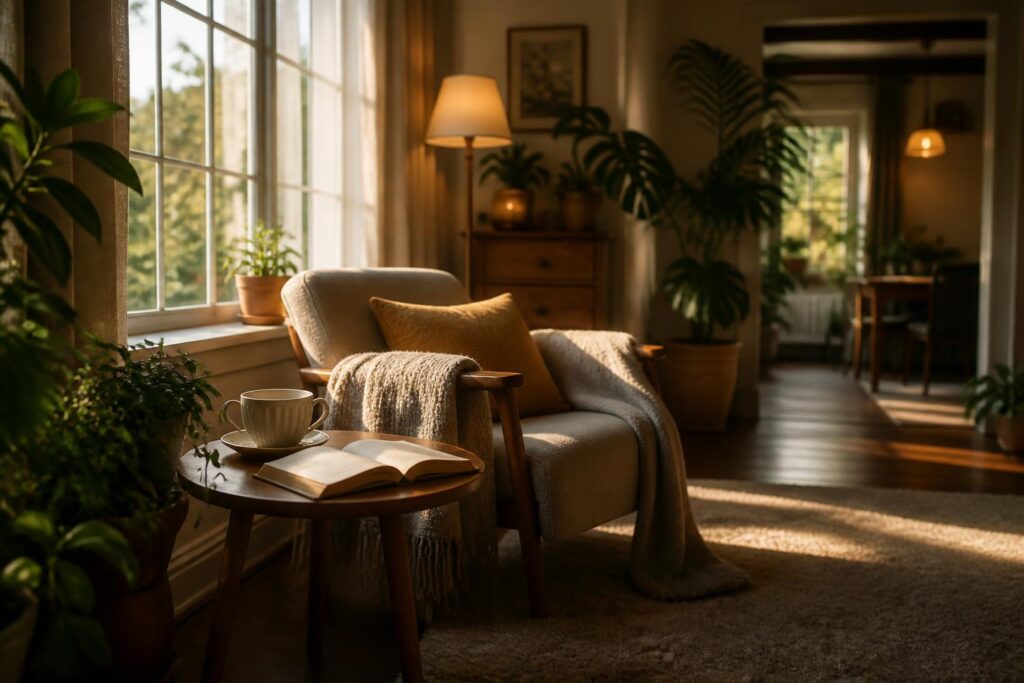
After a day spent handling numerous tasks, traveling through crowded streets, or constantly meeting other people’s expectations, everyone needs a place to return to. At such times, home is not merely somewhere to sleep or store belongings. It can also be a quiet space that helps people release some of their stress, sort through their emotions, and prepare mentally for the next day.
However, simply returning home does not always make us feel relieved right away. A cluttered room, uncomfortable lighting, prolonged noise, or habits that keep pulling our minds back into work can cause tiredness to follow us home. Therefore, creating a restorative space does not begin with buying lots of decorative items. It begins with observing how the home affects us, then adjusting each detail to suit our actual needs.
Home Is a Place to Rest, Not a Scorecard
Many people unintentionally turn caring for their homes into a race for perfection. They feel guilty when the dining table has not been cleared immediately, the clothes have not been neatly folded, or one corner of the room is still untidy. Cleaning is necessary, but if every time we see an item out of place we experience a sense of failure, the home will no longer bring us peace.
A good living space must first serve the people who live in it. A home may bear the traces of daily life: a few books currently being read, a jacket temporarily placed on a chair, or frequently used belongings left within reach. Tidiness is meaningful when it makes things easier to find, movement more convenient, and small decisions less burdensome. It should not become a standard that forces everyone to continually prove they are living the right way.
Rather than aiming to transform the entire house into an idealized image, each person can start with a small area that is used frequently. It could be a table beside the window, a reading nook, the space beside the bed, or the entrance to the home. When this area becomes open and pleasant, a sense of control over life gradually returns. Small changes like these are often more practical than trying to deep-clean the entire house in one day and quickly exhausting yourself.
Identify Sources of Fatigue in Your Living Space
Our surroundings affect our moods in many ways that we sometimes fail to notice. Light that is too harsh can make evenings less relaxing. Sounds from electronic devices, notifications, or programs playing continuously can make it difficult for the mind to shift into a state of rest. An uncomfortable chair, a desk constantly piled with paperwork, or rarely used belongings can also create subtle stimulation.
To identify the problems, try entering the home with the mindset of an observer. What makes me want to sit down? What makes me immediately want to clean, avoid, or leave the room? Which areas often cause family members to clash because they are inconvenient? These questions are not intended to find fault with anyone. Instead, they help reveal the gap between how the home is currently being used and what people actually need from it.
For example, if the whole family regularly leaves belongings in the entryway because there is no convenient place to store them, blaming one another for being untidy will not solve the underlying cause. A basket, hook, or small shelf placed in the right location may make it easier to change the habit. If the desk is located in the same space used for rest, separating usage times, putting the computer away after work, or using different lighting can create a clearer boundary between responsibilities and relaxation.
Create Simple Transition Rituals
Fatigue does not always disappear as soon as work ends. The body may be home while the mind remains stuck in a meeting, a conversation, or a list of unfinished tasks. A transition ritual helps signal that the workday has ended and personal time has begun.
The ritual does not need to be elaborate. Some people change clothes as soon as they get home, wash their face, take a warm shower, or walk slowly for a few minutes before starting household tasks. Others spend a little time opening the windows, watering the plants, making a cup of tea, or tidying the table. What matters is not the specific activity, but the intentional repetition. When performed regularly, these small actions help create a sense of shifting from one state to another.
Families can also agree not to immediately ask about matters that need to be dealt with, especially when a member has just returned from a long day. This does not mean avoiding responsibility. It simply creates enough of a buffer for everyone to regain their composure before talking. A conversation that takes place after people have become less tense is usually more likely to reach a solution than words blurted out in a moment of exhaustion.
Give the Senses a Chance to Rest
A restorative space should contain elements that help the senses slow down. Natural light during the day, softer lighting in the evening, good airflow, and a suitable temperature all contribute to a feeling of comfort. If major architectural changes are not possible, we can still adjust the curtains, the placement of lights, how windows and doors are opened, or when sound-producing devices are used.
Scents can also evoke a sense of familiarity, but there is no need to overuse air-freshening products. Sometimes the smell of a family meal, clean bedding, or fresh air after a room has been ventilated is enough to create a feeling of belonging. Similarly, plants can make a space feel more lively if they are chosen and cared for appropriately, but a home without many plants can still be a good place to rest.
It is worth noting that comfort is personal. Some people need quiet, while others enjoy listening to soft music. Some want a completely dark room in order to sleep, while others need a small source of light. Therefore, one decorating style should not be turned into a universal formula for every family. The most suitable arrangement is one that respects the lifestyle, health, and preferences of the people using the space.
Shared Spaces Need to Be Built Through Agreement
A home is where several people live together, so one person’s sense of restoration sometimes depends on the cooperation of others. One member may want quiet in order to rest, while another needs to talk or relax. One person may like everything neatly organized, while another has a habit of putting things wherever they are most convenient. These differences are not necessarily signs of a lack of care, but if they are not openly discussed, they can easily become sources of frustration.
Instead of making vague complaints such as “the house is always a mess” or “no one ever pays attention,” families can speak more specifically about their needs. For example, they might agree to keep walkways clear, designate a place for keys, set aside a period of reduced noise in the evening, or divide household chores according to each person’s abilities. A clear agreement is generally fairer than waiting for others to guess what is expected.
Shared spaces also need to include room for privacy. A small room, a familiar chair, or a period of time without interruption can all help each person recharge. Respecting personal space does not weaken family bonds. On the contrary, when everyone has the opportunity to rest properly, gatherings and conversations at home often become more natural and warmer.
Restoration Does Not Mean Avoidance
There is a boundary that needs to be recognized: home should be a place that helps people regain their strength, but it should not become a place completely cut off from all responsibilities. Closing oneself off from the world for a short time may be necessary, but if we continually avoid communication, postpone everything, or use entertainment to forget our problems, rest can turn into a state of being stuck.
Restoration is the process of regaining the ability to face things, not denying what is happening. After a period of quiet, we can return to work, have more honest conversations, or address a problem one part at a time. A healthy home does not require everyone to be cheerful all the time. It allows people to be sad, tired, and quiet, and then find a way to keep going.
During periods of prolonged stress, when insomnia, sadness, or anxiety clearly affects daily life, changing the environment may not be enough. At such times, seeking appropriate support from a trusted person or a professional is an option that should be respected. Caring for the home cannot replace caring for physical and mental health, but it can create a more supportive foundation for that process.
Start with One Sustainable Change
There is no need to wait for the weekend, a special occasion, or a time when you have enough money to begin turning your home into a place of restoration. Choose one small change that can be maintained in your current life. It could be clearing the desk before bed, keeping the phone away from the bed, opening the windows to let in fresh air in the morning, preparing a quiet place to sit, or agreeing with the family on a time to reduce noise.
After some time, observe whether the change is genuinely helpful. If a habit makes life feel more burdensome, it can be adjusted without feeling like a failure. The goal is not to create a perfect house for photographs, but a space that makes people feel supported on the most ordinary days.
Amid a demanding pace of life, a home that knows how to welcome people back is a precious emotional asset. Restoration sometimes begins with very simple things: a walkway free of clutter, an unhurried meal, lighting that is just right, a nonjudgmental conversation, and a quiet moment respected by everyone. When we learn to design our surroundings around people’s real needs, we not only make the home more comfortable but also create more opportunities to live slowly, stay close to one another, and treat ourselves with greater kindness.

ARTICLES IN THE SAME CATEGORY
Setting Boundaries in Digital Life to Regain Focus
The Art of Slowing Down in a World That Is Always Urging Us On
A Home That Knows How to Listen: Building a Peaceful Space Through Very Small Things
Healthy Boundaries: How to Protect Your Energy Without Becoming Cold
Slow Down to See Clearly: The Art of Living Without Being Swept Away
Keeping Promises to Yourself: The Quiet Foundation of a Trustworthy Life
ARTICLES IN THE SAME GENRE
The Seedling Who Knew How to Listen and the Forest That Awoke
Brown Squirrel’s Raincoat
The Wind Chime Finds Its Chime Again
Stepmother and Stepchild