

 Tiếng Việt
 日本語
 한국어
 中文 (中国)
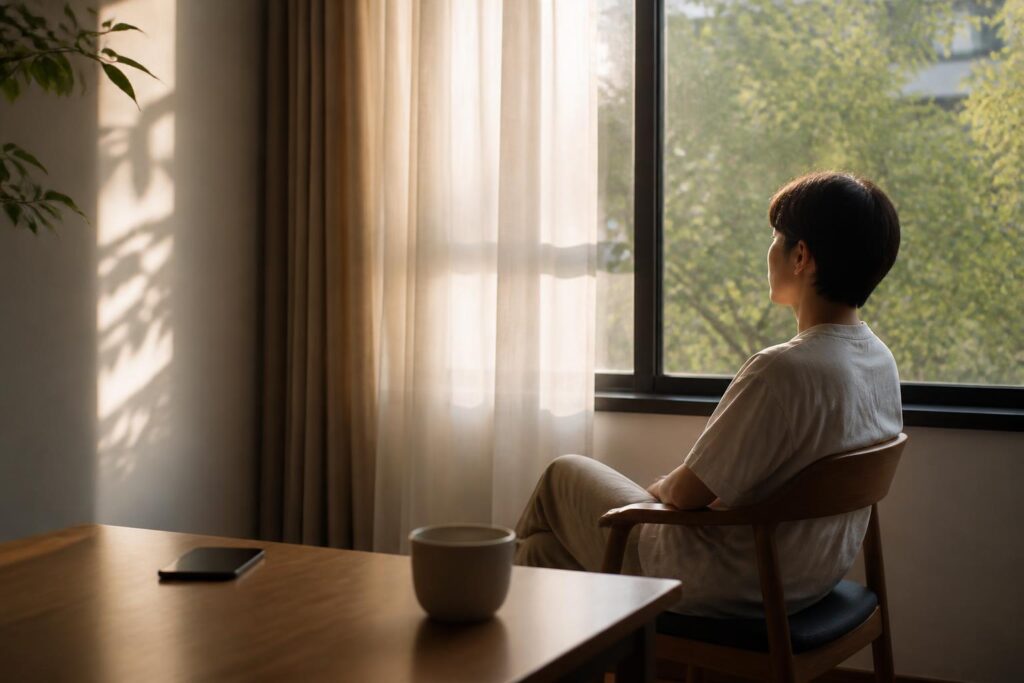
There are days when, as soon as we open our eyes, we hear the sounds of the world. A notification on the phone, a missed call, messages waiting for replies, work waiting to be handled, and countless pieces of information appearing one after another. By the time night falls, the room is quiet, but the mind continues to work. The words spoken during the day, unfinished tasks, and small worries return one by one. In a rhythm of life like this, silence can sometimes become a luxury.
Yet silence does not necessarily mean loneliness or sadness. Nor is it an attitude of coldness toward others. From another perspective, it is a necessary pause that allows us to recognize what we are feeling, what we need, and how we want to move forward. When consciously chosen, silence can become a simple yet profound way of caring for ourselves.
We are living amid too many sounds
Sound does not come only from noisy places. Even a quiet room can be full of noise if the mind is constantly being pulled in many directions. Phones create the feeling that we must always be present. Social media makes it easy to encounter other people’s lives even when we are resting. Work, family, relationships, and invisible expectations all contribute to making each day feel crowded.
In these circumstances, many people mistake busyness for effectiveness. They fill every empty moment by checking the news, watching a short video, or replying to a conversation. These actions are not always harmful, but if they happen continuously, we may lose the ability to simply be with ourselves. When there is no longer any external noise, unnamed emotions begin to surface. Because we are not used to facing them, we quickly look for another sound to fill the space.
The issue is not that people use technology or enjoy conversation. What matters is whether we can still consciously turn down those stimuli. A person can live among many people and still preserve an inner quiet. Conversely, someone may be alone while their mind never gets any rest.
Silence helps us hear what is often overlooked
When we do not have to respond immediately, explain ourselves, or please anyone, we have the opportunity to observe the small changes within us. It may be exhaustion hidden behind an ordinary appearance, a sadness that has not been acknowledged, anger over having yielded for too long, or a desire to live more slowly. These signals have always been there; they are simply often drowned out by the noise of daily life.
Silence does not automatically solve every problem. However, it creates enough distance between an emotion and a reaction. When angry, a few minutes without arguing can help a person realize what has truly hurt them. When facing a difficult choice, some time without pressure can help us distinguish between our own desires and the pressure of others.
This does not mean that every decision must be made in isolation. Sharing with someone we trust remains very important. But before telling our story, we may need to listen to it ourselves once, honestly. If we do not yet understand what we are going through, we can easily turn a conversation into a repeated complaint or search for a ready-made answer instead of truly looking at the cause.
Silence within relationships
In families and friendships, silence is often misunderstood. Someone who speaks little may be considered distant, when they may simply need time to think. Someone who does not reply immediately may be seen as uncaring, even though they are trying to remain calm to avoid saying things that could hurt one another. For this reason, healthy silence needs to be accompanied by clarity.
Instead of disappearing without explanation, we can simply say that we need some time to calm down and will continue the conversation when we are ready. This way of speaking does not deny the other person’s feelings while also protecting our own legitimate needs. It is different from using silence to punish, exert pressure, or make someone else guess what we are thinking.
In an argument, sometimes the kindest thing is not to try to have the last word. Pausing to listen, recognize our share of responsibility, and give the other person a chance to speak is also a form of respect. In that moment, silence does not impoverish the conversation. On the contrary, it gives the words that follow more weight because they do not appear merely as a reaction.
Creating silence amid a busy day
Not everyone has the opportunity to spend hours in a quiet place. Silence can begin with very small, familiar stretches of time: a few minutes without holding a phone after waking up, a meal without eating while scrolling through a screen, a stretch of road walked more slowly, or a few minutes sitting by the window before starting work.
The goal is not to turn life into a series of rigid rules. If we try to create quiet as a task that must be completed, we may once again turn rest into a new source of pressure. What matters more is recognizing when we need to reduce stimulation. Some people find stillness while walking; some like to write a few lines at the end of the day; others need to tend plants, cook, or do a hands-on activity that does not require them to constantly shift their attention.
During that time, there is no need to force ourselves to think positively. A useful period of silence is not a place where every unpleasant emotion is pushed away. It is a space where emotions can be acknowledged without immediately being judged. We may realize that we are tired, disappointed, or impatient today without hastily concluding that we are terrible people. Seeing a state does not mean identifying ourselves with that state.
When silence becomes avoidance
Alongside its healing value, silence can also be used as a way to escape. Some people do not talk about a problem because they are afraid to face responsibility. Some continually withdraw because they fear being hurt. Some call it peace, when in fact they are cutting off every necessary connection. Therefore, not every kind of silence is healthy.
A beneficial period of silence usually helps us become clearer and able to return to life. After resting, we can say what needs to be said, do what needs to be done, or seek help when a problem exceeds our ability to resolve it on our own. By contrast, if silence causes someone to become increasingly isolated, lose interest in everything, and be unable to share with anyone for a long time, it may be a sign that more serious attention is needed.
Caring for ourselves does not mean having to endure everything alone. Some pain requires a safe conversation, the companionship of loved ones, or appropriate support from a professional. Silence should be a door through which we understand ourselves better, not a wall that prevents us from accepting help.
Keeping a quiet space to live more intentionally
In a world that constantly encourages quick responses, silence reminds us that not everything that appears needs to be answered immediately. Not every comment is worth debating, not every invitation must be accepted, and not every standard set by the crowd needs to become a personal goal.
When we have some quiet, we begin to recognize the difference between what is truly important and what merely attracts attention for a moment. A message can wait a few minutes. A differing opinion does not have to become a battle. A plan can be reconsidered if it is no longer suitable. These choices help people regain decision-making power over their time, energy, and attention.
Silence also changes the way we see others. When we do not rush to judge, we may recognize tiredness behind an unpleasant attitude, fear behind an awkward remark, or an untold story behind someone who shares little. Understanding does not come from always agreeing, but from being able to pause long enough to see an event from more than one perspective.
Ultimately, silence is not a place for people to disappear from life. It is a pause that allows us to return to life with greater clarity. Amid days filled with sound, a few quiet minutes may not make every difficulty disappear, but they can help us recognize what to keep, what to let go of, and what to say in a calm voice. Knowing how to return to silence at the right time is also knowing how to give ourselves an unassuming form of care: listening to ourselves before continuing on.

ARTICLES IN THE SAME CATEGORY
When the House Feels Less Crowded, the Heart Has More Room to Breathe
The Art of Saying No While Remaining Kind
Digital Silence: How to Reclaim Your Attention in a Day Full of Notifications
The Art of Doing Just Enough on a Day When There Is Always Too Much to Do
When Life Becomes Too Noisy, We Need An Intentional Pause
The Necessary Space: Learning to Rest Without Feeling Guilty
ARTICLES IN THE SAME GENRE
When There Are Too Many Choices, How Can We Make Wiser Decisions?
The 12 Zodiac Signs and How Each One Establishes Healthy Boundaries
Learn to Repair Before Replacing: A Slower Way of Living in an Age of Fast Consumption
Living Mindfully in an Age of Information Overload
From Knowing a Lot to Understanding Deeply: How to Build Systematic Thinking
Setting Boundaries in Digital Life to Regain Focus