

 Tiếng Việt
 日本語
 한국어
 中文 (中国)
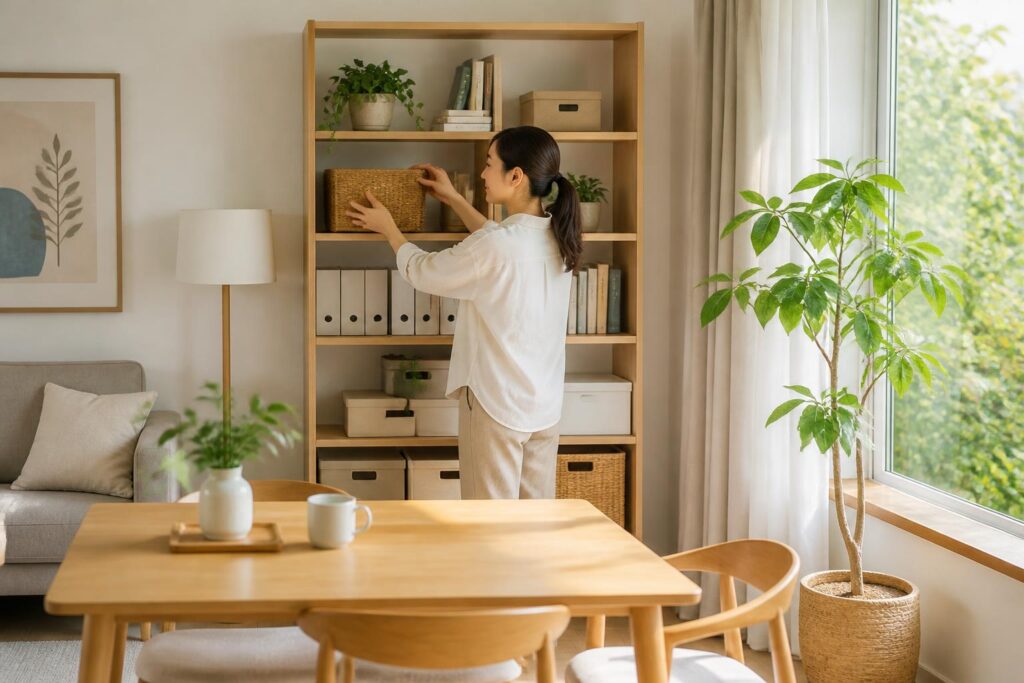
There are days when we return home after a long schedule, put our bag down on a chair, and suddenly realize that there are too many things around us. Clothes are still unfolded, documents are mixed in with old bills, items bought because they looked beautiful are rarely used, and a few boxes have remained untouched since the last move. The room is not necessarily dirty, but the feeling of being cramped is still there. It makes finding something take longer, makes rest less complete, and makes it difficult for the mind to truly settle.
Many people think tidying is purely a task for the hands. In reality, it is also a process of making choices and engaging in a dialogue with ourselves. Each item in the house is often connected to a need, a memory, a habit, or some version of who we were in the past. When we decide whether to keep or give something away, we are not merely arranging belongings; we are also considering what is still suited to our current lives.
Clutter Is Not Just About the Number of Things
A house can contain many things and still feel comfortable if everything has a place and is used appropriately. Conversely, a space with relatively few belongings can still feel burdensome if things are scattered around, lack order, or constantly remind us of unfinished tasks. The issue, therefore, is not only how many items we have, but also how much space, effort, and attention each one occupies.
A chair piled high with clothes reminds us that we have not washed or folded them. A desk covered with work papers makes it difficult to distinguish between tasks that need to be done and matters that are already over. A drawer filled with items we no longer use still requires us to move, check, and maintain them. These small signals repeat themselves, creating a form of quiet fatigue whose cause we sometimes fail to recognize.
Our living environment also affects how we begin the day. When we have to spend several minutes in the morning looking for our keys, choosing clothes, or clearing a corner of the desk before working, the energy available for important tasks has already been depleted very early. Sensible tidying does not turn life into a series of perfect days, but it can reduce unnecessary friction in everyday routines.
Why Is It So Difficult for Us to Let Go of Things?
Quite a few items are kept not because they are still needed, but because they carry a story. An old shirt may remind us of our first trip, a few books may have helped us through a difficult period, or a gift may have come from someone who has long since disappeared from our lives. Getting rid of such things can sometimes make us feel that we are betraying a memory or cutting off a part of the past.
However, memories do not depend entirely on whether an item remains in the closet. What is worth remembering usually lies in the experience, emotions, and meaning we once received. A gift may have fulfilled its purpose long ago: it once made us happy, reminded us of someone, or accompanied us through a particular period. Choosing not to keep that item any longer does not necessarily mean denying the feelings behind it.
We also tend to hold on to things connected to plans that never came to fruition. Equipment for a hobby we once intended to pursue, clothes in a style we have never worn, or a device bought because we thought we would need it someday. Such items often represent the person we hope to become. When we see them, we feel both regret over the money spent and guilt toward ourselves for not having done what we intended.
Instead of blaming ourselves, we can view the matter more gently: people’s needs change, circumstances change, and not every plan needs to be extended indefinitely. An item that is no longer suitable is not evidence of failure. It simply shows that we have come to understand more clearly what we truly want.
Tidying as an Exercise in Mindfulness
To begin, there is no need to immediately undertake a major deep-cleaning session. A small area often creates a clearer sense of accomplishment and helps us avoid becoming overwhelmed. We might start with a tabletop, a drawer, a shoe rack, or a corner that regularly gets in the way. The initial goal is not to make the entire house perfect, but to create a change concrete enough for us to notice the difference.
When picking up each item, instead of asking vaguely, “Should I keep this?”, we can ask more practical questions: Has this been used recently? Does it serve a clear need? If I did not own it today, would I actively buy it again? Does keeping it make daily life more convenient, or does it merely fill more space? These questions help us make decisions based on our present lives rather than on feelings of reluctance to let go.
With sentimental items, we do not necessarily have to choose between the two extremes of keeping everything or throwing everything away. We can select a small number of representative items, take photographs, write a few lines about the related stories, or give them to someone who can genuinely use them. This approach allows us to honor our memories without turning the house into a storage facility for every stage that has passed.
Belongings should also be handled responsibly after being sorted. Items that are still in good condition can be given to people who need them; things that can be repaired should be considered for repair; while broken items or those with no remaining practical value should be sorted appropriately. Tidying should not become a matter of moving clutter from our own room to somewhere else. What matters is reducing waste and sending each item to the place where it can be most useful within our means.
Physical Space Opens Up Mental Space
When a room becomes less crowded, the first changes are usually not grand emotions but small conveniences. We find things more quickly, cleaning becomes easier, and there is somewhere to sit without having to move many objects. These advantages accumulate day by day, making daily life less stressful and creating more time for rest, conversation, or self-care.
Space also allows us to see more clearly what we already have. When the wardrobe is not crammed full, it is easier to recognize the items that truly suit us. When the desk is tidier, we can focus on one task instead of constantly having our attention pulled away by unsorted objects. When the living room has enough open space, family members have more opportunities to sit together, even if only to drink tea or talk about the day that has passed.
Tidying also helps distinguish temporary desires from long-term needs. After seeing how many items were once bought because of emotion, convenience, or other people’s influence, we may become more cautious in future shopping. When faced with a new item, the question is not only “Is it beautiful?” but also “Where will it go, how many times will it be used, and will it truly make life better?”
Maintaining Order with Manageable Principles
A tidy house does not need to look like a staged image on the internet. Every family has a different amount of space, set of habits, and rhythm of life. What we should aim for is suitability, not a perfect appearance. A good system is simple enough for everyone in the household to maintain without feeling that it is a burdensome task.
We can assign each category of belongings a designated area, prioritize frequently used items by keeping them somewhere easy to reach, and return things to their places immediately after use. Items used less often should be stored neatly, in locations that are visible or easy to remember. For newly purchased items, we can consider the principle that when one item comes in, one similar item should be considered for giving away, but there is no need to apply this so rigidly that it creates pressure.
More important than anything is maintaining short but regular periods of tidying. Spending a few minutes each day returning things to their places can be more effective than waiting until everything has piled up and then spending an entire day dealing with it. Family members should also participate, because a shared space cannot be maintained for long if only one person is constantly cleaning while everyone else continues creating more disorder.
Our Living Space Is a Mirror of a Particular Period
A house does not need to be perfectly tidy at all times. Living means using things, cooking, working, caring for children, welcoming guests, and resting; the traces of those activities are natural. The purpose of tidying is not to erase every sign of life, but to create an order flexible enough for people to live more comfortably in their own space.
There are periods when we are busy and the house temporarily becomes less tidy. There are times when our spirits are low and caring for ourselves and the surrounding space becomes difficult. At such times, instead of viewing clutter as a fault, we can regard it as a signal that needs attention. Simply starting with a garbage bag, a tabletop, or a pile of clothes is already a first step toward regaining a sense of control.
Ultimately, tidying is not a battle against objects. It is a way of choosing what deserves to be present in our current lives. When we know how to keep what is useful, meaningful, and suitable, while also having the courage to let go of things that have fulfilled their purpose, the house becomes lighter. And in that lightness, people often find more room to breathe—for their thoughts, their feelings, and the things that truly matter.

ARTICLES IN THE SAME CATEGORY
The Art of Saying No While Remaining Kind
Digital Silence: How to Reclaim Your Attention in a Day Full of Notifications
The Art of Doing Just Enough on a Day When There Is Always Too Much to Do
When Life Becomes Too Noisy, We Need An Intentional Pause
The Necessary Space: Learning to Rest Without Feeling Guilty
Family Meals and the Art of Being Present with One Another
ARTICLES IN THE SAME GENRE
When There Are Too Many Choices, How Can We Make Wiser Decisions?
The 12 Zodiac Signs and How Each One Establishes Healthy Boundaries
Learn to Repair Before Replacing: A Slower Way of Living in an Age of Fast Consumption
Living Mindfully in an Age of Information Overload
From Knowing a Lot to Understanding Deeply: How to Build Systematic Thinking
Setting Boundaries in Digital Life to Regain Focus