
Zodiac Signs · 20 November, 2026
The Moon in the Birth Chart: A Map of Emotions and the Need to Be Understood

When exploring a birth chart, many people often begin with the Sun sign because it is the most familiar placement, associated with the date of birth and personality traits expressed outwardly. However, to understand inner life, looking only at the Sun sign is not enough. In the symbolic language of astrology, the Moon is often seen as a lens for interpreting emotions, the need to be cared for, and the way a person seeks a sense of security.
The Moon’s placement is not an absolute explanation of personality or destiny. It does not replace lived experience, family circumstances, education, or personal choices. Even so, observing this symbol can help each person ask useful questions: What makes me feel at ease? How do I usually react when I am hurt? Why do some seemingly minor needs have such a strong effect on my mood? These questions make reading a birth chart a process of self-observation rather than merely a search for a personality label.
What does the Moon represent in a birth chart?
In common interpretations, the Moon is associated with the emotional side that is expressed naturally, especially when people are in private spaces or facing pressure. If the Sun sign is often linked to self-awareness, goals, and the way we want to shine, the Moon points to reactions that arise almost instinctively, habits that create comfort, and the need to belong somewhere.
People with a prominent Moon placement in their self-awareness often care about the question of what they truly feel, rather than focusing only on how others see them. Someone may appear strong, rational, and proactive at work, but when they return home, they may need quiet, a familiar meal, or a nonjudgmental conversation. The difference between outward image and inner needs is something the Moon is often used to illuminate.
This symbol is also often associated with memories, family habits, and early experiences. This does not mean that the Moon’s placement completely determines how a person grows up. Rather, it may suggest patterns of response that have become familiar: seeking someone else to confide in, withdrawing when insecure, trying to control everything, or turning to small rituals that help stabilize the mind.
How to determine and read the Moon’s placement
To determine the Moon sign in a birth chart, the information commonly used includes the date of birth, time of birth, and place of birth. The more accurate the birth time, the more technically reliable the chart will be, because the Moon moves relatively quickly through the signs. When the exact birth time is unknown, the result may need to be treated as a cautious reference, especially on days when the Moon may move from one sign to another.
Reading the Moon should not stop at memorizing a few keywords. The zodiac sign, the house where the Moon is located, and its aspects to other planets should be considered together. The zodiac sign may suggest a style of emotional expression. The house indicates the area of life where the need for security and emotional reactions are most readily felt. Aspects may make that expression more harmonious, intense, or conflicted, depending on the interpretation of each school.
For example, someone with the Moon in a sign oriented toward communication may need conversation, exchange, and the ability to name their emotions in order to feel relieved. Someone with the Moon in a sign that values stability may feel more at ease with a familiar routine, a dependable environment, and relationships marked by consistency. These descriptions should be used only as suggestions to compare with real experience, not as rigid conclusions about a person.
The Moon and emotional needs in the signs
Each zodiac sign gives the Moon symbol a different nuance. When the Moon is in a Fire sign, emotions may be experienced in a direct, enthusiastic way, with a need for room to act. People with this quality often want encouragement, trust, and opportunities to show initiative. However, when restrained or taken lightly, they may react quickly before having time to fully consider the situation.
With Earth signs, the need for security is often connected to stability, practicality, and the feeling that things can be predicted to a certain extent. Emotions are sometimes not expressed immediately but are shown through concrete actions, care, responsibility, or maintaining a familiar way of life. When they lack a solid foundation, people with this quality may become anxious, rigid, or overly focused on controlling the outcome.
Air signs often find balance through communication, thought, and intellectual connection. Being listened to, being able to present their views, and looking at an issue from multiple perspectives can help them process emotions. On the other hand, if they rely too heavily on reason, they may unintentionally analyze their emotions instead of truly experiencing them. At that point, the need to be understood lies not only in a logical explanation but also in genuine presence.
Water signs are often associated with sensitivity, empathy, and a deep attachment to memories. People with this quality may sense the atmosphere in a room or small changes in another person’s attitude. This can be a strength in caring for and connecting with others, but it can also make them easily affected by the emotional environment around them. Personal boundaries and time to recover therefore become especially important.
Why can understanding the Moon improve relationships?
In many relationships, conflict does not arise because two people do not care about each other, but because they seek a sense of security in different ways. Someone who wants to be checked on frequently may feel abandoned when the other person remains silent. Conversely, someone who needs time alone may feel pressured if they are expected to immediately share every thought. Through the lens of the Moon, these differences can be placed in the context of needs instead of being quickly judged as right or wrong.
It is important not to use the Moon sign to justify behavior that hurts others. Being sensitive does not mean having the right to control others, and needing privacy does not mean one can ignore the feelings of the person beside them. The practical value of learning about a birth chart lies in its ability to expand the language of communication. Instead of saying, “You are always inconsiderate” or “You are always demanding,” two people can try to speak more clearly: “I need a response to feel connected,” or “I need some quiet time before I can have a calm conversation.”
In families, the Moon symbol also suggests that each member may receive care in their own way. Some people feel love through words, some through time spent together, and others through practical actions. Astrological descriptions should not be treated as templates for labeling children or relatives. Instead, they can become a starting point for more nuanced observation of what makes each person feel respected.
Limitations to remember when reading the Moon
Astrology is symbolic and interpretive, so it should not be used as a tool for psychological diagnosis, certain predictions of the future, or making decisions on behalf of a person. A description that fits someone’s experience does not automatically prove that the Moon’s placement is the sole cause of that experience. Mood is also influenced by sleep, health, work, relationships, and many specific conditions of everyday life.
It is also important to avoid the “I see myself in everything I read” effect. General personality descriptions can often make many people feel that they are familiar. A more cautious approach is to record your own reactions in different situations, then consider whether astrological symbols help organize those observations into an understandable story. If they do not fit, it is entirely acceptable to set them aside. No placement in a birth chart forces a person to behave in only one way.
For emotional issues that persist, reduce quality of life, or seriously affect relationships, support from a mental health professional and appropriate care resources remains more important than any astrological interpretation. Self-understanding needs to go hand in hand with the responsibility to care for oneself through evidence-based methods suited to one’s circumstances.
Turning reading the Moon into a practice of self-observation
A simple way to explore emotional needs is to keep a journal for several weeks. Each day, you can record when your mood changed, what happened beforehand, your first reaction, and what you truly needed. It might be rest, a conversation, a sense of being acknowledged, a clear plan, or the necessary distance to calm down. After some time, recurring patterns will become much clearer than they would from simply reading a short description.
Next, try turning your needs into specific words. If you need attention, say what you want instead of waiting for someone else to guess. If you need personal space, communicate the expected amount of time and take the initiative to return to the conversation. This is the step that turns awareness into skill. A birth chart can prompt questions, but it is the way we communicate, adjust our habits, and take responsibility for our emotions that creates lasting change.
The Moon in a birth chart can therefore be seen as a symbol of the inner part of us that appears less often before crowds. Exploring this symbol is not meant to confine people within a zodiac sign, but to recognize needs that have been neglected and reactions that need to be cared for with awareness. When we understand what we need to feel secure, we also have an opportunity to listen to others more clearly. That is the most practical value of reading a birth chart: not finding a final verdict, but opening another door to dialogue with ourselves.
Related articles
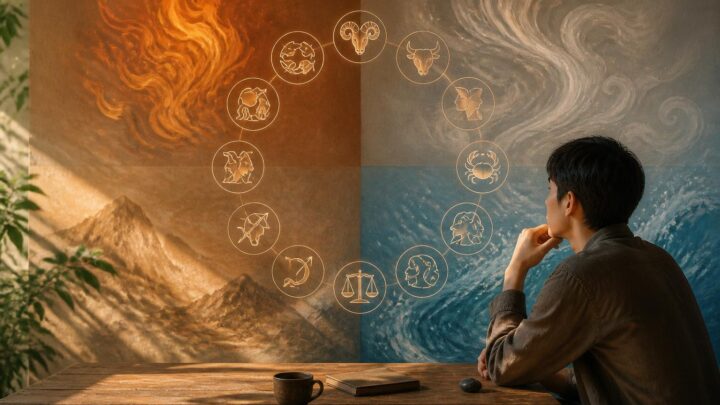
The Twelve Zodiac Signs and the Art of Reading Ourselves Through Differences
The Zodiac Should Be a Mirror, Not a Label In modern life, the zodiac often appears in many familiar situations. Someone may read a morning horoscope before starting the workday, ask a new acquaintance about their sign during a conversation, or use the characteristics of the twelve signs to explain why someone likes quiet, is
Read more
The Ascendant in the Birth Chart: First Impressions and How We Enter Life
In a personal birth chart, the Sun sign is often mentioned as a symbol of the ego and direction of development, while the Moon sign is associated with emotional life and the need for security. Alongside these two familiar placements, the Ascendant also plays a noteworthy role. It is the zodiac sign located on the
Read more
What Is the Ascendant, and Why Does It Affect How You Enter the World?
Where Is the Ascendant in a Birth Chart? When discussing zodiac signs, many people commonly mention the Sun sign, which refers to the position of the Sun at the time a person was born. This is the most familiar layer of information, often used to describe identity, willpower, and personal direction. However, a birth chart
Read more
The Moon in the Birth Chart: Emotional Needs and Where We Find a Sense of Security
In a personal birth chart, the Moon often reveals a layer that is very different from what other people see in us. While certain placements may show how we present ourselves outwardly or how we pursue our goals, the Moon is connected to nearly instinctive reactions: what comforts us, what we need when we are
Read more
Venus in the Birth Chart: The Language of Love, Values, and Personal Attraction
In astrology, Venus is often associated with love, attraction, beauty, and the joy of living. However, the meaning of this planet is not limited to whom a person loves or what their aesthetic tastes are like. Venus also reveals how we give and receive affection, how we respond to care, what we choose to invest
Read more
The Ascendant in the Birth Chart: First Impressions and How You Enter Life
In a personal birth chart, the Ascendant is often referred to as the first doorway into a person’s world. If the Sun is commonly associated with the ego, self-awareness, and long-term direction, while the Moon is more closely connected to emotional life, the Ascendant shows how we appear, respond, and begin things in specific circumstances.
Read more