
Zodiac Signs · 17 November, 2026
Venus in the Birth Chart: The Language of Love, Values, and Personal Attraction
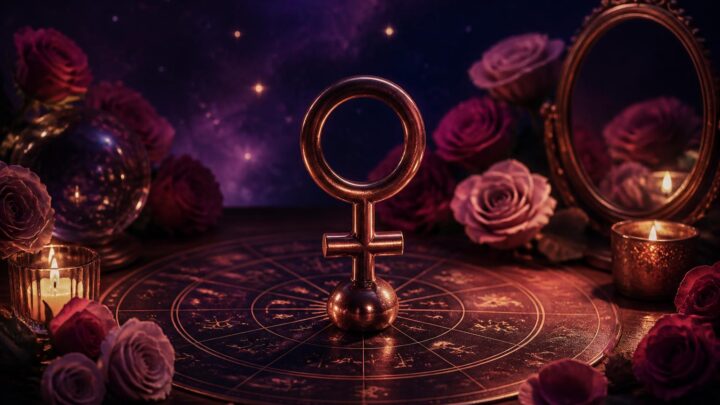
In astrology, Venus is often associated with love, attraction, beauty, and the joy of living. However, the meaning of this planet is not limited to whom a person loves or what their aesthetic tastes are like. Venus also reveals how we give and receive affection, how we respond to care, what we choose to invest in, and how we build a sense of harmony in everyday life.
If the Sun is often regarded as a symbol of identity, while the Moon is closely connected to emotional needs, then Venus shows how a person creates connection and what makes them feel valued. The position of Venus in a birth chart is not a fixed prediction about one’s love life. Rather, it is a symbolic language that helps each person reconsider their preferences, standards, gentle communication style, and habits that may affect their relationships.
What does Venus represent?
Venus is often associated with the ability to recognize value. That value may be a trustworthy relationship, a beautiful living space, a deep conversation, freedom in love, or a sense of material security. Therefore, when exploring Venus, we should not ask only, “What type of person am I attracted to?” Broader questions can be more useful: “When do I feel loved?”, “What makes me want to commit?”, “How do I usually show goodwill?” and “Am I compromising my values to maintain a relationship?”
Venus also reflects how we enjoy life. Some people find joy in art, fashion, and highly aesthetic spaces. Others feel happy when they are cared for, share a meal, work together, or maintain stable routines. No expression is entirely right or wrong. The difference lies in how each person defines comfort and uses it to nurture their inner life.
Reading Venus through the Zodiac signs
The Zodiac sign in which Venus is located is often used to describe a person’s style of loving and the way they express their fondness. For example, Venus in an action-oriented sign may cause feelings to be expressed directly, quickly, and energetically. People with this placement may enjoy initiative, new experiences, and the feeling that a relationship is always lively. By contrast, Venus in a stability-oriented sign often values loyalty, familiar rhythms, and signs of care shown through consistent actions.
For Venus in signs that emphasize communication, attraction may begin with an interesting conversation, the ability to share ideas, or the feeling of being heard. These people often need mental flexibility and can easily lose interest if a relationship lacks exchange. Conversely, Venus in signs rich in emotional depth may value trust, privacy, and the ability to move through difficult periods together. They do not necessarily express affection loudly, but they often care about the sincerity behind the words.
With this approach, a Venus placement should not be turned into a personality label. A person with Venus in a freedom-loving sign may still desire commitment, while someone with Venus in a stable sign may still need personal space. A birth chart is always a combination of many factors. The sign of Venus provides only one layer of information, and that layer needs to be considered alongside the house placement, aspects, and each person’s real-life context.
Venus in the houses: In which area does love appear?
If the Zodiac sign shows the style of expression, then the astrological house is commonly used to examine the area of life where Venus’s energy is most likely to receive attention. Venus in a house related to the self may make personal image, clothing style, and the way one creates a favorable impression important themes. This person may be sensitive to feedback from others and often want to present themselves in a way that is harmonious with who they are.
When Venus is located in a house related to finances and personal resources, matters of money, comfort, and a sense of abundance may be closely tied to self-esteem. This placement suggests a need to examine how a person spends, saves, and defines material security. In some cases, it also encourages the ability to recognize the value of one’s skills, effort, and the things one can create.
Venus in an area related to communication often emphasizes the power of gentle words, grace in exchanges, and the ability to connect through learning. In the area of family, this planet may make private space, memories, and a sense of belonging important sources of nourishment. In the area of work, Venus suggests that a collaborative or aesthetically pleasing environment, or relationships with the community, may significantly affect one’s level of satisfaction.
Placements related to love, creativity, and social life often make the need for self-expression more apparent. Meanwhile, Venus in areas oriented toward inner depth may manifest through reserve, compassion, or a tendency to seek connections that are not easily visible from the outside. The important thing is not to judge one placement as better than another. Each house simply offers a different context in which people learn to exchange value and find joy.
Venus aspects and common conflicts
In a birth chart, Venus can form aspects with other planets. According to astrological interpretations, these aspects describe harmony or tension between the need for love and other parts of the psyche. When Venus connects harmoniously with factors related to action, a person may find it easy to turn feelings into concrete actions. They know what they like and are often not afraid to show care.
Conversely, a tense aspect between Venus and factors related to responsibility may make a person cautious about expressing affection. They may fear rejection, doubt their own worth, or believe that love must always be proven through sacrifice. This pattern is not a lifelong sentence. It can become a reminder for that person to learn to distinguish between healthy responsibility and taking on too much of other people’s emotions.
When Venus is strongly connected to emotionally rich factors, empathy and imagination may stand out. However, sensitivity can also make a person idealize a partner or overlook signs of incompatibility. When Venus is linked to strongly transformative factors, love may be experienced deeply, intensely, and with great power to change. The lesson here is to maintain boundaries and avoid confusing attraction with safety, or intense emotion with long-term compatibility.
Venus and choices in love
One of the practical benefits of learning about Venus is that it helps us identify needs rather than merely judge behavior. A person who constantly seeks novelty may not simply be unserious; they may need a sense of discovery and exchange. Someone who rarely uses sweet words is not necessarily uncaring; they may express affection by keeping promises, taking care of small things, or being present when needed.
However, understanding an emotional style does not mean using it to justify hurtful behavior. Jealousy, control, punitive silence, or dismissing a partner’s needs do not become appropriate simply because they are attributed to a particular astrological placement. A birth chart can support self-observation, but responsibility for choices, communication, and respect for boundaries still belongs to each person.
In a relationship, Venus also encourages people to clearly express their own love language. Some people need words of affirmation, some value time spent together, while others feel affection through practical support. When two people do not recognize this difference, they can easily end up feeling, “I have done so much, but my partner does not understand.” A specific conversation about desires and boundaries is usually more helpful than waiting for the other person to guess.
Applying Venus’s symbolism to everyday life
To use information about Venus mindfully, one can begin by recording situations that make them feel valued. Observe what you are usually attracted to, what quickly causes you to lose interest, and which standards truly arise from your personal needs. This helps distinguish genuine desires from expectations shaped by family, society, or idealized images of love.
Venus can also be incorporated into very ordinary choices. Caring for one’s living space, making time for art, learning to savor a meal slowly, or developing self-care routines are all ways of nurturing a sense of harmony. When life revolves only around performance and obligations, the need for joy, beauty, and connection can easily be neglected. Paying attention to Venus, therefore, is not only about exploring love, but also about rediscovering the ability to enjoy life without feeling guilty.
Ultimately, Venus in a birth chart should be regarded as a symbolic mirror, not a formula that determines destiny. It raises questions that can help each person better understand how they love, how they choose, and how they protect their personal values. When self-awareness is combined with sincere communication, differences in affection can become opportunities for two people to understand each other more deeply rather than causes of distance.
Related articles

The Ascendant in the Birth Chart: First Impressions and How You Enter Life
In a personal birth chart, the Ascendant is often referred to as the first doorway into a person’s world. If the Sun is commonly associated with the ego, self-awareness, and long-term direction, while the Moon is more closely connected to emotional life, the Ascendant shows how we appear, respond, and begin things in specific circumstances.
Read more
The Moon in the Birth Chart: Emotional Needs and How We Find Our Way Back to a Sense of Safety
While many people know the Sun sign as a way of describing identity and personal direction, the Moon in a birth chart opens up a more private layer of experience. It is the emotional realm that often reveals itself only when we are alone, with loved ones, or in circumstances where we no longer have
Read more
Mercury in the Birth Chart: How Each Person Thinks, Communicates, and Learns
In a personal birth chart, Mercury is often mentioned when people want to understand how someone thinks and communicates. If the Sun evokes a sense of the self, while the Ascendant shows first impressions and how we enter the world, Mercury is more closely related to the process of receiving, organizing, and conveying information. It
Read more
The Rising Sign in a Birth Chart: The First Layer and How We Enter the World
When exploring a birth chart, many people usually begin with the Sun sign, since it is the familiar placement associated with the date of birth. After that, they may turn to the Moon sign to understand their emotional life. However, there is still another important element that often surprises people who are new to astrology:
Read more
Mars in the Birth Chart: Motivation, Desire, and How We Face Conflict
In a personal birth chart, Mars is often mentioned when discussing motivation, the instinct to act, and how a person protects what they value. If the Sun evokes a sense of self, while the Moon relates to emotional life, Mars shows how energy is directed into action. This may take the form of decisiveness, a
Read more
The Moon in the Birth Chart: The Emotional World and the Need for Security
When exploring a birth chart, many people first pay attention to the Sun sign because it is the familiar position used to name the 12 zodiac signs. However, if we want to observe the more private and tender aspects of personality, the Moon is also worth noting. In astrology, the Moon is often associated with
Read more