
Zodiac Signs · 14 November, 2026
The Moon in the Birth Chart: The Emotional World and the Need for Security
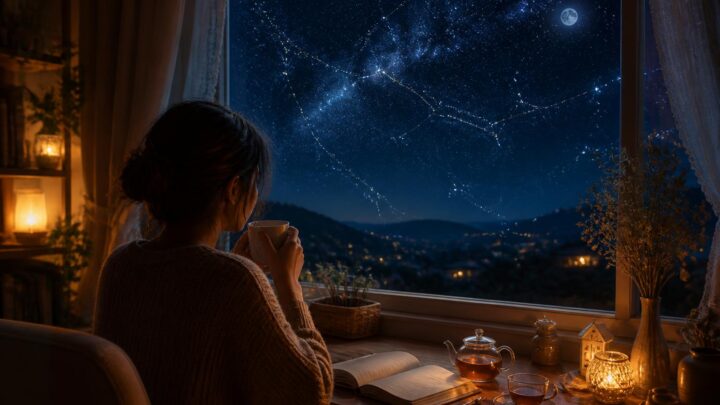
When exploring a birth chart, many people first pay attention to the Sun sign because it is the familiar position used to name the 12 zodiac signs. However, if we want to observe the more private and tender aspects of personality, the Moon is also worth noting. In astrology, the Moon is often associated with emotions, instinctive reactions, childhood memories, and the need for protection. This is not a scientific conclusion about people, but rather a symbolic language that may suggest ways for each person to observe their own inner world.
Unlike the image we consciously show to the outside world, the Moon’s position is often used to describe what happens when we are alone, tired, or no longer have enough energy to maintain our composure. Some people become quiet, some need to talk, while others immediately turn to familiar tasks to regain a sense of control. Such reactions can be difficult to recognize if we look only at the Sun sign. Therefore, learning about the Moon can make a birth chart feel more connected to everyday life.
What does the Moon represent in a birth chart?
In common astrological interpretations, the Moon is connected with emotional life and needs that often go unspoken. These may include the desire to be heard, the need for a quiet space, a longing for stability, or the need to express emotions freely. The Moon is also often associated with how a person receives care and gives care to others.
This position does not merely describe whether a person is happy or sad. It also suggests how they respond to change, handle feelings of insecurity, and regain balance after a difficult experience. When they feel safe, a person may display warmer, more flexible, and more open qualities. Conversely, when under pressure, they may return to highly instinctive habits, such as withdrawing, seeking familiar foods, calling a loved one, or trying to arrange everything in an orderly way.
Therefore, the Moon should not be understood as a fixed label. It is more like a lens through which to ask questions: What makes me feel protected? What do I usually do when I am anxious? What kind of space do I need to restore my energy? These questions have value even for people who do not view astrology as a tool for predicting the future.
The Moon sign and different ways of responding
To determine the Moon sign, readers generally need a relatively accurate date, time, and place of birth, because the Moon moves quickly through the signs. However, the result may vary depending on the astrological system and calculation tool used. Therefore, one should not hastily treat an interpretation found online as an absolute conclusion, especially when the time of birth falls near the boundary between signs.
A Moon in a Fire sign is often interpreted as indicating emotions that arrive quickly and clearly, along with a need to take action or express oneself. People with this mode of expression may become frustrated with indirectness, but they can also regain their spirits easily when encouraged. Under stress, they should pay attention to a tendency to react too quickly and allow themselves a pause before making decisions.
A Moon in an Earth sign often brings to mind a need for stability, consistency, and things that can be clearly experienced in practical life. A sense of security may come from a familiar routine, well-organized finances, or a reliable environment. The limitation is that people with this quality may sometimes have difficulty adapting to sudden changes or endure for too long before acknowledging that they are tired.
A Moon in an Air sign is often associated with a need for exchange, thought, and putting emotions into words. A clear conversation may help them become calmer, but overanalyzing can also push emotions further away. When facing a problem, they may need both information and the sincere presence of the person they are speaking with.
A Moon in a Water sign often suggests sensitivity, empathy, and a strong connection to memory. People with this quality may quickly sense the atmosphere in a room or another person’s attitude. On the other hand, they need to learn to distinguish their own emotions from those they absorb from their surroundings, avoiding a situation in which empathy causes them to forget their personal boundaries.
Why can the same Moon sign still manifest differently?
Two people with the same Moon sign do not necessarily have identical emotional lives. In a birth chart, the Moon is also considered alongside the astrological house, its aspects to other planets, and the chart’s overall context. In addition, family experiences, educational environments, culture, and life events deeply influence how a person expresses emotions.
For example, two people may share a need for stability, yet one may seek steadiness through work while the other builds a sense of security through family or a close-knit group of friends. One person may grow up in an environment that encourages sharing, while another is taught to keep their feelings to themselves. Therefore, interpreting the Moon sign should be viewed only as a starting point for self-awareness, not as a verdict on personality.
Aspects in a birth chart are also often used to explain why emotions can be contradictory. One part of a person wants closeness, while another part fears dependence. Someone may desire peace and stability but also become easily bored if life is too routine. Recognizing that different needs can coexist helps us judge ourselves less harshly. Rather than assuming that we lack consistency, we can see the different layers that are simultaneously seeking fulfillment.
Applying the Moon to self-care
The most practical value of learning about the Moon does not lie in predicting what will happen on a particular day. It lies in its ability to help each person identify things that are often overlooked when their schedule is too busy. Someone might begin by recording when they are most likely to lose patience, what circumstances make them feel safe, and how they usually recover after a difficult day.
If we realize that we need consistency, we can build a few simple habits, such as going to bed at a regular time, preparing familiar meals, or arranging a separate corner for rest. If emotions are released more effectively through communication, we can proactively seek out someone we trust to talk to instead of waiting until we become overwhelmed. If we often absorb other people’s moods, spending time alone, taking a walk, or keeping a journal may help us separate what we truly feel.
These practices do not need to have a mystical quality. They are methods of self-observation and mental self-care that can be adjusted to suit different circumstances. If used mindfully, astrology serves only as a system of questions. The answers still need to be tested against real-life experience, honesty with oneself, and sometimes a conversation with a professional when emotions become too heavy.
The Moon in relationships
Understanding our own emotional needs can also clarify misunderstandings in relationships. Some people express affection by taking care of very small things, while others need to hear direct words of affirmation. Some want to be together in silence, while others feel connected only when both people share a great deal. If we do not recognize these differences, we can easily mistake our own way of loving for the only way to love.
Instead of using the Moon sign to conclude that two people are compatible or incompatible, we can use it to ask questions about each person’s emotional rhythm. When upset, does the other person want to be alone or have someone by their side? Do they need advice, a hug, or simply to be heard? Specific questions are often more helpful than labeling someone as too sensitive, too cold, or too dependent.
Within families, this understanding also reminds us that each person has a different way of finding a sense of security. One child may need a stable routine, while another needs clear explanations before every change. Adults also continue to carry these needs, even if they have learned to hide them better. Respecting emotional needs does not mean meeting every demand; it means communicating with one another clearly and maintaining healthy boundaries.
Reading the Moon in a balanced way
The Moon in a birth chart can be a fascinating topic because it touches on hidden parts of ourselves that we sometimes do not fully understand. Even so, this position should not be used to justify hurtful behavior or deny personal responsibility. A person may be easily moved emotionally, but they are still responsible for learning how to communicate. Someone may need a great deal of personal space, but they still need to explain that clearly rather than disappearing without explanation.
Nor should we allow an astrological description to limit us. People change with age, experience, and important relationships. A way of responding that was once appropriate may no longer be useful in the present. As we mature, we can learn additional methods for regulating emotions, building boundaries, and seeking appropriate support.
Seen in this way, the Moon is not a prediction of fate but a symbol of an area of need that deserves to be heard. It reminds us that behind a decision, an outburst of anger, or an act of withdrawal, there is often a feeling seeking recognition. When we understand ourselves better, we have more opportunities to choose how to respond instead of simply repeating old habits.
Exploring the Moon sign can therefore begin with something very simple: observing ourselves with curiosity and without judgment. Treat astrological interpretations as reference material, then compare them with real life. The most important thing is not finding a perfect description, but recognizing what helps us feel more at peace, learning how to express our needs, and respecting the legitimate needs of those around us.
Related articles
The Rising Sign in a Birth Chart: The First Layer and How We Enter the World
When exploring a birth chart, many people usually begin with the Sun sign, since it is the familiar placement associated with the date of birth. After that, they may turn to the Moon sign to understand their emotional life. However, there is still another important element that often surprises people who are new to astrology:
Read more
Mars in the Birth Chart: Motivation, Desire, and How We Face Conflict
In a personal birth chart, Mars is often mentioned when discussing motivation, the instinct to act, and how a person protects what they value. If the Sun evokes a sense of self, while the Moon relates to emotional life, Mars shows how energy is directed into action. This may take the form of decisiveness, a
Read more
The Moon in the Birth Chart: Emotional Needs and How We Seek a Sense of Security
In a personal birth chart, the Moon often reveals a layer of personality that is less visible than our outward appearance. While many people are concerned with how they present themselves to society or the goals they want to achieve, the Moon directs attention to what happens within: feelings of belonging, instinctive reactions, the need
Read more
The Ascendant in the Birth Chart: First Impressions and How We Enter Life
In an encounter, a first impression often forms before two people have enough time to tell each other about their personalities, dreams, or the things they have been through. Some people enter a room looking quick and proactive; others create a calm, reserved feeling; still others make the atmosphere more open simply through their voice
Read more
What Is the Ascendant, and Why Does It Affect How You Appear to the World?
When exploring a personal birth chart, many people usually begin with the Sun sign, as this is the most familiar placement in Western astrology. However, to better understand how a person appears to the world, responds to circumstances, and makes an impression during first encounters, the Ascendant is also a particularly noteworthy point. The Ascendant,
Read more
The Moon in the Birth Chart: The Emotional World and the Need for Security
While the Sun is often associated with identity, willpower, and the way a person wants to shine, the Moon points to the more private part of each individual. It represents the emotions that arise before we have time to explain them, the habits through which we seek security, and the ways we react when hurt.
Read more