
Story Collections · 17 November, 2026
The Keeper of the Rainy Season and the Umbrella That Never Opened
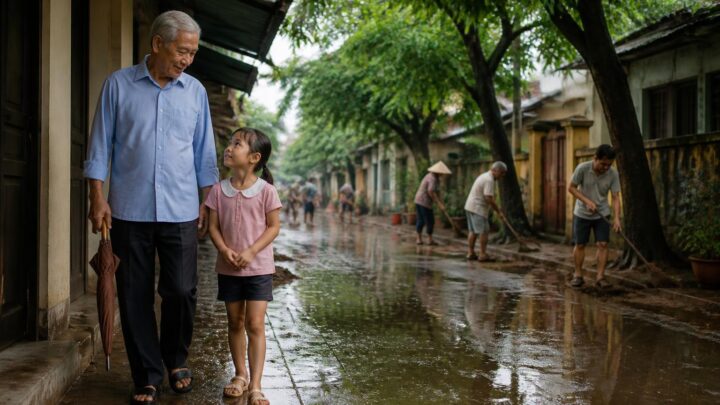
At the end of the street lined with old golden shower trees, where the low-roofed houses gradually gave way to a stretch of land along the river, there was a man who often appeared just as the sky was about to rain. He was in his early sixties, thin, with mostly gray hair, and always wore a neatly pressed light-blue shirt. He invariably carried a dark brown umbrella. The strange thing was that, for many years, no one had ever seen him open it.
The people on the street called him Uncle Man. No one knew whether that was his real name or simply an affectionate form of address passed from one person to another. He lived in a small house near the vacant lot, with two pots of bay laurel and a bougainvillea bush planted in front. Every morning, he swept the stretch of sidewalk in front of his door, even though leaves from the golden shower trees often fell again right after he had finished. In the afternoons, he walked along the street, stopping beneath each awning to check whether the drainpipes were blocked.
On clear days, he still carried the umbrella. On days of heavy rain, he merely kept it closed in his hand and calmly walked beneath the curtain of water. Some people said he was absentminded. Others thought he wanted to appear mysterious. The children on the street once secretly followed him, waiting for a moment when he was distracted so they could snatch the umbrella and run away with it. But he only smiled, waited for them to return, and gently said, “Every object has a time when it needs to remain in its proper place.”
The Umbrella for Days That Had Not Yet Come
One afternoon at the beginning of the rainy season, a little girl named An asked Uncle Man directly why he did not use the umbrella. An was only ten, with bright eyes and a curiosity that could not easily be satisfied by offhand answers. That day, dark clouds covered the sky above the street. An’s mother had called from inside the house that it was about to rain, but An still stood beneath the golden shower tree, watching Uncle Man slowly lock the iron gate.
“You have an umbrella, so why don’t you open it?” An asked.
He looked up at the sky, then at the umbrella in his hand. “Because I don’t need to open it today.”
“But you’re getting wet.”
“Getting a little wet doesn’t mean something bad has happened.”
An did not agree. To her, an umbrella was made to keep off the rain. If it was not opened when rain fell, an umbrella was no different from a useless object. She continued, “Then why do you carry it?”
Uncle Man did not answer immediately. He led An to the awning of a shop that had already closed, where they could see the entire street. The rain began to fall, sparse and gentle at first, then growing heavier on the road.
“There are things people carry not to use right away,” he said. “They remind us that we have prepared, and that alone is enough to make our hearts less frightened.”
An looked at the umbrella. The answer sounded reasonable, but it was not clear enough. She had seen her mother prepare medicine when someone in the house had a fever, and she had seen her father check the brakes before every long trip. Those actions all had specific purposes. But Uncle Man carried an umbrella without opening it, like someone who had brought an answer with him but refused to read it.
A Very Heavy Rain
A few weeks later, the heaviest rain in many years poured down on the city. From morning onward, the wind came in gusts, making the tree canopies sway wildly. By noon, water from the alleys had flowed onto the main road, forming murky streams. Adults hurried to close their doors and move their vehicles to higher ground. The children were kept inside. The electricity in the neighborhood flickered and then went out completely.
An’s house stood at the lowest point of the street. Water began to spill over the doorstep while her parents were still struggling to move their belongings higher. An’s mother slipped in the kitchen, and her ankle hurt so badly that she could not stand up on her own. An’s father had to help her into the front room, but the wooden door had been tightly pressed shut from the outside by the water.
An ran to the window and shouted for help. Through the white curtain of rain, she saw a figure moving toward her house. It was Uncle Man. The brown umbrella was still in his hand, closed. He did not try to fight the wind by opening it. He used the umbrella as a support, moving slowly but steadily through the rising water.
When he arrived, he did not try to push the door open. He went around to the back and called two more neighbors to use a wooden bar to lift the hinge side. After a few minutes, the door opened. Uncle Man and the others carried An’s mother onto the bed that had been raised on a higher platform, then instructed her father to switch off the circuit breaker and move perishable items upstairs.
While everyone was hurrying about, An saw him place the umbrella beside him. There was a long scratch on its handle, while the fabric remained dry. He had not used it to shield himself from the rain, but thanks to it, he had kept his balance while the swiftly flowing water rushed through the alley.
That night, the rain continued for a long time. The people on the street gradually made their way to Aunt Sau’s higher house at the end of the road to escape the water. Uncle Man went from house to house, checking whether anyone was still trapped. He remembered clearly which houses had elderly people, which had small children, and which were usually locked after dark. No one had assigned him the task, but he had quietly observed the neighborhood for many years.
What Is Prepared Is More Than Just an Object
The next morning, the water receded slowly. The street was covered with mud, branches, and objects carried in from elsewhere. Everyone began cleaning up. An sat on the doorstep, watching Uncle Man wipe the umbrella with an old cloth.
“You saved my mother yesterday,” An said.
He shook his head. “Everyone saved one another. I just arrived a little earlier.”
“The umbrella helped you too.”
“Yes. But not because it opened.”
An fell silent. Uncle Man leaned the umbrella against the wall, then took a quarter-folded piece of paper from his shirt pocket. On it were small lines of writing listing the households on the street, the number of people in each house, the locations of the circuit breakers, and places where people could take temporary shelter during flooding. He had kept these records himself for many years. The umbrella was simply what everyone could see; the real preparation lay in his memory, his concern, and his habit of paying attention to things that were often overlooked.
“People often think preparation means correctly guessing what will happen,” he said. “In fact, preparation means knowing what you can do when it happens. No one can stop the rain, but we can clear the drainage paths, know whose house needs help, keep a flashlight, and avoid running after panic.”
Those words stayed in An’s mind for a long time. She realized that before, she had looked only at the result. An umbrella had to be opened, shoes had to be worn, and a box had to be used to hold things. She had never thought that an object could provide a sense of steadiness even while it remained folded. In the same way, a promise does not necessarily have to be repeated again and again; sometimes the steadfast presence of the person who keeps it is enough to reassure others.
The Lesson After the Rain
After the flood, the people on the street worked together to repair the drains and clean up the stretch of land along the river. An’s father built another wooden shelf on the wall to hold important items when the water rose. An’s mother, after her ankle healed, began preparing a small bag containing medicine, a lamp, and several bottles of water. An herself started a separate notebook, recording the phone numbers of the neighbors and the things to do when heavy rain came.
No one became a person who was constantly afraid. On the contrary, everyone lived more calmly. They no longer laughed when they saw Uncle Man checking the drains before every rainy season. A few people began going with him. The children who had once teased the brown umbrella now often stood beside him, asking what needed to be done that day.
An, for her part, still asked Uncle Man many times when he would really open the umbrella. He would usually only smile. Until one year-end morning, when rain suddenly began to fall as everyone was preparing to go to work, he handed the umbrella to An.
“Try using it today,” he said.
An opened the umbrella. The fabric had faded, but the frame was still sturdy. The two of them walked together beneath the rain. After they had gone some distance, An asked, “So in the end, is this umbrella meant to keep off the rain or to remind people to prepare?”
Uncle Man watched the drops of water slide down the edge of the umbrella. “It depends on the moment. On some days, it keeps off the rain. On some days, it helps us stand firm. And on some days, it simply reminds us that, even when the weather is bad, we can still choose how to move forward.”
The rain fell steadily over the street. The rows of golden shower trees trembled gently, and water flowed from the awnings in clear streams. An held the umbrella higher so it would cover them both. For the first time, she understood that peace did not mean a life without rain or storms. Peace meant knowing that she had prepared what was necessary, knowing that there were still people nearby on whom she could rely, and, most importantly, not letting fear make decisions for her.
After that, Uncle Man continued to carry the brown umbrella all around the street. Some days he opened it, and some days he did not. But from then on, no one asked why. Everyone understood that the umbrella was more than just an object. It was a quiet symbol of initiative, care, and the belief that small things done consistently today could help a community remain standing in the face of tomorrow’s rain.
In life, we too often carry “umbrellas” like that. They may be a skill we have practiced, an emergency fund, a relationship we have nurtured, or simply the habit of pausing to think before reacting. Not every kind of preparation immediately produces a visible result. But when adversity appears, we often realize that we are not entirely empty-handed. The things quietly accumulated have become a point of support, helping us avoid being swept away by the current of confusion and panic.
And sometimes, what matters most is not finding a way to avoid every shower, but learning how to walk through the rain with a mind steady enough to endure it.
Related articles
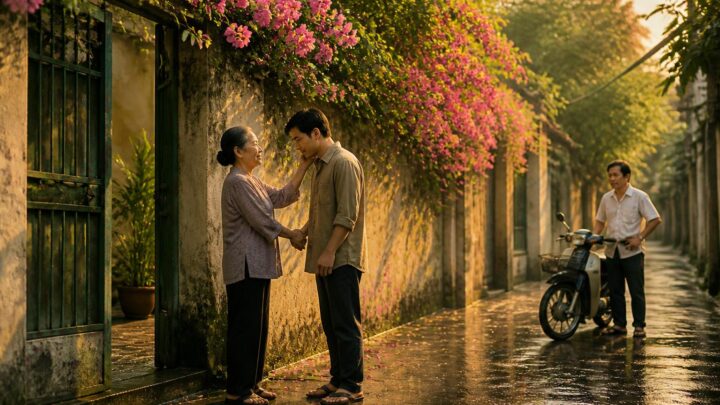
The Bougainvillea Wall at the End of the Alley
At the end of a small alley stood a wall covered in bougainvillea. Every sunny season, delicate clusters of flowers burst into bloom against the backdrop of peeling limewash, making the stretch of road that few people had ever noticed suddenly seem brighter. The people in the alley had grown so accustomed to the wall
Read more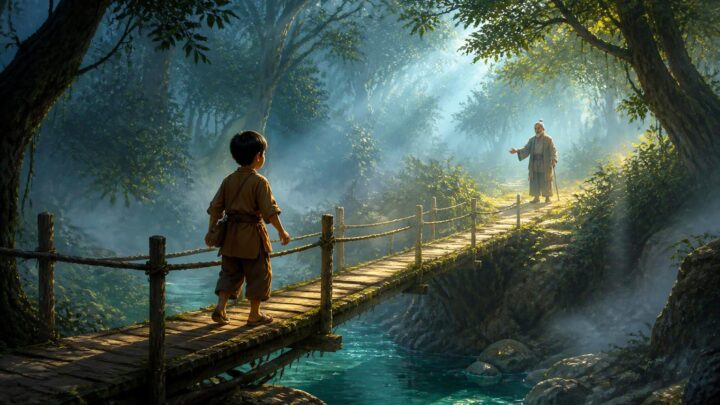
The Wooden Bridge and the Guide for Those Who Are Lost
To the north of a small village stood a forest shrouded in mist all year round. The villagers called it the Misty Forest, not because the trees were too dense, but because anyone who entered easily forgot where they were going. Some people went in to gather firewood and returned a few hours later, but
Read more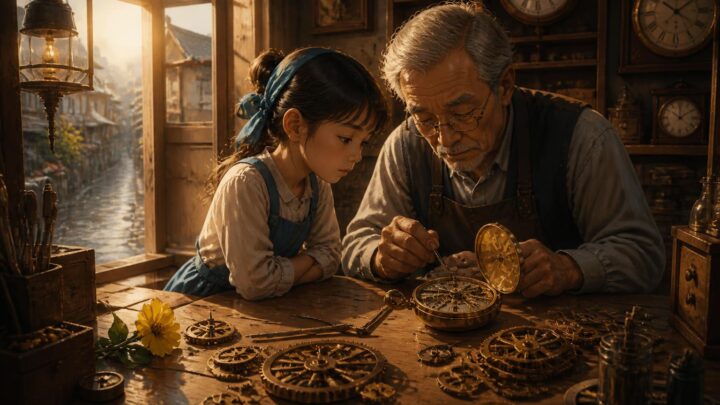
The Clock That Did Not Tell Time
At the end of a narrow street, where old rooftops leaned to reflect their shadows in a ditch thick with duckweed, there was a small shop called Moc Clock Shop. The wooden sign had faded with age, and the letters on it were almost impossible to read, but everyone in town still knew the place.
Read more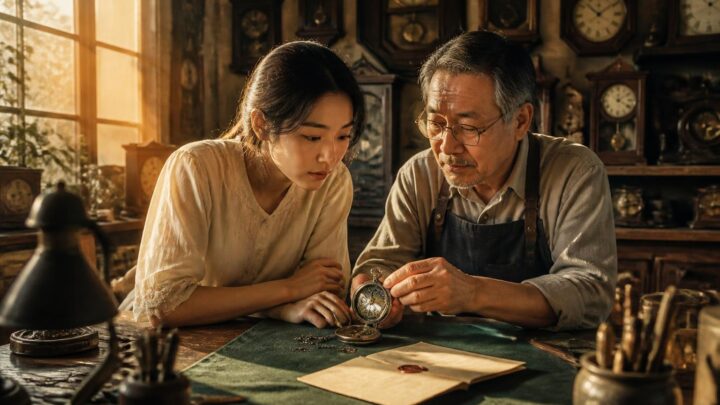
The Clock That Would Not Run and the Forgotten Letter
At the end of a small street stood a watch-repair shop that had been there so long that many people no longer remembered when it had opened. The wooden sign above the porch had faded, two letters in the shop’s name worn away by sun and rain, while the glass door was always covered with
Read more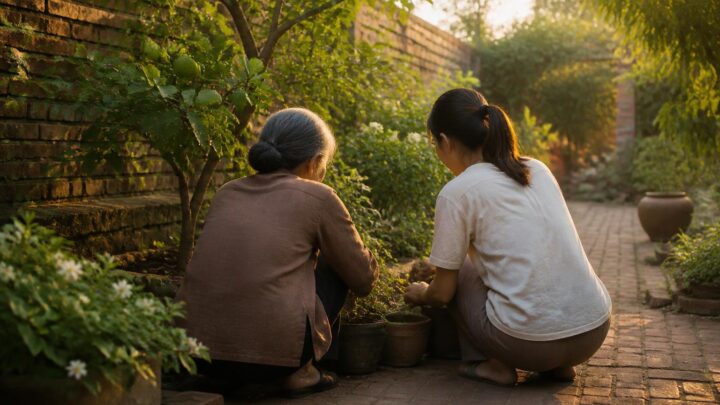
The Garden Behind the Old Wall
When An returned, the small alley was still as narrow as she remembered. Low awnings followed one another along both sides of the street, providing just enough shade from the afternoon sun. The smell of freshly cooked rice drifted from some kitchen, mingling with the scent of damp earth after the rain, and she felt
Read more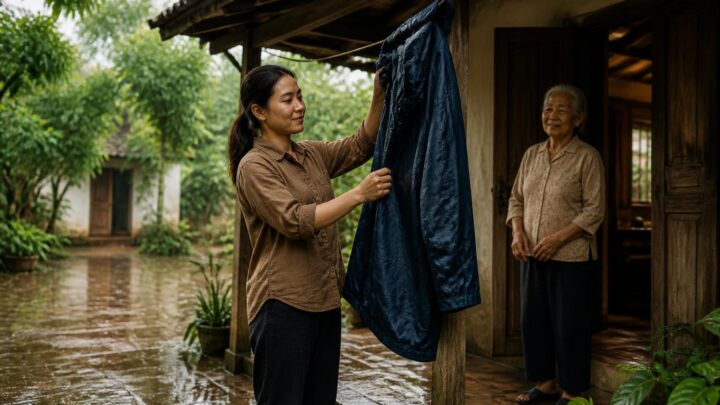
The Scent of Rain on an Old Coat
That afternoon, An reached the entrance to the alley just as the rain began to fall. The drops were small, sparse, and cold, clinging to the car window in long streaks that blurred the road ahead. The low hibiscus hedge was still there, as was the star-fruit tree leaning toward the neighbor’s house and the
Read more