
Children's Stories · 17 November, 2026
The Little Bean and the Garden That Knew How to Wait
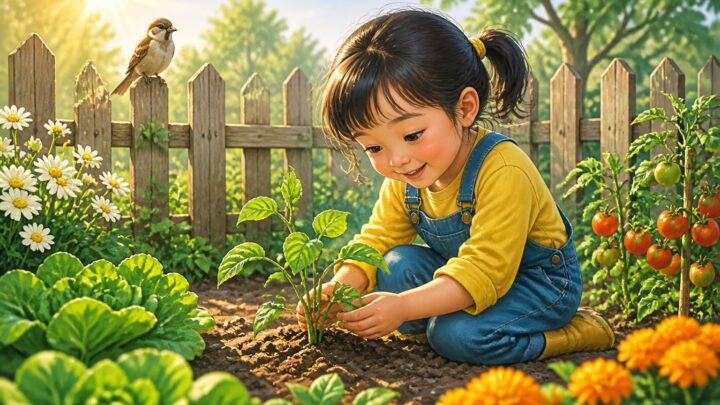
At the edge of a small village, there was a garden beside a crystal-clear stream. The garden was not very large, but all year round it was filled with gentle colors: lush green vegetable beds, clusters of yellow flowers swaying in the breeze, and plump red tomatoes nestled beneath the leaves. The garden’s caretaker was little Na, a girl with rosy cheeks and hands that were always smudged with dirt.
Na loved planting things. Every morning, before going to school, she carried her little watering can out to the garden. She watered each vegetable bed, pulled weeds around the flower roots, and then bent down to chat with the newly sprouted seedlings. Na believed that plants could hear words of love, even though they could not answer with words.
One day, Grandma gave Na a small brown cloth bag. Inside was a little bean, round and shiny.
“This is a special bean,” she said. “Plant it in the corner of the garden, where it gets the morning sun. But remember, a plant does not grow from water alone. It also needs good soil, light, care, and time.”
Na held the bean in the palm of her hand. It was so small that a strong gust of wind could have blown it away. Yet Grandma’s words made Na believe that something wonderful was sleeping inside the bean.
She chose a patch of soil beside the wooden fence, dug a very small hole, and placed the bean inside. Na covered it with a layer of soft soil, gave it just enough water, and stuck a bamboo stick beside it as a marker.
“Sleep well, little bean. You have to grow tomorrow!” Na whispered.
The First Day Without a Sprout
The next morning, Na ran straight out to the garden. She crouched beside the bamboo stick and gently brushed away the layer of soil with her finger. But there was no sprout. The ground was still as smooth as before.
Na felt a little sad, but she remembered Grandma’s words, so she only watered the spot and went to school. When she came home that afternoon, she ran out to look again. The bean still had not moved.
The second day was the same. The third day was no different. By the fourth day, Na was beginning to grow impatient.
“Maybe the bean doesn’t want to grow,” she said.
Sparrow, who was perched on the fence, heard her and tilted his head.
“Have you watered the bean?”
“Yes.”
“Have you kept it somewhere sunny?”
“Yes.”
“Then what else do you want to do?”
Na rested her chin in her hands and thought. She wanted the bean to grow immediately. She wanted to see its stem reaching upward, white flowers blooming, and long bean pods dangling from the branches. But she did not know how to make time pass faster.
“I want to pull the bean up a little to see whether it has grown roots,” Na replied.
Sparrow quickly flapped his wings.
“You mustn’t! If you pull it up, the bean will be hurt and may not be able to grow anymore.”
Na reluctantly pulled her hand back. She sat beside the patch of soil for a little while longer before going inside.
The Garden Speaks of Simple Things
On the fifth day, Na decided to ask her friends in the garden what she should do to make the bean grow faster.
The Tomato Plant said:
“Give the bean plenty of sunlight. But don’t make it stand in the sun too long if the weather is hot.”
The Chrysanthemum Bush swayed its petals.
“Keep the soil soft and free of weeds. The weeds might compete with the bean for nutrients.”
And Earthworm, who lived deep beneath the soil, spoke slowly:
“Every living thing has its own rhythm of growth. Some plants wake up very early, while others need to sleep longer. Don’t be sad because you cannot yet see what is happening beneath the ground.”
Na did not fully understand Earthworm’s words, but she remembered every one of them. From that day on, she stopped digging up the soil to look. Each morning, she checked the soil’s moisture, picked up dry leaves, and watered gently. When it rained, she placed a small banana leaf beside the bean so that the strong flow of water would not wash the soil away.
Na also began observing the garden more carefully. She noticed that the flowers did not bloom all at once. Some opened their petals as soon as the sun rose, while others did not begin to unfold until the afternoon. The first tomatoes did not turn red right away, either. They were green, then pale yellow, and only afterward did they become bright red.
“Perhaps the bean is preparing too,” Na told herself.
An Unexpected Challenge
One afternoon, the wind blowing in from the fields was stronger than usual. Dark clouds covered the sky, the leaves rustled, and the wooden fence creaked. Na hurried out to the garden with Grandma.
“We have to tie up the young plants again,” Grandma said. “Otherwise, the wind will make them lean over.”
Na used soft string to tie the tomato plants to bamboo stakes. She covered the low vegetable beds with an old net, then looked toward the bean. The rainwater was beginning to carve little grooves in the soil there.
Worried, Na used a scoop to pile the soil back up around the place where the bean was planted. She did not dig deeply; she simply added a thin layer of soil and placed a few pebbles around the edge so the water would not carry the soil away.
All night, the rain poured noisily. Na lay in bed thinking about the bean. She hoped it was still resting safely in the earth, not cold and not swept away.
The next morning, the rain had stopped. The garden was soaked, with sparkling drops of water on the leaves. A few branches had broken, but the soil around the bean was still intact.
Na bent down to check. Right in the middle of the soft soil, a pale green curved hook was poking upward.
“Grandma! The bean has woken up!” Na cried.
Grandma smiled.
“It didn’t start growing only today. It had already been growing quietly for many days. You can only see it now.”
The Tiny Seedling
Na sat beside the seedling for a very long time. It was so small that it was only a little taller than one finger, with a soft, slightly curved stem. It looked more fragile than Na had imagined. She did not dare touch it; she only put up a little row of sticks beside it so the family cat would not accidentally step on it.
Each day, the bean seedling grew a little taller. Some days, it rose only by the thickness of a thread. On cloudy days, it seemed not to change at all. Na was no longer as disappointed as before. She understood that growing was not always something easy to see.
Na began keeping a little notebook. She drew a picture of the bean seedling on each page and wrote the dates in handwriting that was still slightly slanted. She also drew Sparrow, Earthworm, and the clouds that had brought rain to the garden.
One morning, while Na was watering the plants, her neighbor Tùng came running over. He looked at the bean seedling and laughed.
“It’s so tiny, and you take care of it every day? If it were me, I’d pull it up to make it taller.”
Na shook her head.
“You can’t pull a plant taller. We can only give it the conditions it needs to grow on its own.”
Tùng was surprised.
“What conditions?”
Na showed Tùng the soft soil, the watering can, the sunlight, and the clear space around the seedling.
“Give it water without flooding it, give it sunlight without letting it dry out, and pull the weeds so it doesn’t have to compete with them. As for growing, the plant has to do that itself.”
Tùng sat down beside Na. The boy quietly watched the bean seedling, for the first time not rushing to touch it.
The Day the Garden Had Visitors
A few weeks later, the bean seedling had become a young plant with green, oval-shaped leaves. Its stem was still slender, so Na placed a bamboo stake beside it for support. Whenever the plant grew a little farther, Na used a strip of cloth to tie it very loosely. She remembered Grandma’s warning not to tie it tightly, because the stem needed room to grow.
Just then, Na’s school organized a visit to the garden. The children walked in groups and listened to their teacher talk about how to care for plants. When they saw Na’s bean plant, many of them exclaimed in admiration because tiny white flower buds had appeared on its branches.
The teacher asked:
“Na, what did you do to help the bean plant grow so strong and healthy?”
Na thought for a moment and answered:
“I watered it, pulled the weeds, and covered it when it rained heavily. But I think the plant grew because it had time. I only helped keep it from facing too many difficulties.”
The teacher nodded. Tùng, standing beside her, also said:
“At first I thought we had to do a lot to make everything happen quickly. Then I learned that some things only require consistency and patience.”
The whole garden rustled in the wind as if agreeing. The chrysanthemum flowers swayed, the tomato plant leaned toward the sunlight, and Sparrow, perched on the fence, sang a clear note.
The First Bean Pods
Before long, the white flowers fell away. Small green bean pods grew from where they had been. They gradually lengthened, curved slightly, and swung from the branches whenever the wind blew.
Na was so happy that she wanted to pick the first pod right away. But Grandma said:
“Wait until the pod is big enough. If you pick it too early, the beans inside will not have had time to develop.”
Na learned to wait again. She observed the color, the firmness of the pod’s skin, and asked Grandma before picking it. One morning, Grandma nodded. Na used a small pair of scissors to cut the first bean pod from the branch. She held it in both hands, feeling both joy and gratitude in her heart.
The bean pod was not a gift that had fallen from the sky. It was the result of a tiny seed, soil, water, sunlight, rainy and windy days, and quiet, steadfast care. Na suddenly understood that every beautiful thing had some unseen work behind it.
Grandma cooked the bean pod with a few carrots for lunch. Na invited Tùng, her teacher, and the people who had helped care for the garden. Everyone found the simple vegetable dish tastier than usual, perhaps because they all knew that the food had come through a long journey.
Na kept a few of the healthiest beans and placed them in the little cloth bag. She did not want to plant them all immediately. She would wait until the beginning of the right season, then share the beans with Tùng and her friends.
Before putting away the bag of seeds, Na wrote in her notebook: “Not everything that has not appeared yet is nonexistent. Some things are growing in silence. Care for them, trust them, and give them time.”
From then on, the corner of the garden beside the fence became a place the children often visited. Each child planted a seed, gave a garden bed a name, and learned to observe instead of becoming impatient. The garden grew greener and greener, while the children gradually became more patient, too.
And if one day you happen to pass through the small village beside the stream, you may see seedlings reaching upward beneath the sunlight. They do not all grow at the same pace, but each seedling is trying in its own way. As long as it receives love and care at the right time, even a little bean can become the beginning of an entire garden.
Related articles

The Boy Who Kept His Promises and His Umbrella
At the end of a small street stood a house with a blue-tiled roof, where a boy named Tí lived with his mother and grandmother. Tí was an energetic boy who loved running around and was always curious about everything happening around him. He could sit for hours watching ants carry food, listening to the
Read more
Little Ti and the Wind Chime That Kept Promises
The Chime by the Front Porch At the end of a small road stood a house with a blue-tiled roof, where a little boy named Ti lived with his grandmother. The house was not large, but a mature star fruit tree in front of the porch cast shade all year round. Whenever the wind blew
Read more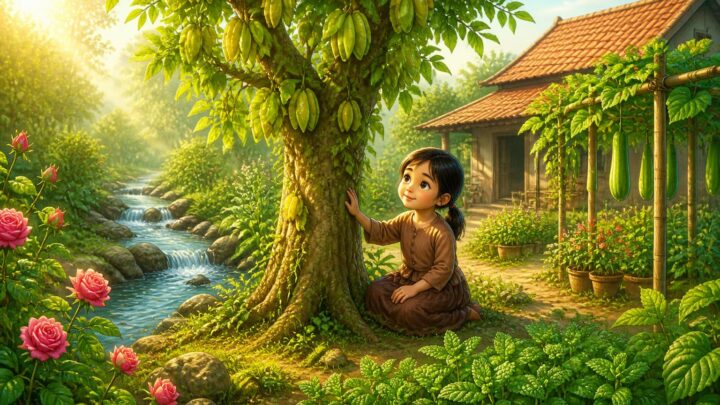
Little May and the Garden That Knew How to Listen
At the end of a winding road stood a house with a green-tiled roof, where a little girl named May lived with her grandmother. The house was not large, but it was always warm and welcoming. In front was a flower-filled garden, behind it was a gourd trellis that provided shade, and along the side
Read more
The Singing Garden and Na’s Seed
The Seed Beneath the Dry Leaf Once upon a time, in a small village nestled on the side of a green hill, there lived a little girl named Na. Na lived with her mother in a house with a brown wooden fence and a large garden behind it. The garden did not have the tallest
Read more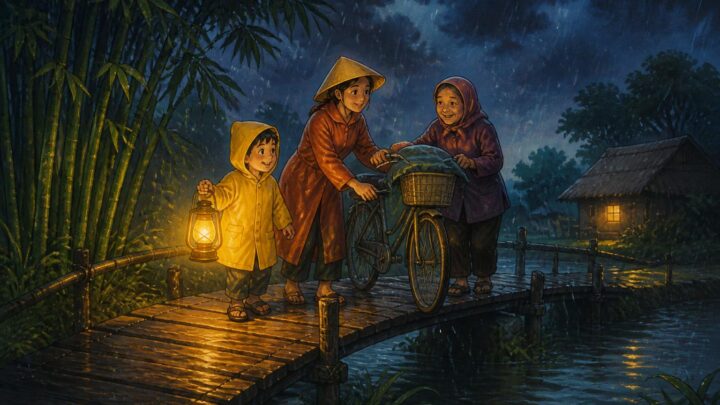
The Little Lamp That Guided the Way Through the Rainy Night
The Little Lamp That Guided the Way Through the Rainy Night At the end of a winding dirt road stood a house with a green-tiled roof, where little An lived with his mother and grandmother. Behind the house was a small garden filled with all kinds of plants: four-o’clock flowers, a gourd trellis, an old
Read more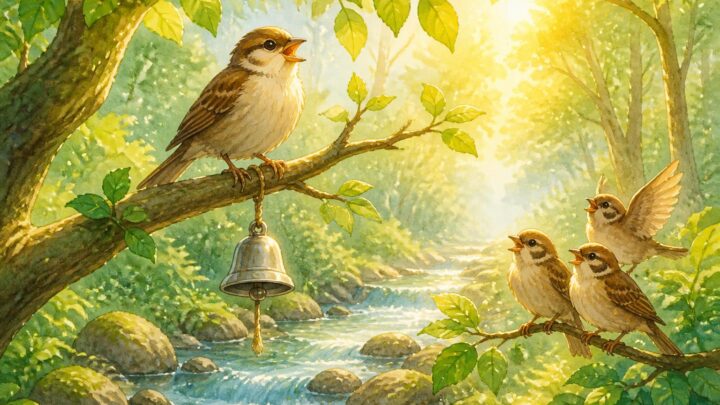
Little Sparrow and the Bell of Dawn
Little Sparrow and the Bell of Dawn At the edge of a green forest, where the blades of grass often swayed in the early morning breeze, a little sparrow lived with his mother in a nest tucked beneath the eaves of an old banyan tree. Little Sparrow had bright black eyes, soft brown wings, and
Read more