
Story Collections · 14 November, 2026
The Garden Behind the Old Wall
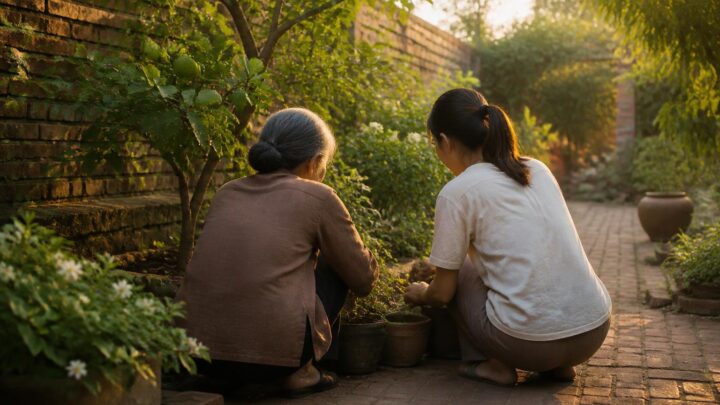
When An returned, the small alley was still as narrow as she remembered. Low awnings followed one another along both sides of the street, providing just enough shade from the afternoon sun. The smell of freshly cooked rice drifted from some kitchen, mingling with the scent of damp earth after the rain, and she felt as though she had just passed through an invisible door back into years she had never truly left behind.
Her grandmother’s house stood at the end of the alley, behind a faded brick wall. Patches of peeling plaster still marked the wall, along with a few small cracks winding like the branches of dry trees. Her grandmother had died at the beginning of summer, and An’s mother had decided to sell the house after it was cleared out. An asked to come a day early, not to keep anything valuable, but simply because she wanted to close this place herself.
For many years, An and her mother had barely mentioned her grandmother. The silence had begun with an argument so old that An no longer clearly remembered what had caused it. She only remembered that, on that day, her mother had slammed the door and pulled An away from the house while a voice called after them and was left behind. After that, her mother never returned. An grew up with a few old photographs, gifts sent through acquaintances, and one repeated sentence: “It’s in the past. Don’t bring it up.”
But things buried beneath silence do not usually disappear. They simply lie still, waiting for a scent, a sound, or some afternoon to awaken them.
The Wall That Divided More Than Two Houses
An pushed open the iron gate. The hinges let out a dry creak. The front yard was covered with tropical almond leaves, their deep red forms piled together like pieces of undelivered mail. She set her bag down on the porch, opened the door, and walked through the rooms.
Almost everything was still in place. The wooden cabinet had a drawer that was stuck. The blue enamel tea set sat on the shelf. The wall clock had stopped at some hour long ago. In her grandmother’s bedroom, the blankets and pillows were neatly folded, and on the bedside table lay a wooden comb with a few strands of gray hair caught in it.
An did not cry. She simply stood by the window for a long time, looking at the wall behind the house. When she was little, she had thought that wall marked the boundary of the entire world. On the other side was a vacant lot overgrown with weeds and vines. Her grandmother would not let An go there because she was afraid the girl would be hurt by rusty nails or shards of glass.
“There’s nothing there,” her grandmother used to say.
That afternoon, while looking for a broom in the corner of the kitchen, An found a small key hanging behind an old calendar. The key had tarnished, and a piece of blue cloth was tied to it. She tried it in all the locks in the house, but it opened none of them. Then, as she stepped outside behind the kitchen, An saw a low wooden door completely covered by vines at the foot of the wall.
The door led to the other side.
It took An nearly half an hour to clear away the vines and push the fallen bricks aside. When she inserted the key into the lock, the door opened with a long groan. She expected to see a vacant lot choked with grass, but behind the wall was a small garden.
Things Sown with Patience
The garden was not large, only about the size of the house’s courtyard. A path paved with pieces of old brick ran between the beds. There were herbs, several bougainvillea bushes, a low guava tree, and pots lined up against the wall. Many of the plants had grown wild, but it was clear they had once been carefully tended. Bamboo stakes supporting the branches were tied with strips of cloth. Some earthen pots with drainage holes had been raised on bricks to keep them from flooding.
In one corner of the garden stood a moss-covered stone bench. On it was a faded yellow plastic watering can. An crouched down and touched its side. A familiar feeling passed through her palm. When she was little, she had used this watering can to water the plants with her grandmother every morning.
Back then, An did not understand why her grandmother spent so much time on plants that brought in no money. She could have bought vegetables at the market, or a bouquet more beautiful than the tiny flowers in the garden. But every morning, her grandmother rose early, rolled up her trousers, went through the low door, and slowly tended each plant.
A small wooden sign was attached to the guava tree. Her grandmother’s handwriting had faded, but An could still read it: “This tree belongs to Mai.” Mai was her mother’s name.
Next to the guava tree was a jasmine bush, with a sign that read: “This plant belongs to An.”
An stood frozen. She looked around and saw many other signs. A pot of basil bore the name of the neighbor at the entrance to the alley. A small chrysanthemum patch bore the name of a relative. There were also names An did not recognize. Each plant seemed to have been planted for a particular person.
Under the stone bench, she found a tin box. Its lid was not locked. Inside were packets of seeds wrapped in newspaper, along with many neatly folded scraps of paper. An opened the first one.
“Today the guava tree put out new leaves. Mai didn’t come home, but surely my girl will like eating sweet fruit.”
The second read:
“An’s jasmine was attacked by bugs. I got rid of them all. When she was little, the girl always asked when the flowers would bloom. Perhaps there will be many this year.”
An sat down on the brick floor. These were not letters meant to be sent. They were more like conversations her grandmother had stored away for the times when no one was beside her.
What Mother Had Never Told Her
That night, An called her mother. She did not immediately mention the garden. The two of them listened in silence to the sound of traffic at either end of the phone. At last, An asked:
“Did you know there was a garden behind the house?”
There was a longer silence than usual on the other end.
“I knew,” her mother replied. “Your grandmother planted it before you were born.”
“Why did you never tell me about it?”
“Because I didn’t want you to think everything was simple.”
An looked out the window. The shadow of the guava tree fell across the wall, shifting in the wind.
Her mother told her that many years earlier, her grandparents had bought the land behind the house to make a garden. After her grandfather died, her grandmother kept the land. An’s mother was still young then and wanted to leave the alley and begin a life of her own. The two had argued over things that seemed very small: selling the land, work, and her grandmother’s refusal ever to leave the old house.
But behind those arguments lay fear on both sides. Her grandmother was afraid her daughter would go too far away and never return. Her mother was afraid that if she stayed, she would spend her whole life living among other people’s unfinished things. Neither of them could express her real fear, so they spoke through anger.
“Did Grandma ever want to see you?” An asked.
“Every day.”
“Then why didn’t she call?”
Her mother sighed. “Perhaps she thought I needed time. And I thought she no longer needed me. The two of us just kept waiting for each other.”
An closed her eyes. She realized that her own memory began only on the day her mother pulled her out of the house. Before that, she did not know how many days her grandmother had stood behind the door, nor how many times her mother had picked up the phone and then put it down.
A Garden Needs More Than Water
The next morning, An began clearing the garden. She pulled weeds, cut away dry branches, and gathered dead leaves into a corner. The work was harder than she had expected. Some roots clung deep beneath the soil and took a long time to dig out with a small shovel. She worked until noon, her back aching and both hands covered in dirt.
How many years had her grandmother done this alone? The question kept returning to An’s mind.
Nearly midday, an elderly woman stood by the gate looking in. An recognized her as Ms. Hao, who had once sold sticky rice at the entrance to the alley. Ms. Hao brought a bag of vegetables and told An that, for many years, her grandmother had often given the neighbors vegetables from the garden. Whenever someone was ill, she picked perilla leaves for them. When a family held a wedding, she cut jasmine flowers to give as a gift. She also gave small pots to people who had no land on which to grow plants.
“Your grandmother didn’t just grow plants,” Ms. Hao said. “She grew reasons for people to visit one another’s homes.”
An looked at the old paths. She understood why the garden had so many names. Each plant represented a relationship, and each relationship had a story she had never heard.
That afternoon, her mother arrived. She stood for a long time in front of the low door. An did not urge her on. She handed her mother the yellow watering can, then quietly returned to the jasmine bed.
Her mother stepped into the garden. At first, she simply walked around like a visitor. Then she sat beside the guava tree and used her hand to brush the dry soil from its base. A crack ran across the wooden sign on the trunk.
“She kept my name,” her mother said.
“Yes.”
“I used to think she only wanted to keep everything the way it was. But perhaps she simply didn’t know how to say that she missed me.”
An did not answer. She handed her mother a cloth. The two of them sat beneath the guava tree, pulling weeds around the roots that had risen above the ground.
No grand apologies were spoken. Neither tried to explain the past all over again. What had happened was still there, unable to become something that had never occurred. But between them appeared a kind of silence different from the silence of earlier years. It was no longer silence used for avoidance, but a silence wide enough for one person to sit down beside the other.
What Remains After a Farewell
At the end of the week, An’s mother decided not to sell the house yet. It was not because the house had suddenly become more valuable, but because they both realized they needed more time to sort through things that could not be put into cardboard boxes.
An asked to keep the garden. She hired someone to repair the low door, replace a few bricks, and build a small shelter in one corner of the yard. She did not turn the place into a perfect garden. Some plants still grew crookedly, a few old pots still had chipped rims, and the wall still bore its cracks. But she left them as they were, because those traces made the garden look like a place that had lived through many seasons rather than a picture arranged for display.
An returned once a month. Her mother came more often. The two of them tended the plants together, occasionally arguing about how the branches should be pruned or how much water was enough. Those arguments no longer made the door slam shut. After each disagreement, they still sat beneath the guava tree.
The following season, the jasmine bloomed abundantly. Its fragrance slipped over the old wall, drifting into the kitchen and throughout the small alley. An picked some of the flowers and placed them in her grandmother’s blue enamel bowl. She did not know whether someone who had gone far away could receive that scent. But she knew the garden had done what years of words could not: it had brought the two of them close again, slowly and without force.
Some walls are built to protect a home. Other walls become places where distance between loved ones is stored. To step over them, sometimes no perfectly honest conversation is needed. All it takes is for one person to open the small door, for the other to step inside, and for both of them to patiently tend the patch of earth that had been neglected.
Because good things do not always begin with a promise. Often, they begin with bending down to pull a weed, watering a plant, and staying just a little longer.
Related articles
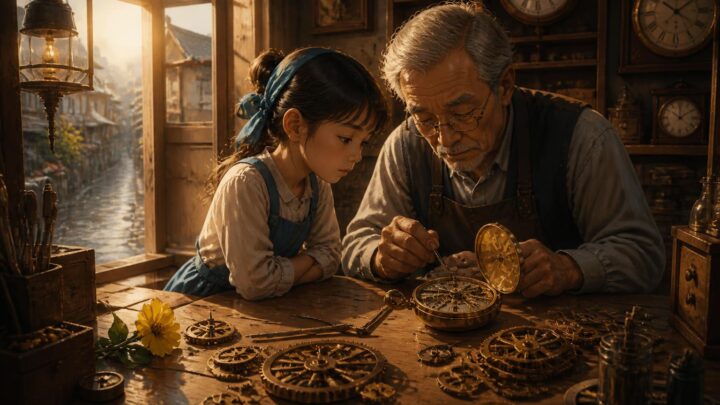
The Clock That Did Not Tell Time
At the end of a narrow street, where old rooftops leaned to reflect their shadows in a ditch thick with duckweed, there was a small shop called Moc Clock Shop. The wooden sign had faded with age, and the letters on it were almost impossible to read, but everyone in town still knew the place.
Read more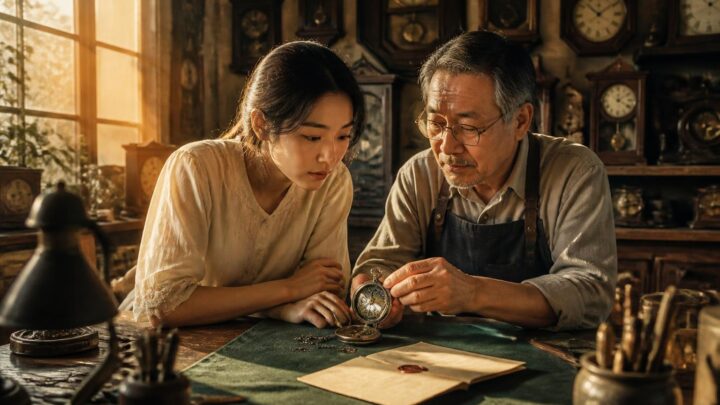
The Clock That Would Not Run and the Forgotten Letter
At the end of a small street stood a watch-repair shop that had been there so long that many people no longer remembered when it had opened. The wooden sign above the porch had faded, two letters in the shop’s name worn away by sun and rain, while the glass door was always covered with
Read more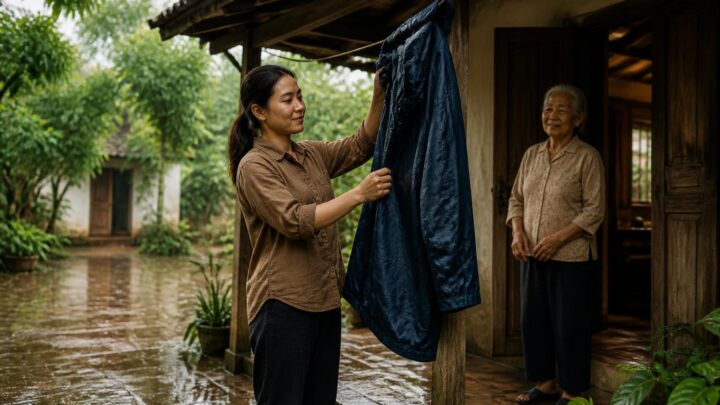
The Scent of Rain on an Old Coat
That afternoon, An reached the entrance to the alley just as the rain began to fall. The drops were small, sparse, and cold, clinging to the car window in long streaks that blurred the road ahead. The low hibiscus hedge was still there, as was the star-fruit tree leaning toward the neighbor’s house and the
Read more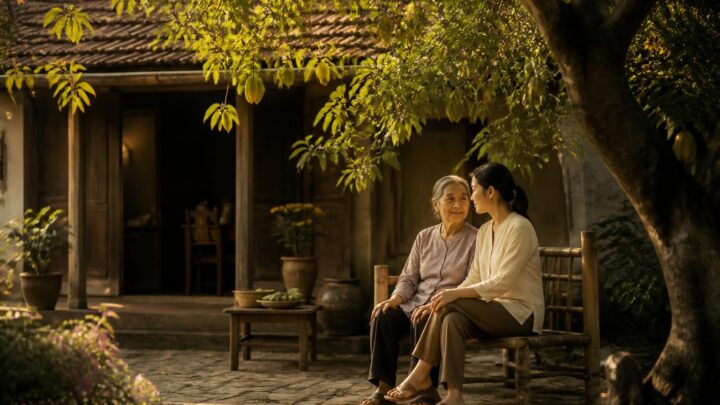
The Empty Chair Beside the Porch
The Chair No One Had the Heart to Put Away At the end of a small alley stood a tile-roofed house whose tiles had faded with age. In front of the house, beneath an old starfruit tree, there was always a low wooden chair. The chair was not beautiful, nor was there anything particularly special
Read more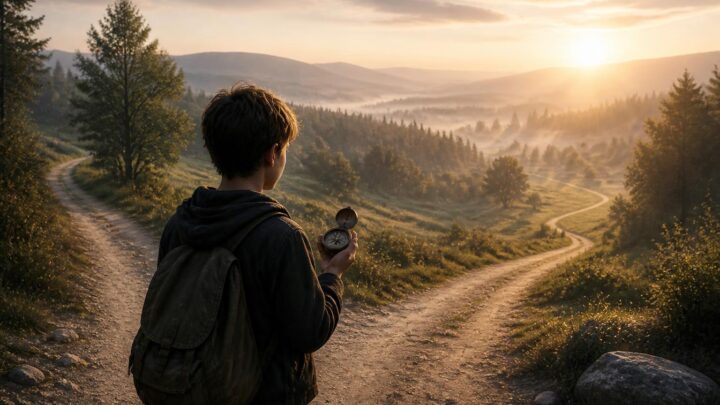
The Compass of the Lost Traveler
At the edge of a town nestled among the hills, there was a small shop that specialized in making and repairing compasses. The shop had no large sign; it only hung a tarnished bronze bell beneath the front porch. Whenever someone stepped inside, the bell rang out clearly, as though the room had just remembered
Read more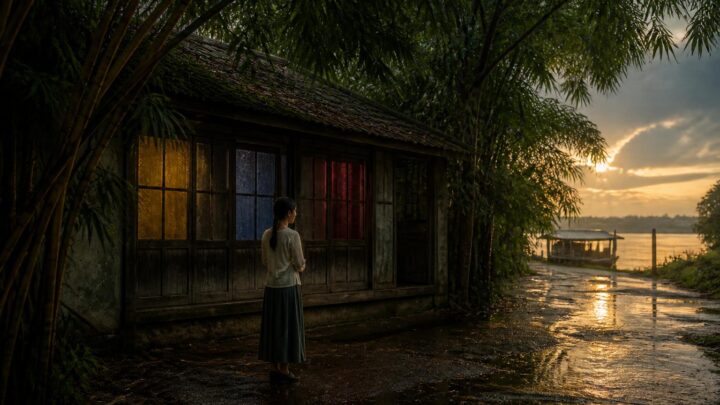
The House with Three Windows and the Clockmaker
At the end of the slope leading down to the river wharf, there was a clock repair shop so small that passersby often overlooked it. The wooden sign hanging above the door had faded with time; only the two words “Peace of Mind” could still be made out clearly. The shop’s owner was Mr. Lam,
Read more