
Story Collections · 12 November, 2026
The House with Three Windows and the Clockmaker

At the end of the slope leading down to the river wharf, there was a clock repair shop so small that passersby often overlooked it. The wooden sign hanging above the door had faded with time; only the two words “Peace of Mind” could still be made out clearly. The shop’s owner was Mr. Lam, a man in his sixties with a slightly hunched back and eyes that were always calm, as though nothing in the world had ever been urgent enough to make him hurry.
People from the area came to him not only to have their clocks repaired. Some brought their late father’s pocket watch, some brought a wall clock that had stopped on the exact day their daughter left home, and some simply wanted to hear the familiar ticking again after years of silence had filled their rooms. Mr. Lam accepted them all, but he never promised to finish the repairs right away.
“A broken clock is easy to fix,” he often said. “Harder is knowing where it has stopped inside the person who brings it in.”
The younger people in town thought it was merely the roundabout way an old craftsman spoke. But no one denied that after taking their clock back from him, they often sat in front of the shop longer than they had intended. Sometimes they told him stories unrelated to clocks, then finally got up and left with relieved expressions.
The Rain and the Strange Path
One afternoon at the beginning of the rainy season, a young woman named Mai came to the shop. She carried a wooden mantel clock with a cracked glass face. The minute hand had stopped at twelve, while the hour hand had stopped at six. It was the only thing her mother had left her after she passed away.
Mai placed the clock on the table and said that she needed it repaired before her mother’s death anniversary. Her voice was calm, but her fingers kept tightening around the strap of her bag.
Mr. Lam opened the back of the clock, examined the mechanism, and shook his head.
“It can be repaired. But you’ll have to leave it here for a few days.”
“I need to pick it up before the weekend.”
“If you only need it to run, I can do it in an afternoon. If you want it to keep running, we have to find out why it stopped.”
Mai did not understand, but she agreed anyway. On her way home, the sky suddenly opened up. She had intended to take a shortcut across the vacant lot behind the river wharf, where a dirt path led straight home. But the rain made the path slippery, so she turned onto a narrow lane beside a bamboo grove.
After walking for a while, Mai realized she had never seen this path before. The bamboo on either side closed overhead into a dark green arch, while the ground beneath her feet was covered with wet leaves. At the end of the path stood a low wooden house with a moss-covered tiled roof. The strange thing was that the house had no front door. On the wall facing her were only three rectangular windows, each with a different-colored pane of glass: pale yellow, blue, and deep red.
Mai stood in the rain, unsure whether to continue or turn back. Just then, the yellow glass window swung open. There was no one inside, only a warm light like the glow of a lamp in an old kitchen. From within came the sounds of dishes and chopsticks, along with someone’s very soft laughter.
Mai stepped closer. Through the glass, she saw her mother sitting at a table, her hair still black, her hands resting before a bowl of steaming soup. The image was so clear that Mai could make out the scarf her mother used to wear on winter days.
“Mom,” she called.
The person inside did not turn around. Her mother simply served rice, then looked toward the empty chair across from her.
Mai reached out and touched the glass. The pain she had tried to hide for months suddenly surged up inside her. She remembered the times her mother had called but she had not answered because she was busy. She remembered the last evening, when her mother had wanted her to come home for dinner, and she had replied that she would come home on the weekend. But that weekend never came.
She stood before the window for a very long time. At last, the light inside gradually faded, and the sounds of dishes and chopsticks disappeared as well. Only her own face was reflected on the glass.
Three Windows, Three Things That Could Not Be Reclaimed
The blue window opened as the rain began to let up. Inside was a long, sunlit road. Mai saw herself at eighteen, pulling an old suitcase as she left the town. Back then, she had told her closest friend that she would return after finishing school. Her friend had stood by the bus station gate, smiling and reminding her not to forget her promise.
Mai had not returned. In the first few years, she was busy studying. After that, she was busy finding work, moving, and building a life of her own. Whenever she remembered her promise, she told herself that there was still plenty of time. By the time she heard that her friend had moved somewhere else, she no longer knew where to look.
In the blue window, she saw the young woman she had been turn back toward her friend, as though taking just a few more steps would allow her to say she was sorry. But the distance between them kept growing. The road in the window continued into one road after another, while Mai could only stand outside and watch time pass.
The final window was deep red. It did not show a memory, but a room identical to Mr. Lam’s clock repair shop. On the table was her mother’s wooden clock. An older woman sat beside it, waiting patiently. That woman was Mai many years in the future, her hair grayer and her hands shakier, but her eyes still fixed on the closed door.
Behind the door came a knock. Once. Then twice. The woman stood up and reached for the doorknob, but stopped. She returned to the table and continued waiting, as though she believed that if she waited long enough, the people who had left would naturally come back.
Mai stepped backward. She understood that the red window was not about the past. It was about a future created by the habit of putting things off. If she continued to remain silent today, continuing to keep her apologies inside, that room could become the place where she lived for years without realizing it.
Suddenly, all three windows closed at once. The house sank into darkness. Mai heard ticking coming from somewhere, steady and clear. She turned and ran back along the bamboo path. When she reached the river wharf, the rain had stopped completely, and Mr. Lam’s clock shop was still lit.
The Clock Begins to Run
Mr. Lam was sitting at the table, with Mai’s mother’s wooden clock in front of him. He did not ask where she had been. He simply pushed the clock gently toward her.
The clock hands were moving. The minute hand was no longer at twelve, and the hour hand was no longer stuck at six. Its ticking was quiet but firm, like the footsteps of someone who had found her direction again.
“Have you finished repairing it?” Mai asked.
“I only replaced a spring and cleaned out the dust.”
“But earlier you said you had to find out why it stopped.”
Mr. Lam smiled.
“Because someone no longer wanted to hear the sound of time.”
Mai lowered her head and looked at the clock. She noticed a small piece of paper behind the wooden face, the handwriting on it blurred by the years. It contained only one sentence: “Come home for dinner when you have time.” It was neither a reproach nor a complaint. The simplicity of the words was precisely what made Mai burst into tears.
That night, she called her cousin, who lived in another province, to ask about her mother’s final years. The next morning, she searched for the old phone number of her former friend. The number was no longer in service, but Mai still sent a message to a social media account she happened to find. She did not know whether the other person would read it. For the first time in many years, she did not wait for a certain outcome before beginning to do what needed to be done.
Before her mother’s death anniversary, the clock was placed on a low cabinet in the living room. Mai did not try to make the house exactly as it had been in the past. She simply cooked a modest meal, placed an extra bowl on the table, and sat down to listen to the ticking. Some sorrows cannot disappear, but when we face them directly, they no longer control the way we live.
What Time Truly Teaches People
A few months later, Mai returned to Mr. Lam’s shop. She brought an old clock belonging to a deceased neighbor and asked him to take a look at it. Mr. Lam was still sitting at the familiar table, his glasses resting low on the bridge of his nose.
Mai told him about her old friend. The friend had received her message and replied nearly a week later. They could not become as close as before, but they had spoken to each other. Mai also told him that she had begun visiting her cousin regularly and cooking some of the dishes her mother used to make. Those things did not change the past, but they made the present feel less empty.
After listening, Mr. Lam merely nodded.
“So the clock is not running only in your house.”
Mai smiled. She understood what he meant. A clock can measure the hours, but it cannot measure the value of a phone call, a meal, or an apology. Time does not always heal everything. Often, it merely quietly points out what needs to be healed, while the first step still belongs to us.
People often regret the years that have passed and worry about the days yet to come. If the house with three windows truly exists, perhaps it is not a place where people can find a way back into the past or secretly glimpse the future. It is simply a reminder that every choice in the present is opening another door. One door leads back to memory, one leads toward possibilities not yet formed, and another opens only when we are brave enough to face what we have been avoiding.
That afternoon, as Mai left the shop, Mr. Lam bent over to repair another clock. Outside, sunlight fell across the puddles left behind by the rain. No one could see the wooden house beside the bamboo grove anymore. But somewhere in the steady ticking of the clocks, perhaps a very quiet reminder was still ringing out: do not wait until time stops to realize that you have forgotten how to live alongside the people who matter most.
Related articles

The Tea House That Does Not Sell What Has Been Lost
At the bottom of the slope leading down to the river wharf, there was a small tea house. It had no sign, displayed no goods all the way to the walkway, and had no calls inviting customers in. People in the area called it bà Mộc’s tea house, though no one knew when she had
Read more
The Bell Ringer and the Things Left Unsaid
At the end of the stone slope in the town of An Mộc stood a small church, its tiled roof faded with age and its bell tower covered in moss. The people in the area no longer remembered exactly when the church had been built. They only knew that for many years, whenever the sun
Read more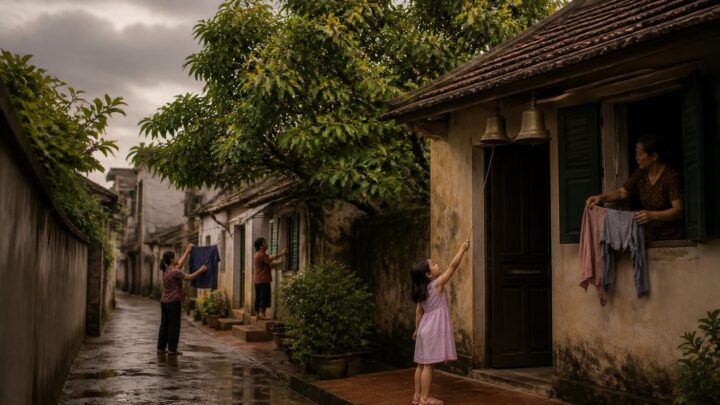
The Keeper of the Last Bell at the End of the Alley
The Bell on Cloudy Afternoons At the end of the alley stood a low, tiled-roof house, with two pots of orange jasmine and an old starfruit tree in front. Every afternoon, when the sunlight began to withdraw from the mottled walls, Mr. Lam would step onto the veranda, pull the cord hanging beneath the roof,
Read more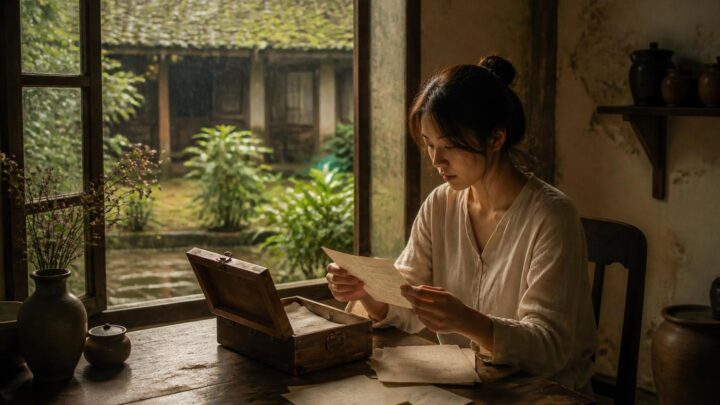
The Box That Held the Scent of Rain
The day An returned to the village, the rain had just stopped. The dirt road leading into the small hamlet still glistened with water, and the two rows of grass along the roadside drooped as if they had just gone through a long conversation with the wind. The vehicle carrying her stopped in front of
Read more
The Chair Beneath the Veranda and the One Who Came Back
There are houses that do not keep people with doors, nor hold anyone back with reproaches. They simply stand there in silence, weathering sun and rain alongside a small yard, an old doorstep, and an object that seems meaningless. When people grow weary amid the vastness of life, it is precisely those ordinary things that
Read more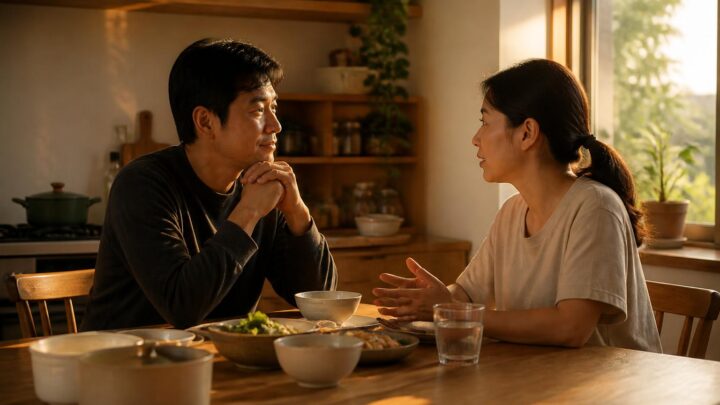
A Belated Apology Can Still Open the Door to Tomorrow
In many relationships, what drives people apart is not necessarily some major event. Sometimes it is simply a harsh word spoken in the heat of the moment, a broken promise treated lightly, a prolonged silence, or the habit of always assuming that the other person will understand without an explanation. Such things may pass unnoticed
Read more