
Story Collections · 11 November, 2026
The Keeper of the Last Bell at the End of the Alley
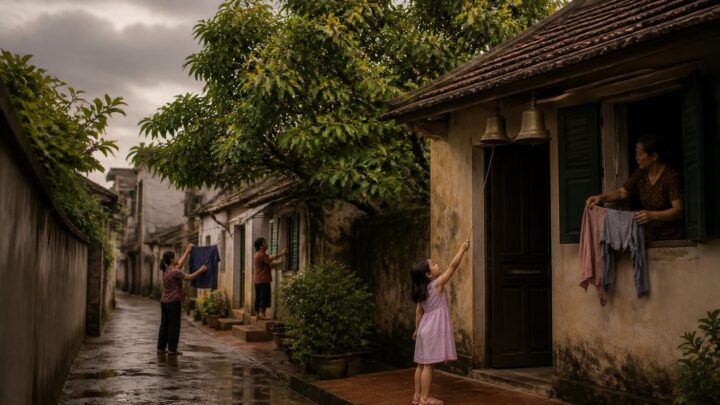
The Bell on Cloudy Afternoons
At the end of the alley stood a low, tiled-roof house, with two pots of orange jasmine and an old starfruit tree in front. Every afternoon, when the sunlight began to withdraw from the mottled walls, Mr. Lam would step onto the veranda, pull the cord hanging beneath the roof, and ring a clear-toned bell.
The bell was not loud. Its sound carried only far enough to reach the neighboring houses, mingling with the motorbikes returning home, the clatter of bowls and chopsticks in the kitchen, and the children calling to one another in the alley. Even so, the people in the neighborhood had grown accustomed to it. Whenever they heard the bell, those hanging out laundry would look up at the sky. The vendors at the alley entrance would pull the tarps over their stalls. Mothers would hurriedly call their children home, while older people would quietly close their windows.
Mr. Lam rang the bell only on days when there were signs of heavy rain. He never said what he relied on to recognize them. Some days, the sky would still be clear and the wind would have shifted only slightly, yet the bell would ring. On other days, dark clouds would cover the sky, but he would not ring the bell, because he said the rain that time would pass very quickly.
At first, some people in the neighborhood thought he was making a fuss over nothing. These days, everyone had a phone to check the weather forecast. One young man even laughed and said that bell sounded like a habit from a distant time, when people had no other way to know that rain was about to fall.
Mr. Lam heard him but only smiled. He did not argue. Every afternoon, he wiped the bell with a soft piece of cloth, checked the cord, and sat by the veranda drinking tea. If the wind changed, he would stand up and carry out his familiar task.
A Small Task No One Had Assigned
Mr. Lam had once worked as a clock repairer. The house at the end of the alley had formerly been a small shop, filled with toolboxes, magnifying glasses, gears, and countless old clocks. After his wife died, he closed the shop, but he kept the wooden table where she used to sit and write in the ledger.
The people in the neighborhood knew very little about his life. They only knew that he had a daughter who worked far away and came to visit several times a year. He did not complain or dwell on his troubles. If someone brought him a broken clock, he repaired it if he could. When they asked how much they owed him, he would usually wave his hand and say they could settle it next time.
The bell beneath the veranda had been there since the alley was still a small dirt path. In the past, it had been used to signal when the river was rising or when someone needed to call others during the night. Later, the roads changed, houses sprang up, and the bell was almost forgotten. Only Mr. Lam still remembered it.
One afternoon at the beginning of the rainy season, a little girl named An from the house opposite came over and asked:
“Grandpa, why do you keep ringing the bell whenever it’s about to rain?”
Mr. Lam poured her a glass of water, then looked up at the starfruit tree’s canopy.
“Because some people are too busy to remember to look at the sky,” he replied. “Someone may be airing a blanket, someone may have left a window open, and someone may still be on their way home from work. If one ring of the bell helps them remember, then it is worth ringing.”
An thought for a moment and then asked:
“What if everyone has a phone?”
“A phone tells you that it is about to rain. But the bell reminds you of the people around you.”
That answer stayed in the little girl’s mind longer than Mr. Lam had imagined.
The Day the Bell Fell Silent
One morning, Mr. Lam came down with a fever. His daughter called from the city and urged him to go to the hospital for a checkup, but he only said that he was tired because of the change in weather. That afternoon, he did not step onto the veranda. The cord beneath the tiled roof lay still, and the bell made no sound.
That day, the sky changed color very quickly. Clouds came in from the fields, low and heavy. The wind blew clothes from the lines. Mrs. Sau, who was at the end of the alley, hurried home, but the blanket had already been blown onto the ground. Mr. Tung’s family had forgotten to close the living-room window, and rain blew in, soaking several cardboard boxes used to hold merchandise. A potted plant in front of Ms. Mai the teacher’s house was smashed by the wind.
The rain lasted only about an hour, but afterward the whole alley was in disarray. As they cleaned up, people mentioned Mr. Lam. No one blamed him, because they knew he was ill. Even so, there was a trace of embarrassment in every remark, as though everyone had just realized that they had grown accustomed to receiving someone’s care without ever thinking to ask whether the person giving it needed help.
The next afternoon, An brought some rice porridge to Mr. Lam’s house. She found him lying in bed, his face pale but his mind alert. On the table beside the window, the small bell sat next to an old toolbox.
“Please rest, Grandpa. Today I’ll ring the bell for you,” An said.
Mr. Lam smiled and told her that she had to listen to the wind before ringing it. But this time, An did not do it alone. Mrs. Sau brought over some fruit. Mr. Tung helped repair the awning in front of the veranda. Ms. Mai the teacher brought medicine and called to check on him. Everyone in the alley, each doing one thing, quietly took care of him in the same way he had quietly reminded them to look after the small things in life.
By afternoon, the clouds arrived. An stood beneath the veranda, both hands gripping the cord. She rang the bell once. Its clear sound spread through the end of the alley. Mrs. Sau ran to gather the blankets. Mr. Tung closed the windows. The children playing ball were called home.
Lying in his room, Mr. Lam heard the bell and gently closed his eyes. It was the first time he had not been the person standing beside the cord.
What Remained After the Rain
After his illness, Mr. Lam gradually regained his strength, but he no longer came out to the veranda as regularly as before. He entrusted the ringing of the bell to An on the days she was home. When An was busy with school, others took turns. Some days it was Mr. Tung, some days Ms. Mai the teacher, and sometimes Mrs. Sau, although she usually rang it too early and made everyone laugh.
From then on, the bell no longer belonged solely to Mr. Lam. It became part of life in the whole alley. People began paying more attention to one another. They knew which houses had elderly people living alone, which had babies who had only recently recovered from illness, and which regularly left goods airing in the yard. When someone was away, the neighbors reminded one another to close a door or bring in a potted plant.
The bell did not ring every day. On clear days, it remained still beneath the tiled roof. But its silence was no longer considered empty. People understood that the bell had meaning only because, before it rang, someone had patiently listened and then thought of others.
One late-year evening, An asked Mr. Lam whether the bell would ever be taken down. He was wiping the bell’s surface and stopped when he heard her.
“Things can grow old,” he said, “but what people place in them does not necessarily have to grow old with them.”
An did not fully understand his words, but she remembered them for a long time. Many years later, when she had grown up and left the alley, whenever she heard a rain-warning bell somewhere, she would think of the low veranda, the old starfruit tree, and the man who had once done a task no one had assigned to him.
How Small Things Can Spread
Mr. Lam’s story is not the story of someone who accomplished anything extraordinary. He did not change an entire neighborhood with grand words. He simply recognized a very ordinary need among the people living around him and persistently responded to it with a small action.
In life, much kindness begins that way. Someone remembers a meal for the person coming home late. Someone holds an elevator door for a person in a hurry. Someone makes a phone call to ask how another person is doing instead of waiting for them to speak first. Such actions are rarely acknowledged immediately, but they create a sense of safety and closeness among people who can easily grow distant amid the busy rhythm of life.
More valuable still, kindness can be learned by seeing it. When An rang the bell in Mr. Lam’s place, she was not merely continuing a habit. She was taking in a way of living: observing more carefully, thinking more broadly, and doing something useful even when no one asked her to.
People do not always need a long piece of advice. Sometimes, they only need a timely signal to remember that they are not living alone. A rain-warning bell may help someone put away a blanket, close a door, or call a loved one home. But on a deeper level, it reminds the entire alley that care does not have to be loud in order to matter.
Perhaps that is why the bell at the end of the alley was kept. It did not predict every rainstorm accurately, nor could it stop strong winds or difficult days. It did only one simple thing: ring when necessary. And from that small sound, people learned how to listen, how to pay attention, and how to give without waiting for thanks.
At some point, Mr. Lam would no longer sit beneath the veranda. The starfruit tree might grow older, the house might change owners, and the alley might change. But if there were still people who remembered to ring the bell when rain was approaching, then what he had once done would not yet be over. It had passed from one pair of hands to another, from a private habit into shared care.
And who knows, on a low-clouded afternoon, amid the traffic and the hurried sounds of life, a clear bell might ring again. Then someone would run to gather the clothes. Someone would close the windows. Someone might suddenly remember to call their mother. No one would need to know where the bell’s sound had begun; it would be enough that it continued to remind everyone that there were always things around them worth caring about.
Related articles
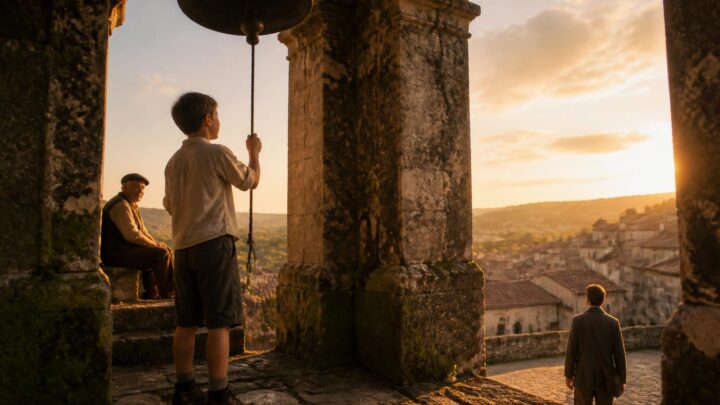
The Bell Ringer and the Things Left Unsaid
At the end of the stone slope in the town of An Mộc stood a small church, its tiled roof faded with age and its bell tower covered in moss. The people in the area no longer remembered exactly when the church had been built. They only knew that for many years, whenever the sun
Read more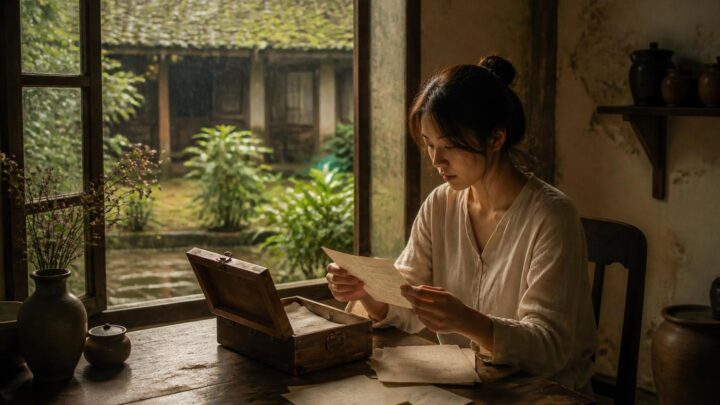
The Box That Held the Scent of Rain
The day An returned to the village, the rain had just stopped. The dirt road leading into the small hamlet still glistened with water, and the two rows of grass along the roadside drooped as if they had just gone through a long conversation with the wind. The vehicle carrying her stopped in front of
Read more
The Chair Beneath the Veranda and the One Who Came Back
There are houses that do not keep people with doors, nor hold anyone back with reproaches. They simply stand there in silence, weathering sun and rain alongside a small yard, an old doorstep, and an object that seems meaningless. When people grow weary amid the vastness of life, it is precisely those ordinary things that
Read more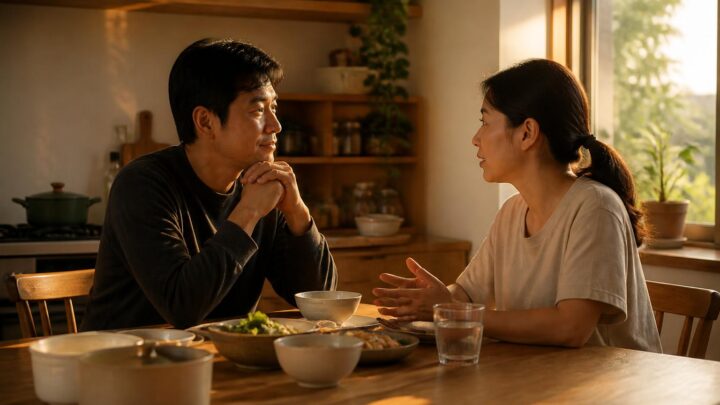
A Belated Apology Can Still Open the Door to Tomorrow
In many relationships, what drives people apart is not necessarily some major event. Sometimes it is simply a harsh word spoken in the heat of the moment, a broken promise treated lightly, a prolonged silence, or the habit of always assuming that the other person will understand without an explanation. Such things may pass unnoticed
Read more
The Keeper of the Last Bell in the Village
At the end of the dirt road leading out to the fields, there was a small village nestled beside a river that flowed slowly all year round. The villagers called the place Van Khe Village, not because it had any particularly special stream, but because whenever evening fell, the bell from the ancient communal house
Read more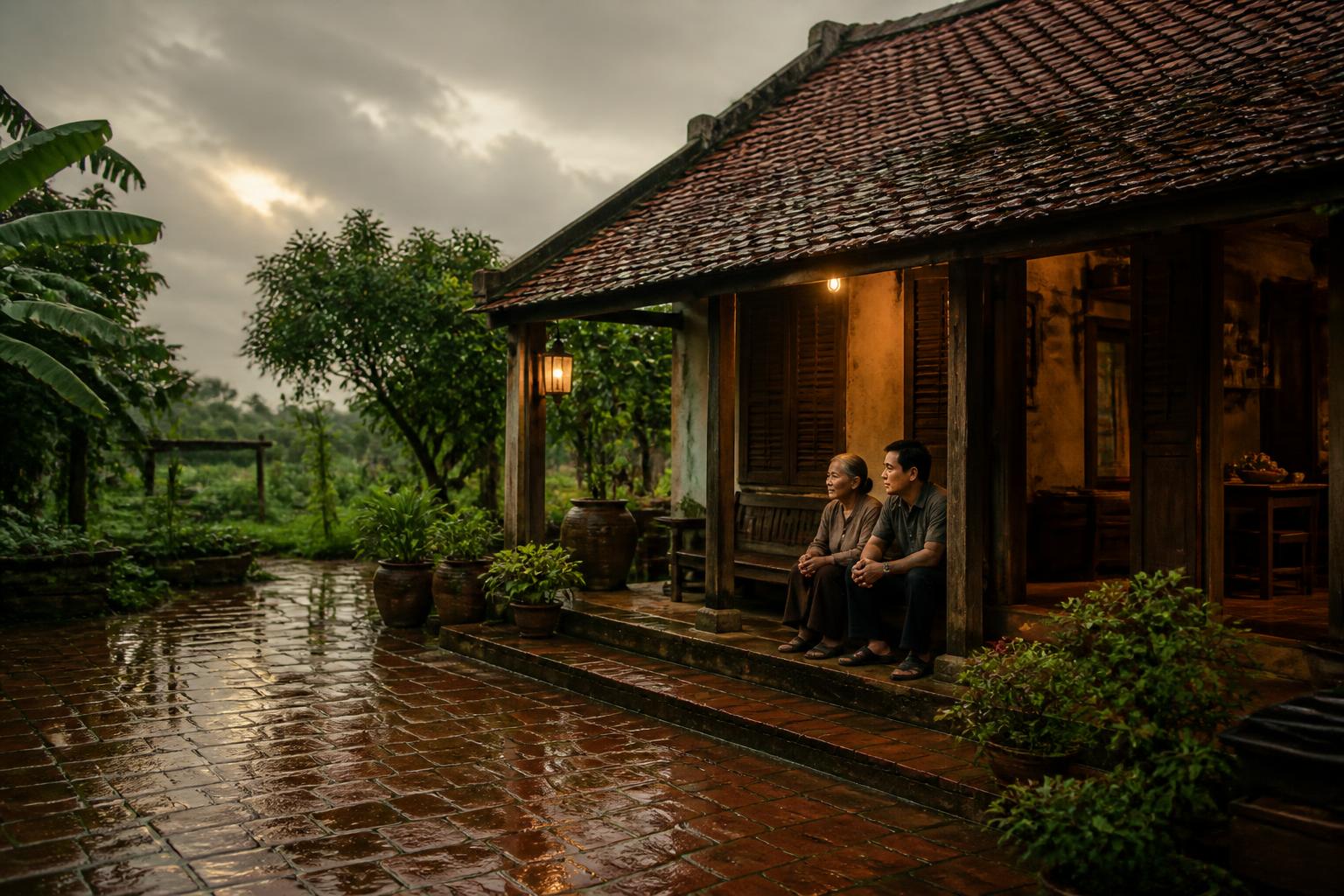
The Scent of Rain on an Old Tiled Roof: When Memories Teach Us How to Return
There are afternoons when a sudden rain is all it takes to carry us back to a place deep in our memories. Not by foot, but through the scent of wet earth, the sound of water falling on a tiled roof, and the warmth that once lingered beside the doorstep. These things often appear when
Read more