
Collection Of Story · 8 November, 2026
A Belated Apology Can Still Open the Door to Tomorrow
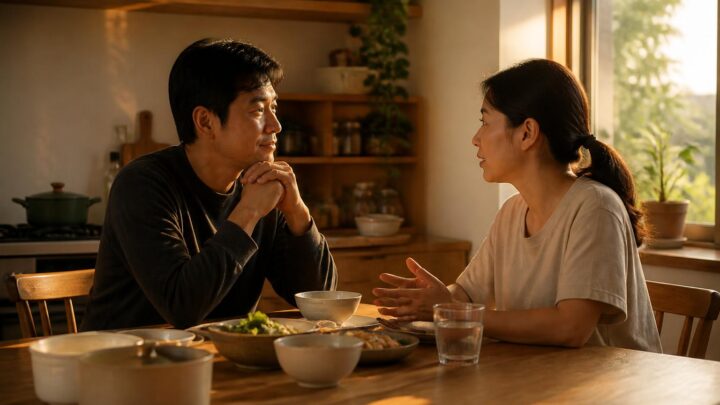
In many relationships, what drives people apart is not necessarily some major event. Sometimes it is simply a harsh word spoken in the heat of the moment, a broken promise treated lightly, a prolonged silence, or the habit of always assuming that the other person will understand without an explanation. Such things may pass unnoticed in everyday life, but they do not always disappear. They remain in the memory, quietly creating distance between people who were once very close.
For that reason, a belated apology often carries many complicated emotions. The person speaking may feel ashamed for having let so much time pass. The person listening may feel both hopeful and doubtful, and may no longer know how to respond. An apology cannot turn back time, nor can it make the sorrowful days that happened disappear. However, if it is spoken sincerely and accompanied by concrete change, it can still open a door to tomorrow.
Why do people so often apologize too late?
Many people do know that they have hurt someone else. They simply do not yet have the courage to face the part of themselves that was in the wrong. Some fear that apologizing will put them at a disadvantage. Some believe that apologizing means accepting all the blame, even though a conflict often has many causes. Others comfort themselves by saying that it is all in the past and bringing it up again will only make both people more uncomfortable.
Within families, this delay happens even more easily. Relatives often think that their bond is strong enough to withstand a few unrestrained remarks. Parents may believe that their children will eventually forget. Children may think that their parents love them, so no explanation is necessary. Spouses may become accustomed to overlooking small hurts without realizing that they are piling up. When everyone waits for the other person to take the first step, silence gradually becomes a wall.
Sometimes people recognize the value of a relationship only after the distance has grown. A chance conversation, an old object, an empty room, or a change in a loved one’s eyes can make us remember what we once said and how the other person quietly endured it. That realization is often unpleasant, but it is necessary. Something that has never been acknowledged cannot be repaired.
What does a sincere apology require?
Apologizing is not merely saying the words “I’m sorry.” A meaningful apology usually begins by accurately naming what happened. Instead of vaguely saying, “If I hurt you back then, I’m sorry,” the speaker can acknowledge it more clearly: “I said disrespectful things when you needed to be listened to.” This way of expressing it shows that the person apologizing does not merely want to end the conversation, but has genuinely reflected on their actions.
The next important thing is not to rush to offer reasons in self-defense. Circumstances may explain why someone reacted a certain way, but explaining is not the same as denying the consequences. A tired person may be more prone to anger, but tiredness does not make hurtful words harmless. When apologizing, we can talk about the circumstances after taking responsibility; we should not use those circumstances as a way to shift responsibility onto someone else.
A mature apology also does not demand that the person listening forgive immediately. The person who was hurt has the right to need more time, the right not to want to talk yet, or the right not to be able to return to the way things were. If an apology comes with the question “Are you not angry anymore?” and pressure to let the matter go, it can become a form of demand. The speaker needs to understand that they can take responsibility only for their own sincerity; the other person’s feelings and decisions belong to them.
An apology must be proven by living differently
What gives an apology weight is not how moving the words are, but the consistency that follows. If someone has often made promises and then forgotten them, the first change may be to think carefully before making a promise and proactively explain when it cannot be kept. If someone has used silence to punish a loved one, change may begin by clearly saying that they need time to calm down, instead of disappearing without explanation. If someone has dismissed other people’s feelings, they need to practice listening without immediately judging or trying to prove that they are right.
Such changes are often small and do not produce results immediately. A regular phone call, keeping a promise once, or responding more gently during a disagreement may not erase the past, but these actions create new evidence. Over time, the person who was hurt may realize that the apology was not merely a moment of emotion. Whether they choose complete reconciliation or simply maintain a healthy distance, the change still has value because it helps the person who apologized live more responsibly.
Conversely, if someone repeatedly apologizes but continues repeating the same behavior, the apology will gradually lose its meaning. At that point, words that seem gentle become a way of postponing the need to face the problem. Saying sorry does not mean that every door must reopen. Forgiveness, if it exists, cannot replace necessary boundaries and actions that protect the peace of the person who was hurt.
Forgiving does not mean forgetting
Many people hesitate to forgive because they fear they are denying the pain they experienced. In reality, forgiveness does not necessarily mean saying that what happened was insignificant. Nor does forgiveness require us to forget, remain close, or immediately give back our trust. In many cases, forgiveness is first of all the choice not to let an old event continue controlling our entire present life.
The person receiving the apology also needs to be respected in their own process. Some people may feel relieved after a conversation. Some need months or years to see the situation from a different perspective. Some may ultimately be unable to return to the old relationship. That does not make the apology useless. A sincere apology, even if belated, can still help two people stop guessing each other’s intentions, blaming each other in silence, and carrying unspoken things into the next chapters of their lives.
Do not wait until there is no opportunity left
People often wait for the perfect moment to apologize. They want to be calmer, find the most eloquent way to express themselves, or be certain that the other person will receive it well. But in life, the perfect moment rarely appears. The longer we wait, the greater the embarrassment becomes and the harder the distance is to cross.
We can begin with a simple, unpretentious sentence: “I’ve been thinking about what happened and realized that I hurt you. I’m sorry. I don’t expect you to let it go right away, but I want to take responsibility for what I did.” After saying that, what is essential is to listen. Do not interrupt to defend yourself, rush to counterattack, or turn the conversation into a trial in which both sides put each other on the stand. Sometimes, what the other person needs most is not a perfect explanation, but the feeling that their pain has finally been acknowledged.
A belated apology cannot give back the days that have been lost. But it can change the way we enter the days that remain. It reminds us to be more careful with our words, more proactive in repairing relationships, and more humble toward those who have loved us. If we are fortunate, the apology will help a relationship find a new path. If not, it will still help us fulfill our share of the responsibility in a decent way.
Not every door will reopen after an apology. Even so, honestly knocking on the door is better than pretending for a lifetime that no one behind it is waiting to hear an acknowledgment of wrongdoing. Sometimes tomorrow does not begin with anything grand. It begins in the moment when someone is brave enough to say: “I was wrong, and I want to learn how to treat you better.”
Related articles

The Keeper of the Last Bell in the Village
At the end of the dirt road leading out to the fields, there was a small village nestled beside a river that flowed slowly all year round. The villagers called the place Van Khe Village, not because it had any particularly special stream, but because whenever evening fell, the bell from the ancient communal house
Read more
The Scent of Rain on an Old Tiled Roof: When Memories Teach Us How to Return
There are afternoons when a sudden rain is all it takes to carry us back to a place deep in our memories. Not by foot, but through the scent of wet earth, the sound of water falling on a tiled roof, and the warmth that once lingered beside the doorstep. These things often appear when
Read more
The Girl Who Gathered Light at the End of the Slope
The Village Behind Three Hills Once upon a time, behind three hills that followed one after another, there was a small village called An Nhien. The villagers made their living by growing rice, weaving baskets, and making terracotta lamps. The village was not wealthy, but it had long been known to many people because the
Read more
The Lighthouse Keeper and the Road That Was Not on the Map
The Lamp at the Edge of the Forest At the end of a narrow valley, a dirt road ran along the mountainside. It did not lead to a large city, nor did it connect to any busy markets. It merely passed a few houses with old tiled roofs, a low stone bridge, and a forest
Read more
The Man Who Mended Forgotten Umbrellas
The Umbrella Repair Shop at the End of the Street At the end of the street stood a small shop tucked beneath a faded awning. The wooden sign out front bore only two words: “Umbrella Repair,” written so simply that passersby often did not bother to look twice. The shop had no gleaming glass display
Read more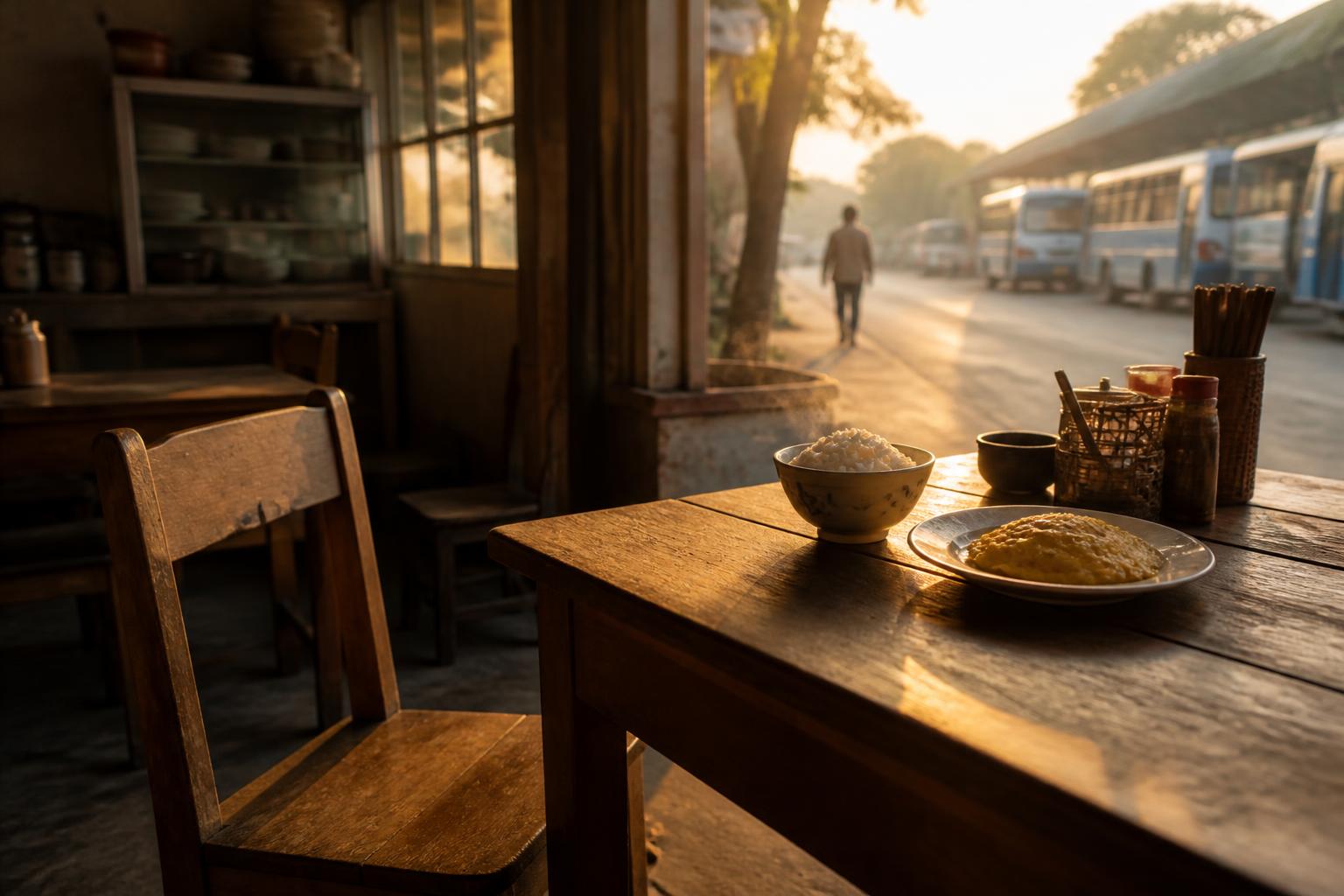
The Empty Chair in the Evening Rice Shop
At the end of the road leading to the old bus station stood a small rice shop called Bep Chieu. The shop had no large sign, only a faded wooden board and a few four-o’clock flowers in pots along the porch. People in the neighborhood often stopped by for a bowl of hot soup, a
Read more