
Horoscopes · 12 November, 2026
The Phúc Đức Palace in Tử Vi: The Spiritual Foundation and the Way We View Happiness
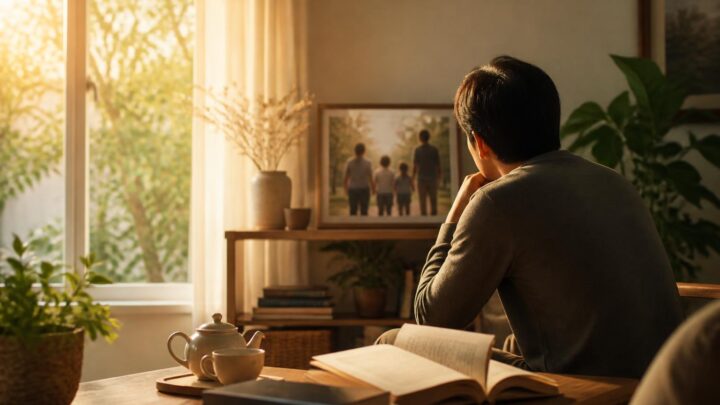
In life, some people seem not to possess many favorable circumstances, yet they remain calm in the face of upheaval. Conversely, others have adequate jobs, assets, and necessary relationships but frequently feel anxious. When discussing these differences, traditional Tử Vi often refers to the Phúc Đức palace as a symbolic area representing one’s spiritual foundation, family influence, and the way a person experiences happiness.
The Phúc Đức palace should not be understood simply as a conclusion that someone will be wealthy, lucky, or unfortunate. A more cautious reading views it as an ancient language for reflecting on inner life: how a person is shaped by family traditions, how they are able to overcome adversity, where they are likely to find a sense of peace, and what kinds of anxiety they often carry. The value of studying this palace lies in its ability to open up possibilities for reflection, not in replacing personal choices, efforts, or responsibilities.
How is the Phúc Đức palace commonly understood?
In the Tử Vi system, each palace has its own field of meaning and needs to be considered in relation to the entire chart. The Phúc Đức palace is often associated with spiritual life, blessings in the traditional sense, family traditions, invisible support from one’s living environment, and the ability to enjoy simple things. The concept of “blessings” here does not refer only to money or occasions of good fortune. It can also be understood as a sense of belonging, having people one can trust, knowing when one has enough, maintaining compassion, and having something to rely on when circumstances change.
Therefore, a responsible interpretation should not turn the Phúc Đức palace into a measure of a family line’s morality or a definite prediction about the future. The symbols in a chart provide only a frame of reference. Real life is also influenced by education, health, economic circumstances, relationships, the social environment, and the many decisions made each day.
The influence of family traditions and family memories
One of the themes commonly associated with the Phúc Đức palace is family influence. Everyone grows up in a different atmosphere. Some families value sharing, encourage children to express their emotions, and solve problems together. Other families are accustomed to keeping silent and regard endurance as a sign of strength. These habits do not exist only within one generation; they can be repeated through patterns of communication, approaches to raising children, and the way family members face crises.
From this perspective, the Phúc Đức palace can become a starting point for each person to ask: what is being passed down in my family? It may be a spirit of mutual support, diligence, hospitality, or the ability to preserve affection during difficult times. But it may also be a fear of failure, a habit of excessive self-sacrifice, a tendency to avoid dialogue, or the belief that one must please everyone. Recognizing both sides helps us accept what is good and actively adjust what is no longer suitable.
What matters is that the concept of “blessings and virtue” should not be used to blame people who are facing difficulties. A person under great pressure is not necessarily lacking blessings or at fault for their family’s past. Tử Vi, when used as a tool for self-observation, should open the way to compassion rather than create additional shame or feelings of inadequacy.
The ability to find peace in small things
The Phúc Đức palace is also often associated with the way a person enjoys life. Some people need major achievements to feel that they are moving forward. Others regain their energy from a quiet home, a meal with everyone present, a sincere conversation, or a few hours spent doing something they love. There is no single type of happiness that is right for everyone, but the ability to recognize attainable joys can make life more sustainable.
When considering this theme, instead of asking only, “Do I have many blessings or not?” we can ask more practical questions. In what circumstances do I usually feel safe? What causes my mind to remain constantly tense? Am I making time for relationships that nourish me? What habits help me return to a balanced state after a tiring day? Questions like these move the interpretation away from speculation and back toward concrete lived experience.
Happiness in this understanding is not a state of constant cheerfulness. A person with a strong spiritual foundation can still feel sad, angry, disappointed, or anxious. The difference lies in the ability to recognize emotions, seek support, and avoid letting a difficult period define one’s entire identity. The Phúc Đức palace can therefore be read as a reminder to build inner resilience, rather than as a promise that life will be free of adversity.
The role of relationships and living spaces
Spiritual life is not separate from the surrounding environment. It is difficult for someone to maintain peace if they regularly live in relationships that lack respect or boundaries, or in which they must always remain on guard. Conversely, the presence of people who know how to listen can help us see problems more clearly, even when they cannot solve them for us. When reflecting on the Phúc Đức palace, this is a time to consider the quality of our connections rather than merely count the number of people we know.
Living spaces also have a significant influence on our daily experience. A tidy, well-lit room with a suitable place to rest cannot erase every difficulty, but it can reduce the feeling of chaos. Simple rituals such as eating a meal on time, walking, caring for plants, reading, or staying in touch with loved ones can form a source of spiritual support. These actions do not need to be tied to a mystical promise. Their value comes from their consistency and their ability to help people return to the present.
Reading the Phúc Đức palace with clear awareness
When studying a chart, the Phúc Đức palace should not be isolated and used to make absolute conclusions. A cautious approach needs to consider the entire structure, the circumstances of the person being interpreted, and changes across each period of life. Even within the Tử Vi tradition, the meaning of a position should not be reduced to a single pronouncement. The same symbol may be interpreted differently depending on its relationship with other elements and on the question that concerns the person consulting the chart.
Readers should also distinguish between cultural reference and important decisions in life. One should not rely on a reading to abandon medical treatment, end a relationship, invest money, or choose a career without considering practical information. If Tử Vi content makes a reader fearful, dependent, or convinced that they cannot change their fate, that is a sign to stop and reconsider the approach.
Instead, the Phúc Đức palace can be used as a tool for self-inquiry. If you find yourself easily anxious, look for the causes in your daily schedule, work pressures, and relationships. If you realize that you are receiving a great deal of support, express gratitude through concrete actions. If your family has a hurtful pattern, begin by setting boundaries, learning how to communicate, and seeking appropriate assistance. These changes are more practical than waiting for a favorable sign to appear.
Blessings are not only what we receive
A deeper understanding of the Phúc Đức palace should also include the ability to create blessings in the present. Kindness, keeping one’s word, taking responsibility, and treating others fairly all contribute to forming a healthy living environment. In the broadest sense, blessings are not only what a person inherits but also what they are cultivating for their family and community.
This does not mean that every good action guarantees a favorable result immediately. Life does not operate according to a simple formula. Kind people can still suffer loss, while selfish people may sometimes gain short-term benefits. However, responsible choices often help build trust, strengthen relationships, and create a firmer foundation for later periods. That is the practical value of nurturing “blessings,” without turning them into an absolute promise.
The Phúc Đức palace in Tử Vi can therefore be viewed as an invitation to look again at our own spiritual foundation. What are we inheriting from our family, what patterns are we repeating, and where can we begin to make changes? Do we know how to accept help, preserve important relationships, and give ourselves the necessary space to rest? When these questions are asked with clear awareness, studying Tử Vi becomes more useful—not as a way to leave everything to fate, but as a way to understand ourselves more clearly and live more proactively.
Ultimately, blessings should not be measured only by how favorable one’s circumstances are. A meaningful life also lies in the ability to maintain clarity when successful, retain gentleness when disappointed, and not lose one’s humanity during difficult times. The Phúc Đức palace can open up this direction for reflection, but each of us is the one who turns reflection into change.
Related articles
The Phu The Palace in Tử Vi: Reflections on Love, Marriage, and Partnership
In Tử Vi, matters of love and marriage are often associated with the Phu The Palace. This is an area that attracts considerable interest, especially when people are faced with questions such as when they will meet a suitable partner, whether their marriage will last, or what changes their married life may go through. Even
Read more
The Career Palace in Tử Vi: Career Orientation and Perspectives on Success
In Tử Vi, when people want to understand their career path, many often pay attention to the Career Palace, or cung Quan Lộc. The name can immediately lead readers to think of positions, wealth, or social status. In reality, the meaning of the Career Palace is broader than a list of occupations considered suitable. It
Read more
The Career Palace in Tử Vi: A Perspective on Career, Abilities, and Advancement
In modern life, questions about careers go beyond simply choosing a job with a good income. Many people also care about whether that work suits their personality, abilities, pace of life, and the things they truly value. Tử Vi often approaches this issue through the Career Palace, an area referred to when discussing a person’s
Read more
The Phúc Đức Palace in Tử Vi: Spiritual Foundations and How a Person Navigates Life’s Turbulence
What Does the Phúc Đức Palace Say About? In the Tử Vi system, each palace is often used as a symbolic lens through which to reflect on an aspect of human life. If the Quan Lộc Palace commonly evokes a person’s career path, and the Tài Bạch Palace relates to how someone approaches money, then
Read more
The Phúc Đức Palace in Tử Vi: Spiritual Foundations and How a Person Navigates Turbulence
In a Tử Vi chart, many people tend to focus first on the Mệnh Palace, Tài Bạch Palace, or Quan Lộc Palace because these positions are associated with personality, money, and one’s career path. However, when seeking to understand why some people remain steady in the face of adversity while others easily lose their bearings
Read more
The Career Palace in Tử Vi: Understanding Career Direction Through Abilities and Choices
In modern life, questions about careers are not limited to choosing a job with a stable income. Many people also wonder whether that work suits their personality, gives them a sense of meaning, and creates room for long-term growth. From the perspective of Tử Vi, the Career Palace is often used to reflect on one’s
Read more