
Horoscopes · 9 November, 2026
The Phúc Đức Palace in Tử Vi: Spiritual Foundations and How a Person Navigates Life’s Turbulence
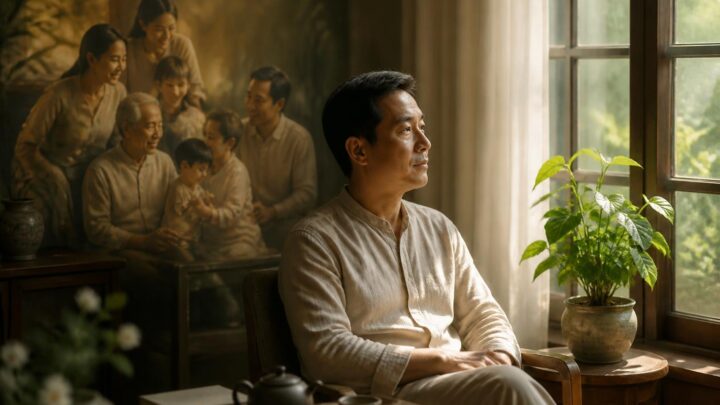
What Does the Phúc Đức Palace Say About?
In the Tử Vi system, each palace is often used as a symbolic lens through which to reflect on an aspect of human life. If the Quan Lộc Palace commonly evokes a person’s career path, and the Tài Bạch Palace relates to how someone approaches money, then the Phúc Đức Palace directs attention to spiritual foundations, family ways of life, and one’s deeply felt sense of peace. This is a subject that is easily reduced to the question of whether someone is “blessed” or “less blessed,” even though its meaning is much broader.
Those who study Tử Vi often use the Phúc Đức Palace to observe the influence of family, traditions, nurturing environments, and spiritual life on an individual. It does not merely ask how many advantages a person receives; it also raises a more important question: when facing difficulties, what does that person rely on to remain steady, what helps them recover, and how do they seek meaning in what they are going through?
Tử Vi should be viewed as a symbolic language for reflection, not as a tool that replaces practical decision-making. A birth chart cannot, by itself, determine a person’s personality, future, or character. The same sign may be expressed differently by each person depending on their life circumstances, education, choices, and level of initiative. Therefore, reading the Phúc Đức Palace is most useful when it helps us understand ourselves more clearly, rather than creating dependence or fear.
Family Foundations and What We Inherit
One of the layers of meaning commonly associated with the Phúc Đức Palace is the influence of family and household traditions. Each person grows up in a particular context and inherits ways of behaving, beliefs, and habits that they may not always recognize. Some people are taught to share, be patient, and keep their promises. Others become accustomed to remaining silent in the face of conflict, constantly having to guess what others mean, or viewing success as a condition for being accepted.
These influences do not necessarily determine an entire life, but they can form a “filter” through which we view ourselves and the world. Someone who grew up in a family that valued stability may be cautious about change. Someone who witnessed a great deal of upheaval may place a high value on saving and preparation. A person encouraged to explore freely may be more willing to experiment. When reflecting on the Phúc Đức Palace, what matters is not concluding that one’s family is good or bad, but identifying which values are supportive and which patterns need to be adjusted.
Recognizing family influences does not mean blaming previous generations. Each generation lives under different conditions and chooses its own ways of adapting. Maturity is a process of selective acceptance: retaining what is compassionate, disciplined, and useful, while learning to stop habits that cause harm. From this perspective, “blessings” are not merely something handed down; they can also be cultivated through the way people treat one another in the present.
Spiritual Life and the Capacity to Recover
The Phúc Đức Palace can also be read as a symbol of one’s inner life. Some people are highly successful on the outside but frequently feel empty. Conversely, some go through many difficult periods and still retain calmness, gratitude, and the ability to find joy in simple things. The difference between them sometimes lies not in the number of problems they face, but in how they interpret those problems and care for their spirit after each encounter with adversity.
The capacity to recover is not an unchanging trait. It is shaped by many factors, such as secure relationships, daily routines, the ability to recognize emotions, and experience in resolving difficulties. A person may once have been highly sensitive and easily disoriented, but become steadier after a process of learning. Therefore, if a birth chart suggests an unstable spiritual foundation, this should not be understood as a sentence. It can serve as a reminder for the reader to pay more attention to sleep, relationships, ways of resting, and the need for support.
Spiritual life does not consist solely of optimism. Peace does not mean always being cheerful or denying sadness. A healthy spiritual foundation allows people to acknowledge disappointment, name their fears accurately, and seek help when necessary. If approached with awareness, Tử Vi can serve as an opportunity to pause and ask: What is draining me, what helps me regain balance, and what values am I trying to live by?
Phúc Đức Is Not a Promise of a Life Without Turbulence
One potentially misleading interpretation is to view the Phúc Đức Palace as an indicator guaranteeing that a person will always be lucky or avoid every risk. In reality, no method of interpretation can completely eliminate life’s unexpected events. Even a family with strong foundations may experience conflict. A person with a resilient spirit may still become exhausted at times. A favorable period will not last forever if people become complacent or stop learning.
The value of this concept lies in shifting the focus from waiting for good fortune to building a foundation. That foundation may consist of the ability to maintain kind relationships, manage money, live responsibly, care for one’s health, and maintain habits that keep the mind from being swept along by every upheaval. When the foundation is solid enough, a person may not necessarily avoid difficulties, but they are more likely to respond to them wisely.
In family life, this spirit is expressed through very concrete actions. It means knowing how to apologize when one is wrong, not using sacrifice to pressure others, respecting personal boundaries, and not turning unspoken expectations into obligations for one’s children. In personal life, it means choosing a suitable environment, not trying to prove one’s worth by working to the point of exhaustion, and daring to change a way of life that is no longer healthy.
Reading the Phúc Đức Palace as an Exercise in Self-Observation
Instead of asking, “Am I someone who is blessed or not?” readers can begin with more practical questions. When something does not go as expected, do I seek support or suffer silently? In my family, which habits from previous generations am I repeating? Do I feel safe expressing my emotions? What do the people around me commonly receive from my presence? These questions do not produce absolute answers, but they help make the practice of Tử Vi more active and profound.
It is also important to distinguish intuition from anxiety. Some people call every feeling of unease a premonition and then make hasty decisions. Others ignore clear signals from their bodies and minds because they believe that simply “trying a little harder” will be enough. A balanced approach is to observe the facts, listen to one’s emotions, consult trustworthy people, and take responsibility for one’s choices. An interpretation of Tử Vi should not be used to justify harmful behavior or delay seeking professional support.
In the broadest sense, cultivating Phúc Đức does not lie in ostentatious rituals or the desire to change one’s fate overnight. It can begin with speaking more kindly, being honest in one’s work, keeping promises, and being able to do what is right even when no one is watching. Small choices repeated over time create character, credibility, and a sense of security that no single prediction can bestow.
Conclusion
The Phúc Đức Palace in Tử Vi can be viewed as a mirror of spiritual foundations, family influences, and the capacity to move through turbulence. It should not be turned into a label of good or bad, or a fixed verdict on the future. What matters more is using this subject to identify what is supporting us, which patterns need to change, and which values we want to pass on to those who come after us.
In the most familiar sense, blessings are not merely unexpected good fortune. They also include calmness developed through practice, a relationship built on respect, a home one can return to, and a way of life that does not require a person to sacrifice their entire health in order to achieve success. When each person actively builds such a foundation through concrete actions, reading Tử Vi becomes a way of looking inward, helping us live more consciously instead of simply waiting for answers from outside ourselves.
Related articles
The Phúc Đức Palace in Tử Vi: Spiritual Foundations and How a Person Navigates Turbulence
In a Tử Vi chart, many people tend to focus first on the Mệnh Palace, Tài Bạch Palace, or Quan Lộc Palace because these positions are associated with personality, money, and one’s career path. However, when seeking to understand why some people remain steady in the face of adversity while others easily lose their bearings
Read more
The Career Palace in Tử Vi: Understanding Career Direction Through Abilities and Choices
In modern life, questions about careers are not limited to choosing a job with a stable income. Many people also wonder whether that work suits their personality, gives them a sense of meaning, and creates room for long-term growth. From the perspective of Tử Vi, the Career Palace is often used to reflect on one’s
Read more
The Career Palace in Tử Vi: Reading Career Direction Through Abilities and Choices
In life, questions about work often go beyond simply making a living. Many people want to know which environments suit them, whether they should develop along a specialist or management path, and why there are periods when work progresses smoothly before suddenly coming to a standstill. Tử Vi approaches these concerns through various palaces and
Read more
The Phúc Đức Palace in Tử Vi: Spiritual Foundations and How Each Person Creates Their Own Blessings
In the Tử Vi system, many people often focus on the Mệnh Palace, Tài Bạch Palace, or Quan Lộc Palace because these are areas associated with personality, money, and career paths. However, if one wants to gain a deeper understanding of mental resilience, inner life, and how a person seeks peace, the Phúc Đức Palace
Read more
The Phúc Đức Palace in Tử Vi: The Spiritual Foundation Behind Life’s Turning Points
In a Tử Vi chart, there are palaces that are often mentioned when people want to learn about their careers, finances, or romantic relationships. However, behind these more visible aspects lies a quieter foundation: spiritual life, family patterns, a sense of belonging, and the ability to find peace. The Phúc Đức Palace is often used
Read more
The Career Palace in Tử Vi: Reading the Career Path Through Abilities and Choices
In the process of learning about Tử Vi, many people are often interested in the Career Palace because they want to know which kinds of work suit them, whether they have the potential to advance, and whether they should work as employees, go into business, or pursue a specialized profession. These questions arise from very
Read more