

 Tiếng Việt
 日本語
 한국어
 中文 (中国)
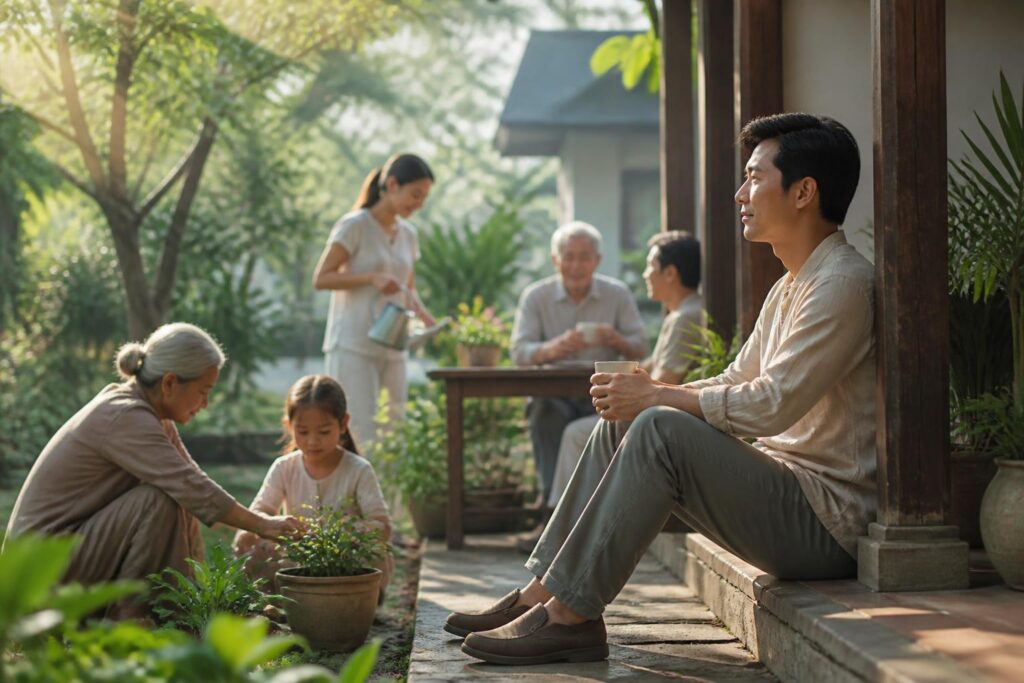
In the Tử Vi system, many people often focus on the Mệnh Palace, Tài Bạch Palace, or Quan Lộc Palace because these are areas associated with personality, money, and career paths. However, if one wants to gain a deeper understanding of mental resilience, inner life, and how a person seeks peace, the Phúc Đức Palace is also a position worth considering. This palace does not merely evoke the family’s blessings in the traditional sense; it also raises broader questions: What values support a person, how do they usually face adversity, and how can they cultivate their own spiritual life?
Interpreting the Phúc Đức Palace therefore should not stop at reaching a conclusion that someone is “blessed” or “lacking blessings.” A more careful approach is to view it as a symbolic language for reflecting on family foundations, behavioral habits, beliefs, the ability to recover, and the invisible influences that have accompanied each person since childhood. When read together with other palaces in the chart, the Phúc Đức Palace can help a person recognize certain psychological tendencies and choices that are repeated in daily life.
How is the Phúc Đức Palace commonly understood?
In traditional Tử Vi thought, the Phúc Đức Palace relates to the blessings of one’s lineage, spiritual life, family traditions, and the degree of inner stability within each individual. “Blessings” here should not be understood only as unexpected luck or material advantages. Blessings can also be seen in the ability to remain calm, know when one has enough, have loved ones provide support during difficult times, and find meaning in simple things.
Two people may experience the same event yet react in very different ways. One may easily fall into despair, while the other maintains their rhythm of life, seeks support, and gradually solves the problem. From a symbolic perspective, this difference may be associated with the Phúc Đức Palace. However, this does not mean that the palace completely determines a person’s resilience. Personality is also influenced by education, economic circumstances, relationships, personal experiences, and the choices repeated each day.
The Phúc Đức Palace is also often considered in relation to the family atmosphere. A family that values kindness, knows how to listen, and handles conflict in healthy ways can create a sense of security for later generations. Conversely, prolonged tension, silence in the face of hurt, or habits of passing down fear can also influence how a person views the world. Tử Vi does not replace the study of family psychology, but it can serve as a starting point for each person to observe these influences more clearly.
Important aspects when interpreting the Phúc Đức Palace
1. Family foundations and inherited values
One of the layers of meaning commonly mentioned when examining the Phúc Đức Palace is the influence of family and lineage. This concerns not only the circumstances of one’s ancestors, but also the values, stories, and ways of behaving passed down through multiple generations. Some families value education, some emphasize stability, while others consistently encourage their children and grandchildren to be independent and willing to take risks. These beliefs are often formed early and may quietly influence how a person chooses a career, makes friends, or builds a family.
When observing this aspect, one should not be quick to attribute every present advantage or difficulty to the ancestors’ “blessings.” A more useful interpretation is to identify what is being inherited. A person may inherit a strong work ethic while also carrying the pressure to satisfy their family. Someone else may grow up in an unstable environment yet develop strong adaptability as a result. Recognizing both the positive aspects and the limitations of one’s family foundation will make the interpretation fairer and more realistic.
2. The ability to seek peace
The Phúc Đức Palace also points to how a person rests, recovers, and nurtures their inner life. Some people need quiet space to regain their energy, while others find joy in caring for their family, reading, gardening, or participating in community activities. Some people feel at ease only when they can share openly with someone they trust. These different approaches show that peace has no single model.
In reality, many people recognize their spiritual needs only after a prolonged period of stress. They may continue completing their work, maintaining relationships, and meeting external expectations, while inwardly feeling constantly exhausted. If the Phúc Đức Palace is viewed as a reminder, readers can ask themselves what is truly nourishing them. A busy schedule does not necessarily mean a meaningful life, just as being alone does not necessarily mean being lonely.
3. Endurance and the ability to recover
An important sign of a life with strong spiritual foundations is the ability to recover after failure. Recovery does not mean never feeling sad or afraid, or always appearing strong. It means being able to acknowledge one’s emotions, seek necessary help, and gradually regain a sense of agency. When interpreting the Phúc Đức Palace, one can use this aspect to reflect on how one has moved through difficult periods in the past.
People who have experienced upheaval but know how to learn from it, adjust their expectations, and maintain healthy habits often have a better chance of building resilience over time. Conversely, if someone always avoids their emotions or regards seeking help as a sign of weakness, they may make the recovery process more difficult for themselves. Therefore, regardless of how the chart is interpreted, concrete actions in the present still play an important role.
The Phúc Đức Palace should not be understood as a fixed verdict
One of the risks of studying Tử Vi is turning symbols into absolute conclusions. If someone hears that their Phúc Đức Palace shows unfavorable signs, they may worry that they will always experience anxiety, have difficulty maintaining family harmony, or live without support. This way of receiving the information can easily create dependence and cause readers to overlook the capacity for change inherent in human beings.
In reality, the same sign can be interpreted in multiple ways depending on the entire chart and the circumstances of life. A challenge in one’s spiritual life can sometimes also help a person mature, become more empathetic, and proactively create a different environment for the next generation. A favorable family foundation likewise does not guarantee that an individual will always be at peace if they lack the ability to take responsibility for themselves or do not know how to appreciate what they have.
Reading Tử Vi with awareness means distinguishing between tendencies and destiny. A tendency can point to something that needs to be observed, whereas an absolute destiny can cause people to give up their power to choose. When an interpretation makes readers fearful or dependent, or leads them to make important decisions solely because of a prediction, they should step back and consider that information cautiously. Issues involving mental health, finances, marriage, or the law still need to be considered with appropriate knowledge and responsible advice.
Ways to cultivate “blessings” in present-day life
If the Phúc Đức Palace is viewed as a prompt concerning spiritual foundations, the most practical question is not how much blessing one has received, but what one can do today to make life kinder and more stable. This cultivation does not necessarily have to begin with major actions. Keeping promises, knowing how to apologize, caring for loved ones at the right time, working responsibly, and not directing one’s frustration at people who are more vulnerable are all ways of creating a positive impact.
A family can build a foundation of safety through nonjudgmental conversations. Parents can listen to their children instead of merely giving orders. Adult family members can learn to express their needs clearly, divide household responsibilities, and resolve disagreements before conflicts accumulate. These changes are more valuable than simply waiting for an auspicious sign from outside, because they directly transform the atmosphere of everyday life.
In addition, each person should establish routines that help them recover. These may include getting enough sleep, setting aside time for physical activity, limiting exposure to sources of information that exhaust the mind, maintaining a trustworthy relationship, or seeking a professional when necessary. Spiritual life does not naturally become resilient simply because of an interpretation. It is formed through small choices repeated for long enough to become habits.
Practicing gratitude can also help broaden one’s understanding of “blessings.” Gratitude does not mean denying hardship or forcing oneself to be cheerful. It is the ability to recognize the sources of support that are present, from someone willing to listen to an opportunity to begin again. When people see what they already have, they are often less consumed by comparison and have more energy to deal with unfinished tasks.
Read the Phúc Đức Palace to understand yourself, not to live in fear
The Phúc Đức Palace in Tử Vi can be approached as a symbol of spiritual roots, family influences, and the ability to regain balance. It encourages readers to look at the values that have been passed down, the fears formed in the past, and how they themselves are responding to adversity. However, any interpretation should serve only as a reference and cannot replace experience, reason, or personal responsibility.
The most valuable insight from reflecting on this palace is recognizing that “blessings” are not merely something received from family or circumstances. Blessings are also something each person creates through the way they live, treat others, and heal patterns that no longer suit them. When a person knows how to care for their inner life, build healthy relationships, and act kindly within their capacity, they not only find greater peace in the present but also help create a better foundation for those who come after them.

ARTICLES IN THE SAME CATEGORY
The Phúc Đức Palace in Tử Vi: The Spiritual Foundation Behind Life’s Turning Points
The Career Palace in Tử Vi: Reading the Career Path Through Abilities and Choices
The Quan Lộc Palace in Tử Vi: Reading the Career Path Through Abilities and Choices
The Phúc Đức Palace in Tử Vi: Spiritual Roots and Understanding the Resilience of a Human Life
The Career Palace in Zi Wei Dou Shu: Reading Career Indicators and Building a Professional Path
The Career Palace in Tử Vi: Reading the Career Path Through Abilities and Choices
ARTICLES IN THE SAME GENRE
Living Amid Too Much Information: How to Keep a Clear Mind in an Age of Noise
When the Familiar Holds Us Back: Recognizing Biases in Everyday Choices
The Bystander Effect: Why Do We Hesitate Before Helping Someone in Need?
The Default Choices Quietly Shaping Our Lives
Familiarity Is Not Always the Truth
Memory Is Not a Video Camera: Understanding It Clearly to Look Back at Ourselves