

 Tiếng Việt
 日本語
 한국어
 中文 (中国)
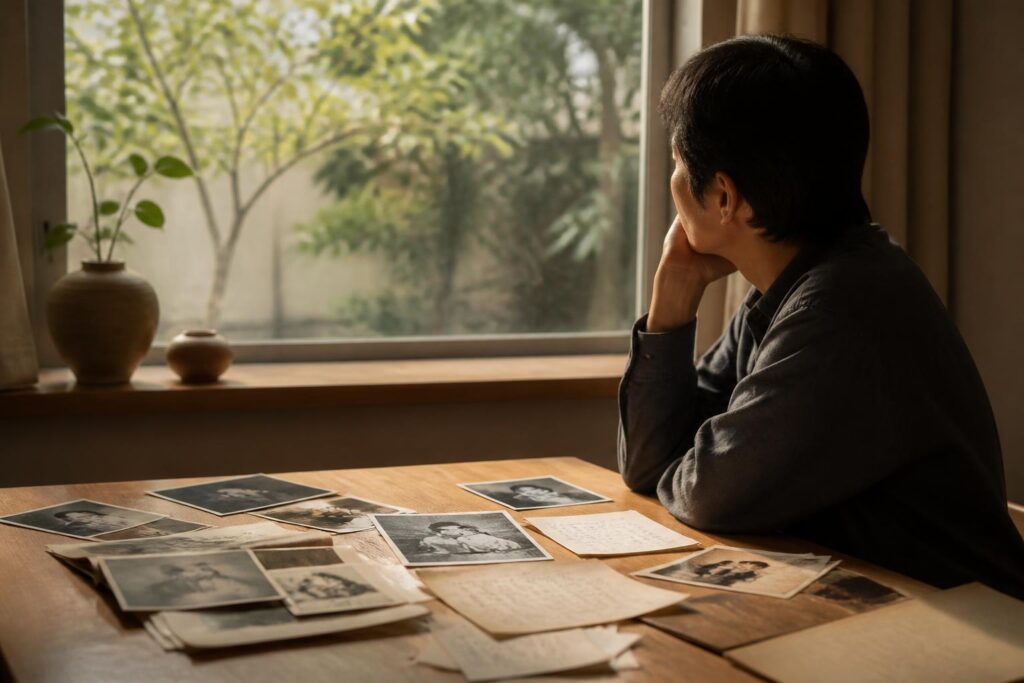
Many people still imagine memory as a video camera placed inside the mind. An event happens, its images and sounds are recorded, and when the time comes, we simply open the right “file” to watch it again. This way of imagining memory is quite natural, because memories sometimes appear with remarkable clarity: a room, someone’s face, a voice from a distant afternoon. The vividness makes us believe that we are seeing the past exactly as it happened.
Yet memory does not operate like an unchanging recording. It is formed through the processes of attention, perception, interpretation, and storage; afterward, it can change over time according to what we hear, how we feel, and how we understand ourselves. Each time we remember, we do not merely “retrieve” old information; we also reconstruct the experience from the fragments that remain. Recognizing this does not mean that all memories are wrong. It simply reminds us that the clarity of a memory does not entirely equate to its accuracy.
How Is Memory Formed?
To remember an event, we must first pay attention to some part of it. In a conversation involving many people, each person may focus on different details: one may pay attention to what was said, another to facial expressions, while someone else remembers the feeling of being left out. From the very moment an experience occurs, memory already bears the imprint of personal attention and emotional state; it is not a complete, panoramic copy.
Afterward, the brain organizes the new experience based on what it already knows. An unfamiliar place may be remembered by relating it to a familiar room. A complex story may gradually be reduced to a few main points. Details that are no longer mentioned frequently may fade, while certain striking elements are retained for longer. Over time, the “meaning” of an event may sometimes remain more stable than specific details such as the order in which things were said, the exact time, or where each person was standing.
When recalling something, the mind relies on the pieces of information still available to reconstruct a version that seems coherent. Gaps may be filled with reasonable inferences, with things that happened before or afterward, or even with a story someone else told about the same event. Because this process usually happens naturally and quickly, we may not realize which details we experienced directly and which were inferred or learned later.
Why Can a Memory Feel Certain Yet Still Be Inaccurate?
A feeling of certainty is a real psychological experience, but it is not an absolute measure of accuracy. A memory may be accompanied by strong emotions, vivid images, and a powerful sense of confidence, while some of its details have changed. Emotionally intense events often leave a deep impression, but strong emotions can also narrow our attention. We may remember clearly what hurt us without necessarily remembering the full surrounding context.
Our present mood also affects how we view the past. When feeling disappointed in a relationship, people are more likely to recall times they were bothered or rejected and see them as evidence for a broader judgment. When feeling happy, they tend to call to mind warm memories instead. This does not make the memory fabricated; it shows that memory is always accessed from within a particular circumstance. The same event may be understood and retold with different nuances at different times.
Language also helps shape memory. A leading question can draw a listener’s attention to a detail they had never previously considered. Repeatedly retelling a story can make its wording smoother, but it can also gradually cause the storyteller to remember the version that has been told rather than the entire original experience. Within a family, a memory repeated over many years may become a shared story, even though each member’s initial experience of it may have been different.
How Does This Affect Relationships?
Quite a few arguments begin with the words: “I remember that very clearly.” When two people experience the same event but remember it differently, each side may easily regard its own version as the only truth. From there, disagreement over one detail can quickly turn into a judgment about character: the other person is accused of lying, being uncaring, or deliberately distorting the past.
Understanding the reconstructive nature of memory can make conversations less confrontational. Instead of immediately deciding who is right and who is wrong, we can begin by acknowledging that the two people paid attention to different things and carried different emotions with them. Saying “I remember that event differently” often creates a better opportunity for listening than saying “You’re making this up.” Of course, this does not mean overlooking hurtful behavior or treating every denial as harmless. It simply encourages us to distinguish between differences in memory and deliberate concealment or deception.
For matters that require a high degree of accuracy, such as appointments, work agreements, or important decisions, writing things down and confirming them again is more reliable than relying on memory alone. A summary message after a discussion, an updated schedule, or clear meeting minutes can significantly reduce disputes arising from the way each person remembers things differently. This is not a sign of a lack of trust, but a way of respecting the natural limitations of human memory.
Looking Back at Ourselves Without Being Bound by the Past
Memory does not merely help us know what happened; it also contributes to the story we tell about ourselves. Someone who has experienced failure may look back on the past as a chain of evidence showing that they have always been inadequate. Someone who has been rejected may gather many different experiences into the conclusion that they are unworthy of love. When that story is repeated often enough, it becomes so familiar that it feels like an unchangeable truth.
Here, being cautious with memory does not mean denying pain. What happened may truly have been difficult, and our feelings about it still deserve respect. However, moving from a specific event to a conclusion about an entire person is a very large step. We can remember that we once made a mistake without turning it into the sole definition of our abilities. We can acknowledge that we were hurt without asserting that every future relationship will repeat the same pattern.
One helpful approach is to separate three layers of information when remembering an event: what we are certain we directly observed, what we inferred from the event, and the meaning we assigned to it. For example, “that person did not reply to my message that day” is different from “that person deliberately disrespected me,” and both are different again from “I do not matter to anyone.” Separating these layers is not meant to make emotions cold; it helps us identify which parts are facts and which are interpretations that can be reconsidered.
Living Mindfully with Memory
No one can, or needs to, check every memory in their life as though taking inventory of a data warehouse. What matters more is knowing when to remain flexible. When a memory concerns someone else’s reputation, a major decision, or a long-running conflict, we should avoid turning a feeling of certainty into a hasty conclusion. We can ask other witnesses, review documents, listen to another version, and acknowledge what we do not know.
Keeping a journal can also help us observe experiences closer to the time they occur, rather than relying only on recollections formed many years later. When writing, it is helpful to distinguish description from judgment: record what happened, the emotions and needs involved, and what remains unclear. Later, those notes are not a final verdict, but they provide additional context for understanding how we have changed.
Memory is an important part of our inner lives. Through memory, we maintain connections with loved ones, learn from experience, and feel a sense of continuity in ourselves over time. But memory also has limitations. When we understand that it is reconstructed rather than replayed intact, we are less likely to treat the stories in our minds as absolute, less likely to use the past to condemn others, and less likely to let an old version of ourselves determine the future.
Maturity does not mean remembering everything perfectly. It means being able to look back with honesty and humility: holding on to what matters, checking what needs to be verified, and leaving room for the possibility that we may remember things differently. That space does not make life less certain; on the contrary, it creates an opportunity to understand others more deeply and treat ourselves more fairly.

ARTICLES IN THE SAME CATEGORY
When Belief Guides the Way We See the World
The Necessary Pause: Why Knowing When to Stop Helps Us Live More Wisely
Knowing When to Ask: A Skill That Opens the Door to Deeper Conversations
Behind a Hasty Judgment: Learning to See Others with Understanding
Being Busy Doesn’t Mean Making Progress: Rethinking How We Use Our Time
The Pause Before a Choice: How to Stay Clear-Headed Amid Too Many Decisions
ARTICLES IN THE SAME GENRE
When Belief Guides the Way We See the World
Knowing When to Ask: A Skill That Opens the Door to Deeper Conversations
Being Busy Doesn’t Mean Making Progress: Rethinking How We Use Our Time
When There Are Too Many Choices, How Can We Make Wiser Decisions?
The 12 Zodiac Signs and How Each One Establishes Healthy Boundaries
Learn to Repair Before Replacing: A Slower Way of Living in an Age of Fast Consumption