
Story Collections · 13 November, 2026
The Empty Chair Beside the Porch
The Chair No One Had the Heart to Put Away
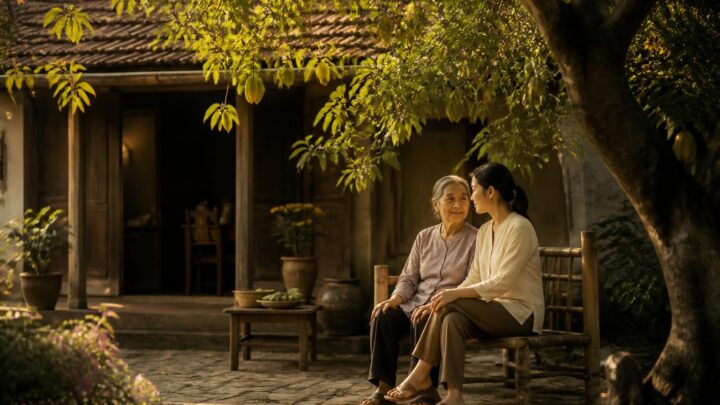
At the end of a small alley stood a tile-roofed house whose tiles had faded with age. In front of the house, beneath an old starfruit tree, there was always a low wooden chair. The chair was not beautiful, nor was there anything particularly special about it. One leg was slightly uneven, the wood had darkened from years of exposure to sun and rain, and the backrest had become smooth where people often placed their hands. Yet for many years, no one in the family wanted to put it in storage or throw it away.
The chair had belonged to Mr. Lam, who had lived in that house for nearly his entire life. Every morning, he would sit on it with a cup of hot tea, listening to the bicycle bells of the vegetable seller at the end of the alley and watching patches of sunlight slowly slide across the yard. In the afternoon, he would sit there again to sort vegetables, mend a torn net, or wait for his children and grandchildren to return from school. Some days he did nothing at all, simply sitting in silence. But his silence never made the porch feel empty. It was like a small lamp that remained lit, even though no one ever said so aloud.
After he died, the chair remained in its old place. At first, Mrs. Hanh and her children intended to put it away because seeing it made them remember their father and husband. Her youngest son even suggested making a new, sturdier chair to replace it. Mrs. Hanh only shook her head. She said that when an object had been sat upon through so many years, it should not be so quickly regarded as something old and useless.
The People Who Passed Through the Porch
The first person who often sat in the chair after Mr. Lam’s death was An, his granddaughter. An was only eight at the time and did not yet fully understand the meaning of separation. She only knew that her grandfather no longer came to open the gate whenever she returned from school, no longer hid a few peanut candies in his shirt pocket, and no longer asked whether she had received a poor grade in mathematics that day.
Every afternoon, An sat on the chair, swinging her legs and gazing down the alley. She believed that if she sat there long enough, her grandfather would return from somewhere, holding his old cloth hat and smiling as he told her to stay out of the sun. Mrs. Hanh knew that belief would eventually change, but she did not rush to explain. She sat down beside her granddaughter, placed a plate of guavas on the little chair, and told An stories about Mr. Lam that she had never heard before.
She told her that Mr. Lam had once walked nearly ten kilometers simply to deliver a schoolbag to a sick friend. She said that he was not good at speaking sweet words, but whenever anyone in the neighborhood was in trouble, he was always the first to appear. She also told her that he had once ruined a pot of rice because he was too busy repairing his daughter’s bicycle, and the whole family had to eat porridge instead. These stories did not make him a perfect man. They simply helped An understand that the person she loved had also been an ordinary human being, capable of clumsiness, anger, and mistakes, yet someone who had given his family so many good things.
After that, the chair welcomed more people. The neighbor came over to sit while waiting for a pot of cakes to finish boiling. The student renting a room nearby stopped by on evenings when the power went out. Delivery workers sometimes set their bags by the chair to wipe away their sweat. Some people sat for a few minutes; others stayed for an hour. The chair did not ask who they were, whether they were happy or sad, or what they needed to say. It simply remained there quietly, like a porch sheltering people from the rain without needing to know where they had come from.
The Things People Often Put Off
One late afternoon at the end of the rainy season, Mrs. Hanh’s eldest daughter, Mai, returned home after working away for several months. She brought a bag of fruit, a few gifts for her mother, and the weariness of someone accustomed to handling everything on her own. Since getting married, Mai usually called her mother only when she was in a hurry. The calls rarely lasted more than a few minutes. Mother and daughter asked each other the familiar questions, then quickly ended the conversation because of work, dinner, or some appointment.
That day, Mai saw her mother sitting on the old chair. Mrs. Hanh asked her daughter to sit beside her. Mai hesitated a little because the chair did not look very sturdy, but she sat down anyway. After a while, she asked her mother why she still kept it.
Mrs. Hanh did not answer immediately. She ran her hand over the seat and said that in the past, whenever the couple had a disagreement, Mr. Lam would come out and sit there first. He never went far away. He simply needed some time to cool down before going back inside. Once, after an argument, he sat there the entire evening. It was not until Mrs. Hanh brought him a bowl of rice that he said, “We still have a long life to share. Don’t say things we will regret later.”
Mai lowered her head and looked at her mother’s hands. She suddenly remembered the many times she had snapped during their brief phone calls, and the times her mother had wanted to tell her something but Mai had said she was busy and hung up. When they happened, those things had seemed very small. But sitting beside a chair that had heard countless stories, Mai realized that distance, too, was built from small things like that.
She asked her mother whether she ever felt sad that her children did not often come home. Mrs. Hanh smiled and said that older people did not always need their children sitting beside them. Sometimes, simply knowing that their children still remembered them was enough. But after saying this, she fell silent. That silence made Mai understand that the real answer was not as simple as her mother’s words.
Distance Is Measured by the Times We Return
From that day on, Mai began calling her mother more often. She did not call to ask whether her mother had eaten and then hurry to end the conversation. She asked about the starfruit tree in front of the house, the new neighbor who had moved in, and the leaky porch roof after the rain. Sometimes neither of them had anything important to tell the other, but the conversations still went on. Her mother told some old stories again and again. Mai continued to listen, because she understood that people often repeat the memories they want others to help preserve.
A few months later, Mai brought her husband and son home to repair the house. Her son, who was used to nothing but an apartment in the city, ran excitedly around the yard and asked about the chair. Mrs. Hanh told her grandson about his great-grandfather. The child did not truly understand yet, but he still placed his hand on the seat, as if trying to touch someone he had never met.
Mai suggested reinforcing the chair’s leg rather than replacing it with a new one. The carpenter fitted a small piece of wood into the loose section, leaving the scratches on the seat untouched. When the work was finished, the chair was still old but sturdier. Mrs. Hanh sat down to test it and smiled. She said that some things did not need to become like new again; they only needed to be strong enough to continue accompanying those who remained.
What the Chair Reminds Us
Every family usually has objects that hold little material value but contain a part of its shared history. It may be a pot with a broken handle, a tablecloth, a clock that no longer runs, or a chair beside the porch. These things remind us that families are not formed only by grand reunions. Family also exists in the most ordinary afternoons, when one person sits waiting for another to come home, when a meal is reheated, or when someone quietly saves the best portion of food for the person who is absent.
The chair beside the porch also reminds us of the need for pauses. In a life that is growing faster and faster, people easily react before they have time to think, easily say something that hurts a loved one and only afterward realize they have gone too far. Sitting quietly for a while cannot resolve every conflict, but it can help people see clearly what they truly want to protect. Many arguments do not begin with a lack of love, but with exhaustion, wounded pride, and things that have not been expressed in the right way.
More importantly, the chair reminds us that love needs to be shown while we still can. A brief phone call, an unhurried meal, or returning home once without waiting for a special occasion can sometimes mean more than grand promises. Our loved ones do not always need an expensive gift. They need to feel that they still have a place in the busy life of someone else.
A Seat for Those Who Return
Many years passed, and the chair remained beneath the old starfruit tree. Mrs. Hanh no longer had the strength to sit for as long as she once did, but every morning she still went out to the porch to water the plants. Mai often took her mother there on weekends. The two sat beside each other, sometimes talking, sometimes simply listening to the leaves gently brush against the tiled roof.
An was grown now. Whenever she came home to visit, she usually sat in the chair first. She no longer waited for her grandfather to return, but she still remembered what it had felt like to sit there and listen to her grandmother’s stories. One day, An asked her grandmother why she did not buy a new chair. Mrs. Hanh looked down the alley and said that this chair had grown accustomed to welcoming family members home.
Those words stayed in An’s heart for a long time. Later, wherever she went, whenever she felt tired, she often thought of the small porch and the old chair. She understood that a place becomes home not merely because it has walls, doors, or familiar objects. It becomes home because someone is waiting for us there, memories recognize us, and there is a seat we may return to without having to ask permission.
That is why the chair beside the porch was no longer just an old object. It was a pause amid hurried days, a place where family members learned to listen to one another, and a gentle reminder that time does not stand still waiting for the things we plan to say another day. If your home also has a chair like that, try sitting down beside a loved one today. The conversation may begin with something very ordinary, but those ordinary things are often the most enduring part of love.
Related articles

The Compass of the Lost Traveler
At the edge of a town nestled among the hills, there was a small shop that specialized in making and repairing compasses. The shop had no large sign; it only hung a tarnished bronze bell beneath the front porch. Whenever someone stepped inside, the bell rang out clearly, as though the room had just remembered
Read more
The House with Three Windows and the Clockmaker
At the end of the slope leading down to the river wharf, there was a clock repair shop so small that passersby often overlooked it. The wooden sign hanging above the door had faded with time; only the two words “Peace of Mind” could still be made out clearly. The shop’s owner was Mr. Lam,
Read more
The Tea House That Does Not Sell What Has Been Lost
At the bottom of the slope leading down to the river wharf, there was a small tea house. It had no sign, displayed no goods all the way to the walkway, and had no calls inviting customers in. People in the area called it bà Mộc’s tea house, though no one knew when she had
Read more
The Bell Ringer and the Things Left Unsaid
At the end of the stone slope in the town of An Mộc stood a small church, its tiled roof faded with age and its bell tower covered in moss. The people in the area no longer remembered exactly when the church had been built. They only knew that for many years, whenever the sun
Read more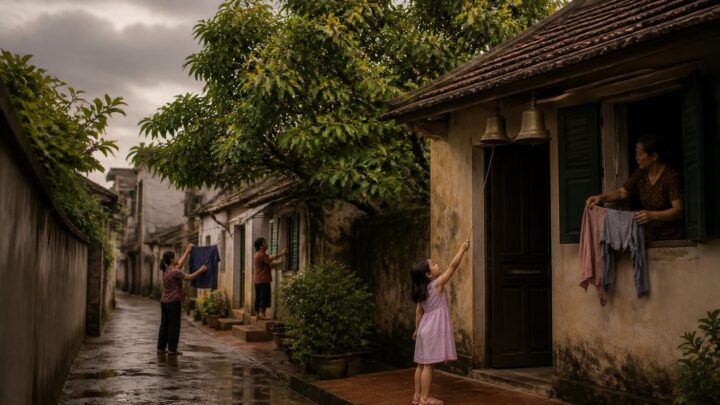
The Keeper of the Last Bell at the End of the Alley
The Bell on Cloudy Afternoons At the end of the alley stood a low, tiled-roof house, with two pots of orange jasmine and an old starfruit tree in front. Every afternoon, when the sunlight began to withdraw from the mottled walls, Mr. Lam would step onto the veranda, pull the cord hanging beneath the roof,
Read more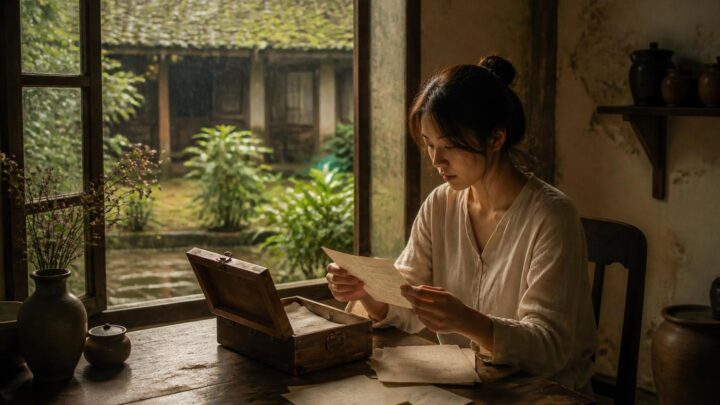
The Box That Held the Scent of Rain
The day An returned to the village, the rain had just stopped. The dirt road leading into the small hamlet still glistened with water, and the two rows of grass along the roadside drooped as if they had just gone through a long conversation with the wind. The vehicle carrying her stopped in front of
Read more