
Zodiac Signs · 22 November, 2026
The Moon in the Birth Chart and the Need for Emotional Safety

When discussing birth charts, many people usually begin with the Sun sign because it is the most familiar and accessible placement. However, if we want to understand inner life, how a person reacts to upheaval, or what makes them feel that they belong, the Moon is a noteworthy symbol. In common astrological interpretation, the Moon is associated with emotions, memories, habits, and the need for emotional security. It does not deliver a fixed verdict on personality, but opens up a language through which each person can observe themselves more deeply.
It is important not to regard these interpretations as scientific conclusions or certain predictions. A birth chart can only be used as a symbolic tool for self-reflection. A person’s personality and choices are also influenced by family, living environment, education, experiences, mental health, and countless specific circumstances. When approached mindfully, learning about the Moon can help us name certain emotional needs that are often overlooked amid the pace of busy life.
What does the Moon represent in astrology?
In the language of astrology, the Moon is often associated with the most natural and private part of human response. It may be the feeling that appears before we have time to analyze it rationally, habits formed during our early years, or the way we return to a familiar state after a stressful day. If the Sun is often used to talk about personal consciousness and how someone wants to express themselves, the Moon brings to mind the question: “What makes me feel safe when I do not need to prove myself to the world?”
This symbol is also often placed alongside family memories and nurturing experiences. One person may find peace in regular family meals, while another needs private space, music, nature, or a deep conversation. These needs are not always expressed in words. They often reveal themselves through habits, ways of resting, reactions when hurt, and the kind of care we offer our loved ones.
Therefore, interpreting the Moon’s placement is not simply about finding a personality label such as sensitive, strong, or introverted. A more useful approach is to observe several layers of questions: How do we usually react when we lose control? What makes us become defensive? What do we need to recover? And are we expecting other people to guess our needs correctly?
Moon signs and how emotions are expressed
In astrology, the zodiac sign in which the Moon is located is believed to describe a style of processing emotions. This is a symbolic interpretation, not a rule that applies identically to everyone. The same emotion, such as anxiety, can be expressed in many ways: some people talk continuously to release it, some become silent, some look for tasks to do, while others need reassurance through closeness.
The Fire element group
Interpretations associated with the Fire group often emphasize the need to take initiative, receive encouragement, and feel vitality. People with the Moon in signs belonging to this group may react quickly, express emotions directly, or become uncomfortable when forced to remain in a stagnant state for too long. When under stress, they tend to seek a goal, an activity, or a new direction in order to regain a sense of autonomy. The positive side is enthusiasm and the ability to inspire others; the challenge may lie in acting too quickly before fully understanding their true feelings.
The Earth element group
The Earth group is often associated with the need for stability, predictability, and concrete expressions of care. A person with this quality may feel reassured when schedules are clear, promises are kept, and affection is shown through practical actions. They often need time to adjust to change, but patience and the ability to create a lasting foundation are among their strengths. During times of insecurity, returning to healthy routines such as eating and sleeping regularly, organizing their living space, or completing one small task at a time can help them regain balance.
The Air element group
The Air group is often interpreted through the need to exchange ideas, ask questions, and understand things through language. People with this quality may feel more relieved after a conversation, writing down their thoughts, or viewing an issue from multiple perspectives. They are not necessarily lacking in emotion; sometimes they simply need to name and organize their feelings before they can live with them. The challenge is that they may use analysis to avoid touching their sadness, or turn every conversation into a debate instead of listening to the need beneath it.
The Water element group
The Water group is often associated with sensitivity, intuition, and the ability to absorb the surrounding atmosphere. People with this quality may notice subtle changes in another person’s voice, eyes, or attitude. They often need a sufficiently trustworthy space where their emotions can be acknowledged rather than dismissed as weakness. One point to bear in mind is that emotional boundaries can become blurred if they continually carry other people’s moods. Learning to rest, say no appropriately, and distinguish their own emotions from those they are taking in is an important part of maturing.
The Moon’s placement in different areas of life
Besides the zodiac sign, people who study birth charts are often interested in which house the Moon occupies. According to symbolic interpretation, an astrological house may suggest the area of life where the need for security and emotional responses are most likely to emerge. For example, the Moon’s association with family may make themes of attachment, memory, and personal space especially prominent. If it is related to work, a person may be particularly sensitive to the atmosphere in the workplace or may need to feel that their work provides meaning through caring or supporting others.
These interpretations should be used as open-ended questions, not closed conclusions. Instead of saying, “This placement definitely makes me this way,” we can ask: “Do I often seek a sense of safety in this area?”, “Have I learned how to care for my own needs?” and “Does my current worry come from what is happening now, or from an old memory that has been reawakened?” Asking questions in this way allows the birth chart to become a means of observation rather than an excuse to deny personal responsibility.
From emotional needs to building relationships
One practical value of reflecting on the Moon is recognizing the difference between a need and a defensive strategy. A need may be to be heard, to have one’s personal space respected, or to feel stable. But when afraid of rejection, a person may turn that need into controlling behavior, prolonged silence, testing the other person, or demanding that their partner always be present. If we look only at the behavior, we can easily judge ourselves or blame others. If we look more deeply, we have an opportunity to identify the fear behind it and find a clearer way to communicate.
In romantic relationships, understanding emotional needs does not mean forcing the other person to meet everything we want. A healthy relationship requires two-way exchange, appropriate boundaries, and the ability to express what we need in specific language. Instead of saying, “You never care about me,” we might say, “I need to be told in advance when plans change so that I feel respected.” Instead of withdrawing and waiting for the other person to guess, we can say, “I need some quiet time, but I still want to continue this conversation tomorrow evening.”
Within families, differences in how affection is expressed can easily lead to misunderstandings. Some people show love by cooking, repairing things, or taking care of practical matters; others need words of encouragement and emotional presence. No one approach is automatically nobler than another. When we recognize that each person has their own language of safety, we may be less likely to interpret differences as coldness or control. This does not eliminate conflict, but it helps the conversation begin with curiosity rather than accusation.
Do not let the Moon sign become an identity box
Astrology can become unhealthy when people use a placement in their birth chart to justify every behavior. “That is just how I am” may be a description, but it should not become a reason to refuse to change. Whether interpretations of the Moon emphasize sensitivity, impulsiveness, reserve, or the need for stability, each person still has the ability to learn how to regulate their reactions, repair mistakes, and develop communication skills.
It is also important to avoid using a birth chart to diagnose mental health conditions or replace professional support. If sadness, anxiety, insomnia, stress, or hopelessness persists and clearly affects daily life, seeking an appropriate mental health professional or doctor is more important than any astrological interpretation. A symbol may help us begin a conversation with ourselves, but it cannot replace professional assessment and the care that is needed.
A simple practice for observing emotions
Readers can try keeping a journal for one to two weeks without immediately drawing conclusions about their Moon sign. Whenever a strong emotion arises, record the circumstances, the initial reaction, the need that may have been touched, and what actually helps you feel calmer. For example, after an argument, we may realize that we are not only angry but also afraid of being dismissed. After an overloaded workday, what is needed may not be advice but a nutritious meal, sleep, and some time without pressure.
Next, distinguish between what you can give yourself and what you need to ask of others. You can create a break for yourself, reorganize your schedule, or write down your thoughts. At the same time, you still have the right to want respect, support, and honesty in your relationships. Emotional maturity does not mean needing no one; it means knowing what you need, expressing it responsibly, and accepting that other people have their own limits as well.
The Moon in a birth chart, when viewed as a symbol, can open up a journey back to needs that are often hidden behind social roles and daily responsibilities. The value of exploring it does not lie in finding an absolute answer about who we are, but in being able to observe more deeply before reacting. When we know what makes us anxious, how we protect ourselves, and what kind of care we truly need, we have more opportunity to build a more balanced life. Ultimately, emotional safety does not come solely from a placement in a birth chart; it is formed through concrete choices: listening to ourselves, communicating honestly, respecting boundaries, and being patient with the process of change.
Related articles
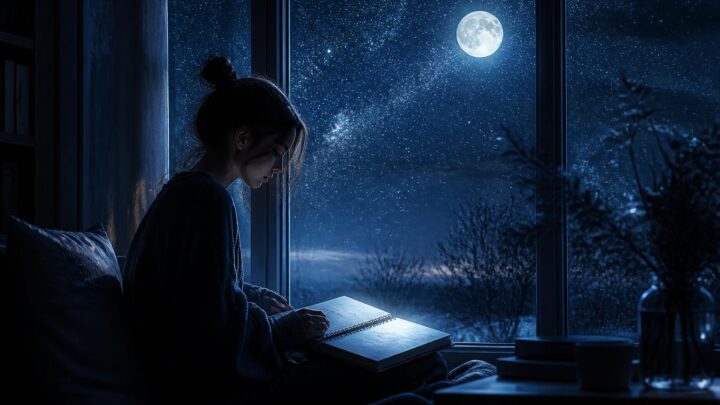
The Moon in the Birth Chart: An Emotional Landscape That Needs to Be Heard
While many people know the Sun sign as a symbol of identity and self-expression, the Moon in a birth chart points to a more private layer of experience. It speaks to the emotions that often arise before reason has a chance to speak, the need to be cared for, reactions under stress, and the feeling
Read more
The Ascendant and How Each Person Enters the World
When studying a birth chart, many people usually begin with the Sun sign because it is the most familiar placement. However, this single factor can hardly fully describe how a person appears in everyday life. Some people belong to the same zodiac sign but make entirely different impressions: one may be open and quick to
Read more
The Ascendant and How Each Person Enters the World
In a natal chart, many people first become familiar with the Sun sign because it is associated with their date of birth and is commonly used to identify their zodiac sign. However, if we want to understand more deeply how a person appears to the world, the Ascendant is also worth noting. The Ascendant, or
Read more
The Moon in the Birth Chart: A Map of Emotions and the Need to Be Understood
When exploring a birth chart, many people often begin with the Sun sign because it is the most familiar placement, associated with the date of birth and personality traits expressed outwardly. However, to understand inner life, looking only at the Sun sign is not enough. In the symbolic language of astrology, the Moon is often
Read more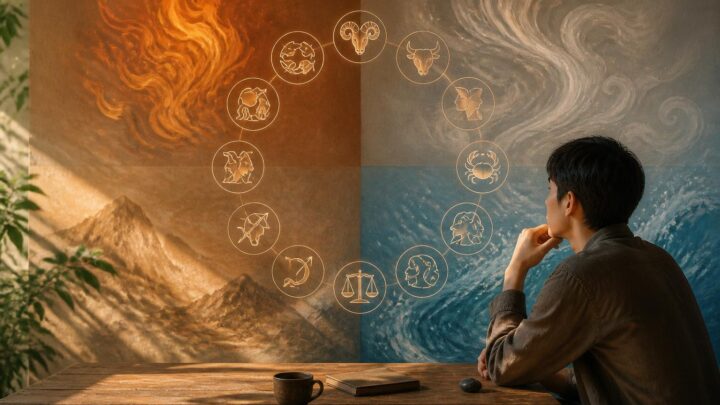
The Twelve Zodiac Signs and the Art of Reading Ourselves Through Differences
The Zodiac Should Be a Mirror, Not a Label In modern life, the zodiac often appears in many familiar situations. Someone may read a morning horoscope before starting the workday, ask a new acquaintance about their sign during a conversation, or use the characteristics of the twelve signs to explain why someone likes quiet, is
Read more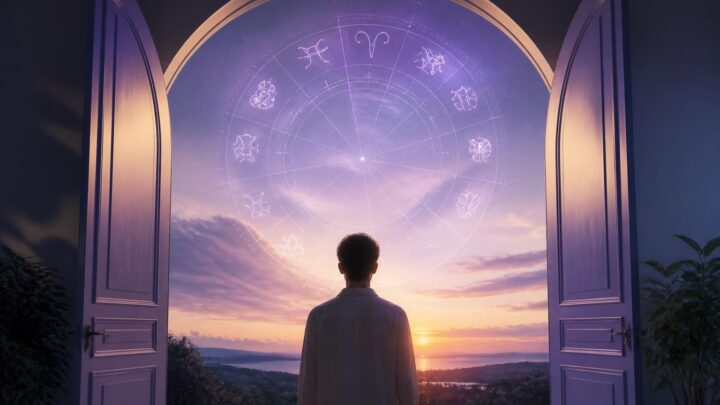
The Ascendant in the Birth Chart: First Impressions and How We Enter Life
In a personal birth chart, the Sun sign is often mentioned as a symbol of the ego and direction of development, while the Moon sign is associated with emotional life and the need for security. Alongside these two familiar placements, the Ascendant also plays a noteworthy role. It is the zodiac sign located on the
Read more