
Horoscopes · 24 November, 2026
The Phúc Đức Palace in Tử Vi: Spiritual Foundations and How a Person Moves Through Life’s Turbulence
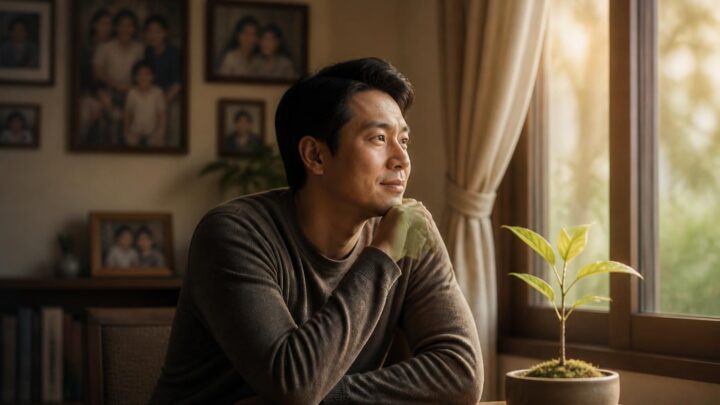
In Tử Vi, some palaces naturally attract attention because they are associated with money, careers, or relationships that are clearly visible in daily life. The Phúc Đức Palace, however, often lies behind those outward expressions. It is not a definite promise of good fortune, nor should it be understood simply as a predetermined verdict on happiness or unhappiness. When approached cautiously, this palace can be seen as a lens through which to reflect on spiritual foundations, family influences, and how a person recovers after difficult periods.
Everyone carries many things that are not easy to see with the naked eye. They may include habits formed within the family, ways of responding to loss, beliefs about safety, or a sense of belonging somewhere. These factors quietly influence choices, relationships, and the ability to withstand pressure. In traditional interpretations, the Phúc Đức Palace is the area often used to observe this underlying layer. Therefore, learning about the Phúc Đức Palace is not only about asking whether one has “blessings,” but also about identifying sources of emotional support and patterns that need to be adjusted.
How Is the Phúc Đức Palace Commonly Understood?
The concept of “blessings” in life does not mean only money, status, or having everything always go smoothly. A person may not possess many material advantages yet still have a supportive family, trustworthy friends, and an inner strength sufficient to start over. Conversely, someone with many opportunities may still frequently feel anxious if they lack a sense of security or are constantly pulled back into unresolved conflicts.
In chart interpretation, the Phúc Đức Palace is often associated with spiritual life, family traditions, the customs and values of one’s lineage, and the ability to experience inner peace. However, these associations should not be turned into rigid conclusions. A chart cannot replace real-life experience, education, social conditions, or personal effort. The symbols in Tử Vi are useful as points of reference only when they help people ask better questions about themselves.
The Phúc Đức Palace is also often considered in relation to other palaces. For example, a sense of peace may affect how a person works, builds a family, or uses money. Someone who is always afraid of scarcity may make very different financial decisions from someone with a stable belief in their own ability to adapt. Therefore, the Phúc Đức Palace should not be separated from the chart as a whole, and one should certainly not look at just a few stars and hastily draw conclusions about an entire life.
Family Influences and Inherited Patterns
Family is one of the first environments in which people learn what love, responsibility, success, and failure mean. Some families encourage each member to express their feelings, while others are accustomed to silence in order to avoid conflict. Some people grow up believing that difficulties can be resolved step by step, while others are constantly reminded that the outside world is full of risks. These messages may continue to exist in the way a person, as an adult, chooses a partner, a career, and a lifestyle.
When examining the Phúc Đức Palace, the factor of lineage should therefore be understood as something broader than simply “receiving blessings” or “carrying karma.” A responsible approach is to observe what a person has inherited from previous generations: patience, a spirit of mutual support, and a habit of learning, or, conversely, fear, harshness, and conflicts that have never been given a name. Recognizing these influences does not mean blaming one’s parents or denying the past. It is the first step toward distinguishing what should be continued from what needs to change.
A family that has experienced hardship may develop thrift, responsibility, and the ability to work hard. Yet from the same foundation, a person may also develop excessive anxiety about money, constantly feel that they are not good enough, or be unable to enjoy their achievements. Tử Vi may open up topics for reflection, but turning awareness into concrete change still depends on present choices.
Phúc Đức and the Ability to Recover from Turbulence
One practical way to understand the Phúc Đức Palace is to observe a person’s ability to recover. Recovery does not mean feeling no grief or fear, or always maintaining a calm appearance. It means being able to acknowledge what has happened, seek the necessary support, and gradually rebuild one’s rhythm of life. A person with a strong spiritual foundation is not necessarily spared upheaval, but they often have more ways to prevent an upheaval from completely defining them.
That foundation can come from many sources. A person may be supported by family, a friend who knows how to listen, a familiar community, or personal beliefs. Others may find strength in work, study, art, nature, and health-supporting habits. When reading a chart, instead of asking only, “Will I be able to get through this?” a more useful question is, “What do I usually rely on when I face a crisis?” and “What sources of support am I neglecting?”
These questions make the study of Tử Vi more closely connected to everyday life. If someone realizes that they tend to withdraw when under stress, they can proactively maintain a few safe relationships. If they realize that they always try to carry everything alone, they can practice sharing responsibilities and clearly expressing their needs. If they are frequently controlled by the past, they can seek suitable methods for processing their emotions instead of waiting for a prediction to change everything.
Phúc Đức Should Not Be Equated with Luck
A common mistake is to view the Phúc Đức Palace as a fixed measure of whether someone is lucky or unlucky. This approach can lead to two extremes. Some people become overconfident, believing that they have “great blessings” and can therefore disregard risks and responsibilities. Others become pessimistic when they see signs they dislike, limiting their own opportunities before anything has actually happened.
Life is naturally influenced by many factors. Economic circumstances, health, education, relationships, and specific decisions all play important roles. If used at all, a chart should be a tool for suggesting possibilities, not a basis for replacing reason. One should not rely on Tử Vi to make medical, legal, or financial decisions, or choices with major consequences, without considering real-world information.
Blessings are also not found only in receiving good things. Often, they are expressed through the ability not to hurt others while under pressure, knowing when to stop an argument, or being clear-minded enough to correct one’s mistakes. A person who keeps their word, treats others kindly, and creates trust in their relationships is helping build a peaceful foundation for themselves. This is something that cannot be seen merely through a symbol on a chart; it must be demonstrated through repeated actions each day.
Turning Chart Reading into a Process of Self-Observation
If you want to explore the Phúc Đức Palace in a healthy way, you can begin by recording the situations that make you feel supported or depleted. When facing difficulties, whom do you usually turn to? Do you allow yourself to rest? In your family, are there principles that have been repeated so often that you have never examined them? Are you holding on to a belief simply because you have heard it for so long, or do you truly find that it fits your current life?
Self-observation should take place calmly and should not be aimed at judging yourself. A pattern that once helped a person adapt in the past may no longer be suitable when circumstances change. For example, caution may once have protected someone in an unstable environment, but later it may cause them to miss opportunities for cooperation. Independence may once have been a strength, but when taken too far, it can turn into an inability to accept help.
In addition, it is important to distinguish between reflection and superstition. Reflection helps people better understand their reactions, needs, and responsibilities. Superstition often causes people to hand over all decision-making power to an external prediction. The Phúc Đức Palace can become a subject that opens a conversation with oneself, but it should not be used to instill fear, judge a lineage, or assert that a person cannot change their destiny.
The Value of Phúc Đức Lies in How One Lives in the Present
Whether approached through tradition or symbolism, the Phúc Đức Palace still conveys a thought-provoking message: inner life has a lasting influence on how people move through the world. A stable state of mind does not eliminate difficulties, but it helps us see them more clearly. A family that is still capable of listening does not guarantee that all its members will always agree, but it creates a place for them to return to after disagreements. A person who knows how to care for their mental health is not weak; they are someone who understands that resilience also needs to be nurtured.
Therefore, the most important question is not how much blessing the chart says one will receive, but what one is doing with the foundations one has been given. Are we turning our family’s support into a sense of responsibility toward others? Are we continuing to pass on to the next generation fears that we once endured? Do we have the courage to change a habit that has existed for many years but no longer helps us live better?
When viewed with clarity, the Phúc Đức Palace is not a statement that everything has already been arranged. It is more like an invitation to observe the roots of life: the beliefs, connections, and quiet sources of strength that support people. From there, each person can actively cultivate peace by living responsibly, maintaining healthy relationships, knowing when to seek help, and being willing to change what is no longer suitable. Phúc Đức is not only something inherited; in many respects, it is also something created through each mindful choice made today.
Related articles
The Phúc Đức Palace in Tử Vi: Spiritual Foundation and How a Person Navigates Life’s Ups and Downs
In a Tử Vi chart, many people tend to focus first on the Mệnh Palace, the Tài Bạch Palace, or the Quan Lộc Palace because these positions are directly associated with personality, money, and career. However, if we look only at outward manifestations, we may overlook a very important foundation: the Phúc Đức Palace. This
Read more
The Career Palace in Tử Vi: Reading How a Person Works, Grows, and Creates Value
In life, work is not merely a means of earning an income. It is also where a person demonstrates their abilities, confronts their limitations, learns how to cooperate, and gradually determines who they want to become. Therefore, when exploring Tử Vi, many people are interested in the Career Palace as an area that offers insight
Read more
The Career Palace in Tử Vi: Reading the Career Path Through Abilities and Ways of Acting
In Tử Vi, questions about work and career often revolve around more than whether a person can advance easily. Behind the desire to find a suitable occupation are broader concerns: how we work, what enables us to persevere, why we become easily exhausted in a certain environment, and when we should move forward or slow
Read more
The Palace of Fortune and Virtue in Tử Vi: The Spiritual Foundation Behind How a Person Lives and Makes Choices
In Tử Vi, some palaces easily attract attention because they are associated with money, work, or relationships. The Palace of Fortune and Virtue, however, is often discussed through broad concepts such as inherited blessings, family legacy, spiritual life, and invisible protection. For this reason, newcomers sometimes regard it as an area that is difficult to
Read more
The Phúc Đức Palace in Tử Vi and How to View a Person’s Spiritual Foundation
In many Tử Vi charts, the Phúc Đức Palace often creates a feeling of being more difficult to grasp than the palaces directly associated with work, money, or relationships. This is not an area that can easily be interpreted through a few brief conclusions such as success or failure, favorable circumstances or difficulties. The Phúc
Read more
The Career Palace in Tử Vi: Reading the Direction of Career Development Instead of Waiting for a Prediction
In modern life, questions about careers often go beyond choosing a job to earn a living. Many people want to know which environments suit them, whether they should develop their expertise or management abilities, and whether they should persevere on their current path or boldly change direction. When exploring Tử Vi, quite a few people
Read more