
Horoscopes · 24 November, 2026
The Phúc Đức Palace in Tử Vi: Spiritual Foundation and How a Person Navigates Life’s Ups and Downs
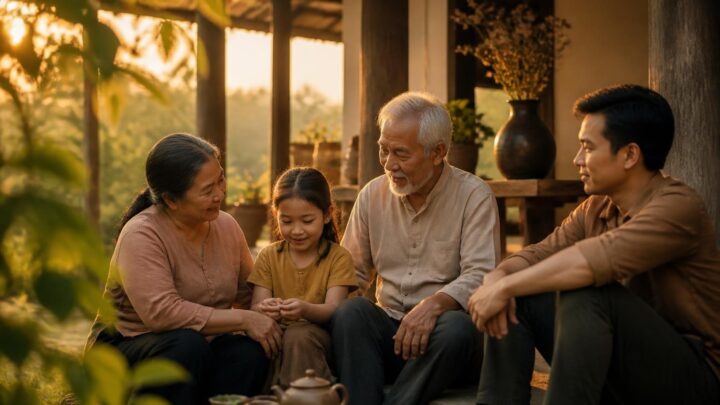
In a Tử Vi chart, many people tend to focus first on the Mệnh Palace, the Tài Bạch Palace, or the Quan Lộc Palace because these positions are directly associated with personality, money, and career. However, if we look only at outward manifestations, we may overlook a very important foundation: the Phúc Đức Palace. This is an area often used to reflect on spiritual life, family values, resilience in the face of adversity, and the ability to find inner balance.
The Phúc Đức Palace should not be understood simply as a “storehouse of luck” that determines whether a person will be rich or poor, fortunate or beset by difficulties. A more cautious approach views it as a symbol of the intangible resources a person inherits, develops, and nurtures throughout life. These may include the way a family faces difficulties, the habit of preserving close relationships, one’s beliefs about life, the ability to forgive, or calmness when things do not unfold as desired.
What Does the Phúc Đức Palace Suggest?
Symbolically, the Phúc Đức Palace is related to whether a person feels supported in life. Some people, even when facing obstacles, can easily find someone to share with, quickly regain their spirits, and see a way to resolve the problem. Others may possess many favorable conditions but often feel uneasy, find it difficult to rest, constantly fear loss, or feel that they must face everything alone. These two states show that “phúc” does not lie only in what can be measured externally, but also in how the mind receives and transforms experience.
When studying the Phúc Đức Palace, readers can ask themselves several relatable questions. What values has the family passed on to us? How do we usually respond to upheavals? Do we know how to seek help when necessary? Do close relationships provide a sense of security or create additional pressure? These questions make the reading of a Tử Vi chart more practical, because they bring Tử Vi symbolism back into concrete life.
The Phúc Đức Palace is also often associated with the spiritual atmosphere of one’s lineage and family. This does not mean that everyone in the same family will have exactly the same fate. Each individual is still influenced by their choices, environment, education, and personal circumstances. Nevertheless, patterns of thought repeated across generations can significantly affect how a person grows up. A family that values learning, keeps its word, and knows how to discuss problems will create a different foundation from a family that often remains silent, assigns blame, or avoids conflict.
Reading the Phúc Đức Palace as a Process, Not a Verdict
A common mistake when learning about Tử Vi is treating a palace as a fixed conclusion. If they see signs considered favorable, readers may become complacent and believe that everything will naturally turn out well. If they encounter a configuration regarded as difficult, they may instead become excessively worried, believing they cannot change their circumstances. With the Phúc Đức Palace, this extreme perspective is even more likely to cause misunderstanding, because spiritual life is constantly influenced by time, experience, and practice.
Instead of asking, “Is the Phúc Đức Palace good or bad?” one might ask, “Where does this person’s spiritual support come from, and how does it need to be strengthened?” Someone with a stable family foundation but little ability to care for their own emotions still needs to learn how to rest, set boundaries, and express their needs. Conversely, someone who has experienced considerable upheaval can still build a stable life by choosing healthy relationships, developing positive habits, and actively healing old wounds.
This way of reading also helps avoid labeling family members. The Phúc Đức Palace should not be used to conclude that a family is “blessed” or “lacking in blessings,” much less as a reason to blame parents or grandparents or deny one’s own efforts. If used at all, a chart should only be a tool for opening up reflection. Its value lies in helping people identify tendencies that deserve attention, not in replacing clear-minded decision-making.
The Relationship Between Spiritual Life and Everyday Choices
Phúc Đức is often felt most clearly through very ordinary things. A person who knows how to maintain connections with family, has a few trustworthy relationships, keeps a relatively stable daily routine, and knows when to stop before becoming exhausted often has a stronger spiritual foundation. These things do not create a sense of mystery, but they do help people handle difficulties more effectively. When the mind is not drained by prolonged conflict or unnamed anxiety, we have more energy to study, work, and care for others.
Conversely, habits that seem minor can weaken a sense of security. For example, constantly comparing oneself with others, keeping all resentments inside, viewing asking for support as a sign of weakness, or pursuing success to fill an inner fear. If these tendencies continue for a long time, a person may achieve many external goals and still not feel fulfilled. From the perspective of the Phúc Đức Palace, this is a reminder that quality of life depends not only on achievements, but also on the ability to live with oneself.
Nurturing “phúc” can therefore begin with concrete actions. Keeping promises within one’s ability to fulfill them, treating family members fairly, taking the initiative to reconcile once a conflict has settled, being grateful for help received, and not passing pain on to the next generation are all ways of building a family foundation. In addition, caring for one’s health, managing finances prudently, and choosing a suitable living environment can also help reduce anxiety. Phúc Đức does not lie only in kind thoughts; it is also expressed through the way a person takes responsibility for their life.
The Role of Family and the Ability to Create a New Foundation
Family is an important part of any discussion of the Phúc Đức Palace, but it is not the only factor. Some people are born into circumstances lacking emotional warmth yet still build a loving home of their own. Others are raised in materially sufficient conditions but need many years to learn how to communicate without causing harm. This shows that the influence of the past is significant, but it does not completely determine the future.
The ability to create a new foundation is especially important for people who feel they are repeating familiar patterns of behavior from their family. If we grew up in an environment of frequent blame, we can learn to pause before reacting, name our emotions accurately, and discuss the issue rather than attack the person. If we witnessed prolonged silence, we can practice calmly expressing what we want. If rest was not a habit in our family, we can regard self-care as a responsibility rather than selfishness.
These changes do not happen immediately. They require repetition, patience, and sometimes support from a trusted person or an appropriate professional. Tử Vi cannot replace methods of caring for mental health, nor should it be used to explain every psychological problem. When a person experiences prolonged suffering, severe insomnia, emotional collapse, or an inability to maintain normal daily activities, seeking professional support is essential.
Practical Applications When Reflecting on the Phúc Đức Palace
Those exploring the Phúc Đức Palace can begin by writing down three groups of things. The first group consists of the positive values passed down by the family, such as a sense of responsibility, love of learning, kindness, or the ability to overcome difficulties. The second group consists of patterns of behavior they do not want to continue repeating, such as avoiding dialogue, excessive control, or self-sacrifice without knowing their limits. The third group consists of the resources available in the present, including friends, relatives, work, healthy habits, and spaces that help them regain calm.
This practice turns an abstract concept into a clearer life plan. If we realize that we lack connection, we can take the initiative to call a family member or arrange a meaningful meeting instead of simply waiting for others to understand us. If we are frequently anxious, we can establish a stable routine, reduce unnecessary stimulation, and spend time observing our emotions. If we are carrying a family conflict, we can consider an appropriate conversation while accepting that reconciliation requires willingness from multiple sides.
More importantly, reflecting on the Phúc Đức Palace should be directed toward compassion. Everyone has limitations shaped by their own circumstances. Understanding those limitations is not about making excuses for hurtful behavior, but about recognizing them more clearly and creating an opportunity for change. When we learn to look at ourselves honestly but without harshness, we also become better able to look at our family members with compassion that still has boundaries.
Conclusion
The Phúc Đức Palace in Tử Vi can be viewed as a mirror reflecting one’s spiritual foundation, family influences, and the way a person seeks peace amid life’s changes. It is not a promise of an automatically favorable future, nor is it a sentence requiring people to accept everything predetermined for them. The most practical value of this palace lies in prompting questions about inner resources, family patterns, and the choices being repeated each day.
When we understand “phúc” as something that can be received, preserved, and nurtured, we become less dependent on waiting for luck or misfortune to decide our lives. A kind word, a responsible decision, one deliberate effort to correct a mistake, or a period of time spent resting can all help create a stronger foundation. Ultimately, reading the Phúc Đức Palace means reflecting on how people can live more deeply with the past, more mindfully in the present, and more deliberately sow positive values for the future.
Related articles
The Phúc Đức Palace in Tử Vi: Spiritual Foundations and How a Person Moves Through Life’s Turbulence
In Tử Vi, some palaces naturally attract attention because they are associated with money, careers, or relationships that are clearly visible in daily life. The Phúc Đức Palace, however, often lies behind those outward expressions. It is not a definite promise of good fortune, nor should it be understood simply as a predetermined verdict on
Read more
The Career Palace in Tử Vi: Reading How a Person Works, Grows, and Creates Value
In life, work is not merely a means of earning an income. It is also where a person demonstrates their abilities, confronts their limitations, learns how to cooperate, and gradually determines who they want to become. Therefore, when exploring Tử Vi, many people are interested in the Career Palace as an area that offers insight
Read more
The Career Palace in Tử Vi: Reading the Career Path Through Abilities and Ways of Acting
In Tử Vi, questions about work and career often revolve around more than whether a person can advance easily. Behind the desire to find a suitable occupation are broader concerns: how we work, what enables us to persevere, why we become easily exhausted in a certain environment, and when we should move forward or slow
Read more
The Palace of Fortune and Virtue in Tử Vi: The Spiritual Foundation Behind How a Person Lives and Makes Choices
In Tử Vi, some palaces easily attract attention because they are associated with money, work, or relationships. The Palace of Fortune and Virtue, however, is often discussed through broad concepts such as inherited blessings, family legacy, spiritual life, and invisible protection. For this reason, newcomers sometimes regard it as an area that is difficult to
Read more
The Phúc Đức Palace in Tử Vi and How to View a Person’s Spiritual Foundation
In many Tử Vi charts, the Phúc Đức Palace often creates a feeling of being more difficult to grasp than the palaces directly associated with work, money, or relationships. This is not an area that can easily be interpreted through a few brief conclusions such as success or failure, favorable circumstances or difficulties. The Phúc
Read more
The Career Palace in Tử Vi: Reading the Direction of Career Development Instead of Waiting for a Prediction
In modern life, questions about careers often go beyond choosing a job to earn a living. Many people want to know which environments suit them, whether they should develop their expertise or management abilities, and whether they should persevere on their current path or boldly change direction. When exploring Tử Vi, quite a few people
Read more