

 Tiếng Việt
 日本語
日本語 한국어
한국어 中文 (中国)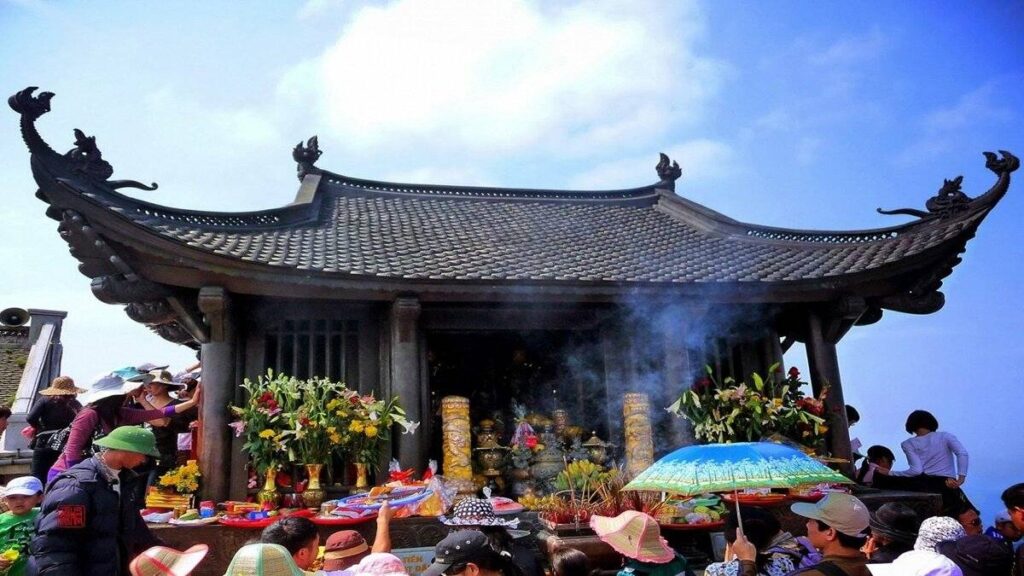
Every year, as the Lunar New Year arrives and the last chills of winter gradually give way to the gentle warmth of early spring sunlight, the spiritual life of Vietnamese people enters a familiar yet sacred rhythm. It is the season of spring openings, of festivals, of early year temple visits. More than a customary activity, this is a deeply rooted spiritual need that has existed in Vietnamese cultural life for centuries. Vietnamese people do not visit temples at the beginning of the year merely to ask for blessings, but to seek inner peace, to begin a new life cycle with a calmer state of mind after a year filled with change and uncertainty.
In traditional consciousness, the new year is not simply a transition of time but a renewal of spirit. After days of family reunion during Tet, stepping outside the familiar home to join the flow of spring travelers carries the meaning of opening one’s heart to the surrounding world. Early year pilgrimages therefore contain a distinct cultural depth. People travel to remember their roots, to express gratitude to their ancestors, and to entrust simple yet meaningful wishes such as health, peace, and harmony in relationships.
Temples have long held a special place within the structure of Vietnamese village culture. They are not only sites for religious practice but also communal spaces that preserve collective memory across generations. Visiting temples at the start of the year is a way for individuals to return to core moral values. Within the faint scent of incense and the echo of temple bells, Vietnamese people often find a rare moment of stillness amid an increasingly fast paced life.
Spring outings are also closely connected to the need for social bonding. Village festivals organized in the early days of the new year often serve as commemorations of guardian deities and historical figures who contributed to the protection and development of the community. At the same time, festivals create opportunities for social interaction, allowing relationships to be renewed after a year of busyness. From traditional folk games to solemn ceremonial processions, these activities form a vivid cultural tapestry reflecting the richness of Vietnamese spiritual life.
The cultural essence embedded in early spring festivals lies in the balance between belief and daily living. Historically, Vietnamese people have never separated spirituality from ordinary life but have viewed it as a natural component of existence. Visiting temples at the beginning of the year thus serves as a reminder to live more compassionately, to restrain negative impulses, and to seek harmony within society and nature.
However, in the context of modern society, many traditional values now face the risk of distortion. As material life becomes increasingly emphasized, spiritual needs are at times commercialized. Numerous spring festivals have gradually turned into overcrowded spaces dominated by activities focused on seeking personal gain. Temple visits may no longer originate from a desire for reflection but instead become an invisible competition to secure luck in wealth or career advancement.
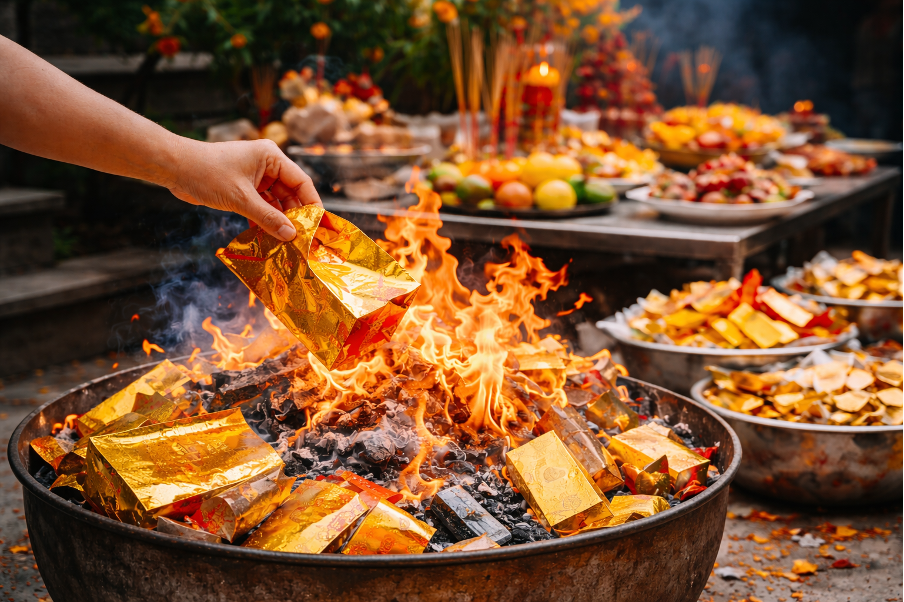
The phenomenon of praying for fortune through lavish offerings and placing stacks of money across altars has begun to alter the original meaning of temple visits. When faith becomes associated with material exchange, spiritual practice can easily slip toward superstition. Some individuals believe that larger offerings can be traded for divine favor in business success or professional promotion. As a result, behaviors such as scattering small denomination money throughout sacred spaces or burning excessive amounts of votive paper have become increasingly common.
Such distortions not only diminish the solemnity of spiritual environments but also raise serious concerns regarding cultural identity. When spring outings transform into opportunities for display and material expression, the communal and ethical values they once fostered begin to fade. Spiritual traditions accumulated over generations risk being replaced by short term utilitarian thinking.
Preserving the cultural soul of early year festivals has therefore become an urgent necessity. This does not imply denying the human desire for good fortune, but rather guiding spiritual practices in ways that remain consistent with traditional values. Early year temple visits should represent a journey inward, an opportunity to reflect on the past and to prepare for the coming year with a more positive mindset.
In a rapidly changing society, traditional springtime activities can serve as a form of psychological and cultural grounding. Yet to fulfill this role, collective effort is required to safeguard essential values. Festivals hold genuine meaning only when they encourage individuals to slow down, appreciate relationships, and aspire toward goodness in everyday life.
Preserving cultural identity does not mean rejecting all forms of change. What matters is the ability to distinguish between authentic belief and superstition, between sincere spiritual needs and material pursuit. When each individual enters a temple with a sense of calm sincerity, and when festivals regain their role as spaces of communal connection rather than material display, the cultural soul of Vietnam can be preserved across generations.
Spring openings, festival pilgrimages, and early year temple visits will always remain an inseparable part of Vietnamese spiritual life. Yet for these traditions to endure sustainably, greater awareness is needed in how they are practiced and understood. Culture resides not only in rituals themselves but also in the way people perceive and live alongside them through each passing spring.

ARTICLES IN THE SAME CATEGORY
Knowing How to Set Boundaries So You Can Live Kindly Without Exhausting Yourself
The Art of Repairing a Relationship After Words Cause Hurt
A Page Can Change the Way We Understand Ourselves
Don’t Rush to Guess What Others Mean from a Silence
Regaining Focus in a World That Is Always Pulling Us in Many Directions
Knowing How to Say No in Order to Live in Alignment with What You Truly Value
ARTICLES IN THE SAME GENRE
Heavenly Officials in Vietnamese Folk Belief: Bestowers of Blessings from the Celestial Realm
The Judge Figures in Vietnamese Folk Belief: Guardians of Justice in the Afterlife
The world is never short of those who judge others by their material possessions; however, the most concerning poverty of all is the lack of wisdom and self-cultivation.
Stay Away from Foolishness: Seven Forms of Self-Deception and the Path to Awakening
Letting Go of Attachment to Overcome Anxiety: When What Exhausts Us Is Not Life Itself, but the Way We Hold On to It
Drinking Tea or Living Life: When People Get Lost in Material Glamour and Forget Themselves