

 Tiếng Việt
 日本語
日本語 한국어
한국어 中文 (中国)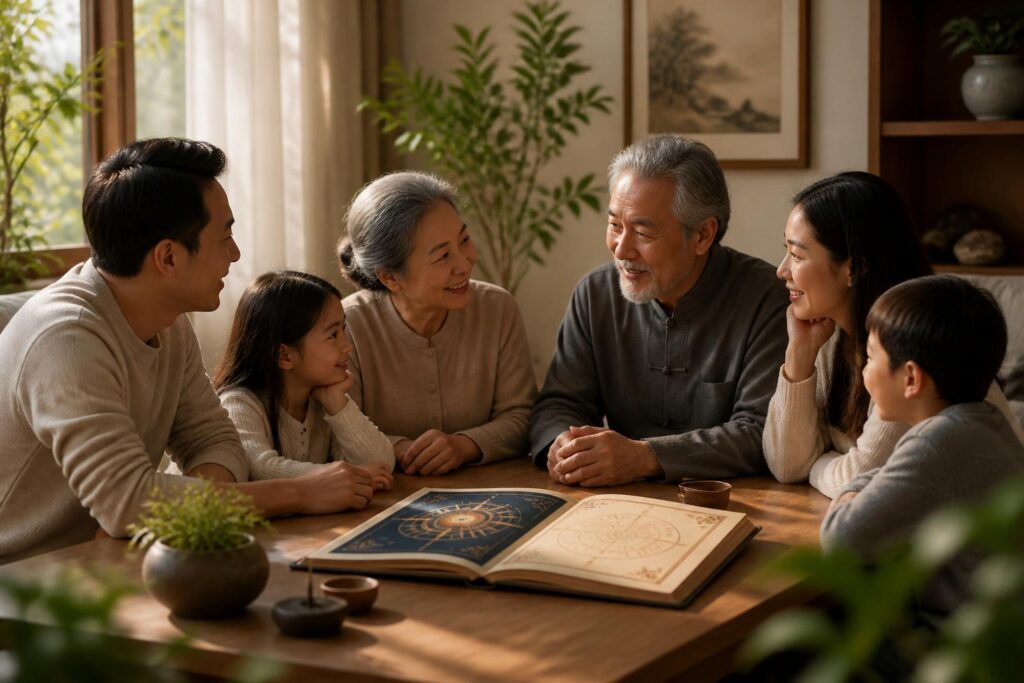
In a Tử Vi chart, the Phúc Đức palace is often mentioned when people want to understand their spiritual foundations, family way of life, and ability to maintain stability amid life’s upheavals. It should not be understood in the simplistic sense that anyone with a favorable Phúc Đức palace is certain to always have good luck, while those with unfavorable signs cannot lead a smooth life. When approached as a traditional symbolic system, Tử Vi is better suited to suggesting ways of reflecting on one’s living circumstances, inner habits, and the influences a person may receive from family, the surrounding environment, and their own conduct.
The Phúc Đức palace is often associated with the blessings of one’s lineage, spiritual life, beliefs, tranquility, and the feeling of being supported during difficult periods. However, these aspects should not be separated from the chart as a whole. A single palace cannot replace an overall consideration of the palaces, stars, the relationships among them, and the actual circumstances of the person concerned. The most practical value of learning about the Phúc Đức palace is that it helps each person ask: What is creating my sense of peace? What makes me easily unsettled? And which healthy foundations can I actively cultivate?
What aspects does the Phúc Đức palace suggest?
First of all, the Phúc Đức palace is often used as a way to reflect on inner life. Some people have relatively abundant material conditions but worry constantly, struggle to rest, or always feel unsafe. Conversely, some people go through many challenges yet remain calm, know how to find simple joys, and are not easily swept away by circumstances. From a symbolic perspective, the Phúc Đức palace can help readers pay closer attention to the difference between what they possess externally and their actual inner state.
Phúc Đức is also often associated with the family atmosphere and influences passed down through generations. From their family, a person may inherit not only property or a profession, but also ways of communicating, ideas about success, attitudes toward hardship, and ways of treating relatives. These habits are sometimes repeated across generations without being recognized. For example, a family that always emphasizes patience may foster perseverance in its descendants, but it may also cause them to become accustomed to suppressing their emotions. A family that values freedom may encourage independence, but sometimes lack cohesion if its members share little with one another.
In another respect, the Phúc Đức palace is also linked to the feeling of having a place where one belongs. When a person has a healthy relationship with their family, homeland, traditions, or a suitable community, they often gain an additional source of spiritual support for getting through unstable periods. This source of support does not necessarily have to be a large extended family. It may be a relative who knows how to listen, a trustworthy group of friends, a moderate spiritual life, or principles that help them avoid losing themselves under pressure.
Blessings are not only something one receives
The common understanding of Phúc Đức sometimes leads people to think that blessings are a kind of existing capital, passed down and impossible to change. This view can easily result in passivity or premature self-satisfaction. In real life, family foundations have a significant influence, but they do not completely determine how a person matures. Someone who grows up amid considerable deprivation can still build an upright life, create a warm family atmosphere, and become a source of support for the next generation. Conversely, a person with many advantages still needs to learn how to use their circumstances responsibly.
Therefore, “cultivating blessings and virtue” can be understood in a more familiar sense as building behaviors and relationships that make life deeper, more trustworthy, and more sustainable. It means keeping one’s word, behaving fairly, caring for loved ones within one’s ability, not taking advantage of other people’s vulnerability, and being willing to correct oneself after realizing that one has caused harm. These actions do not always produce immediate results, but they create credibility, peace of mind, and a better environment for those living alongside us.
Phúc Đức also does not mean having to sacrifice oneself in every circumstance. A person who is always yielding, takes all the responsibility upon themselves, or tries to please everyone may not necessarily have a healthy spiritual life. Kindness needs to be accompanied by boundaries. Knowing how to refuse what is unsuitable, leave a harmful relationship, and seek support when necessary are also ways of protecting one’s spiritual foundations. When people live in accordance with their values instead of chasing external approval, a sense of peace is more likely to take firm root.
How can one read the Phúc Đức palace without understanding it mechanically?
When learning about the Phúc Đức palace, the first important point is not to rush to conclusions based on a single star or an isolated sign. Traditional Tử Vi methodologies include different ways of placing stars, interpreting them, and assessing their combinations. The same symbol may be viewed in many different shades depending on its position, associations, and the chart’s overall structure. Therefore, absolute predictions such as “certain to become wealthy,” “bound to be unhappy,” or “unable to change one’s fate” are inconsistent with a cautious approach to this subject.
Second, it is advisable to distinguish between tendencies and conclusions. If an interpretation suggests that the person concerned tends to overthink, this can serve as a prompt to observe their habit of worrying ahead of time, sleep quality, and ways of handling pressure. If the chart is interpreted as emphasizing family, the reader can reconsider the level of their connection with relatives rather than automatically assuming that all relationships are good. A useful reading is one that opens up questions and possibilities for adjustment, not one that confines a person within a fixed label.
Third, all observations drawn from Tử Vi should be considered alongside specific circumstances. Mental health, economic conditions, family history, and current relationships can all deeply affect how a person feels. When facing a psychological crisis, bereavement, or domestic violence, seeking support from a trusted person and professional services should take priority over any interpretation. Tử Vi can be a cultural language for self-observation, but it should not replace medical, psychological, or legal advice, or important decisions based on evidence.
Practical ways to cultivate “blessings” in daily life
Caring for the Phúc Đức palace, if interpreted in a practical way, can begin with very ordinary things. First is creating a rhythm of life that includes periods of rest. A mind constantly stretched by work, information, and expectations can hardly experience peace, even when external conditions are favorable. Rest does not necessarily require a distant trip. It may be an evening spent limiting electronic devices, a walk, a few minutes of sitting quietly, or a habit of writing down the things that are weighing on one’s mind.
Next is taking the initiative to repair meaningful relationships. Not every disagreement needs to be resolved immediately, but many wounds persist because the parties never clearly express their needs and boundaries. A sincere conversation should begin by describing one’s own experience rather than blaming the other person. Knowing how to listen, apologize when necessary, and accept that some relationships can only be maintained at an appropriate distance are all expressions of spiritual maturity.
Families can also strengthen positive foundations through small rituals. A meal in which family members are genuinely present, checking in on older relatives, preserving family stories, or caring for a shared living space can create a sense of connection. These things do not eliminate every difference, but they help family members recognize that a family is not only a place where responsibilities are shared; it is also a place where each person is seen and respected.
In addition, doing good should be accompanied by awareness. Helping others within one’s means, contributing to the community, or giving opportunities to people who need support are ways of creating a positive impact. However, kindness should not become a form of display, bargaining, or unlimited burden-bearing. A meaningful act often begins with willingness, respect for the recipient’s dignity, and care not to harm the health, finances, or boundaries of the person giving.
The value of the Phúc Đức palace in understanding oneself
More broadly, the Phúc Đức palace reminds readers that a worthwhile life is not measured only by achievements, money, or social status. Being able to rest without feeling guilty, preserve one’s kindness when no one is watching, have people one can trust, and know how to return to fundamental values are also important forms of success. These things are often quiet and difficult to express in numbers, yet they determine how a person moves through periods that cannot be controlled.
No one can completely choose the family into which they are born, the events that have occurred, or every influence from the past. Yet each person still has the ability to choose how to continue. One can begin by identifying a habit that is exhausting them, finding a less hurtful way to communicate, taking more consistent care of their health, or building a safe circle of relationships. Each small choice, when repeated for long enough, can become part of a new foundation.
The Phúc Đức palace in a Tử Vi chart should therefore be approached as an invitation to reflect on one’s spiritual roots, rather than as a fixed sentence about the future. Whether one believes greatly or only a little in Tử Vi, each person can still draw a useful question from it: What am I receiving from my family and the past, and what do I want to leave for those who come after me? The answer does not lie entirely within a single chart. It is formed through how we live, how we heal, how we treat others, and how we create peace within our own lives.

ARTICLES IN THE SAME CATEGORY
The Wealth Palace in a Tử Vi Chart: A Look at Money Management and Personal Values
The Career Palace in a Zi Wei astrology chart: Career orientation and ways to develop one’s abilities
The Phúc Đức Palace in a Tử Vi Chart: Spiritual Foundations, Family Values, and How to Cultivate Inner Peace
The Wealth Palace in a Tử Vi Chart: Perspectives on Money, Management Ability, and the Value of Work
The Quan Lộc Palace in a Tử Vi Chart: Career Orientation and Building One’s Position
The Phúc Đức Palace in a Tử Vi Chart: Spiritual Foundations, Family Traditions, and Ways to Cultivate Inner Peace
ARTICLES IN THE SAME GENRE
The 12 Zodiac Signs and How Each One Establishes Healthy Boundaries
Learn to Repair Before Replacing: A Slower Way of Living in an Age of Fast Consumption
Living Mindfully in an Age of Information Overload
From Knowing a Lot to Understanding Deeply: How to Build Systematic Thinking
Setting Boundaries in Digital Life to Regain Focus
The Art of Slowing Down in a World That Is Always Urging Us On