

 Tiếng Việt
 日本語
 한국어
 中文 (中国)
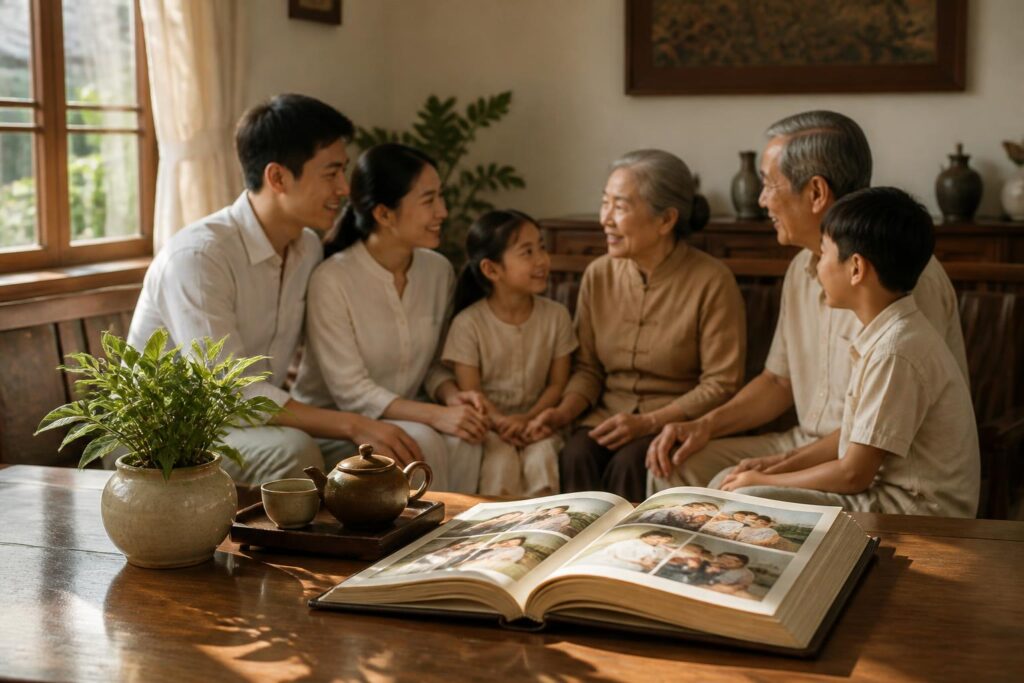
What does the Phúc Đức Palace represent?
In the system of Tử Vi, the Phúc Đức Palace is often regarded as one of the particularly profound palaces. While many other palaces point to more readily observable aspects such as work, money, marriage, or health, the Phúc Đức Palace leans toward the inner foundation. This may include spiritual life, the influence of family and lineage, the way a person experiences peace, as well as their ability to remain steady when circumstances do not unfold as expected.
In the traditional understanding, the concept of “blessings” does not simply mean good luck. Blessings may also be viewed as a resource accumulated through one’s way of life, how one treats others, and the values passed down within a family. Therefore, when exploring the Phúc Đức Palace, readers should not ask only whether they are blessed or not, but should also ask themselves: What have I inherited from my family, what patterns of behavior am I repeating, and what can I further cultivate in my own life?
Tử Vi is a traditional system of symbols and interpretation, not a tool that replaces practical decision-making or scientific assessments of personality and destiny. A chart may suggest themes for reflection, but the meaning of those themes also depends on each person’s circumstances, choices, and maturity.
Three common layers of meaning associated with the Phúc Đức Palace
Spiritual foundation and a sense of security
One aspect commonly associated with the Phúc Đức Palace is the ability to find stability within oneself. Some people live amid many changes yet still maintain a regular rhythm of life, know how to share, and recover after disappointment. Others may have relatively favorable external conditions but frequently feel anxious, struggle to rest, or constantly feel the need to prove their worth. In symbolic interpretation, this difference is often considered alongside the story of one’s spiritual foundation.
This foundation does not necessarily come from a perfect family. Sometimes, a person develops strong inner resilience because they were taught from an early age to take responsibility, name their emotions, and respect other people’s boundaries. Conversely, experiences of insecurity can cause a person to grow up constantly alert, find it difficult to trust, or always fear loss. When approached as a form of self-observation, the Phúc Đức Palace can help readers recognize such patterns instead of treating them as an unchangeable fate.
The influence of family and lineage
The Phúc Đức Palace is also often associated with family traditions, multigenerational memories, and the intangible things passed from one generation to the next. These may include a spirit of academic dedication, habits of saving, the ability to form close bonds, perseverance in adversity, or beliefs about living kindly. On the other hand, families may also pass down pressures such as fear of failure, the belief that one must sacrifice all personal needs, or the habit of remaining silent in the face of conflict.
These influences are not always expressed in words. A child may learn how to behave by observing adults: how they resolve disagreements, talk about money, face illness, or react when a family member chooses a different path. As people grow older, they often want both to preserve the beautiful things and to adjust habits that are no longer appropriate. Thus, looking at the Phúc Đức Palace can also be an opportunity to distinguish between gratitude toward one’s family and continuing to repeat every pattern simply because it has existed for a long time.
The ability to receive and create support
A person with a strong Phúc Đức does not necessarily mean someone who is always helped by others. A more practical meaning may lie in the ability to build healthy relationships, seek support when needed, and also be willing to support others within one’s capacity. Support does not come only from relatives or people in special positions. It may appear in the form of a friend who knows how to listen, a trustworthy colleague, a calm living environment, or a habit that helps the mind return to balance.
Conversely, people who always reject support out of fear of being indebted, or who turn to others only when a crisis has become overwhelming, may feel that life is heavier than necessary. From this perspective, the Phúc Đức Palace raises questions not only about one’s “share of blessings,” but also about the capacity to connect. Peace is sometimes created by knowing how to speak honestly about difficulties, express gratitude at the right time, and establish boundaries with relationships that leave one exhausted.
The Phúc Đức Palace should not be interpreted in an absolutely deterministic way
In the process of learning about Tử Vi, a common mistake is to treat one palace as the final conclusion about a person’s life. For example, if someone hears that the Phúc Đức Palace shows signs of challenges, they may hastily believe that they are unlucky or that their family has serious problems. This approach can easily create anxiety and even cause readers to view ordinary events through a lens of fear.
In reality, any symbol in a chart needs to be considered as part of the whole and within the context of a person’s actual life. A sign regarded as difficult does not necessarily bring only disadvantages. It may suggest a need for maturity, the ability to become self-reliant, or the need to build a spiritual foundation different from that of previous generations. Similarly, a configuration regarded as favorable does not guarantee that a person will always be peaceful if they live irresponsibly, neglect their mental well-being, or repeatedly make harmful choices.
What matters is not using a chart to judge one’s parents, blame relatives, or make major decisions in a state of panic. Matters involving health, finances, the law, and family relationships should be considered through reliable information, frank dialogue, and appropriate support. If used at all, Tử Vi should serve only as an open-ended language through which each person reflects on themselves.
How to turn interpretation into everyday practice
Instead of trying to reach the conclusion that they are “blessed” or “less blessed,” readers can begin by observing the sources of peace already present in their lives. Keeping a journal of situations that cause stress, how one reacts, and what helps one recover can provide more concrete information than a vague prediction. Over time, we may recognize that we often become unbalanced because we do not rest enough, expect too much of ourselves, fear disappointing others, or have not learned how to say no.
Within a family, one useful practice is to talk about the stories of previous generations with curiosity and respect. Asking grandparents and parents about their childhoods, the times they overcame difficulties, or the values they wish to pass on can help a person better understand the origins of many beliefs. However, understanding does not mean having to accept everything. Everyone has the right to retain kindness, a sense of responsibility, and resilience while changing the way they communicate, raise children, or resolve conflicts if old methods cause harm.
Nurturing Phúc Đức is also expressed through small but consistent actions. It means keeping one’s promises within one’s ability, not taking advantage of other people’s vulnerability, caring for one’s living space, making time for loved ones, and knowing how to apologize when one has done wrong. These actions should not be carried out as a transaction to obtain good luck. Their value lies in creating a dependable living environment where people can feel respected and have the opportunity to make amends.
In addition, we need to learn to accept the limits of life. Not every loss is a sign of bad karma, just as not every success proves that someone has lived more correctly than others. Some things lie beyond our control, and maturity sometimes begins with clearly distinguishing our own responsibilities from things that cannot be forced. When we can do that, we waste less energy searching for mystical causes behind every event and have more strength to address the problems in front of us.
The value of the Phúc Đức Palace in modern life
In the rhythm of modern life, people often measure themselves by productivity, income, achievements, or recognition on social media. These measures may be useful within certain limits, but they do not fully answer the question of whether a person is living peacefully. The Phúc Đức Palace, when understood as a symbol of spiritual foundation and the continuation of values, reminds us to pay attention to the part of life that is not easy to display.
A blessed family is not necessarily a family in which disagreements never occur. It may be a family that knows how to return to dialogue after an argument, respects a member who needs personal space, and does not turn love into control. A person with inner strength is not someone who is never sad or afraid. They may still be hurt, but they know how to seek help, learn from experience, and avoid letting a difficult period define their entire identity.
Therefore, the most significant meaning of the Phúc Đức Palace may not lie in predicting how much good or bad fortune will come. It lies in the reminder that peace must be built through choices repeated every day. Family heritage may influence us, but it does not completely determine how we live. What we receive from previous generations can be preserved, adjusted, or healed so that it becomes a better foundation for the generations to come.
Conclusion
The Phúc Đức Palace in a Tử Vi chart often opens up a story about spiritual life, family influence, the ability to connect, and resilience in the face of change. Reading this palace with awareness can help each person identify the values that support them while also recognizing the patterns that need to change. Rather than viewing “blessings” as a fixed reward granted in advance, we can understand them as a process created through the way we live, treat others, and care for our inner selves.
A chart can be the starting point for self-reflection, but the deepest answers still come from concrete actions. When we know how to appreciate the good things we have received, take responsibility for our choices, and actively create safety for those around us, we are contributing to the cultivation of Phúc Đức in the most practical sense: making the present life kinder, steadier, and more peaceful.

ARTICLES IN THE SAME CATEGORY
The Wealth Palace in a Zi Wei Astrology Chart: Looking at Money Management and Personal Values
The Career Palace in a Tử Vi Chart: Career Orientation and How to Develop One’s Abilities
The Phúc Đức Palace in a Tử Vi Chart: Spiritual Foundations and Ways to Cultivate a Peaceful Life
The Wealth Palace in a Tử Vi Chart: A Look at Money Management and Personal Values
The Career Palace in a Zi Wei astrology chart: Career orientation and ways to develop one’s abilities
The Phúc Đức Palace in a Tử Vi Chart: Spiritual Foundations, Family Values, and How to Cultivate Inner Peace
ARTICLES IN THE SAME GENRE
When There Are Too Many Choices, How Can We Make Wiser Decisions?
The 12 Zodiac Signs and How Each One Establishes Healthy Boundaries
Learn to Repair Before Replacing: A Slower Way of Living in an Age of Fast Consumption
Living Mindfully in an Age of Information Overload
From Knowing a Lot to Understanding Deeply: How to Build Systematic Thinking
Setting Boundaries in Digital Life to Regain Focus