

 Tiếng Việt
 日本語
 한국어
 中文 (中国)
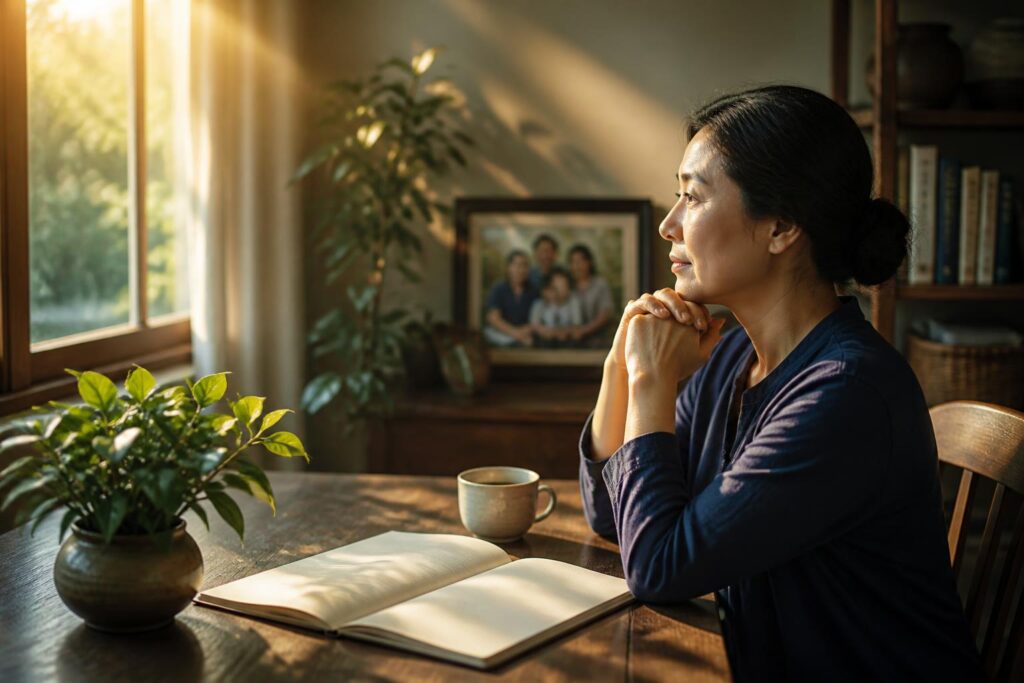
In a tử vi chart, many people tend to focus first on career, money, or marriage. However, there is one palace that plays a foundational role but is sometimes not given the attention it deserves: the Phúc Đức Palace. According to the traditional approach, this palace is associated not only with the blessings of one’s family or lineage, but also with spiritual life, the ability to endure adversity, and the sense of inner peace within each person.
Tử vi should be viewed as a symbolic system for reflection, not as a fixed verdict on the future. A palace with many favorable signs does not mean that a person will always be lucky, just as a palace considered less favorable does not mean that life will consist entirely of misfortune. The value of exploring the Phúc Đức Palace lies in the way it encourages each person to observe their family foundations, emotional habits, and the way they face things beyond their control.
How is the Phúc Đức Palace commonly understood?
In common interpretations, the Phúc Đức Palace is associated with blessings, family traditions, spiritual life, and the ability to experience tranquility. The concept of “blessings” here should not be understood solely as money, status, or lucky breaks. Blessings can also manifest in a family that supports one another, a strong inner life, the ability to remain kind in difficult times, or knowing how to be content with what one has.
Therefore, when examining the Phúc Đức Palace, interpreters often consider several layers of meaning. One layer concerns the influence of family and lineage, such as ways of living, beliefs, or values passed down from previous generations. Another reflects how an individual finds joy, peace, and emotional support. The remaining layer relates to psychological resilience in the face of upheaval, because some people can remain clear-minded when confronted with difficulties, while others are easily overcome by anxiety or lose their sense of direction.
These meanings do not exist separately from the other palaces in a chart. The Phúc Đức Palace should only be considered in relation to the overall structure, living circumstances, and practical choices of the person concerned. If one palace is isolated and used to make an absolute conclusion, the interpretation can easily become one-sided.
The influence of family and lineage
One of the themes often mentioned when discussing the Phúc Đức Palace is the influence of family. Everyone is born into different circumstances and receives different lessons from their parents and grandparents. Some families value learning, a sense of responsibility, and compassion. Other families are affected by prolonged conflict, silence, or heavy expectations. Whether viewed through tử vi or psychology, the family environment can leave a profound mark on how a person sees themselves and the world.
However, family influence is not an unchangeable fate. Someone who grows up lacking emotional affection can still actively build a healthier home. A person who has witnessed much discord can still learn to communicate calmly and establish appropriate boundaries. If the Phúc Đức Palace is used as a tool for reflection, it can help each person recognize what should be preserved, what needs healing, and what should not continue to be passed on to the next generation.
The concept of phúc đức therefore does not speak only about what has been received, but also about what is being created. Caring for a loved one, behaving responsibly, acting honestly at work, or knowing when to stop before hurting someone else can all be seen as concrete expressions of building a spiritual foundation for the family.
The ability to find peace in everyday life
The Phúc Đức Palace is also often associated with how a person enjoys life. Some people only feel happy when they achieve major goals, while others find energy in simple activities such as reading, caring for plants, cooking a meal, or talking with loved ones. There is no single way of seeking happiness that is right for everyone. What matters is whether each individual understands their true needs.
When spiritual life is stable, people are generally able to view problems with the necessary distance. They may still feel sad, angry, or disappointed, but they do not allow a passing emotion to determine all their actions. Conversely, when there is constant inner unrest, even small matters can easily become major sources of pressure. From a symbolic perspective, a Phúc Đức Palace interpreted as having many challenges may point to a need for emotional care, rather than being used to conclude that the person is destined to suffer.
Peace is not a state of always being cheerful. It is the ability to accept that life contains both favorable circumstances and uncertainty while still maintaining one’s own direction. A person with a strong inner life does not necessarily possess more than others, but they often know what truly matters to them. They also tend to recover better after failure because they do not place their entire self-worth in a single outcome.
The role of habits and personal choices
Many approaches to tử vi emphasize the element of blessings, but if people merely wait for good fortune, they can easily overlook their own responsibility. Given the same circumstances, two people may respond in completely different ways. One may choose to nurture resentment, while the other seeks to learn and adjust. One may repeat hurtful ways of communicating, while the other actively looks for ways to change. Small choices like these, when repeated over a long period, shape the quality of one’s spiritual life.
To strengthen the Phúc Đức foundation in a practical sense, one can begin by observing oneself. When stressed, do we usually react by becoming silent, losing our temper, avoiding the issue, or seeking approval? When we achieve what we want, do we know how to enjoy it, or do we immediately move on to another goal? When conflict arises in the family, do we want to resolve the problem, or merely prove that we are right? These questions are more valuable than trying to find a simple conclusion that a chart is good or bad.
In addition, maintaining a balanced rhythm of life is also important. Getting enough sleep, working within reasonable limits, making time for healthy relationships, and learning to say no all help protect one’s peace of mind. These actions have nothing mystical about them, but they are precisely what create the foundation for facing change with a more clear-minded attitude.
Points of caution when interpreting the Phúc Đức Palace
The subject of Phúc Đức can lead people toward two extremes. On one side, they may treat the chart as absolute, believing that every benefit or misfortune has already been predetermined. On the other, they may completely reject the value of symbolic reflection. A more balanced approach is to view tử vi as a cultural language that helps people ask questions about themselves, while not using it as a substitute for professional knowledge or practical decisions.
In particular, the Phúc Đức Palace should not be used to judge the morality of a family or to claim that someone is facing difficulties because they “lack blessings.” Such language can easily cause harm and overlook many objective factors, such as economic conditions, health, the social environment, and unforeseen events. Phúc đức should not become a tool for blaming people who are already experiencing hardship.
Caution is also needed with advice that makes readers fearful, dependent, or compelled to spend money on unfounded solutions. If information from a chart causes you prolonged anxiety or insomnia, or leads you to make an important decision hastily, that is a sign to stop and seek appropriate support. Tử vi may suggest a perspective, but it should not take away each person’s agency.
Turning the study of Phúc Đức into an opportunity to live better
Understanding the Phúc Đức Palace can begin with looking back at the family values we carry with us. What from previous generations has helped us mature? What fears, behaviors, or prejudices are we repeating even though they are no longer appropriate? What kind of atmosphere are we creating for the people who live around us? These are questions capable of turning an abstract concept into concrete observation.
Each person can also build their own “place of refuge” in daily life. It might be a quiet space, a group of trustworthy friends, a habit of writing down one’s thoughts, or time devoted to meaningful activities. When the mind is cared for regularly, people generally become less dependent on predictions from outside sources. They can consult tử vi without being swept up in fear, while also knowing how to take responsibility for their decisions.
Ultimately, the Phúc Đức Palace does not merely ask how much good fortune a person has received; it also raises the question of how they are using what they have. A good family foundation needs to be preserved through gratitude and responsibility. Even circumstances filled with challenges can become a starting point for growth if people are patient enough to change.
In its most positive sense, Phúc Đức is a reminder of inner life and the connections between generations. Peace is not a gift that appears only after an interpretation; it is cultivated through every word, action, and choice made each day. When people learn to view their charts with clear-mindedness, they can receive the insights offered by tradition while still retaining their autonomy, compassion, and ability to build a meaningful life for themselves.

ARTICLES IN THE SAME CATEGORY
The Wealth Palace in a Tử Vi Chart: Understanding How to Create and Use Money
The Wealth Palace in a Tử Vi Chart: Understanding How to Build and Use Money
The Spouse Palace in a Tử Vi Chart: Viewing Marriage with Clarity and Understanding
The Career Palace in a Tử Vi Chart: A Perspective on Career, Responsibility, and the Path of Development
The Phúc Đức Palace in a Tử Vi Chart: Spiritual Foundations and Ways to Cultivate Blessings
The Tài Bạch Palace in a Tử Vi Chart: A Way of Looking at Money, Values, and Management Ability
ARTICLES IN THE SAME GENRE
When Belief Guides the Way We See the World
Knowing When to Ask: A Skill That Opens the Door to Deeper Conversations
Being Busy Doesn’t Mean Making Progress: Rethinking How We Use Our Time
When There Are Too Many Choices, How Can We Make Wiser Decisions?
The 12 Zodiac Signs and How Each One Establishes Healthy Boundaries
Learn to Repair Before Replacing: A Slower Way of Living in an Age of Fast Consumption