

 Tiếng Việt
 日本語
 한국어
 中文 (中国)
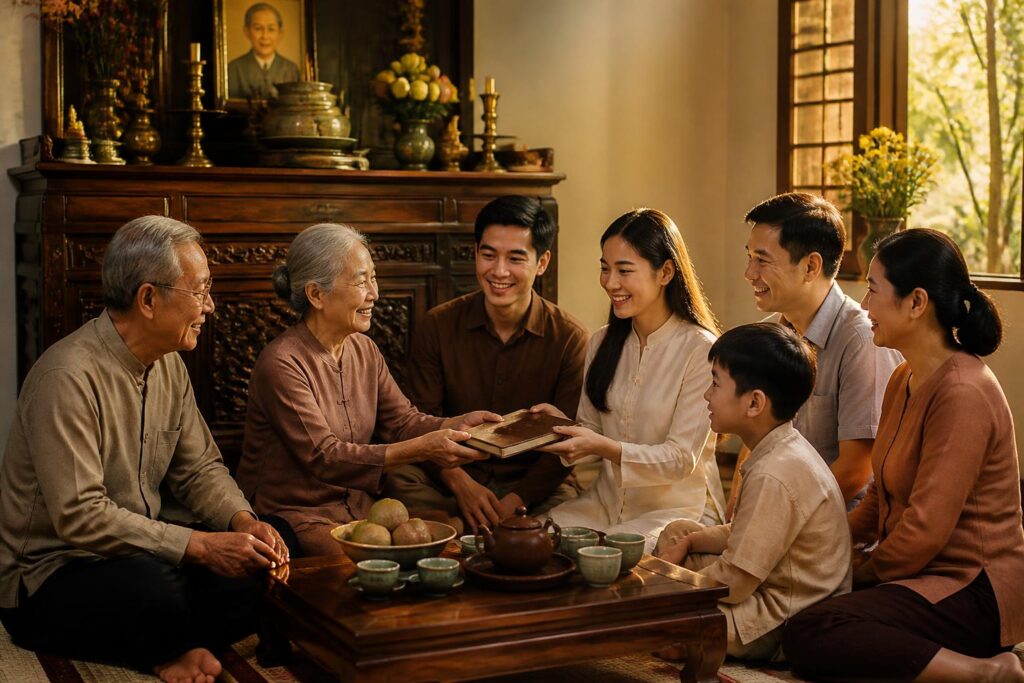
In a tử vi chart, the Phúc Đức Palace often raises profound questions about a person’s life: What helps us remain steady when circumstances change? Why do some people easily find peace while others constantly feel anxious? And what influences from our family and lineage have quietly shaped the way we view life? This is not a palace used merely to predict whether someone will be lucky. If approached carefully, the Phúc Đức Palace can be regarded as a symbol of spiritual foundations, family patterns, beliefs, and the ability to nurture inner stability.
Tử vi is a traditional interpretive system, not a scientific tool capable of determining the future with certainty. Therefore, content related to the Phúc Đức Palace should be read as a reference and a means of self-observation. The value of exploring it does not lie in surrendering oneself to a chart, but in recognizing the habits, beliefs, and relationships that are influencing one’s life. Viewed in this way, “blessings” are no longer something entirely passive, and “virtue” is not merely an abstract concept. They are the results cultivated through the way a person lives, treats others, and handles what they have inherited.
How is the Phúc Đức Palace commonly understood?
In common interpretations, the Phúc Đức Palace is associated with spiritual life, familial blessings, the traditions of one’s lineage, and the ability to enjoy peace of mind. This palace is also often considered alongside questions about belief, inner life, connection to one’s roots, and a person’s sense of belonging. Some people possess many external advantages yet still find it difficult to feel at ease; others experience considerable deprivation but retain clarity, gratitude, and the ability to find simple joys. In its symbolic sense, the Phúc Đức Palace directs attention to the foundation behind these differences.
Spiritual foundations are shaped not only by direct teachings. They are also reflected in how previous generations resolved conflicts, faced failure, used money, cared for the elderly, raised children, and treated neighbors. A family that regularly keeps its promises, knows how to admit mistakes, and respects boundaries may pass a sense of security on to its descendants. Conversely, prolonged conflicts, imposed silence, or unresolved secrets can also affect how a person understands love, responsibility, and trust.
This does not mean that people are locked into their family history. If used for reflection, a chart should open up more questions rather than close off the possibility of change. Someone who realizes that they are repeating a hurtful pattern of behavior can still learn to stop, seek support, and build a new way of living. It is this capacity for transformation that makes exploring the Phúc Đức Palace more meaningful than simply waiting for a favorable or unfavorable prediction.
Three important layers of meaning of the Phúc Đức Palace
Inner life and the ability to find peace
The first layer of meaning concerns how a person lives with themselves. Some people need many activities, social interactions, and achievements to feel that they are living a meaningful life. Others need personal space, quiet, or a stable routine to restore their energy. The Phúc Đức Palace is often used to open up reflection on this difference, but it should not be turned into a fixed label. Inner life is always influenced by age, experience, the work environment, and important relationships.
When observing oneself, one can begin with simple questions: What do I usually do when I am anxious? Can I rest without feeling guilty? Do I seek reassurance from within, or do I always need others to validate me? Am I confusing busyness with peace? These questions are more practical than trying to find an absolute conclusion in a chart. They help each person recognize what they are failing to care for, such as sleep, time alone, an honest conversation, or a more compassionate attitude toward themselves.
The influence of family and roots
The second layer is the connection with family, one’s lineage, and the values passed down through generations. A person may inherit from their family a love of learning, diligence, moderation, or the ability to care about the community. They may also carry fears, prejudices, and defensive patterns that they never consciously chose. Recognizing these influences is not intended to assign blame to previous generations. Each generation acts within its own circumstances and limitations. What is necessary is to see what deserves to be preserved and what should be changed.
Roots are not found only in major rituals. They also exist in the family meal that is maintained, stories about deceased relatives, the way a family names and discusses loss, or a small habit such as helping one another when difficulties arise. These ordinary things create a sense of continuity between generations. When people understand the origins of a value, they often have more choices in deciding how to accept it. We can preserve filial devotion without accepting blind sacrifice; we can honor tradition while still allowing ourselves to live differently in ways that are no longer appropriate.
How a person receives fortune and misfortune
The third layer concerns how we interpret favorable and unfavorable events. Some people see a small opportunity as a foundation for making an effort. Others see only shortcomings and believe that they are always unlucky. When faced with upheaval, some people seek to learn, connect with others, and adjust; others may become trapped in a feeling of injustice. From a gentle interpretive perspective, the Phúc Đức Palace helps raise questions about a person’s “capacity” for happiness, loss, and uncertainty.
The ability to enjoy blessings is not only about receiving many good things. It also involves knowing how to accept, preserve, share, and avoid destroying good things through suspicion or greed. An invitation to collaborate, a kind relationship, or a period of peace all need to be received with awareness. If people always live defensively, they may turn even an opportunity into a burden. If they trust too easily, they risk overlooking necessary boundaries. The balance between openness and self-protection is an important part of a blessed life.
How can the Phúc Đức Palace be read without falling into fatalism?
A responsible interpretation should avoid separating one palace from the entire chart and from the actual circumstances of the person being consulted. The elements in a chart are generally considered in relation to one another, but even after taking the whole chart into account, conclusions should remain only a reference. An interpretation should not be used to assert that someone is certain to enjoy blessings, certain to suffer misfortune, or destined to bear the mistakes of their ancestors. Such absolute conclusions can easily create fear, shame, and dependence.
Instead, the Phúc Đức Palace can be viewed as a map of questions. If an interpretation emphasizes spiritual life, observe the quality of your rest and your ability to balance emotions. If it mentions family influence, explore the values being passed down within the household. If it suggests anxiety, examine its specific causes: work pressure, an unsafe relationship, unprocessed memories, or the habit of constantly demanding perfection from yourself. When the questions are brought back to real life, consulting tử vi can create useful change.
It is also important to be cautious about advice that requires spending money to “解除 bad luck” or promises to change one’s fate in a short time. Spiritual practices, family rituals, or turning toward one’s roots may hold cultural and emotional meaning for each person, but they should not be turned into tools for exploiting fear. A wise choice often begins with concrete actions: repairing a relationship, fulfilling responsibilities, caring for one’s health, managing finances carefully, and seeking professional support when needed.
Cultivating “blessings” through things that can be done every day
If blessings are understood as the ability to live with the support of healthy relationships and a sufficiently steady inner life, cultivating them does not need to begin with anything grand. A person can stay in touch with relatives sincerely rather than appearing only when something is needed. They can practice listening without rushing to judge, learn to say thank you, take the initiative to apologize, and respect differences between generations. These actions do not guarantee that life will be free of upheaval, but they help create a network of relationships capable of providing support when difficulties arise.
Cultivating blessings also means learning to live with boundaries. Kindness does not mean meeting every demand. Forgiveness does not mean having to remain in a hurtful relationship. Filial respect does not mean completely abandoning one’s legitimate needs. When people know how to distinguish responsibility from shame, and voluntary sacrifice from coercion, they can give more without nurturing resentment.
Another helpful habit is to acknowledge what one already has. This is not intended to deny hardship, but to keep the mind from focusing only on what is lacking. One might write down someone who has helped them, a lesson from an unfavorable day, a kind thing they once did, or an ordinary but memorable moment. Over time, this way of directing attention creates balance in one’s perception. We no longer see happiness as a reward that comes only after every goal has been achieved; instead, we recognize that it is also present in the ability to connect and to feel.
The meaning of the Phúc Đức Palace in modern life
In a society that values speed and achievement, the Phúc Đức Palace reminds us to care about things that are difficult to measure: a sense of belonging, peace of mind, gratitude, and the quality of our relationships. A good job or stable income may make life more convenient, but they do not automatically create serenity. People still need spiritual foundations to know what they are striving for, when they need to rest, and whom they should keep close.
From this perspective, blessings are not a fixed privilege belonging to a particular group of people. They may be received from family, but they can also be built in the present. Someone who grew up amid considerable instability can still create a safer home for the next generation. Someone who lacked attentive listening can learn to listen. Someone who once lived in fear can gradually establish boundaries and regain the power to choose. This process is slow and sometimes difficult, but it demonstrates that people are not merely products of the past.
The Phúc Đức Palace should therefore be read as an invitation to return to the foundation of life. It encourages us to ask what we are carrying from our family, what we are nurturing in our souls, and what good things we can leave for those who come after us. A chart cannot replace decisions, nor can it do the work of healing, building relationships, or cultivating character. But when approached with awareness, it can become an opportunity to look more deeply at the intangible values shaping the way we live.
Ultimately, “blessings” may not lie only in avoiding every misfortune. Blessings also exist when people have enough clarity to recognize what is precious, enough courage to correct what is wrong, and enough generosity of spirit to pass kindness on. The Phúc Đức Palace should not make us sit and wait for a foretold stroke of luck. It can remind us to begin with what is closest at hand: living more sincerely with our loved ones, being calmer with ourselves, and taking greater responsibility for what we pass on.

ARTICLES IN THE SAME CATEGORY
The Tài Bạch Palace in a Tử Vi Chart: A Way of Looking at Money, Values, and Management Ability
The Career Palace in a Zi Wei Chart: Viewing Careers Through Abilities and Choices
The Phúc Đức Palace in a Tử Vi Chart: The Foundation of Inner Well-Being and How to Nurture Peace
The Wealth Palace in a Zi Wei Astrology Chart: Looking at Money Management and Personal Values
The Career Palace in a Tử Vi Chart: Career Orientation and How to Develop One’s Abilities
The Phúc Đức Palace in a Tử Vi Chart: Spiritual Foundations and Ways to Cultivate a Peaceful Life
ARTICLES IN THE SAME GENRE
When There Are Too Many Choices, How Can We Make Wiser Decisions?
The 12 Zodiac Signs and How Each One Establishes Healthy Boundaries
Learn to Repair Before Replacing: A Slower Way of Living in an Age of Fast Consumption
Living Mindfully in an Age of Information Overload
From Knowing a Lot to Understanding Deeply: How to Build Systematic Thinking
Setting Boundaries in Digital Life to Regain Focus