

 Tiếng Việt
 日本語
 한국어
 中文 (中国)
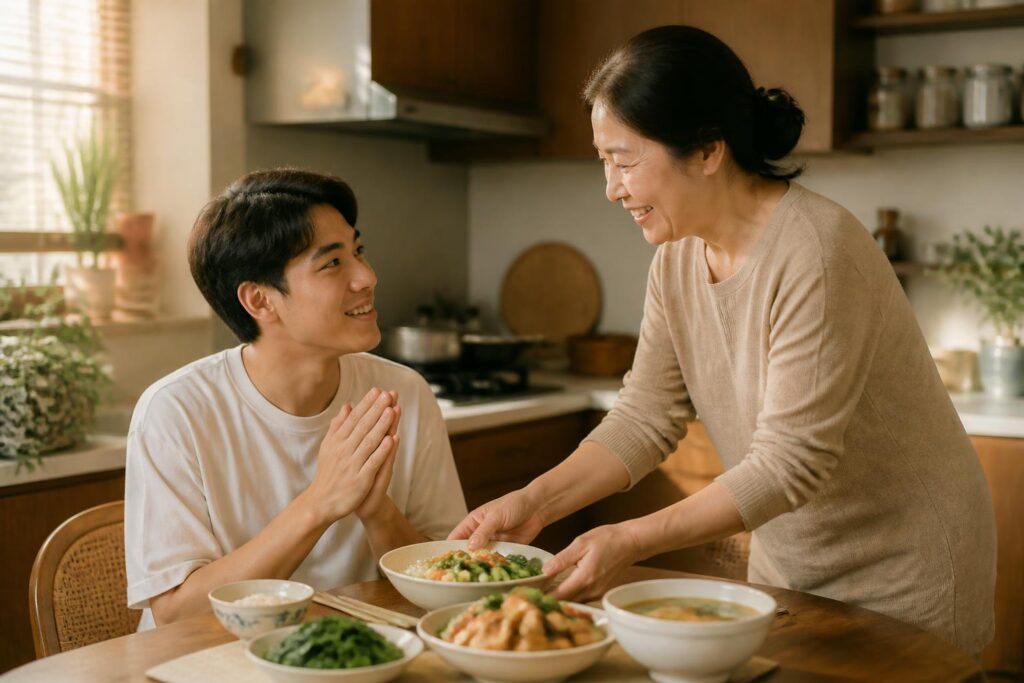
In the midst of busy lives, many people readily accept help but forget to say thank you. It is not necessarily because they are inconsiderate. Sometimes, one task follows another, and familiar relationships lead us to take other people’s care for granted. A meal prepared for us, a message asking how we are, a colleague’s help when we are overwhelmed, or a stranger giving way can all pass by without being acknowledged.
And yet, a thank-you has never been a trivial thing to say. When spoken at the right moment and with sincerity, it lets the other person know that their effort has been seen. At the same time, expressing thanks helps the speaker realize that they do not exist in isolation. The ordinary life we have each day is often made possible by countless acts of quiet care, cooperation, and kindness.
First and foremost, a thank-you is an acknowledgment
Many people think that saying thank you is simply a social ritual to be performed out of politeness. As a result, they say it very quickly, almost automatically, or only thank someone when they receive a gift or obvious assistance. There is nothing wrong with speaking this way, but a thank-you becomes more meaningful when it is accompanied by specific recognition.
Instead of simply saying “thank you,” we can say: “Thank you for staying and listening to me talk,” “Thank you, Mom, for remembering to buy this for me,” or “Thank you for explaining it again even though you were busy with your own work.” A short sentence that identifies what we appreciate can make the listener feel that their contribution has not been taken lightly. They know that we are not thanking them out of habit, but truly recognizing the time, effort, or affection they have given.
Recognition is especially important in families. Tasks such as cooking, cleaning, taking children to and from places, and caring for older family members are often repeated every day, making them easy to regard as the automatic responsibility of a particular member. When the work goes unseen, the person doing it may gradually feel tired and alone. A thank-you cannot replace sharing the workload, but it opens the door to a necessary conversation: who is doing what, who needs support, and how the family can share the burden together.
Gratitude does not mean denying difficulties
In conversations about gratitude, an extreme idea sometimes emerges: that simply thinking positively will make every problem easier. Reality is not that simple. Someone who is sad, exhausted, or under pressure should not be required to become cheerful immediately just because life still contains things to be grateful for.
Practicing gratitude in the right way does not mean hiding pain. We can acknowledge that we are disappointed today while also recognizing that there is someone willing to listen. We can worry about work while still being grateful for the opportunity to learn a new skill. We can be dissatisfied with a relationship while still appreciating the good things that once existed in it. Two emotions that seem contradictory can coexist without canceling each other out.
This perspective makes gratitude more realistic. It does not forcefully turn difficulties into something good, nor does it require people to find a lesson while they are still hurting. It simply reminds us that a situation rarely has only one side. Alongside what has not gone as hoped, there may still be a source of support, a choice, or a person whom we need to recognize.
Relationships are nurtured by small things
Strong relationships are not built only through major occasions. They are nurtured through countless small details: remembering that a loved one has an important appointment, asking a colleague whether they have had a chance to rest, replying to a message instead of making someone wait, or taking the initiative to apologize when we have hurt someone. Within this chain of actions, a thank-you serves as a signal that care is still being exchanged between two people.
In friendship, someone may not need advice right away; they may simply need a friend to sit beside them and listen. If that presence is acknowledged with thanks, the friend will understand that their time matters. At work, a team member who regularly completes behind-the-scenes tasks may receive less attention than the person presenting the final results. Public recognition, or simply a private thank-you, can create a greater sense of fairness within the group.
However, gratitude should not become a tool for softening disrespectful behavior or concealing injustice. If one person is always carrying an excessive share of the work, a thank-you needs to be accompanied by a redistribution of responsibilities. If someone helps because they are being pressured, we should not use gratitude to make them continue sacrificing themselves. Sincerity must always go hand in hand with boundaries and mutual respect.
Building a natural habit of gratitude
There is no need to begin with a complicated plan. Each day, we can spend a few minutes remembering a person or a thing that made the day more pleasant. It could be the vendor who patiently gave us directions, a colleague who sent us a document, a family member who left us a portion of dinner, or even ourselves for trying to finish something despite not being in a good state of mind.
Writing down a few lines can also be useful, but it is not required. What matters is learning to look at things specifically rather than speaking in generalities. “I am grateful for life” is a broad thought, while “I am grateful that someone reminded me to rest today when I had been working for too long” makes the feeling more immediate and real. When we recognize specific things, we also find it easier to respond in specific ways.
We can call someone we have not checked in on for a long time, send a thank-you message, complete our part of a task on time, or take the initiative to help someone else without waiting to be asked. Sometimes, the most practical way to express thanks is not through words but by continuing to pass that kindness on in another situation.
We should also learn to thank ourselves. Many people can acknowledge other people’s efforts while seeing only their own shortcomings. After a day in which we did not achieve every goal, we can still recognize that we tried. Self-acknowledgment is not indulgence or an excuse to overlook flaws. It is the foundation that allows us to correct our mistakes without turning a single error into a reason to deny our entire worth.
What remains after a thank-you
A thank-you does not make every conflict disappear, immediately resolve financial pressures, or replace concrete action. But it can change the atmosphere between people. When acknowledged, people often find it easier to open up. When we learn to notice the help around us, we feel less as though we have to face everything alone.
What is valuable about gratitude is that it does not require circumstances to be perfect before it can begin. We can give thanks on a day still filled with worry, in a family where disagreements remain, or in a job that is still imperfect. A sincere thank-you does not say that everything is wonderful. It says that amid what remains incomplete, we still recognize the value of kindness and want to preserve it.
So today, try giving a truly specific thank-you to someone who has helped you, even if what they did seemed very small. Say thank you without rushing, listen to their response without treating it as an obligation, and, if possible, turn your gratitude into a follow-up action. A sentence takes only a few seconds, but the feeling of being seen can remain much longer. From small things like these, the way we live together becomes warmer, fairer, and more meaningful.

ARTICLES IN THE SAME CATEGORY
The Necessary Silence in a Day Full of Noise
When Slowing Down Becomes a Strength Amid a Life Full of Noise
Listening to Reconnect the Gaps Within the Family
Decluttering Digital Life: How to Regain Focus Amid Too Many Notifications
The Art of Setting Boundaries to Live More Lightly in Modern Life
The Quiet Amid a Noisy Era: Learning to Slow Down to Hear Ourselves Clearly
ARTICLES IN THE SAME GENRE
Grateful for mother’s hands