

 Tiếng Việt
 日本語
 한국어
 中文 (中国)
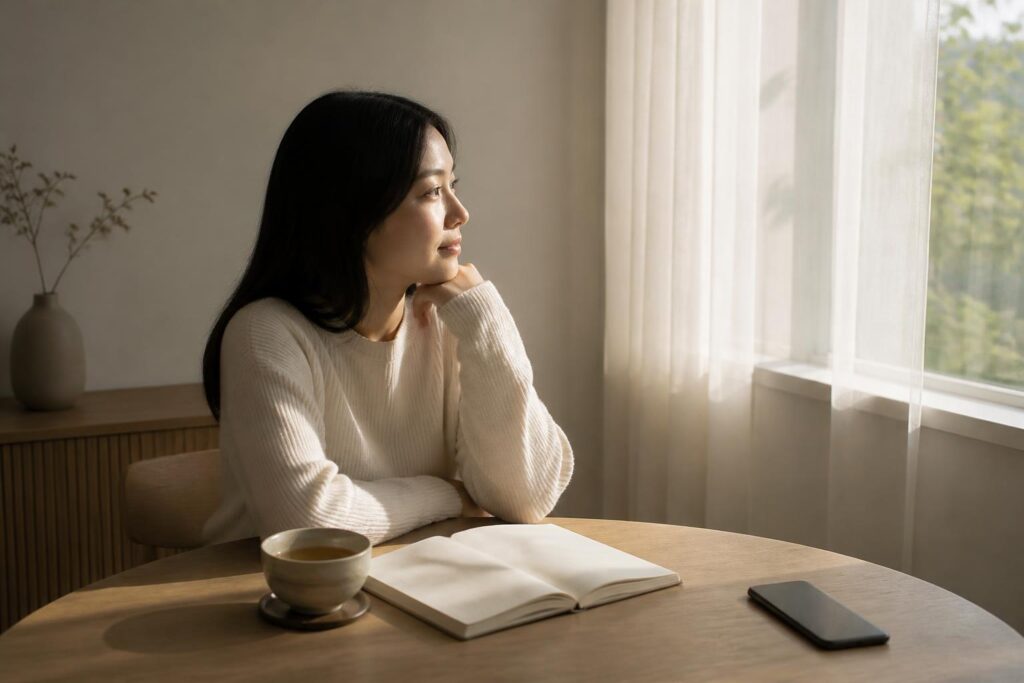
There are days when we wake to the sound of an alarm, hurriedly check our phones, skim a few lines of news, and immediately step into a schedule that is already packed. Work, messages, appointments, unfinished household chores, and countless new pieces of information keep appearing. By evening, our bodies are tired, but our minds have not truly stopped. We lie down in bed with the feeling that we have done a great deal, yet find it difficult to answer a simple question: what really mattered today?
Modern life brings many conveniences, but it also makes it difficult for people to remain at ease with silence. Whenever there is a free moment, we often immediately turn to a screen, a conversation, or some form of entertainment. Quiet has therefore gradually become something that leaves many people confused, even anxious. Yet silence is not a useless stretch of time. It can be a place where neglected thoughts are recognized, unnamed emotions are heard, and important choices are reconsidered with a calmer state of mind.
Why are people finding it increasingly difficult to slow down?
Living quickly is often seen as a sign of being energetic and dynamic. Someone who replies to messages immediately, completes many tasks at once, and is always present at appointments may be regarded as responsible and efficient. Speed is indeed necessary in many circumstances, but when it becomes a permanent state, people can easily mistake busyness for their own value.
In that rhythm of life, our attention is divided among too many things. We eat while looking at a screen, listen to someone while thinking about the next thing we have to do, and rest while feeling guilty that we are not being productive enough. Our bodies are present in one place, while our minds run through many others. The consequences do not necessarily appear as a major event. Sometimes it is simply that we no longer remember how we spent a day, lack the patience to hear a loved one’s story to the end, or become irritated by something that does not really deserve it.
Social media also intensifies the feeling that we must constantly move forward. When we see other people’s achievements, trips, careers, or beautifully arranged lives, we can easily imagine that we are falling behind. Comparison quietly creates a race with no finish line. People take on one more task not because it is truly necessary, but because they are afraid of being left behind. The more afraid they become, the more they fill their time; the more they fill their time, the fewer opportunities they have to realize where they are running.
Quiet does not mean stagnation
Many people are reluctant to slow down because they fear becoming passive, less competitive, or missing opportunities. This understanding comes from equating slowness with standing still. In reality, slowing down does not mean rejecting every goal or abandoning responsibility. It is the ability to actively adjust one’s pace, to know which things require urgency and which can wait, and to know when to act and when to step back and observe.
A person who lives slowly can still work seriously, pursue ambitions, and make major decisions. The difference is that they do not allow external speed to completely determine their internal state. They try to be present with what they are doing instead of constantly being pulled along by the next stimulus. When reading a book, they read to understand rather than merely to finish. When conversing, they listen instead of simply waiting for their turn to speak. When resting, they do not see it as a reward they must earn after becoming exhausted, but recognize it as necessary for maintaining a healthy life.
Quiet is also not an elaborate ritual reserved for people with plenty of time. It can begin with very small actions: drinking a glass of water without looking at a phone, walking along a familiar route with full attention, sitting by a window for a few minutes, or eating a meal without allowing work to intrude. The purpose is not to create an attractive image of how one lives, but to restore the ability to be fully present in an ordinary moment.
Listening to emotions instead of immediately pushing them away
One of the greatest values of stillness is that it helps us recognize emotions before they turn into behavior. When our schedules are always full, sadness can be covered up with work, disappointment can be buried beneath a few hours of scrolling, and anger can be redirected into another argument. We think we have moved on, but emotions that have not been acknowledged often find ways to return in other forms: impatience, difficulty sleeping, withdrawal, or an overly intense reaction to small matters.
Sitting quietly with our emotions does not mean sinking into negativity. It simply means acknowledging: I am tired, worried, hurt, or in need of rest. When we can name an emotion, we gain the necessary distance between what is happening and our reaction to it. That distance allows us to choose how to respond instead of acting entirely out of habit.
For example, when faced with criticism, our first reaction may be defensiveness. If we respond immediately, we may say things that hurt both sides. But if we give ourselves a pause, take a breath, and reconsider the situation, we may be able to distinguish between feedback worth considering, an inappropriate way of expressing it, and the sensitive part of ourselves that has been touched. Slowing down in this case does not make the problem disappear, but it helps us deal with it more maturely.
Slow down so relationships have room to exist
Many relationships do not fall apart because affection was absent from the beginning, but because the people involved no longer have enough attention to give one another. Family members live under the same roof but see each other only in passing. Friends remain in contact, but conversations are often interrupted by work and notifications. Questions such as “How have you been lately?” sometimes become familiar openings without enough time to hear the answer.
Slowing down helps us realize that affection needs to be nurtured through concrete presence. An unhurried meal, a phone call without doing other work at the same time, or one patient occasion of listening to an older person retell a familiar story may not produce an easily measurable achievement, but they create a feeling of being cared for. Lasting relationships are usually not maintained through a constant stream of grand gestures, but through moments of being present at the right time and with enough sincerity.
When we slow down, we also become less demanding about having others meet all our needs immediately. Not every message needs an instant reply, not every silence is a sign of coldness, and not every difference needs to be resolved in an argument. A sufficient amount of space can sometimes help each person retain their independence while allowing the relationship to develop more naturally.
Practicing a mindful rhythm of life
To live more slowly, we first need to observe the times when we are usually swept away. It may be the habit of picking up the phone as soon as we open our eyes in the morning, taking on too many tasks because we are reluctant to refuse, or spending evenings constantly switching from one piece of content to another without truly resting. Observation is not meant to judge ourselves. It helps us see which habits are serving us and which are taking away our attention.
After that, we can create a few fixed periods of space in the day. There is no need to begin with an overly strict plan. Ten minutes of sitting quietly, a screen-free meal, a walk, or time spent preparing for the next day in silence can all become anchors. What matters is consistency and intention. Quiet will be difficult to establish if we wait until everything is finished, because in real life new tasks are always appearing.
It is also worth focusing on one thing at a time instead of constantly switching. When working, work; when talking, talk; when resting, rest. This approach does not turn each day into a rigid schedule, but helps prevent mental energy from being drained by too many shifts in direction. A short but clear list is often more useful than an overloaded plan that always makes us feel we have not done enough.
At the end of the day, instead of only counting the tasks left unfinished, ask yourself where you were truly present. Which moment made you feel peaceful? What drained your energy? Is there a conversation that needs to be continued with greater sincerity? These questions are not a test for judging whether a day was good or bad. They are a way to stay connected with our inner life, which is often neglected amid external demands.
The value of a life that is not constantly pressured
No one can live completely apart from society’s fast pace. We still have to work, care for our families, deal with financial matters, and adapt to many changes. Therefore, slowing down should not be understood as a call to abandon reality. It is a reminder that people need the freedom to choose a rhythm suited to their health, circumstances, and the values they pursue.
When we are no longer pressured to respond to everything immediately, we have the opportunity to recognize what truly deserves priority. Some things need to be completed, some need to be refused, some relationships need to be nurtured, and some expectations should be set down. This clarity does not come from thinking more while in a state of tension; it often appears when the mind has enough space to see things as they are.
Quiet does not make life less problematic, but it helps prevent people from being swallowed by their problems. It gives us a place to return to after noisy days, a pause between decisions, and an opportunity to remember that our worth is not measured only by the number of things we have done or the speed we have achieved.
In an era that constantly encourages us to be faster, do more, and stand out more, knowing how to slow down is a form of mindfulness. It is when we hear the voice of our bodies, recognize our emotions, see the person beside us, and reconsider the direction we have chosen. A life worth living does not necessarily have to be full of events. Sometimes it is made up of ordinary minutes in which we are truly present, without hurriedly passing them by and without needing to prove anything to anyone.

ARTICLES IN THE SAME CATEGORY
Silence in Modern Life and How People Find Their Clarity Again
The Art of Keeping Promises to Yourself on Days When Giving Up Feels Easy
When Slowing Down Becomes a Capability Amid a Life Full of Noise
Small Conversations and the Journey of Healing Family Divides
The Art of Repair: When Caring for Small Things Is Also a Way of Life
A House That Knows How to Rest: Building a Living Space That Helps People Recover
ARTICLES IN THE SAME GENRE
Memory Is Not a Video Camera: Understanding It Clearly to Look Back at Ourselves
When Belief Guides the Way We See the World
Knowing When to Ask: A Skill That Opens the Door to Deeper Conversations
Being Busy Doesn’t Mean Making Progress: Rethinking How We Use Our Time
When There Are Too Many Choices, How Can We Make Wiser Decisions?
The 12 Zodiac Signs and How Each One Establishes Healthy Boundaries