
Roundups · 16 November, 2026
Slowing Down in an Age of Too Many Choices

Never before have people had as many choices as they do today. With just a phone, we can access countless news reports, conversations, products, courses, entertainment invitations, and different opinions. A day seems to have been expanded by technology, yet our attention is often divided into short intervals. We eat while checking the news, work while replying to messages, and rest while thinking about unfinished tasks. By the end of the day, the body may have stopped, but the mind continues to run.
In this context, slowing down becomes a need worth considering. Slowing down does not mean denying the speed of society, nor does it mean abandoning goals or avoiding responsibilities. It is the ability to consciously adjust the pace of life so that each action is not entirely driven by external pressure. When we know how to slow down at the right moment, we have the opportunity to see clearly what we are doing, why we are doing it, and whether that choice is truly suitable.
Why Do Too Many Choices Make People Tired?
Many choices are often seen as a sign of freedom. However, freedom only brings value when people are sufficiently mindful to choose. If we must constantly make decisions, from small matters such as what to eat, watch, or buy to major issues such as changing jobs, moving to another place, or pursuing a new direction, the mind can easily become overloaded. Not every decision is equally important, but each consumes some of our attention.
Fatigue also comes from the fact that we often see too many lives presented as desirable models. One person always seems successful, another has a happy family, while someone else possesses a healthy, energetic lifestyle. When continuously exposed to such images, people can easily develop the feeling that they are falling behind, lacking something, or missing out on something. From that point on, having many choices no longer means that opportunities are opening up; instead, it becomes pressure to keep up.
What is worth noting is that not all busyness produces progress. There are days when the work schedule is packed but the results are unclear. There are conversations that last a long time but do not bring relationships closer. Sometimes we spend a great deal of time preparing for something, only to realize that we never asked ourselves whether it was truly necessary. Slowing down begins with recognizing the gap between being busy and doing something meaningful.
Slowing Down Does Not Mean Living Passively
A common misunderstanding is that people who live slowly lack ambition or are afraid of change. In reality, slowing down can help people act more decisively because they are not swept along by every invitation. Those who know what they value will find it easier to say “no” to things that do not suit them, while devoting more energy to the goals they have chosen.
Slowing down also does not require us to leave the city, turn off every device, or transform life into a series of quiet days. Each person has different circumstances, responsibilities, and conditions. Someone who works in a fast-paced environment can still live slowly by focusing on one task for a certain period of time. A busy family can still create an unhurried meal during which its members genuinely listen to one another. Someone who frequently uses social media can still set limits so that every empty moment does not become time spent scrolling.
At the heart of slowing down is reclaiming the right to choose how we use our time and attention. The pace of the outside world may be fast, but our responses do not necessarily have to be rushed. When faced with an upsetting message, we can wait until we are calm before replying. Before making a purchase, we can ask ourselves what our real need is. Before accepting a new opportunity, we can consider whether it fits our current priorities or merely adds to the feeling that we must prove ourselves.
Starting with Small Pauses
Changing the pace of life does not necessarily have to begin with a major plan. Short pauses, when practiced regularly, can make a difference in the way people observe their own days. For example, instead of checking notifications as soon as we wake up, we can spend a few minutes noticing our bodies, organizing our thoughts, and identifying the most important thing to do that day. This period does not significantly slow down the new day, but it keeps the mind from being drawn into other people’s concerns from the very beginning.
At work, we can try dividing tasks into three groups: tasks that must be completed, tasks that should be done if there is still time, and tasks that can be refused or postponed. This classification helps reduce the feeling that everything is urgent. When we focus on one task at a time, the quality of our attention is often better than when we constantly switch back and forth between multiple tasks. If interrupted, we can write down what we were working on so that we can return to it later, rather than trying to hold everything in our heads.
In family life, slowing down can begin with very ordinary activities. It may mean sharing a meal without each person becoming absorbed in their own screen, taking a short walk without turning the conversation into an attempt to solve a long list of problems, or listening to a family member tell a story without immediately offering advice. These actions do not produce immediate results, but they nurture a sense of being present and respected.
Rest also needs to be reconsidered. Many people only allow themselves to rest once they have finished everything, even though their to-do lists almost never end. If we view rest as a rare reward, we can easily feel guilty whenever we stop. In contrast, seeing rest as a necessary part of life helps people restore their energy and view problems more clearly. Rest does not necessarily have to be a long trip; sometimes it is simply an evening without too many activities scheduled.
Reducing Noise to Hear What Matters
In the information age, silence becomes valuable because it creates space for our own thoughts. If every empty moment is filled with videos, news, or online conversations, people may become accustomed to reacting constantly and forget how to ask themselves questions. Turning off some notifications, choosing specific times to check email, and limiting content that often distracts us are simple steps toward reducing noise.
However, reducing noise does not mean merely removing technology. Some noise comes from the expectations we carry ourselves: always having to be productive, replying quickly, being present everywhere, and turning every interest into an achievement. Once we recognize these expectations, we can consider which are our own goals and which are simply pressures absorbed from the surrounding environment.
One useful approach is to regularly write down the things occupying much of our minds. Once put into words, worries often become more concrete. From there, we can divide them into matters within our ability to handle, matters that require more information, and matters beyond our control. Not every problem can be solved through immediate action. Some things require time, some questions cannot yet be answered, and some losses can only be accepted step by step.
The Value of a Suitable Pace of Life
There is no single ideal speed that applies to everyone. There are periods when people need to move quickly to seize opportunities, fulfill responsibilities, or overcome difficulties. There are also periods when they need to slow down to recover, care for their families, learn to understand themselves, or adjust their direction. The issue is not whether the pace is fast or slow, but whether it has been chosen consciously.
A suitable pace of life usually allows people both to complete what is necessary and to preserve some space for the unexpected. If the schedule is so full that there is no room left for a conversation, a new idea, or a day when one’s health is poor, life can easily become rigid. Conversely, without any structure at all, we may fall into procrastination and lose our sense of direction. Slowing down, therefore, does not mean abandoning all plans; it means building plans that are clear enough to provide direction yet flexible enough to adapt.
When we slow down, we also have the opportunity to notice joys that are often taken for granted. A carefully prepared meal, sunlight on a balcony, a familiar stretch of road, a brief conversation with a neighbor, or the feeling of completing a small task can all become meaningful if we are truly present in the moment. Happiness does not always come from a major change. Often, it appears when we stop demanding that every moment be special.
Conclusion
Slowing down in an age of too many choices is a way to protect our attention and the quality of our lives. It is not a call to turn our backs on progress, nor is it a formula requiring everyone to live in the same way. It is a reminder that each person’s time, energy, and presence are limited, and therefore should be given to the things that are truly worthwhile.
Beginning to live more slowly can be as simple as pausing in silence before replying, having an unhurried meal, making a short list instead of an overloaded schedule, or bravely refusing something that is no longer suitable. These changes may seem small, but they help people gradually move from being swept along to consciously choosing. When we know where we are going and why we are going there, a slower pace of life does not impoverish our lives. On the contrary, it can help us see more clearly the things that have already been present in our lives.
Related articles

Silence in Modern Life and How to Find Inner Balance Again
Modern life is often measured by speed. A day may begin with the sound of an alarm, followed by a stream of messages, appointments, work, and incessant notifications appearing on the screen. When there is an empty space in the schedule, many people immediately try to fill it by checking their phones, watching a short
Read more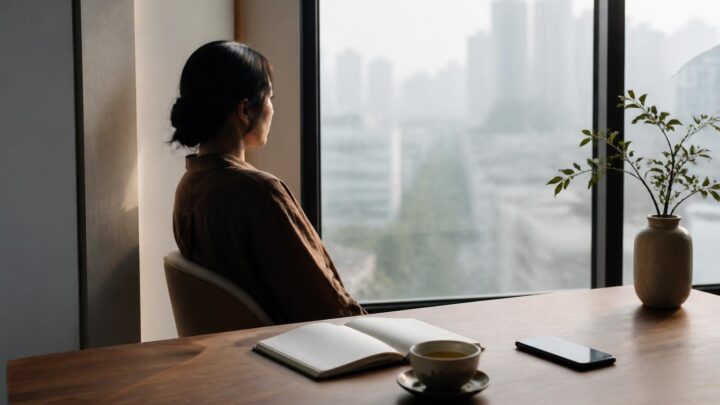
When Attention Becomes an Asset: How to Reclaim Quiet in Digital Life
There are days when we feel tired before we have even had a chance to sit down. The phone starts buzzing early in the morning, one message leads to several minutes of replying, a new notification prompts us to open an app, and then one short video follows another. By the end of the day,
Read more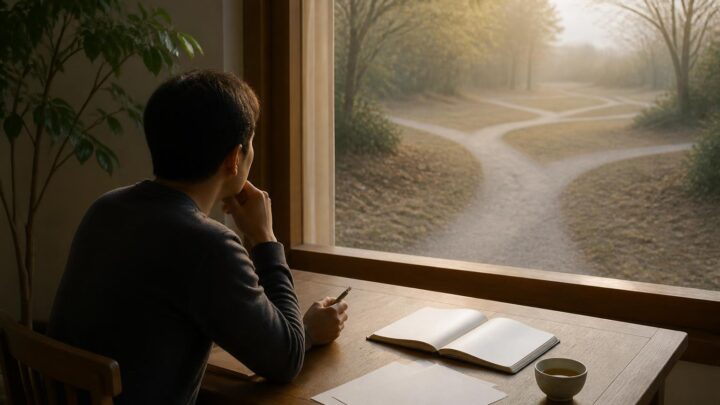
When There Are Too Many Choices, How Can We Live More Clearly?
Today, people have more choices than ever before. We can choose our jobs, where we live, how we learn, how we shop, how we communicate, and even the image we want to present to others. With just one internet-connected device, countless possibilities open up before each person. Yet having more choices does not always mean
Read more
When Silence Becomes a Skill That Helps People Live More Wisely
In a life always filled with noise, silence is often misunderstood. A person who speaks little may be seen as lacking confidence, someone who does not react immediately may be considered indifferent, while a person who wants time to think before answering may sometimes be judged slow. However, silence is not merely a state of
Read more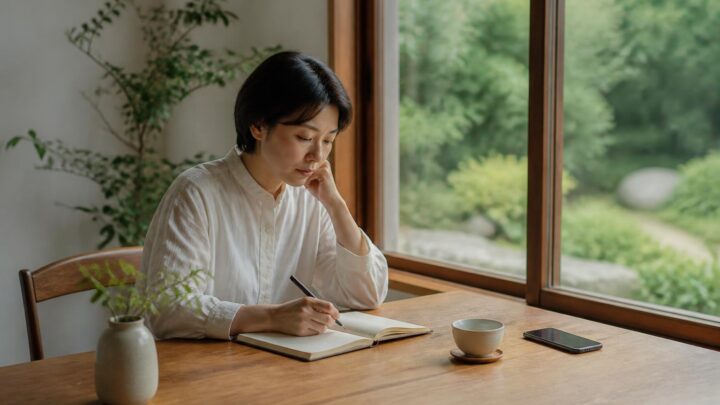
Decluttering Your Attention: How to Live Mindfully Amid an Overload of Information
Every day, we move through a stream of information that seems to have no end. A message appears while we are working, a short video slips into a break, and an attention-grabbing headline pulls our eyes away from the book we are reading. Many of these things take up only a few seconds, but repeated
Read more
Decluttering Your Digital Space to Live More Slowly and Focus Better
In many households, tidying up is usually associated with things that can be seen: clothes that are rarely worn, old documents, an overstuffed cabinet, or a kitchen with too little open space. Yet each person also owns another space that needs organizing: their digital space. Phones, computers, email inboxes, messaging apps, and online accounts store
Read more