

 Tiếng Việt
 日本語
日本語 한국어
한국어 中文 (中国)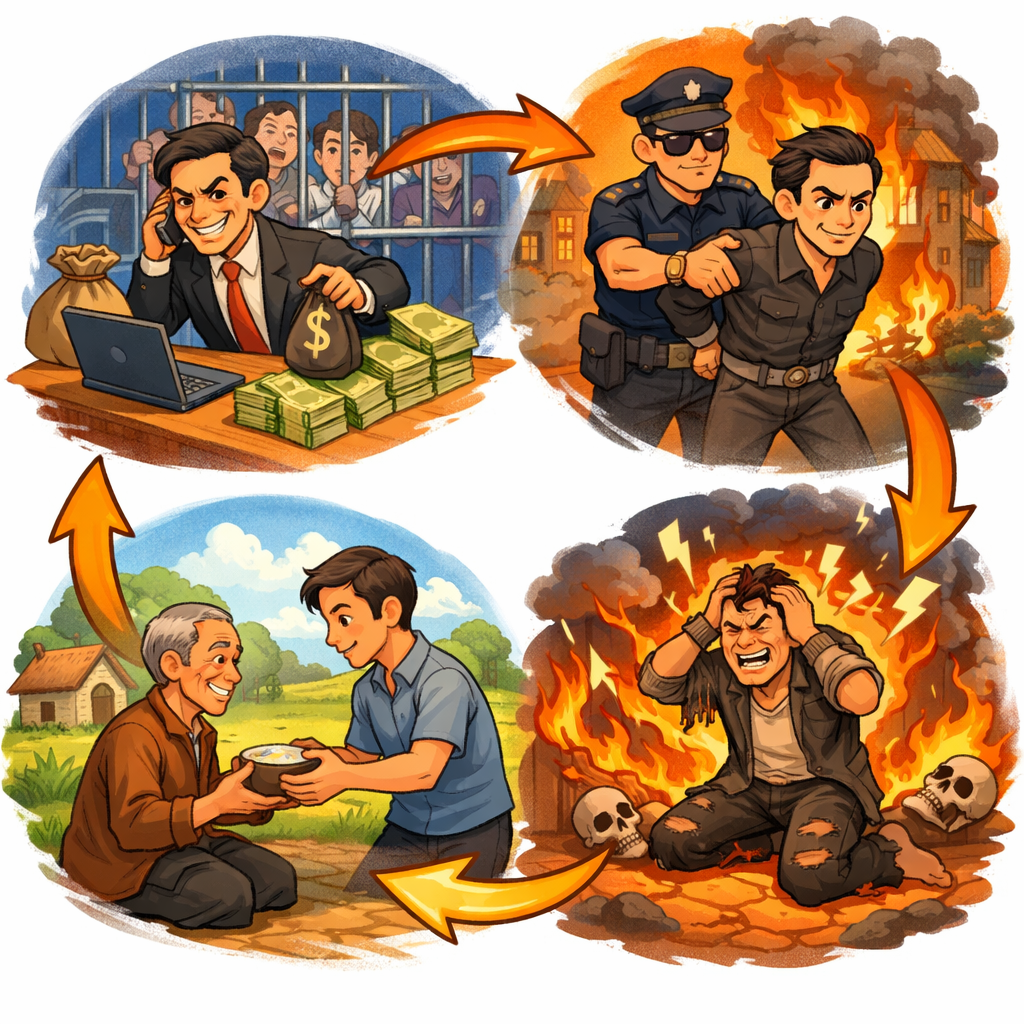
Karma is one of the core concepts deeply embedded in the spiritual life and social conduct of the Vietnamese people. From folk proverbs to Buddhist teachings that spread widely through society, the ancients used short, memorable sayings to remind one another that today’s actions create tomorrow’s consequences. In today’s international context, as online scam networks expand and allegations arise about criminal groups exploiting certain territories, the traditional principle of karma offers a moral and human lens through which to examine political, economic, and social consequences.
This article first presents traditional Vietnamese perspectives on karma, then gives historical and modern examples, and finally focuses on the situation in Cambodia in relation to allegations of protecting scam operations, its relationship with Vietnam, and the resulting consequences with other countries, especially Thailand.
What Vietnamese Ancestors Said About Karma
Vietnamese proverbs and idioms contain many concise yet powerful expressions of karmic law. Sayings such as You reap what you sow, Sow the wind, reap the storm, The kind meet good fortune, and If the father eats salty food, the child will thirst have long served as moral standards reminding people that every action carries consequences. These are not merely everyday sayings but reflections of the community’s deep desire for justice and moral balance in society.
In theory, Vietnamese views of karma are strongly influenced by Buddhism. Concepts of karma and karmic retribution are explained in Buddhist teachings as natural laws governing human life. Good and bad deeds plant seeds that shape the destiny of individuals and communities. These teachings function both as personal moral guidance and as social principles that encourage people to restrain harmful behavior and reduce suffering.
From both folk philosophy and religious perspectives, karma is not simply a threat of punishment. It also serves as a warning and a form of moral education. The proverb The kind meet good fortune encourages good conduct to build trust and community, while Sow the wind, reap the storm warns of social consequences when wrongdoing is encouraged and spreads. These ideas have existed for centuries and remain a spiritual foundation for how Vietnamese people interpret moral and social issues.
Historical and Modern Examples of Karma and Forgotten Gratitude
Vietnamese folklore, legends, and folk songs often tell stories of repaying kindness and avenging wrongdoing as moral lessons. Tales influenced by Buddhist thought frequently describe karmic retribution, reinforcing the belief that gratitude is rewarded while ingratitude leads to bitter outcomes. These stories help explain why the ungrateful often meet hardship and why deceivers are eventually exposed. Cultural and religious studies show that such beliefs have long played a role in regulating social behavior.
In practical terms, many cases of fraud and dishonest business may bring quick profits but tend to collapse over time under the pressure of two forces: the law and social trust. Once credibility is lost, customers withdraw, partners turn away, and international environments may intervene. Illicit business systems weaken far faster than honest enterprises. This is a real world expression of the karmic principle in economic and social life.
From Theory to Reality: Fraud and Rapid Collapse
A key feature of karma in the modern era is that its effects are amplified by legal systems, media, and social networks. Fraud may succeed in the short term but can be exposed on a large scale when victims speak out, journalists investigate, or law enforcement agencies cooperate across borders. In this sense, karmic consequences in the twenty first century are not only spiritual ideas but also legal, political, and economic outcomes.
Corporate scandals, financial fraud, and pyramid schemes have repeatedly demonstrated this pattern. Internal collapse, bankruptcy, prison sentences, total asset loss, and even social consequences such as mass unemployment are all part of the chain of effects. Karma here can be understood as the full calculation of consequences resulting from a series of unethical and illegal actions.
Cambodia Today and Cross Border Scam Networks
In recent years, Southeast Asia has seen the rise of technology based scam operations that exploit legal loopholes and weak enforcement in certain areas. One hotspot frequently mentioned in regional and international reporting is Cambodia. Reports indicate that Cambodian authorities have stepped up crackdowns on high tech scam compounds, with numerous arrests, deportations, and closures of illegal facilities in recent years. These campaigns show stronger enforcement efforts but also reveal the scale of the problem that had previously existed.
Some reports describe Cambodia increasing raids and deporting foreign nationals suspected of involvement in scam networks. At the same time, neighboring countries have conducted their own operations against groups linked to networks operating from Cambodian territory. Vietnamese authorities have also dismantled fraud rings whose activities were connected to bases in Cambodia, involving large numbers of suspects. These figures demonstrate both determination to respond and the seriousness of the earlier situation.
Public reporting has shown that from around 2024 onward, areas such as Bavet and other border zones became locations where suspicious business compounds operated under the cover of online recruitment, sales, or services with signs of fraud. When such facilities are exposed, the consequences include damage to local reputations, negative effects on legitimate investment and residents’ livelihoods, and criticism at the international level regarding domestic security management.
Political and Diplomatic Karma: The Consequences of Forgotten Gratitude
When linking folk karma with political consequences, it is important to distinguish between personal morality and collective impact. If a country is accused of tolerating illegal operations, the consequences extend beyond moral judgment. They can include reputational damage, reduced cooperation, asset seizures, suspended economic agreements, or even sanctions. In Cambodia’s case, allegations of allowing foreign criminal groups to operate have affected relations with partners, leading some countries to heighten vigilance and law enforcement cooperation to combat cross border scams. Public reports show that Cambodian authorities have responded with crackdowns and deportations in an effort to limit the fallout.
The issue of forgetting historical gratitude toward Vietnam is sensitive and complex. The relationship between Vietnam and Cambodia includes periods of assistance as well as politically complicated phases. Historical gratitude is often mentioned, but modern bilateral relations are shaped by strategic interests, security concerns, and practical considerations. If one side is perceived as downplaying past ties or shifting alignment, consequences may include cooler relations, reduced security and economic cooperation, and in times of border tension, additional conflict risks. Recent border developments between Cambodia and Thailand illustrate how sovereignty issues can become entangled with domestic politics and regional diplomacy.
Tensions with Thailand and Territorial Consequences
In recent years, border disputes between Cambodia and Thailand, especially around the Preah Vihear temple area, have periodically strained bilateral relations. Border clashes, retaliatory trade restrictions, and hardline diplomatic measures have appeared, reducing regional stability and directly affecting border communities. A country perceived as lacking responsibility in internal security management may face consequences such as partial regional isolation, reduced investment, and trade losses. Military incidents or sanctions further weaken national standing and prompt other partners to reassess their relationships.
Why Karmic Consequences in Cambodia’s Case Appear Fast and Clear
Several factors explain why the consequences of alleged tolerance of scam operations in Cambodia have appeared quickly and visibly. First is globalized information. When victims report online and international media investigate, public pressure pushes governments to act quickly to avoid diplomatic and economic risks. Second is improved cross border law enforcement cooperation. When multiple countries have victims, they share intelligence and conduct joint operations. Third, national reputation is a crucial asset in modern politics. Investors and foreign partners are highly sensitive to legal and ethical risks. When a region is labeled a crime hotspot, economic and political consequences arrive rapidly and deeply. Arrests, deportations, and closures of compounds are only the most visible outcomes of this broader process.
From a folk karmic perspective, tolerating or ignoring organized crime can be seen as sowing bad seeds. The resulting fruits are loss of reputation, diplomatic strain, economic damage, and if not resolved, even risks to sovereignty when tensions with neighbors escalate. This interpretation is not meant to religiously frame politics, but to emphasize that present actions carry future costs across many levels.
Concrete Consequences for Cambodia and Constructive Recommendations
Immediate consequences include reputational damage, declines in tourism and investment in affected areas, tighter border controls from neighboring countries, and diplomatic pressure. In the long term, without reforms in governance, transparency in business licensing, and regional cooperation, Cambodia may face deeper economic and political losses.
Constructive recommendations include
Strengthening investigative capacity and international cooperation. Information sharing and cross border law enforcement should continue expanding.
Raising management standards in border economic zones. Transparency in business licensing and monitoring is essential to prevent criminal groups from hiding behind commercial fronts.
Rebuilding diplomatic trust through dialogue, compensation where victims are harmed, and support programs for those coerced into criminal operations. Proactive correction and cooperation are practical ways to reduce consequences.
Improving legal education and public awareness at the local level so communities understand the dangers of scam models and are willing to report suspicious activity.
Karma as the Voice of Community and of the Times
Vietnamese tradition says You reap what you sow. In the modern world, that saying is both a moral warning and a practical description of a system where information, law, and international relations amplify consequences. When a community or a nation allows wrongdoing to persist or tolerates criminal activity, the results are not only spiritual ideas of retribution, but also tangible losses in reputation, economic opportunity, and national security.
For Cambodia, recent crackdowns show attempts to mitigate the consequences. To transform those consequences into lessons and recovery, comprehensive, transparent reforms and international cooperation are essential. Only then can historical responsibility and regional trust be turned into concrete action, helping to avoid the bitter outcomes that the ancestors long ago warned about.

ARTICLES IN THE SAME CATEGORY
Read less, understand deeply: 4 filtering layers to keep you clear-headed amid a sea of information
The art of saying “no” without offending: 7 boundary techniques for modern Vietnamese
Maintaining a slow pace of life in the era of short attention: small strategies for long-term calm
Reducing Digital Noise: 9 habits to streamline information for a lighter mind every day
Heavenly Officials in Vietnamese Folk Belief: Bestowers of Blessings from the Celestial Realm
The Judge Figures in Vietnamese Folk Belief: Guardians of Justice in the Afterlife
ARTICLES IN THE SAME GENRE
Tam Cam Part 2: The Vengeful Spirits of the Palace
Tam and Cam: The Palace Intrigue and the Original Ending – Part 1
The world is never short of those who judge others by their material possessions; however, the most concerning poverty of all is the lack of wisdom and self-cultivation.
Stay Away from Foolishness: Seven Forms of Self-Deception and the Path to Awakening
Why Donald Trump is Repealing the “Endangerment Finding”: Where Will Humanity Go if Earth Exceeds Its Limits?
The Epstein Files and the Shadow of Power: When Dark Rumors Reflect Back Through Cinema