

 Tiếng Việt
 日本語
日本語 한국어
한국어 中文 (中国)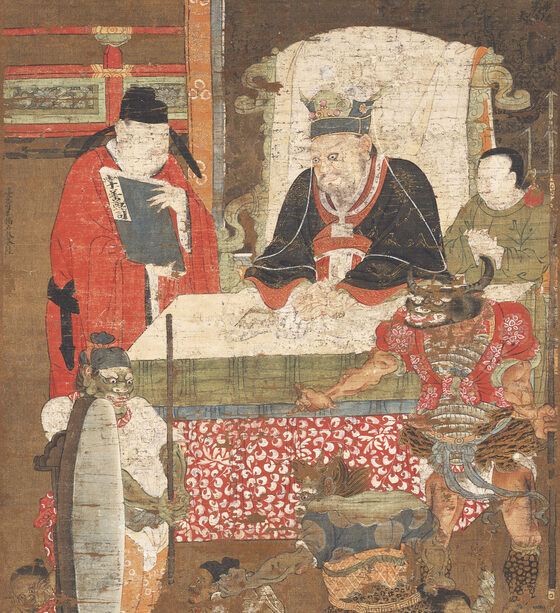
In the spiritual life of Vietnamese people, rituals of worship have always been closely connected with deep beliefs about the invisible world. Alongside familiar ceremonies such as ancestor worship, offerings to the God of Wealth, or the Ghost Festival, many people also speak about a rather special ritual known as offering judgment money, often called “tiền phán quan.” Although the concept does not appear frequently in formal religious texts, it is quite present in folk spiritual practices, especially in rituals related to dispelling misfortune, praying for peace, or seeking good luck in business and life.
Judgment money is commonly understood as a type of votive paper money used in rituals connected with the underworld. People believe that this symbolic currency is offered to the judges of the underworld, spiritual officials who are believed to examine and record the merits and sins of human beings after death. The offering of judgment money therefore carries the meaning of asking for mercy, easing karmic burdens, or receiving spiritual assistance from the divine authorities believed to govern the afterlife.
The concept of judgment money in folk belief
Judgment money is a form of paper offering typically printed to resemble ancient coins or symbolic currency used in the spirit world. In shops selling ritual items, this type of paper money is usually grouped together with other votive offerings such as underworld money or spirit currency used in funeral and memorial ceremonies.
The term “judgment official” or “phán quan” originates from the image of judges in the underworld according to East Asian spiritual traditions. In beliefs influenced by Chinese culture, the underworld is often imagined as a structured realm similar to a bureaucratic court. It is ruled by a supreme authority often known as the King of Hell, assisted by various officials responsible for managing different aspects of the afterlife. Among them are the judges who review records of human behavior and determine the rewards or punishments awaiting each soul.
According to folk understanding, judgment money is offered to these underworld officials as a symbolic tribute. While it does not represent bribery in the modern sense, within traditional belief it expresses respect and humility toward the spiritual authorities who oversee justice in the afterlife. Through such offerings, people hope that their actions will be viewed with compassion and that misfortunes or karmic burdens may be softened.
Origins of the belief in offering judgment money
The belief surrounding judgment money developed through the interaction of several spiritual traditions, particularly Taoism, Buddhism, and indigenous folk beliefs. These influences blended over centuries and shaped the symbolic worldview that many people still recognize today.
In classical East Asian cosmology, especially within Taoist-influenced traditions, the afterlife was often depicted as an organized realm resembling a government system. The underworld was governed by powerful rulers and a complex hierarchy of officials who maintained cosmic order. The judges or “phán quan” were believed to keep detailed records of human deeds, ensuring that justice would ultimately prevail after death.
These ideas spread throughout East Asia and gradually became part of Vietnamese spiritual culture. Over time, the imagery of the underworld court was absorbed into local belief systems and adapted to fit Vietnamese cultural traditions.
In Buddhist-influenced folk narratives, similar concepts appear in stories about the judgment of souls after death. Texts and popular tales speak of ten courts of hell, where different kings and officials preside over the fate of the deceased. Within these narratives, judges and record keepers document the good and bad deeds of each person, determining the path that soul must take in the afterlife.
Because these traditions describe the afterlife as a place governed by moral law and administrative order, the practice of offering symbolic gifts naturally emerged. Just as people in ancient societies offered tributes to earthly officials, offerings in the spiritual realm came to represent respect for divine authority. From this perspective, the ritual of offering judgment money developed as a cultural expression of reverence toward those believed to administer justice beyond the human world.
Which deities receive judgment money offerings
Judgment money is not dedicated to a single deity but rather to the group of officials believed to preside over judgment in the underworld. These figures are typically understood as servants or assistants of the supreme ruler of the underworld, who oversees the entire realm of the dead.
In many traditional interpretations, judgment money is intended for the spiritual judges responsible for maintaining the registers of life and death. These officials are believed to record every action performed by a person during their lifetime. When a soul arrives in the underworld, the records are examined and used to determine the consequences that follow.
In addition to the judges themselves, some rituals symbolically direct these offerings toward gatekeepers of the underworld or administrators responsible for guiding souls through the different stages of judgment. The offering of judgment money is therefore seen as a respectful gesture acknowledging the authority of these spiritual figures.
Unlike widely worshipped deities such as household gods or protective spirits, underworld judges are rarely worshipped directly in household altars. Their presence is mainly reflected in ritual symbolism rather than formal temples or daily devotion. Nevertheless, the concept remains embedded in certain ceremonies that address karmic burdens, misfortune, or the fate of departed souls.
When judgment money is offered
Unlike major religious festivals with fixed dates, the offering of judgment money does not follow a strict calendar. The ritual is usually performed in specific spiritual contexts depending on the intention of the ceremony.
One common occasion involves rituals intended to dispel misfortune or relieve spiritual burdens. When individuals experience prolonged difficulties in life, some turn to traditional ceremonies that aim to balance unseen influences. Within such rituals, judgment money may be included as part of the symbolic offerings presented to spiritual authorities.
Another context appears in memorial ceremonies for deceased relatives. According to folk belief, newly departed souls must pass through stages of judgment in the underworld. Family members may therefore burn symbolic offerings, including judgment money, as a way of expressing care and hoping the soul of their loved one will receive kindness during this process.
In certain large-scale religious ceremonies held at temples or communal shrines, judgment money may also be burned alongside other votive items. These acts symbolize the sending of offerings to the unseen world, reflecting the sincerity and devotion of the participants.
Why people believe it is necessary to offer judgment money
The belief in offering judgment money is closely tied to the idea that the visible world and the invisible realm are interconnected. In traditional thinking, human life is not governed solely by material forces but also influenced by spiritual and moral dimensions.
When individuals encounter hardship, illness, or repeated misfortune, some interpret these events through a spiritual framework. They may believe that unresolved karma or unseen influences play a role in shaping these experiences. Ritual offerings therefore become a symbolic means of restoring harmony between the human world and the spiritual order.
In this context, judgment money represents more than a physical object. It symbolizes humility, repentance, and the desire for forgiveness. The act of offering reflects a recognition that human actions carry moral consequences beyond the present moment.
At another level, the belief in underworld judges also serves as a moral reminder. The idea that every deed is recorded and evaluated after death encourages individuals to behave responsibly during life. Whether interpreted literally or symbolically, this concept reinforces the cultural emphasis on ethical conduct and personal accountability.
Changes in the perception of judgment money in modern society
Modern society has brought new perspectives on spiritual practices. For many people today, rituals such as offering judgment money are viewed more as elements of cultural heritage than as strict religious obligations.
Some scholars interpret these practices as reflections of how earlier societies understood morality and the unknown. Before modern scientific knowledge provided explanations for many natural phenomena, imagining the afterlife as a structured realm helped people make sense of death and justice.
In contemporary religious communities, particularly within Buddhist temples, excessive burning of votive paper is sometimes discouraged. Many religious leaders emphasize that spiritual sincerity and ethical living hold greater importance than material offerings.
Despite these evolving interpretations, rituals connected with judgment money continue to appear in certain cultural contexts. They remain part of the broader tapestry of Vietnamese folk spirituality, illustrating the ways people have historically expressed reverence for unseen forces and sought reassurance in times of uncertainty.
Cultural significance of the judgment money ritual
Regardless of differing viewpoints, the practice of offering judgment money reflects meaningful aspects of traditional culture. It reveals how earlier generations envisioned the moral structure of the universe and the ultimate accountability of human behavior.
The image of spiritual judges recording every deed conveys a powerful ethical message. It suggests that actions carry lasting consequences and that justice extends beyond the boundaries of earthly life. This concept has long reinforced moral discipline within traditional communities.
At the same time, the ritual reflects a human desire to seek balance and reassurance in the face of life’s uncertainties. Through symbolic acts of offering, individuals express respect toward the unseen order they believe influences their fate.
Judgment money, therefore, is not merely a piece of ritual paper burned in ceremonies. It represents a cultural symbol rooted in centuries of spiritual imagination. Through it we can glimpse how people in earlier times interpreted morality, justice, and destiny within the broader framework of the cosmos.
In the context of modern life, these beliefs may be understood in different ways, sometimes as metaphor and sometimes as faith. Yet studying the idea of judgment money still provides valuable insight into the richness of Vietnamese spiritual culture and the enduring human search for meaning beyond the visible world.

ARTICLES IN THE SAME CATEGORY
The Spouse Palace in Tử Vi: Understanding a Relationship Through the Way Two People Walk Together
Memory Is Not a Camera: Understanding It Correctly to Argue Less with Ourselves
The Wealth Palace in Tử Vi: Understanding How a Person Builds and Uses Money
When Attention Is Fragmented: How to Regain the Ability to Focus in a Distracted Life
The Career Palace in Tử Vi: Reading How You Work, Not Just Predicting Your Position
The Phúc Đức Palace in Tử Vi: Reading Spiritual Heritage Instead of Waiting for a Prediction
ARTICLES IN THE SAME GENRE
Heavenly Officials in Vietnamese Folk Belief: Bestowers of Blessings from the Celestial Realm
The Judge Figures in Vietnamese Folk Belief: Guardians of Justice in the Afterlife
Why People Offer All Types of Spiritual Money When Moving Into a New House: From Judgment Officials to Heavenly, Earthly, Immortal, Cao, and Buddhist Officials
Earth Official Money in Folk Belief: Origins, Meaning, and Its Role in Spiritual Rituals
Buddhist Official Money in Folk Belief: Origins, Meaning, and Its Role in Spiritual Rituals
Heavenly Official Money in Folk Belief: Origins, Meaning, and Its Role in Spiritual Rituals