

 Tiếng Việt
 日本語
日本語 한국어
한국어 中文 (中国)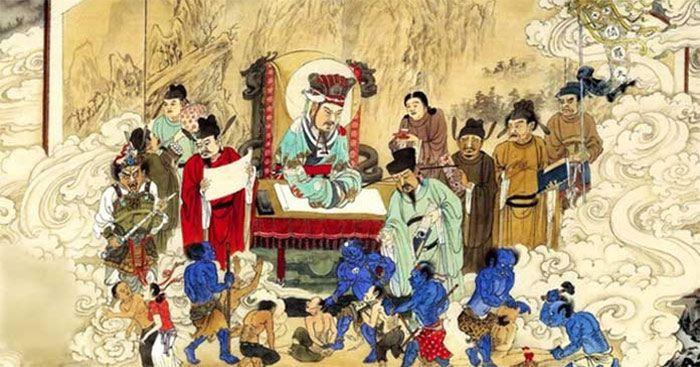
In Vietnamese folk belief, the afterlife has never been seen as an abstract or empty realm. Instead, it is imagined as a structured world that mirrors human society, complete with order, rules, and systems of reward and punishment. Within this spiritual realm, alongside the King of Hell, there exist figures known as “phán quan,” often understood as judges or magistrates who evaluate the deeds of souls after death.
These figures are more than mythological characters. They embody a deep cultural longing for justice. In times when earthly law was incomplete or inconsistently enforced, people placed their trust in an invisible system where every action would ultimately be judged fairly. Because of this, the phán quan came to symbolize moral balance, accountability, and the assurance that no deed would go unnoticed.
Origins and Development of the Judge Figure
The concept of the phán quan in Vietnamese culture is strongly influenced by broader East Asian spiritual systems, particularly Chinese traditions such as the Ten Courts of Hell. However, as these ideas entered Vietnam, they were adapted and reshaped to align with local beliefs and cultural sensibilities.
In the Vietnamese imagination, these judges resemble upright and incorruptible officials from the human world. They are often depicted wearing formal robes, holding records of life and death, with stern expressions that reflect their role as impartial arbiters. In some depictions, their appearance is intentionally severe to emphasize their unwavering commitment to justice.
Over time, the image of the phán quan became embedded in folklore, appearing in stories about karma, moral retribution, and journeys to the underworld. These narratives helped make the concept accessible and meaningful to everyday life.
The Role of the Judges in the Spiritual World
Keepers of the Records of Life and Death
According to folk belief, every person’s life is recorded from birth. The phán quan are responsible for maintaining these records, documenting every good and bad deed throughout a person’s lifetime.
Nothing is considered insignificant. A kind act, a harmful word, a moment of compassion or cruelty, all are carefully noted. This belief reinforces the idea that even unseen actions carry weight and consequence.
Judges of Moral Conduct After Death
When a person dies, their soul is believed to enter the underworld, where it undergoes judgment. The phán quan serve as magistrates who review the records and determine the outcome based on one’s actions in life.
Their judgments are not arbitrary. They are grounded in the principle of cause and effect. Those who lived virtuously may be rewarded with a favorable rebirth, while those who committed wrongdoing must face appropriate consequences.
Importantly, in Vietnamese belief, these judges are not cruel enforcers but impartial executors of justice. They are not swayed by emotion, bribery, or personal bias.
Maintainers of Order in the Underworld
Beyond judging souls, the phán quan also help maintain order within the spiritual realm. They work alongside other figures such as spirit messengers and underworld guardians to ensure that all souls follow the established rules.
This structured view of the afterlife reflects how people understand their own society. The underworld is not chaotic but organized, governed by principles similar to those of the human world.
The Duties of the Judges
The tasks of the phán quan are vividly described in many folk narratives.
They begin by examining the records of life and death. Every soul must present itself, and its life history is reviewed with precision. There is no room for error or omission, as everything has already been documented.
Next comes the process of verification. In some stories, the judges can replay a person’s life, allowing every action to be seen clearly. This ensures that the judgment is transparent and undeniable.
Finally, a verdict is issued. Based on one’s deeds, the soul is assigned its fate. Some may be reborn as humans, others as animals, and some must endure punishments in various levels of the underworld.
Interestingly, certain traditions suggest that the judges may consider mitigating factors. Acts of great virtue or prayers and offerings made by the living can sometimes influence the final judgment.
The Judges in Everyday Vietnamese Life
The image of the phán quan extends beyond religious texts and into daily consciousness.
People often invoke the idea of unseen judgment when speaking about morality. Expressions equivalent to “heaven sees all” or “good deeds bring good results” reflect a belief in an invisible system of justice.
In folklore, the phán quan frequently appear in moral tales. Individuals who escape punishment in life are ultimately judged after death. These stories serve as reminders that justice cannot be avoided indefinitely.
This belief system plays a subtle but powerful role in shaping behavior. It encourages self-regulation, not through fear alone, but through an internalized sense of accountability.
Worship Practices Related to the Judges
Unlike more familiar household deities, the phán quan are not commonly worshipped in private homes. However, they are often represented in temples, especially those associated with the underworld or dedicated to figures like Ksitigarbha.
Worship in this context is a way of seeking fairness and mercy in the afterlife. It also serves as a personal reminder to live with integrity.
Some individuals, particularly those engaged in business or those who strongly believe in moral causality, may venerate these figures as symbols of honesty and ethical conduct.
Occasions for Worship and Offerings
Offerings to the phán quan are typically not made separately but are part of broader rituals related to the spiritual realm.
During the Ghost Festival in the seventh lunar month, when it is believed that the gates of the underworld open, people make offerings to wandering spirits. These practices are indirectly connected to the system governed by the judges, as they seek to ease the suffering of souls.
In funeral rites and memorial ceremonies, families often perform rituals to pray for the deceased. These prayers are, in essence, appeals to the authorities of the underworld, including the judges, asking for compassion and leniency.
During major celebrations such as the Lunar New Year, some families include offerings to both deities and spirits as a gesture of respect toward the unseen order that governs existence.
The Judges and the Philosophy of Karma
At a deeper level, the phán quan represent the principle of karma.
Vietnamese culture holds that every action leads to a corresponding outcome. The judges are not creators of this law but its enforcers. The true source of reward or punishment lies in one’s own actions.
This understanding encourages a sense of responsibility. When people believe that nothing is overlooked, they are more likely to act with care and intention.
Modern Relevance of the Judge Figure
In contemporary society, as legal systems become more developed, the practical role of such spiritual figures may seem less prominent. However, their symbolic value remains significant.
The phán quan continue to represent fairness, accountability, and the enduring belief that justice ultimately prevails. In a rapidly changing world, these values retain their importance.
They are not merely relics of superstition but part of a moral framework that helps individuals navigate complex ethical choices.
Justice as a Living Belief
The phán quan in Vietnamese folk belief are more than figures of the underworld. They are embodiments of a collective desire for justice and moral order.
Whether one interprets them literally or symbolically, their presence serves as a reminder that life extends beyond immediate consequences. Every action carries meaning, and every choice contributes to a larger moral balance.
Through generations, the image of the phán quan has quietly endured, offering a steady reminder that integrity and righteousness remain timeless values.

ARTICLES IN THE SAME CATEGORY
The Wealth Palace in a Tử Vi Chart: A Look at Money Management and Personal Values
When There Is Too Much Information: How to Cultivate Clear Thinking
The Necessary Space: Learning to Rest Without Feeling Guilty
The Career Palace in a Zi Wei astrology chart: Career orientation and ways to develop one’s abilities
Silence in Modern Life and How to Return to Ourselves
Family Meals and the Art of Being Present with One Another
ARTICLES IN THE SAME GENRE
Heavenly Officials in Vietnamese Folk Belief: Bestowers of Blessings from the Celestial Realm
Why People Offer All Types of Spiritual Money When Moving Into a New House: From Judgment Officials to Heavenly, Earthly, Immortal, Cao, and Buddhist Officials
Earth Official Money in Folk Belief: Origins, Meaning, and Its Role in Spiritual Rituals
Buddhist Official Money in Folk Belief: Origins, Meaning, and Its Role in Spiritual Rituals
Heavenly Official Money in Folk Belief: Origins, Meaning, and Its Role in Spiritual Rituals
Judgment Money in Folk Belief: Origins, Meaning, and the Ritual of Offering to the Underworld Judges