

 Tiếng Việt
 日本語
日本語 한국어
한국어 中文 (中国)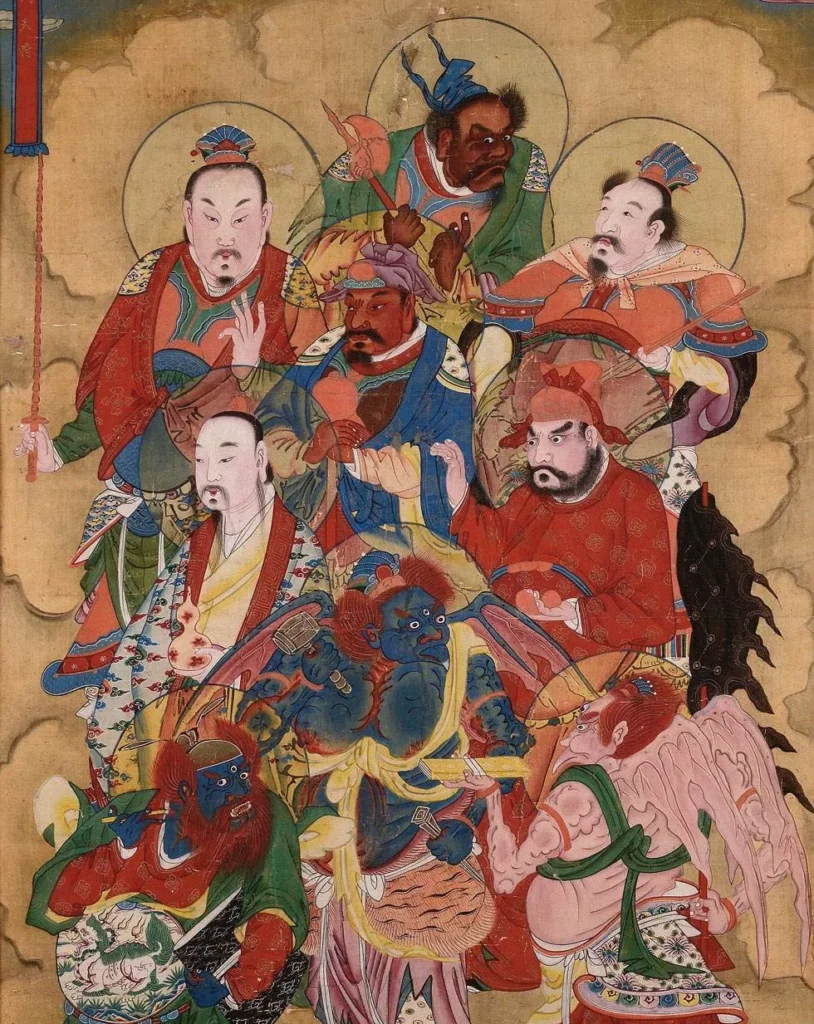
In the spiritual life of many East Asian communities, the burning of votive paper and the offering of symbolic paper money to the unseen world has long been a familiar tradition. Vietnamese culture also preserves this practice as part of its folk religious customs. Alongside commonly known forms of ritual paper currency such as underworld money, judgment money, or money offered to spiritual officials, many people also refer to another type known as Heavenly Official Money, or tiền thiên quan.
Heavenly Official Money appears in certain folk rituals and is associated with the heavenly realm and the deities believed to govern it. According to traditional cosmological imagination, the universe is not limited to the world of humans. Instead, it is thought to consist of several spiritual layers. Above lies the heavenly realm where divine beings and celestial officials maintain the order of the cosmos. In the middle lies the human world where people live their everyday lives. Beneath it is the underworld, where souls are judged after death.
Within this worldview, Heavenly Official Money is understood as a symbolic offering dedicated to the celestial officials of heaven. The act of presenting this paper money reflects a desire to receive blessings, protection, and good fortune from divine powers believed to reside in the heavenly realm.
The concept of Heavenly Official Money
Heavenly Official Money is a type of votive paper offering made from paper and often printed with symbolic currency designs, ancient coin imagery, or characters associated with sacred meanings. In many shops that sell ritual items, this type of paper money is offered alongside other forms of votive offerings used in ceremonies dedicated to deities.
The term “Heavenly Official” contains two important elements. The word “heavenly” refers to the celestial realm or heaven, while “official” refers to the divine administrators or spiritual authorities who are believed to manage certain aspects of the universe. Combined together, the term generally refers to celestial officials belonging to the heavenly court.
According to folk belief, heaven is imagined as a vast celestial court containing many gods and officials. Each divine figure is believed to oversee a particular domain, such as weather, prosperity, health, or human destiny. Heavenly Official Money therefore represents a symbolic tribute offered to these heavenly authorities.
Although it resembles money in appearance, Heavenly Official Money does not represent material wealth. Instead, it serves as a symbolic expression of reverence and sincerity toward the divine.
Origins of the belief in Heavenly Official Money
The belief in Heavenly Official Money originates from the interaction of several religious and cultural traditions, especially Taoism and East Asian folk spirituality.
In Taoist cosmology, the universe is described as a structured system with several spiritual realms. At the highest level lies the heavenly court, ruled by the Jade Emperor, who is considered the supreme ruler of heaven and earth. Under the Jade Emperor are numerous celestial officials and deities, each responsible for overseeing a particular aspect of cosmic order.
Stories about the heavenly court and the gods who administer the universe became widespread throughout East Asia. When these ideas reached Vietnam, they gradually blended with indigenous beliefs and local traditions, creating a rich spiritual worldview centered around heavenly deities and celestial administrators.
Within this imagined system, heaven functions like a royal court similar to earthly governance. There is a supreme ruler, numerous officials, and an organized system of responsibilities. Human actions are believed to be observed and recorded by these divine beings. Offering symbolic gifts to them therefore became a way for people to express respect and seek divine favor.
From this cultural background, the practice of burning votive paper and symbolic currency for celestial officials gradually emerged. Heavenly Official Money came to represent a symbolic offering directed toward the divine authorities of heaven.
Which deities receive Heavenly Official Money
In folk ritual practices, Heavenly Official Money is usually offered to deities associated with the heavenly realm or those believed to bestow blessings and protection upon humans.
Some interpretations suggest that the money is symbolically sent to celestial officials who assist the supreme ruler of heaven in maintaining cosmic order. These heavenly administrators are believed to have the power to grant blessings or impose consequences depending on human behavior.
In addition, Heavenly Official Money may also be included in rituals honoring deities such as the God of Wealth, land guardians, or protective spiritual beings. In these ceremonies the paper money serves as a symbolic offering directed toward the celestial realm.
In practice, the exact identity of the deity receiving Heavenly Official Money is often less important than the sincerity and devotion expressed through the ritual itself.
When Heavenly Official Money is offered
Heavenly Official Money does not have a specific fixed date for offering. However it frequently appears in ceremonies intended to pray for blessings, prosperity, or good fortune.
One of the most common occasions is during New Year rituals. At the beginning of the lunar year many families perform ceremonies to pray for peace, prosperity, and success in the coming year. During these rituals Heavenly Official Money may be burned together with other votive offerings.
It may also be used in ceremonies related to business success or financial prosperity. Within such rituals people express their respect toward divine powers in the hope of gaining favorable circumstances in life and work.
In some larger religious ceremonies held at temples or community ritual sites, Heavenly Official Money may also be burned as part of offerings symbolically sent to the heavenly realm.
The meaning behind offering Heavenly Official Money
The ritual of offering Heavenly Official Money reflects the belief that human life remains connected with the spiritual world. In traditional folk thought, the gods are not distant beings but active forces that may influence human destiny.
Offering Heavenly Official Money therefore represents an act of reverence toward these divine powers. It also expresses a hope for protection, prosperity, and blessings from the heavenly realm.
From another perspective, such rituals provide psychological comfort. When people face uncertainty or challenges in life, spiritual practices often help create a sense of reassurance and stability.
These rituals also help preserve long standing cultural traditions. Through such practices, communities maintain continuity with their past and reinforce shared cultural values.
Heavenly Official Money in modern society
In contemporary society, the perception of rituals involving Heavenly Official Money has evolved. Many people continue to perform such practices as part of cultural tradition, while others view them primarily as symbolic expressions of belief.
Scholars often interpret customs such as burning votive paper as reflections of how earlier societies attempted to understand the relationship between the visible and invisible worlds. Before modern scientific explanations were available, symbolic rituals provided a way for people to interpret the uncertainties of life.
Today many temples and religious organizations encourage believers to focus more on spiritual sincerity and ethical behavior rather than emphasizing the material aspect of ritual offerings.
Nevertheless, traditions such as offering Heavenly Official Money continue to exist within folk culture. They reflect the enduring spiritual needs of people and the desire to maintain a connection with the unseen world.
Cultural significance of Heavenly Official Money
Heavenly Official Money is more than a type of ritual paper currency. It represents a cultural symbol rooted in traditional cosmology and spiritual imagination.
Through rituals involving such offerings, earlier generations expressed a worldview in which the universe operates according to an organized system governed by divine authorities. The belief that heavenly beings oversee human life provided people with a sense of balance between the visible world and the invisible realm.
Even today, although interpretations of these rituals may differ, Heavenly Official Money still holds cultural value. Studying such traditions allows us to better understand the rich spiritual life of Vietnamese folk belief and the ways in which earlier generations perceived the relationship between humanity and the divine.

ARTICLES IN THE SAME CATEGORY
The Phúc Đức Palace in a Tử Vi Chart: The Foundation of Inner Well-Being and How to Nurture Peace
When There Are Too Many Choices, How Can We Make Wiser Decisions?
Resting Properly: Why Stopping Is Also a Life Skill
The Wealth Palace in a Zi Wei Astrology Chart: Looking at Money Management and Personal Values
The Art of Setting Boundaries: Protecting Your Peace Without Hurting Others
The Career Palace in a Tử Vi Chart: Career Orientation and How to Develop One’s Abilities
ARTICLES IN THE SAME GENRE
Heavenly Officials in Vietnamese Folk Belief: Bestowers of Blessings from the Celestial Realm
The Judge Figures in Vietnamese Folk Belief: Guardians of Justice in the Afterlife
Why People Offer All Types of Spiritual Money When Moving Into a New House: From Judgment Officials to Heavenly, Earthly, Immortal, Cao, and Buddhist Officials
Earth Official Money in Folk Belief: Origins, Meaning, and Its Role in Spiritual Rituals
Buddhist Official Money in Folk Belief: Origins, Meaning, and Its Role in Spiritual Rituals
Judgment Money in Folk Belief: Origins, Meaning, and the Ritual of Offering to the Underworld Judges