

 Tiếng Việt
 日本語
日本語 한국어
한국어 中文 (中国)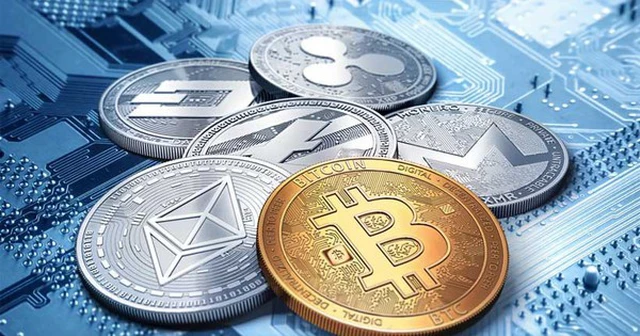
For decades, the global financial system has operated on a principle that appears simple but is profoundly complex: trust. The paper money we use every day, from USD to VND, has no intrinsic value when separated from trust in the issuing government and the financial system behind it. This makes the question of cryptocurrency particularly compelling: can a form of money not controlled by any nation replace cross-border payments as trust in it continues to grow?
Cryptocurrencies, especially Bitcoin and other major digital assets, are gradually entering the realm of international payments. With fast transaction speeds, lower costs, and the ability to operate without intermediaries like banks, crypto is often seen as a solution to long-standing inefficiencies in traditional finance. Yet behind this rapid rise lies a paradox: the very features that make cryptocurrencies attractive could also become their greatest vulnerabilities if disrupted.
Trust: the common foundation of all currencies
To understand the potential of cryptocurrency, it is necessary to revisit the nature of money itself. Paper currency does not hold intrinsic value like gold or silver. Its value stems from the belief that others will accept it in exchange. This is what the renowned economist Milton Friedman emphasized when he argued that money functions effectively only when there is widespread agreement about its value.
Similarly, cryptocurrency is built on trust. But instead of trust in governments, it relies on trust in technology, algorithms, and user communities. Satoshi Nakamoto designed Bitcoin as a system where trust is not centralized in institutions but distributed across a network.
This makes cryptocurrency particularly appealing in a globalized world where cross-border transactions are often hindered by high fees, delays, and regulatory barriers. A Bitcoin transaction can be completed in minutes without relying on banks or systems like SWIFT. For many, this represents a revolutionary shift.
Cross-border payments: real opportunity or inflated expectation?
In practice, cryptocurrency has already begun to be used in international payments, especially in regions with underdeveloped financial systems or those affected by sanctions. Fintech companies and even major financial institutions are experimenting with blockchain to reduce remittance costs.
Jack Dorsey once stated that Bitcoin could become the “currency of the Internet,” a borderless global payment method. This reflects a belief that crypto could replace—or at least complement—the traditional financial system.
However, not everyone agrees. Christine Lagarde, President of the European Central Bank, has warned that cryptocurrencies are highly speculative and lack the stability required to function as primary payment instruments. This highlights the gap between potential and reality.
One of the core challenges is price volatility. A currency that can fluctuate by double-digit percentages within days is difficult to use as a stable medium of exchange. This volatility makes many businesses hesitant to adopt cryptocurrency for international transactions.
Ambiguity and lack of control: a double-edged sword
One of the reasons for the rapid growth of cryptocurrency is its decentralized and hard-to-control nature. No central bank can directly intervene in the Bitcoin network. This offers freedom, but also creates uncertainty.
Warren Buffett famously described Bitcoin as “rat poison squared,” reflecting deep skepticism toward an asset without clear intrinsic value. While extreme, his view raises a crucial question: what truly guarantees the value of cryptocurrency?
The very lack of control that has fueled crypto’s expansion could also threaten its stability. If governments impose stricter regulations or if technological vulnerabilities are exposed, trust in the system could be severely shaken.
Elon Musk provides a clear example of how sentiment drives the crypto market. His public statements have repeatedly caused dramatic swings in Bitcoin and Dogecoin prices, illustrating how heavily the market still depends on perception rather than fundamentals.
Technology: both a driver and a latent risk
There is no denying that cryptocurrency is closely tied to technological breakthroughs. Blockchain, smart contracts, and scaling solutions like the Lightning Network have significantly improved transaction speed and efficiency.
However, technology is not static. If superior innovations emerge or existing systems encounter critical failures, trust could quickly shift. History offers many examples of once-dominant technologies being replaced.
Vitalik Buterin has emphasized that the future of crypto depends on continuous adaptation and innovation. This means cryptocurrencies are not only competing with traditional finance but also with each other.
When trust breaks: a scenario that cannot be ignored
The greatest weakness of cryptocurrency lies in its foundation: trust. If any key element—technology, decentralization, or widespread acceptance—erodes, its value could collapse rapidly.
Unlike fiat currencies, which are backed by governments and economies, cryptocurrencies lack a “lender of last resort.” If trust disappears, there is no mechanism to guarantee their value.
Paul Krugman has compared cryptocurrencies to historical financial bubbles, where value is driven more by expectation than by underlying fundamentals. This perspective gains credibility when considering past crypto market crashes.
Can cryptocurrency replace cross-border payments?
The answer is neither a simple yes nor no. Cryptocurrency clearly offers advantages in international transactions, particularly in speed and cost. However, to fully replace the current system, it must overcome significant challenges, including volatility, regulatory uncertainty, and user trust.
More likely, cryptocurrency will coexist with fiat currencies as a complementary layer rather than a complete replacement. Central banks are already developing their own digital currencies, signaling that financial digitization is inevitable.
The true value lies in trust
Cryptocurrency is one of the most significant financial innovations of the 21st century, but it is not a miracle solution. Its value, like that of paper money, ultimately depends on human trust.
The difference is that while fiat currency relies on trust in governments, cryptocurrency depends on trust in technology and communities. This makes it both powerful and fragile.
In an increasingly digital world, cryptocurrency may become an important component of cross-border payments. But to become a dominant foundation, it needs more than technological advancement. It requires stability, transparency, and above all, a level of trust strong enough to withstand market and political turbulence.
As Benjamin Graham once said, “In the short run, the market is a voting machine, but in the long run, it is a weighing machine.” Cryptocurrency may be receiving strong “votes” today, but whether it has the “weight” to endure over time remains an open question.

ARTICLES IN THE SAME CATEGORY
Attention Needs Rest Too: The Art of Living Amid Too Many Things to Know
Healthy Boundaries: How to Protect Yourself Without Hurting Others
The Pause Before a Choice: Slow Down to See Clearly What You Truly Need
Listen to Understand, Not to Respond, in Difficult Conversations
Saying No Without Feeling Guilty: Building Healthy Boundaries in Everyday Life
Forgiveness Does Not Mean Reopening a Closed Door
ARTICLES IN THE SAME GENRE