

 Tiếng Việt
 日本語
 한국어
 中文 (中国)
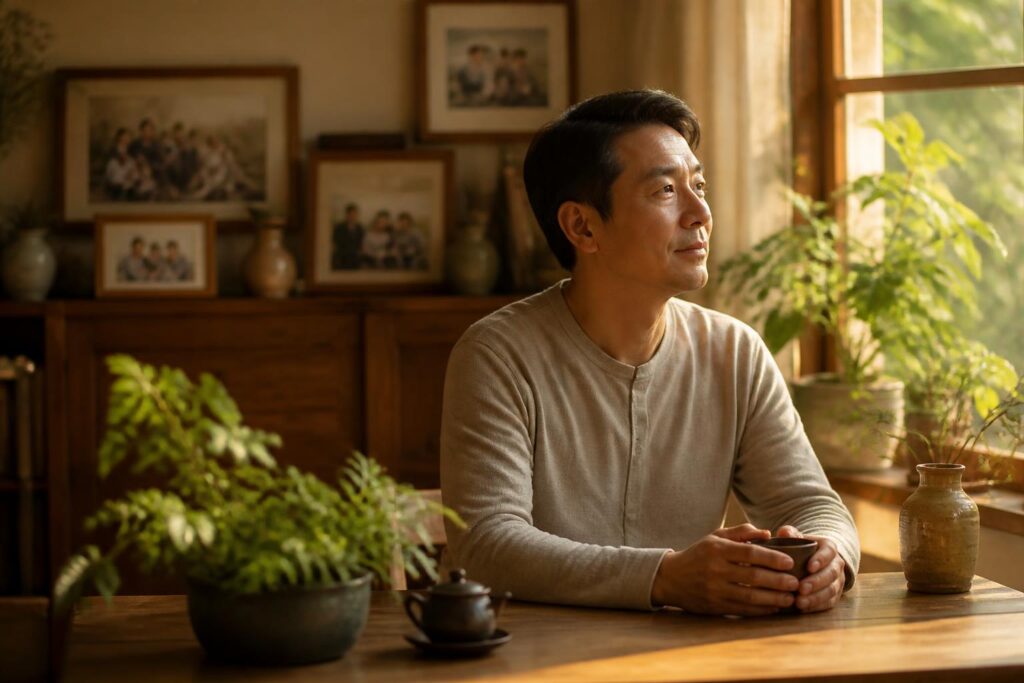
In a Tử Vi chart, people often turn to very specific questions: Will my work go smoothly? Will my finances be stable? How will my relationships change? However, behind these questions lies a deeper need: to live peacefully, have emotional support, and feel that one’s efforts bring meaning. The Phúc Đức Palace is often mentioned when people want to explore this underlying layer of life.
Phúc Đức should not be understood simply as a conclusion that someone is “fortunate” or “less fortunate.” In a reference-based approach to Tử Vi, the Phúc Đức Palace offers insight into the influence of family traditions, inner life, the way a person responds to life’s events, and the ability to maintain inner stability. This is a broad subject that needs to be considered together with the entire chart rather than isolating one palace and making absolute judgments.
How is the Phúc Đức Palace commonly understood?
Phúc Đức is one of the foundational palaces in interpreting a chart. While some palaces point toward clear expressions such as career, finances, or relationships, this palace is often associated with the less observable aspects: beliefs, mental habits, a sense of belonging within the family, and the way a person seeks peace. It can help the chart reader ask what makes them feel supported, what causes their mind to become uneasy, and where the source of energy lies that helps them move through difficult periods.
In the Tử Vi tradition, the word “phúc” does not mean only unexpected good luck. Phúc can also be understood as the accumulation of one’s way of life, kindness, the way one treats others, the ability to maintain relationships, and one’s attitude toward gains and losses. Therefore, when discussing the Phúc Đức Palace, one should not merely wait for an indication of good fortune. More important are the qualities and environments that help a person live steadily, avoid being swept into extremes, and know how to adjust after each experience.
The influence of family and patterns of living
Everyone grows up in a particular context. Some people are raised in families that value sharing; some become accustomed to discipline; others have to become independent early because they lack a sense of security. These experiences often leave an imprint on the way we see the world. Someone who has received encouragement may find it easier to trust in their abilities; conversely, a person who is frequently criticized may constantly doubt themselves even after achieving many things.
When examining the Phúc Đức Palace, the point worthy of reflection is not assigning blame to the family, but recognizing the influences that continue to exist within us. Family patterns can create strengths such as perseverance, connectedness, or a sense of responsibility. But they can also form patterns that need to be reconsidered, such as the habit of sacrificing too much, fear of disappointing others, or the belief that one must endure suffering in order to be a good person.
Seen in this way, the Phúc Đức Palace becomes an invitation to observe how values are passed down between generations. What in the family should be preserved? What is no longer suited to the present circumstances? Once these questions can be asked, a person consulting Tử Vi can move from waiting for fate to actively choosing how to live.
Inner life and the ability to recover
An important quality often associated with the Phúc Đức Palace is mental resilience. Two people may encounter the same obstacle but respond very differently. One may quickly find support, know when to rest, and learn from the experience. Another may remain stuck for a long time in anxiety, self-blame, or a sense of helplessness. This difference is not necessarily a sign of a fixed “destiny.” It may be related to past experiences, thought patterns, relationships, and the mental skills that have been cultivated.
Therefore, when interpreting the Phúc Đức Palace, one can focus on the question: How do I usually recover? Some people regain balance through family, meaningful work, nature, religious life, or sincere conversations. Some need a period of quiet to organize their thoughts. Others feel relieved only when they can turn their pain into concrete action, such as caring for loved ones, learning a new skill, or contributing to the community.
This shows that “phúc” does not always appear as a life without difficulties. A life with a strong spiritual foundation can still include failure, loss, and periods of uncertainty. The difference lies in the ability not to let a single event define one’s entire identity. People who know how to return to their core values often have more opportunities to reestablish their direction after being shaken.
Reading the Phúc Đức Palace together with related palaces
The Phúc Đức Palace should not be separated from the overall structure of the chart. A careful interpretation needs to consider the relationship between inner life and family, the self, social relationships, and the goals one is pursuing. The same indication, when placed in different contexts, may suggest different forms of expression. A person with a strong inner life may become thoughtful and a good listener; but without balance, they may also overthink and withdraw into themselves.
Similarly, closeness to family can be a major source of support, but it can sometimes also create pressure if a person always lives according to other people’s expectations. A responsibly interpreted chart should point out both favorable aspects and areas that need adjustment, rather than emphasizing only fear-inducing predictions. No single palace is sufficient to replace real-world observation of a person’s circumstances, mental health, abilities, and choices.
For those who are new to Tử Vi, concepts such as stars, palaces, and the ways they combine should be regarded as a symbolic language. This language can help us name certain tendencies, but it is not scientific evidence for making certain claims about the future. The more calmly and clearly one approaches it, the more one can avoid becoming dependent on predictions and use Tử Vi as a tool for self-reflection.
Turning awareness into concrete ways of living
If you notice that you are prone to anxiety, the first step does not necessarily have to be seeking another interpretation. You can begin by recording the situations that cause your mind to lose balance, how you responded, and what truly helps you become calmer. Regular observation will reveal recurring patterns that a single chart reading may not be able to identify fully.
In practical terms, caring for the Phúc Đức Palace also means caring for the quality of one’s relationships and inner life. A timely inquiry about someone’s well-being, gratitude toward those who have helped us, a reasonable habit of resting, or learning to say no can all create lasting change. These actions are not mysterious, but they help people live less reactively and create more space for choice.
For a family, phúc does not simply lie in all its members always agreeing with one another. A family with a healthy foundation needs the ability to speak honestly without being offensive, respect differences, and repair relationships after conflict. If there are long-lasting wounds within the family pattern, seeking appropriate support from a trusted person or a mental health professional may be necessary. Tử Vi should not be used as a substitute for medical or psychological counseling, or for important decisions concerning personal safety and rights.
Happiness is not a result granted in advance
The Phúc Đức Palace reminds us that happiness does not lie only in what a person possesses. Some people have many advantages yet are constantly anxious, while others live simply and still maintain peace of mind because they know what is enough and have sincere relationships. This does not mean that circumstances are unimportant. Material conditions, health, and safety remain foundations that must be respected. However, the way we understand and use what we have also contributes to determining the quality of our lives.
From this perspective, “phúc” can be cultivated through small choices: not passing on a hurt once we have recognized it, not using power to make others afraid, taking responsibility for our words, and maintaining kindness even when it is not immediately reciprocated. These choices do not guarantee that life will always go smoothly, but they create an inner strength that helps people live with greater direction.
The Phúc Đức Palace in a Tử Vi chart should therefore be read as a subject concerning spiritual foundations, family traditions, and the ability to create peace from within. It is neither a verdict on good or bad fortune nor a promise that someone with favorable indications will avoid every difficulty. The value of exploring it lies in helping the reader recognize the sources of support they already have, the patterns that need to change, and their responsibility for the future.
When Tử Vi is approached with clear awareness, the most important question is no longer “How much phúc do I have?” but “What am I doing to make my life healthier and more meaningful?” The answer will not come from a single concluding line in a chart. It is formed through the way each person treats themselves, their family, their community, and the unavoidable events along the journey of life.

ARTICLES IN THE SAME CATEGORY
The Spouse Palace in a Tử Vi Chart: Understanding Love Through Maturity and Empathy
The Wealth Palace in a Tử Vi Chart: Perspectives on Money, Value-Creation Ability, and Financial Habits
The Career Palace in a Tử Vi Chart: Career Orientation and How to Develop One’s Abilities
The Phúc Đức Palace in a Tử Vi Chart: The Spiritual Foundation and How Each Person Finds Inner Peace
The Wealth Palace in a Tử Vi Chart: Understanding How to Create and Use Money
The Wealth Palace in a Tử Vi Chart: Understanding How to Build and Use Money
ARTICLES IN THE SAME GENRE
Memory Is Not a Video Camera: Understanding It Clearly to Look Back at Ourselves
When Belief Guides the Way We See the World
Knowing When to Ask: A Skill That Opens the Door to Deeper Conversations
Being Busy Doesn’t Mean Making Progress: Rethinking How We Use Our Time
When There Are Too Many Choices, How Can We Make Wiser Decisions?
The 12 Zodiac Signs and How Each One Establishes Healthy Boundaries