

 Tiếng Việt
 日本語
 한국어
 中文 (中国)
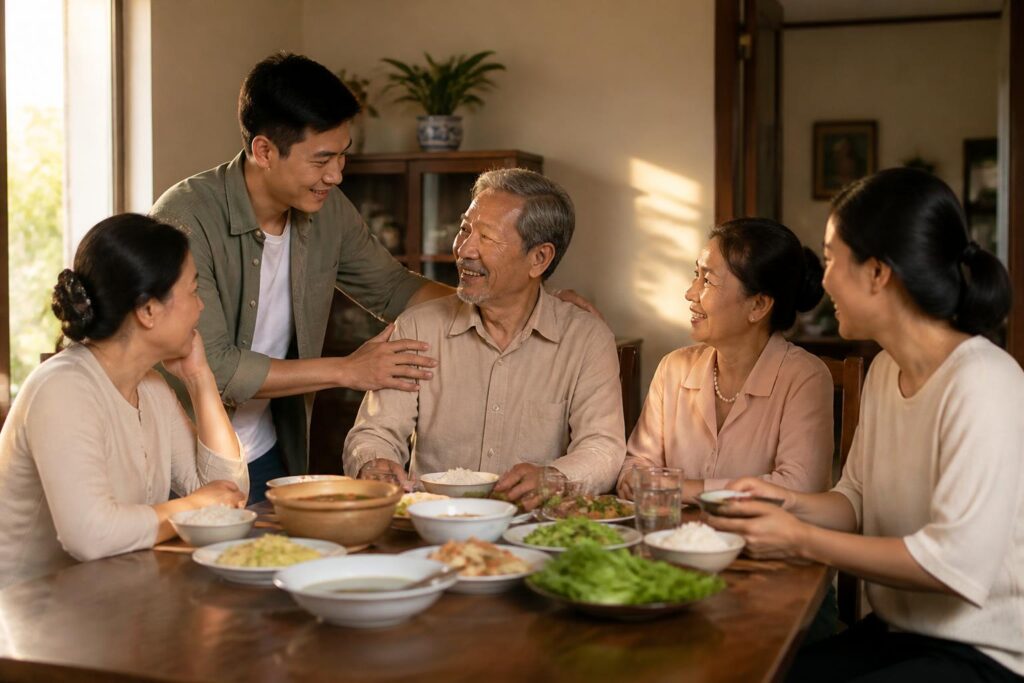
In a life filled with pressure, people often find it easier to focus on what they have not achieved than on what they already have. An insufficient income, an unfinished plan, a relationship that has not turned out as hoped, or an exhausting workday can occupy the entire mind. At such times, the things that quietly support life—good health, a meal, the care of loved ones, or the opportunity to start again—are often taken for granted.
Gratitude begins with the ability to recognize these values. It does not mean forcing oneself to be cheerful in every circumstance, nor does it mean denying difficulties. Gratitude is a more complete way of seeing: we recognize what is unfavorable, but at the same time we do not forget the resources, people, and opportunities that are helping us continue. In a busy life, this perspective can create a necessary pause for each person to understand where they are and how they want to move forward.
Gratitude Does Not Mean Passive Contentment
A common misconception is that if people are grateful for what they have, they will lose their motivation to improve. In reality, gratitude and the desire for growth do not exclude each other. A person can appreciate their current job while still wanting to learn more and improve their abilities. They can be grateful for their family while still establishing healthy boundaries. They can cherish their present life while still trying to change things that are causing harm.
The difference lies in motivation. When we see only what we lack, we are more likely to act in a hurried state of mind, always wanting to prove that we are not inferior to others. When we know how to acknowledge what we have, we gain more calmness to choose suitable goals. Our efforts then do not arise entirely from dissatisfaction, but from the desire to make what is already good more secure.
Therefore, gratitude is not about sitting still and waiting for everything to improve on its own. It is a mental foundation that helps people act without being completely swept away by comparison, envy, or fear of scarcity. A grateful person can still say “not enough” when faced with a problem, but they can often see a solution more easily because they do not allow disappointment to obscure the entire picture.
The Small Things That Are Often Overlooked
In many families, care is repeated so often that it becomes invisible. Someone prepares meals, reminds others of schedules, listens after a long day, or quietly handles countless unnamed tasks. These contributions are sometimes not acknowledged because they do not create prominent moments. Only when the person carrying them out is absent do the others realize that their lives have been supported by so many simple actions.
The same thing also appears in friendships and at work. A timely piece of guidance, a willingness to yield during a discussion, someone ready to share their experience, or a colleague who keeps their promises can all create a sense of security. If we focus only on major achievements, we will overlook the foundation that creates stability within a group.
Gratitude therefore requires observation. It may mean recognizing that a loved one has made time for us, realizing that our body is still doing its best after an exhausting day, or acknowledging that we have made it through a period we once thought impossible. These things do not need to be exaggerated into extraordinary stories. Their value lies in their authenticity and in their ability to bring people back to the present.
How to Cultivate Gratitude Without Turning It into a Formality
Start with Specific Acknowledgment
A general thank-you can sometimes become a mechanical habit. Instead, say clearly what you appreciate. For example, instead of simply saying “thank you,” you could say, “Thank you for patiently listening to me talk,” or “I’m grateful that you completed that part of the work on time.” Specificity shows that the speaker has truly observed and understood the value of the action they received.
Acknowledgment does not have to be formal. A short message, a phone call, a timely nod, or taking the initiative to share the workload can all express gratitude. What matters is not whether the form is grand or small, but whether it is appropriate and sincere.
Take Time to Reflect at the End of the Day
At the end of the day, each person can ask themselves three simple questions: What helped me keep going today? Who offered valuable support? And what did I accomplish, however small? These questions are not intended to create a list of achievements. They help the mind shift from merely searching for mistakes to more fully recognizing what has happened.
Reflection should also be practiced flexibly. On some days, the thing to be grateful for may be an enjoyable conversation. On others, it may simply be completing a difficult task or having the courage to rest when the body needs it. If this practice becomes a rigid rule, gratitude can turn into another burdensome obligation. Consistency matters, but honesty matters more.
Turn Gratitude into Action
Emotion truly comes alive when it is expressed through behavior. Gratitude toward one’s parents can be shown by taking the initiative to check in on them, sharing responsibilities, or respecting their choices. Gratitude toward a friend may mean keeping confidential what they have entrusted to us, being there when needed, and not turning to them only when we are facing difficulties. Gratitude toward colleagues can begin with acknowledging their contributions in a meeting instead of taking all the credit for ourselves.
Grateful actions also extend to people we do not know. Taking care of shared spaces, waiting one’s turn, speaking politely to service workers, or helping someone who is confused are all ways of recognizing that our lives are connected. These actions will not transform society in a single day, but they contribute to creating an environment that is less cold.
Gratitude During Difficult Periods
People do not always have enough strength to see something positive. When facing loss, illness, failure, or conflict, the advice to “be grateful,” if delivered without sensitivity, can make someone who is suffering feel judged. No one is obligated to immediately find a beautiful lesson in a crisis. Some forms of grief need to be acknowledged before a person can think about peace of mind.
In such circumstances, gratitude should be understood as a small choice, not an emotional command. A tired person may be grateful simply for having found a safe place to rest that day. Someone who is disappointed may acknowledge that they still have one person willing to listen. These small sources of support do not erase pain, but they help keep pain from defining a person completely.
At the same time, gratitude should not be used to excuse injustice or demand that others endure indefinitely. Appreciating what we have does not mean accepting a harmful environment. Sometimes, being grateful to ourselves means daring to seek help, leaving an unhealthy relationship, or setting boundaries against demands that exceed our capacity.
The Impact on Relationships
In a relationship, what drives people apart is not only major conflicts but also the feeling that their efforts are not being seen. When thanks and acknowledgment appear regularly, the people involved have more motivation to continue caring for one another. They also find it easier to discuss disagreements because the relationship is not built solely on criticism.
However, gratitude should not become a tool for demanding that others continue to sacrifice themselves. The fact that someone once helped us does not mean that we can bring up that debt in every argument. Mature gratitude always goes together with respect for freedom. We acknowledge what we have received, but we do not turn that acknowledgment into control over another person.
In families, expressing gratitude is especially necessary because loved ones are often easily regarded as people who “are simply supposed to do” certain things. A well-timed sentence can change the atmosphere of an entire home. It lets others know that their efforts have been seen, while also reminding us that affection cannot exist only in our thoughts; it needs to be expressed through words and actions.
Gratitude and Mindful Living
Amid an environment that constantly stimulates the desire to own more, gratitude helps people distinguish genuine needs from desires created by comparison. When we understand what we already have, we can think more carefully before shopping, pursuing a goal, or trading our time for an unsuitable race. This does not mean giving up comfort or ambition, but reclaiming the power to decide for ourselves.
A grateful person is not necessarily someone who is always optimistic. They can still feel anxious, angry, and disappointed. What is valuable is that they do not allow a temporary emotion to deny everything that matters. They know when to move forward, when to stop, when to apologize, and when to thank the people who have accompanied them.
Ultimately, gratitude is a way of seeing that gives life greater depth. It directs our attention toward relationships that are often obscured by work and pressure. It reminds us that personal achievements rarely come from one person alone, and that our present peace is often created by many quiet efforts. When people know how to acknowledge what they receive, they not only feel more fulfilled but also tend to live more responsibly toward those things.
There is no need to begin with a major change. We can start by offering a specific word of thanks, listening fully to a loved one, caring for our bodies, or reflecting on something that helped us get through today. Small actions, when carried out sincerely, gradually form a mental habit. And from that habit, gratitude can become a lasting source of support amid a life that is always in motion.

ARTICLES IN THE SAME CATEGORY
Staying Calm Amid Days of Turmoil
Small Rituals That Help Families Maintain a Sense of Closeness
The Necessary Pause for Staying Present Amid Overwhelmingly Busy Days
The Quiet Space Amid Digital Life: How to Regain Focus and Peace
Intentional Stillness: How to Regain Focus in a Day Filled with Too Much Noise
Gratitude in Everyday Life: How Looking Back at the Ordinary Can Help Us Live More Lightly
ARTICLES IN THE SAME GENRE
Gratitude in Everyday Life: How Looking Back at the Ordinary Can Help Us Live More Lightly
The Keeper of Seeds by the Front Porch
The Lamp Beneath the Station Eaves
The Things No One Applauds Still Make a Decent Life
When the Meal Slows Down, Family Grows Closer
Gratitude in Everyday Life: From an Emotion to a Sustainable Way of Living