

 Tiếng Việt
 日本語
 한국어
 中文 (中国)
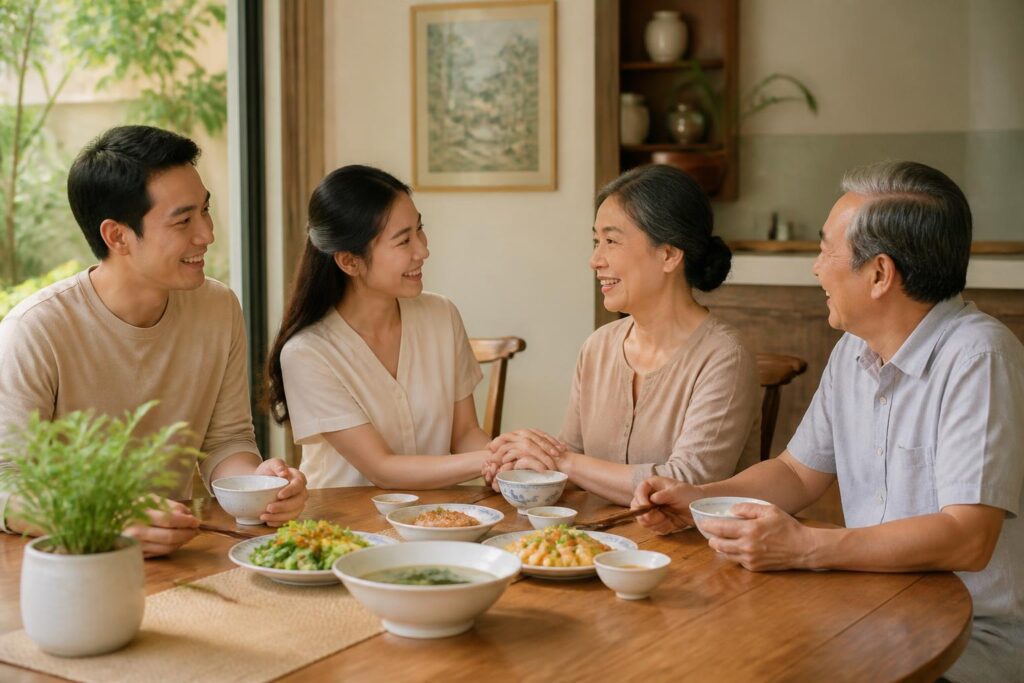
In the fast pace of life, people often find it easier to notice what is missing than what is present. An unfinished plan, insufficient funds, a relationship that has not turned out as hoped, or a missed opportunity can occupy a great deal of space in one’s thoughts. When the mind is constantly focused on what is lacking, the ordinary things that support everyday life can sometimes become invisible. A hot meal, a sincere conversation, a body that is still healthy, a home to return to, or the quiet help of a loved one may all be taken for granted.
Gratitude begins with the ability to recognize these values. It is not a way of denying difficulties, much less a call for people to be cheerful in every circumstance. Gratitude is a more balanced way of seeing: acknowledging what is not going well while also not overlooking what is good. When practiced mindfully, gratitude can change the way we view ourselves, others, and the changes in our lives.
Gratitude Does Not Mean Being Satisfied with Everything
Many people hesitate to talk about gratitude because they fear that it means accepting deprivation or enduring injustice. In reality, a person can be grateful for what they have while still wanting to change their circumstances. Someone working under unsuitable conditions can appreciate the current opportunity while also seeking to learn more and find a better environment. Someone experiencing family conflict can acknowledge the good memories while still needing to set boundaries to protect their peace of mind.
Gratitude is acknowledgment, not surrender. It helps people look more fully at a situation instead of viewing it only through the lens of disappointment. If we focus solely on the negative, we may easily conclude that everything is terrible. Conversely, if we force ourselves to be grateful mechanically, we may unintentionally conceal our genuine emotions. A healthy attitude needs to make room for sadness, anger, disappointment, and appreciation alike.
Ordinary Things Often Have Great Value
In life, major events often attract attention, but the feeling of being supported frequently comes from very small details. A father patiently repairing his child’s bicycle, a friend remembering the day we have an important task, a breakfast hastily prepared before work, a word of concern after a tiring day, or quiet time to rest are all expressions of care. They are not loud and do not necessarily create a special memory, but they help make life feel warm.
The habit of treating ordinary things as a given can cause people to recognize their value only after they are gone. We often think about health only when our bodies are tired, miss the presence of loved ones when they are far away, or understand the value of a home when faced with unstable days. Learning to recognize what is good in the present does not make those things any less significant. On the contrary, it helps us live more actively in expressing our feelings and care.
Gratitude Needs to Be Expressed Through Action
A sincere word of thanks can make others feel that their efforts have been seen. However, gratitude should not stop at words. If we value our family, we can make time to listen instead of merely sending perfunctory messages of concern. If we are grateful to someone who helped us during a difficult period, we can carry that kindness into the way we treat other people. If we are grateful for the work that supports us, we can fulfill our responsibilities with a more serious attitude, even though that does not mean we must remain in our current job forever.
Acts of gratitude can also be very simple. They may involve replying to an important message, keeping a promise, caring for someone who is tired, cleaning a shared space, clearly saying that we appreciate a particular effort, or taking the initiative to apologize when we realize that we have hurt someone. These actions bring gratitude out of the world of thought and make it part of the way we live.
How to Build a Suitable Gratitude Practice
There is no need to begin with major goals. Each day, a person can spend a few minutes asking: What helped me feel more at ease today? Who treated me kindly? What have I accomplished, however small? And what in my life deserves more care? The answers do not need to be extraordinary. Getting enough sleep, completing an overdue task, having time to take a walk, or remaining calm during an argument are all worth recognizing.
Writing down things worth appreciating is a useful approach, but it is not the only one. Some people like to say thank you directly, some choose to call a loved one, and others express it by taking care of the home or helping the community. What matters is that the method suits one’s personality and actual circumstances. If gratitude is turned into a rigid obligation, we may feel pressured and quickly give up.
We should also avoid comparing our circumstances with those of others in order to force ourselves to be grateful. Seeing that someone else is struggling more does not automatically make our pain disappear. Gratitude is most meaningful when it comes from being honest with ourselves, not from guilt. We can admit that we are tired and still recognize that someone has been there for us. We can feel sad about a failure and still appreciate the lesson, experience, or growth we gained from it.
Gratitude in Relationships
Many relationships do not fall apart because of a lack of affection, but because long-term efforts go unrecognized. When one person is always caring for others, making concessions, or shouldering shared responsibilities, the other person’s silence can make them feel taken for granted. A word of thanks does not solve every problem, but it shows that we see the other person’s contributions.
In a family, gratitude should not appear only on special occasions. A specific statement such as “Thank you for picking up our child for me today” often carries more weight than a general expression of thanks. In friendship, gratitude can mean respecting one another’s time, honoring privacy, and not reaching out only when help is needed. In the workplace, it means recognizing the right person’s efforts, sharing responsibilities, and not taking all the credit for oneself. When appreciation is expressed consistently, relationships gain a stronger foundation for getting through ordinary disagreements.
Gratitude Also Means Taking Care of Yourself
People often find it easy to thank others but are harsh with themselves. We may forgive a friend for making a mistake but not allow ourselves to have weak days. We may acknowledge a colleague’s efforts while viewing all our own efforts as insufficient. In this case, gratitude needs to be directed toward ourselves—not to indulge ourselves, but to recognize the work we have put in fairly.
Gratitude toward oneself can begin with resting when needed, eating adequately, seeking support when a problem exceeds our ability to resolve it alone, and stopping the use of harsh language to describe ourselves. Everyone has limits, and recognizing those limits is not a sign of weakness. When we learn to respect ourselves, we are also more likely to treat others with patience.
Keeping Gratitude During Difficult Periods
When upheaval occurs, the advice to be grateful can sometimes make a suffering person feel that their pain is being dismissed. Therefore, gratitude during difficult periods needs to be understood gently. No one is required to find meaning immediately in a loss. Some grief needs time to be named accurately, some questions cannot yet be answered, and on some days people have enough strength only to complete the bare minimum.
In such circumstances, gratitude may simply mean recognizing that we still have someone we can call, a safe place to rest, or a small part of the day that has not been completely occupied by sorrow. This is not a way of minimizing the event, but a point of support that keeps people from being swept away by despair. From that small point of support, we can gradually regain the ability to care for ourselves and reconnect with life.
A More Meaningful Way of Living
Gratitude does not turn every day into an easy day. Nor does it guarantee that people will avoid loss, failure, or difficult choices. The value of gratitude lies in helping us avoid losing sight of the whole picture simply because one part of it is facing problems. When we know how to see the support, opportunities, lessons, and affection around us, we gain greater clarity to act instead of merely reacting.
Life is made up of great things, but it is also sustained by countless small acts repeated each day. A word of thanks, a moment of listening, a carefully prepared meal, or a few minutes spent reflecting on what we have can all change the atmosphere of a day. Gratitude does not require people to have a perfect life. It is a choice to view life in its entirety, with both deprivation and abundance, both hurt and love. From this recognition, we learn to live more kindly toward others, be more patient with ourselves, and take greater responsibility for the things entrusted to us.

ARTICLES IN THE SAME CATEGORY
When People Know How to Pause, They See More to Be Grateful For
The Art of Setting Boundaries: How to Protect Your Energy Without Becoming Selfish
The Art of Slow Living in an Era That Is Always Urging Us to Move Faster
Gratitude in a Busy Life: How to Reconsider the Things Often Overlooked
Staying Calm Amid Days of Turmoil
Small Rituals That Help Families Maintain a Sense of Closeness
ARTICLES IN THE SAME GENRE
The Scent of Rain on an Old Tiled Roof: When Memories Teach Us How to Return
Gratitude in Everyday Life: How Looking Back at the Ordinary Can Help Us Live More Lightly
The Keeper of Seeds by the Front Porch
The Lamp Beneath the Station Eaves
The Things No One Applauds Still Make a Decent Life
When the Meal Slows Down, Family Grows Closer