
Horoscopes · 16 November, 2026
The Phúc Đức Palace in Tử Vi: Spiritual Roots and Ways to Nurture a Peaceful Life
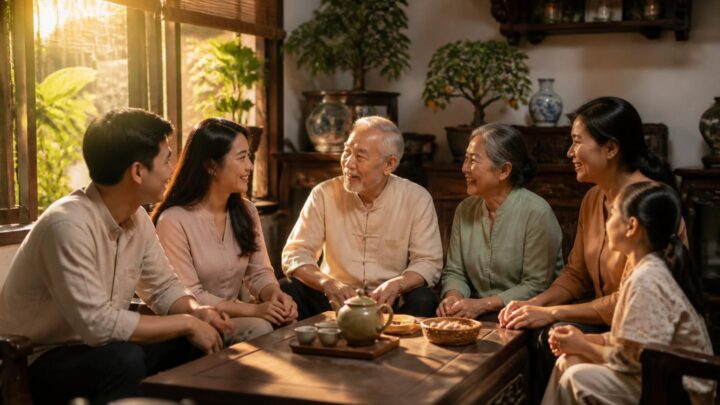
In a Tử Vi chart, the Phúc Đức Palace often raises questions that go deeper than immediate gains and losses. Why are some people able to pass through adversity while remaining calm? Why do some people possess many favorable conditions yet always feel uneasy inside? Questions like these make Phúc Đức one of the palaces that attracts considerable interest among those seeking to understand spiritual life, family patterns, and the feeling of inner stability.
However, the Phúc Đức Palace should not be understood simply as a promise of good fortune or a fixed sentence imposed on each person. From a cautious perspective, it is a symbol for reflecting on spiritual foundations, family influences, attitudes toward change, and the way a person receives things they cannot control. Reading this palace, therefore, is not only about finding out whether one is “fortunate” or “less fortunate,” but also about recognizing the habits, values, and choices that contribute to the quality of one’s life.
How is the Phúc Đức Palace commonly understood?
In the traditional interpretation of Tử Vi, Phúc Đức is often associated with the blessings of one’s lineage, spiritual life, unseen support, and the ability to find joy in simple things. This palace is also linked to mental states, the degree of peace one feels, resilience in the face of circumstances, and the way people seek meaning in their journey. These interpretations may differ depending on the school of thought, the system of stars, and the way this palace interacts with other palaces in the chart.
What is noteworthy is that the word “blessings” here does not only mean wealth or good luck. A person may not have an entirely favorable life and still be blessed if they know how to preserve family bonds, have trustworthy people by their side, know how to be content at the right moments, and are able to rise again after disappointment. Conversely, abundant material advantages do not necessarily bring a sense of peace if a person is always living with anxiety, comparison, or suspicion.
Therefore, the Phúc Đức Palace can be viewed as a lens through which to observe the part of life that lies behind outward appearances. It reminds readers that success, assets, and social position are only part of the experience of living. A sense of belonging, peace within the family, faith in good things, and the ability to live according to principles are also important resources.
The influence of family and inherited ways of living
One of the themes often mentioned when interpreting the Phúc Đức Palace is the influence of family and lineage. Each person is born into different circumstances and absorbs different ways of speaking, behaving, and understanding life. Some families value sharing, encourage their children to learn, and expect them to take responsibility for their choices. Other families frequently remain silent in the face of conflict, place heavy emphasis on achievement, or pass down a fear of failure.
These influences are not always recognized immediately. A person who grows up in a constantly tense environment may develop a habit of being alert, find it difficult to rest, or always feel that they must prove their worth. Someone raised in an atmosphere of trust may find it easier to seek support when facing difficulties. From this perspective, the Phúc Đức Palace is not only about “receiving blessings”; it also opens up a discussion about spiritual legacies passed down through multiple generations.
Nevertheless, recognizing family influence does not mean blaming those who came before. Each generation lives under its own conditions, with its own limitations and anxieties. What is more useful is to distinguish what should be continued from what needs to be adjusted. A family that has rarely expressed affection can still begin with brief conversations, sincere words of thanks, or a consistent presence during important moments.
Phúc Đức and the ability to maintain balance amid change
Life cannot consist only of favorable periods. Loss, a change of job, disagreements in relationships, or plans that do not work out can all shake one’s sense of security. When exploring the Phúc Đức Palace, many people are interested in how well a person can maintain their spirits in the face of such changes.
The ability to maintain balance does not mean always being cheerful or not being allowed to feel sad. A person with inner strength is not someone who has never felt afraid, but someone who can identify their emotions, seek appropriate help, and gradually return to the tasks that need to be done. Calmness is not an unchanging quality, either. It can be cultivated through rest, the development of healthy relationships, care for the body, and learning to view problems over a longer period of time.
If we regard the Phúc Đức Palace as a symbol of spiritual foundations, we can see that “blessings” may be built up through very ordinary actions. Keeping promises, behaving kindly when no one is watching, knowing how to apologize, knowing how to refuse what exceeds one’s capacity, and not nurturing resentment are all ways of creating relief for oneself. These actions do not guarantee that life will be free of difficulties, but they help people become less swept away by those difficulties.
The Phúc Đức Palace should not be used to judge or frighten people
A common risk when consulting Tử Vi is turning symbols into absolute conclusions. If a reader hears only a negative explanation of the Phúc Đức Palace, they may become fearful about their family, feel that they carry an unchangeable “karma,” or view every misfortune as an inevitable result of their chart. This approach can weaken a person’s ability to take initiative and cause Tử Vi to become a source of pressure rather than a tool for self-observation.
No method of interpretation should encourage people to neglect personal responsibility, refuse to care for their mental health, or make important decisions based only on a few signs in a chart. Matters involving finances, law, health, or serious relationships need to be considered using practical information and appropriate advice. If Tử Vi is used, it should only serve as a prompt for each person to ask questions about themselves.
Nor should the Phúc Đức Palace be used to judge the morality of a family or conclude that someone is “more blessed” than another person. Each person’s circumstances are influenced by many factors. A careless judgment can hurt people who have already experienced loss, conflict, or injustice. Kindness in interpretation is no less important than knowledge of the symbolic system.
Practical ways to nurture “blessings” in life
First, begin by building a network of trustworthy relationships. It is not necessary to have many close companions, but everyone should try to maintain a few relationships in which both sides can speak honestly, listen, and respect each other’s boundaries. A phone call to check in, a meal without phones, or timely encouragement can sometimes create a more lasting sense of support than grand advice.
Next, learn to manage the things within your ability. No one can control all of other people’s reactions, market developments, or unexpected changes in life. But everyone can still choose how to prepare, how to communicate, and how to adjust their plans. When people distinguish their own responsibilities from what lies beyond their control, their minds generally spend less energy on worries that have no end.
Nurturing blessings is also connected with doing good consciously. Helping others should not become a way to buy recognition or avoid one’s own problems. Sustainable kindness needs to go together with boundaries, transparency, and the ability to care for oneself. Knowing how to give without exhausting oneself, and knowing how to forgive without continuing to accept hurtful behavior, are signs of maturity.
In addition, reviewing family habits can bring about many positive changes. It may begin with a simple question: in our family, when disagreements arise, do people usually resolve them through dialogue, silence, or blame? This question is not intended to find someone at fault, but to identify a pattern. Once the pattern is seen, each person has an opportunity to create a new way of responding, even if at first it means simply speaking more slowly, listening to the end of a sentence, or pausing before reacting.
Reading the Phúc Đức Palace as a reminder to take initiative
The value of the Phúc Đức Palace does not lie in providing a fixed answer about the future. Its value lies in its ability to help people return to foundations that are often neglected: inner life, family relationships, the way one faces adversity, and what one is passing on to others. A chart cannot replace real-life experience, but it can become a starting point for a serious dialogue with oneself.
If there is unease in life, instead of quickly concluding that one is “lacking blessings,” each person can see it as a signal that some neglected part needs care. It may be sleep, a relationship that has not been clearly addressed, prolonged pressure, or the feeling of having to live according to other people’s expectations. By correctly identifying the cause, small changes will have a better chance of producing practical results than any fear of destiny.
The Phúc Đức Palace, understood in a humanistic way, reminds us that peace comes not only from what we receive, but also from how we live, how we treat others, and the choices we make after each upheaval. Blessings are not some distant reward beyond our reach. They may be present in a family that knows how to listen, a mind that knows when to pause, and a person sufficiently clear-minded to transform influences from the past into a better foundation for the future.
Related articles
The Career Palace in Tử Vi: Reading the Career Path Through Abilities and Choices
In modern life, questions about careers are not limited to choosing a job with a good income. Many people also wonder which environments suit them, whether they should develop specialized expertise or management abilities, whether they prefer working independently or need a team in order to make the most of their capabilities. Tử Vi often
Read more
The Fortune and Virtue Palace in Tử Vi: The Spiritual Foundation and How to Nurture a Peaceful Life
What does the Fortune and Virtue Palace say about a life with depth? In Tử Vi, when mentioning the Fortune and Virtue Palace, many people immediately think of a family’s or ancestors’ blessings, or the unseen advantages a person may inherit. This understanding reflects an important layer of meaning, but it does not encompass the
Read more
The Quan Loc Palace in Tử Vi: Reconsidering the Career Path Through a Proactive Mindset
In life, questions about careers often come with many concerns: What kind of work suits me? Why do some people progress quickly while others need many years to find their direction? Should I continue with a familiar choice or be bold enough to move into a new field? Tử Vi often approaches these questions through
Read more
The Career Palace in Tử Vi: Looking at the Career Path and How to Establish One’s Position
In modern life, a career is not merely a means of earning an income. It is also where each person applies their abilities, connects with the community, experiences responsibility, and gradually establishes their value. Therefore, when exploring Tử Vi, many people are interested in the Career Palace as a symbolic approach to the path of
Read more
The Spouse Palace in Tử Vi: Reading the Story of Love Through a Balanced Perspective
In Tử Vi, romantic relationships are often one of the topics that interest people most. Everyone wants to know whether they tend to fall in love early or late, in what circumstances they are likely to meet a companion, and what marriage needs in order to endure. The Spouse Palace is the position commonly mentioned
Read more
The Wealth of Merit Palace in Tử Vi: Spiritual Foundations and Perspectives on Peace of Mind
What does the Wealth of Merit Palace represent? In the Tử Vi system, the Wealth of Merit Palace is one of the palaces often considered when people want to understand their spiritual life, family traditions, and inner sense of peace. While some other palaces directly evoke work, finances, or relationships, the Wealth of Merit Palace
Read more