
Horoscopes · 16 November, 2026
The Fortune and Virtue Palace in Tử Vi: The Spiritual Foundation and How to Nurture a Peaceful Life
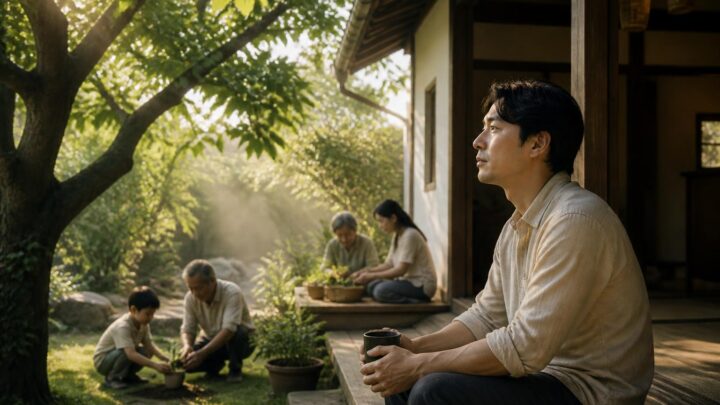
What does the Fortune and Virtue Palace say about a life with depth?
In Tử Vi, when mentioning the Fortune and Virtue Palace, many people immediately think of a family’s or ancestors’ blessings, or the unseen advantages a person may inherit. This understanding reflects an important layer of meaning, but it does not encompass the full significance of this palace. From a broader perspective, the Fortune and Virtue Palace also offers insight into one’s spiritual foundation, ability to find peace, way of connecting with family, and attitude toward life’s upheavals.
If the Life Palace is often associated with temperament, outward expression, and the direction of personal development, the Fortune and Virtue Palace can be viewed as the quiet background that supports or puts pressure on a person. It is the feeling of belonging to a family stream, the values passed down through generations, the patterns of behavior formed by one’s living environment, and the ability to regain balance when facing adversity. Therefore, this palace should not be read only in terms of good or bad, blessed or lacking in blessings, but should instead be viewed as a picture of the quality of one’s inner life.
Tử Vi is a traditional system of symbols and interpretation. Readings from a chart are not scientific conclusions that can replace personal decisions, professional advice, or each person’s responsibilities. The most practical value of learning about the Fortune and Virtue Palace lies in its ability to raise questions: What is helping us remain steady, what is making us anxious, and what can we do to build a healthier spiritual foundation?
Three common layers of meaning of the Fortune and Virtue Palace
Influences from family and tradition
The first layer of meaning of the Fortune and Virtue Palace concerns family background and influences passed down from previous generations. A person who grows up in a family that values learning, kindness, responsibility, or connection often tends to accept these values as a natural part of themselves. Conversely, if a family is marked by tension, silence, prejudice, or expectations that are difficult to meet, young people may need considerable time to recognize and adjust those patterns.
This does not mean that a person is completely determined by their circumstances of origin. Family heritage can provide support, but it can also become a lesson that needs to be reconsidered. Some people continue to develop their family’s positive traditions; others choose to create a different way of living in order to end a harmful cycle. In both cases, what remains important is the capacity for awareness and choice in the present.
When interpreting the Fortune and Virtue Palace, instead of asking only whether one’s family has passed down blessings, we can ask more specific questions. What beliefs has my family passed on to me? Are those beliefs still suited to my current life? What am I continuing voluntarily, and what am I carrying only because I am afraid of disappointing others? Questions like these make the study of a chart more closely connected to real life.
The ability to enjoy and experience happiness
The Fortune and Virtue Palace is also often associated with the ability to experience joy, one’s degree of tranquility, and the way a person enjoys what they have. Two people with similar circumstances may experience life very differently. A person who knows how to rest, appreciates relationships, and recognizes the value of simple things often feels more fulfilled. Another person, despite achieving many accomplishments, may still live in a constant state of deprivation, anxiety, or a need to prove themselves.
From this perspective, blessings are not merely unexpected good fortune. They also include the ability to recognize what is valuable, to stop at the right time, and not to let greed occupy all of one’s mental space. A blessed life does not necessarily mean a life without difficulties. It may be a life in which a person has enough clarity not to lose themselves when things go well, nor fall into despair when facing challenges.
Many people only begin to care about peace of mind after a prolonged period of exhaustion. They realize that income, status, or external recognition cannot automatically create a sense of inner stability. At that point, observing the Fortune and Virtue Palace can serve as a reminder of the need to care for one’s inner life, rather than continuing to seek answers entirely outside oneself.
Mental resilience in the face of change
Another layer of meaning of the Fortune and Virtue Palace is mental resilience. This does not mean always being cheerful or never feeling afraid. Resilience lies in being able to acknowledge difficult emotions, seek appropriate support, and gradually restore balance after a crisis.
When faced with failure, some people see it as proof that they lack ability. Others regard failure as part of the learning process. This difference often comes not only from the event itself, but also from how each person was raised, how they interpret problems, and the psychological resources they can draw upon. When reading the Fortune and Virtue Palace, we can pay attention to how we respond to loss, change, and uncertainty, rather than simply waiting for a prediction about the future.
The Fortune and Virtue Palace should not be understood as a fixed sentence
One approach that can easily lead to misunderstanding is dividing charts into two simple groups: those who are blessed will have everything go smoothly, while those with fewer blessings will have unhappy lives. This perspective both impoverishes the meaning of Tử Vi and may cause people who consult it to become passive. No one should use an interpretation to deny personal effort, overlook real circumstances, or make major decisions based solely on a prediction.
Even if a person believes they have inherited a strong foundation from their family, this does not guarantee that they will always behave correctly. Blessings, if understood as a resource, still need to be nurtured through daily choices. Conversely, a person who comes from difficult circumstances is not thereby locked into unhappiness. They can build a new system of values, seek out a healthy community, and create a different foundation for future generations.
It is also important to avoid attributing every psychological, health, or family relationship issue to a chart. When someone experiences prolonged anxiety, insomnia, emotional collapse, or serious conflict, appropriate professional support remains necessary. Tử Vi can provide a symbolic language for reflection, but it should not be used as a substitute for healthcare and practical solutions.
How to cultivate “blessings” through things we can do today
If the Fortune and Virtue Palace is viewed as a symbol of one’s spiritual foundation, nurturing it does not have to begin with grand gestures. First, each person can learn to build an honest relationship with their emotions. Recognizing that we are sad, angry, exhausted, or anxious helps us avoid reacting out of habit. Peace does not come from denying emotions, but from the ability to understand and regulate them.
The next step is to take the initiative in clarifying boundaries within the family. Respecting parents and relatives does not mean having to meet every expectation or accept every hurtful form of treatment. A family with a strong foundation is not one without disagreements, but one where members can communicate, correct their mistakes, and respect differences. As they mature, each person has the right to choose how to continue traditions in a way that aligns with their values.
Gratitude is also a noteworthy aspect. Gratitude does not mean romanticizing the past or denying the things that have caused us pain. It is the ability to recognize the people, experiences, and opportunities that have helped shape us, while still retaining the right to assess their limitations fairly. Healthy gratitude helps people become less trapped in a sense of deprivation, but it does not require them to remain silent in the face of injustice.
In addition, seemingly small habits contribute to stability: maintaining a reasonable rhythm of rest, making time for trustworthy loved ones, reading a book, walking, doing meaningful work, or recording what we learned after a day. No habit automatically changes destiny, but repeated choices can change the way we see and live within our circumstances.
Finally, blessings are also cultivated through how we treat others. Kindness does not always bring immediate benefits, but it helps create relationships built on trust. When we help within our ability, keep our promises, do not exploit other people’s vulnerabilities, and are willing to apologize, we are building a better emotional environment for ourselves.
Reading the Fortune and Virtue Palace as an invitation to self-observation
The greatest value in learning about the Fortune and Virtue Palace is not trying to know every event in advance, but looking back at the quality of the foundation supporting our lives. Are we living by values that truly belong to us? Do we know how to rest before becoming exhausted? What fears are we carrying from our family? What do we want to pass on to those who come after us?
These questions transform a chart from a tool for prediction into a mirror for self-observation. It reminds each person that their circumstances of origin have an influence, but are not the entire story. What has been passed down can be accepted, transformed, or set down. Peace is not a gift reserved for a few people with favorable charts, but the result of a process of understanding oneself, living responsibly, and nurturing healthy relationships.
The Fortune and Virtue Palace can therefore be viewed as a reminder of the part of life that is often difficult to see through external achievements. When the spiritual foundation is cared for, people gain a greater ability to face life’s ups and downs without losing their direction. And when each individual actively creates kindness, calm, and a sense of responsibility, what is called “blessings” is no longer merely something to await, but something cultivated through every concrete choice.
Related articles

The Career Palace in Tử Vi: Reading the Career Path Through Abilities and Choices
In modern life, questions about careers are not limited to choosing a job with a good income. Many people also wonder which environments suit them, whether they should develop specialized expertise or management abilities, whether they prefer working independently or need a team in order to make the most of their capabilities. Tử Vi often
Read more
The Phúc Đức Palace in Tử Vi: Spiritual Roots and Ways to Nurture a Peaceful Life
In a Tử Vi chart, the Phúc Đức Palace often raises questions that go deeper than immediate gains and losses. Why are some people able to pass through adversity while remaining calm? Why do some people possess many favorable conditions yet always feel uneasy inside? Questions like these make Phúc Đức one of the palaces
Read more
The Quan Loc Palace in Tử Vi: Reconsidering the Career Path Through a Proactive Mindset
In life, questions about careers often come with many concerns: What kind of work suits me? Why do some people progress quickly while others need many years to find their direction? Should I continue with a familiar choice or be bold enough to move into a new field? Tử Vi often approaches these questions through
Read more
The Career Palace in Tử Vi: Looking at the Career Path and How to Establish One’s Position
In modern life, a career is not merely a means of earning an income. It is also where each person applies their abilities, connects with the community, experiences responsibility, and gradually establishes their value. Therefore, when exploring Tử Vi, many people are interested in the Career Palace as a symbolic approach to the path of
Read more
The Spouse Palace in Tử Vi: Reading the Story of Love Through a Balanced Perspective
In Tử Vi, romantic relationships are often one of the topics that interest people most. Everyone wants to know whether they tend to fall in love early or late, in what circumstances they are likely to meet a companion, and what marriage needs in order to endure. The Spouse Palace is the position commonly mentioned
Read more
The Wealth of Merit Palace in Tử Vi: Spiritual Foundations and Perspectives on Peace of Mind
What does the Wealth of Merit Palace represent? In the Tử Vi system, the Wealth of Merit Palace is one of the palaces often considered when people want to understand their spiritual life, family traditions, and inner sense of peace. While some other palaces directly evoke work, finances, or relationships, the Wealth of Merit Palace
Read more