
Horoscopes · 28 November, 2026
The Điền Trạch Palace in Tử Vi: Living Space, Family Values, and Ways to Create a Home
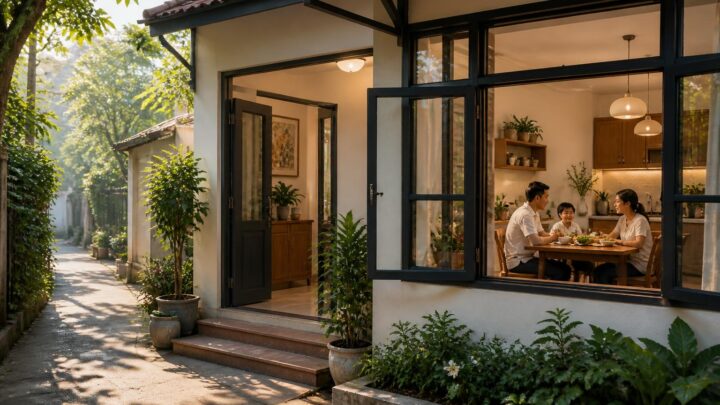
In life, a home is not merely a place that shelters us from the rain and sun. It is also a space that preserves memories, shapes habits, and reflects how a family treats one another. Some people believe that a large house represents abundance, while others find peace in a small but tidy and warm room. Therefore, when exploring the Điền Trạch palace in Tử Vi, one should not ask only how many houses or properties a person will own. More important is the relationship that person has with their home, family, shared assets, and sense of belonging.
In traditional interpretations, the Điền Trạch palace is often associated with houses, land, residence, and the ability to inherit or build material foundations. This palace can also be viewed as a symbol of the family foundation, daily routines, and each person’s inner state of stability. However, Tử Vi is an interpretive system intended for reference, not a tool that can definitively confirm the future. A natal chart cannot replace legal checks, financial assessments, or consideration of practical conditions before making major decisions.
What does the Điền Trạch palace suggest?
In its most immediate sense, the Điền Trạch palace relates to houses and real estate. People who study it often want to know whether they will have favorable circumstances when buying, renovating, or moving house, or when receiving family assets. But if this palace is viewed merely as an asset forecast, the interpretation can easily become simplistic and lacking in depth. Property also depends on income, timing, policies, planning, legal matters, health, and many social changes. These factors cannot be replaced by a conclusion based on destiny.
In a broader sense, the Điền Trạch palace allows each person to reflect on how they establish the foundations of their life. Some people need a private space in order to focus and recover. Others thrive in a lively environment where family members frequently share responsibilities. Some regard their hometown, their parents’ house, or a familiar neighborhood as an emotional anchor, even though they currently live elsewhere. Therefore, when reading the Điền Trạch palace, one should connect the story of assets with the story of safety, attachment, and family responsibility.
A home is not measured by size alone
A house may look beautiful on paper but not suit the rhythm of the people living in it. An apartment may be conveniently located but lack natural light; a spacious house may offer no time for family members to talk; or a fully equipped home may constantly create a sense of tension. These situations remind us that the value of Điền Trạch lies not only in the quantity of assets, but also in the quality of the space and how people use it.
When reflecting on this palace, one can begin with very ordinary questions. Do I need to live close to my family or close to my workplace? Do I value privacy, convenience, or a quiet residential area? At home, who carries most of the caregiving responsibilities? Which belongings truly matter, and which only make the space more cramped? By answering honestly, each person will better understand their own housing needs instead of chasing an image of an ideal home imposed by others.
The influence of family and inherited assets
The Điền Trạch palace is often associated with the family foundation and what earlier generations leave behind. This inheritance may take the form of a house, a plot of land, methods of managing assets, ways of life, or stories connected to one’s homeland. Some people grow up in families that value accumulating and preserving property. Others witness repeated moves, disputes, or changes in livelihood, and consequently develop a constant desire to find a truly stable place. The family story may be the same in broad terms, but its impact can differ greatly from person to person.
Inherited assets often come with both opportunities and responsibilities. A house may help reduce financial burdens, but it may also give rise to disagreements if ownership is unclear or family members cannot agree on how it should be used. Therefore, rather than asking only whether one will receive an inheritance, it is better to focus on preparing the documents, communicating transparently, and respecting the rights of those involved. In practical life, clarity in paperwork and calm communication are often more important than whether an interpretation is favorable or unfavorable.
When living circumstances change
Not everyone follows a straight path when it comes to housing. A person may begin in a small rented room, then move into a rented apartment, buy a house, return to live with their parents, or relocate to another province. Such changes do not necessarily indicate an unstable life. Sometimes, moving is a way to adapt to work, care for loved ones, or find a better environment for one’s children. From a Tử Vi perspective, the Điền Trạch palace should be understood as a theme that changes over time, rather than as a fixed label attached to an entire life.
During turbulent periods, it is important to distinguish genuine needs from decisions driven by pressure. Buying a house out of fear of being left behind is different from buying one after calculating one’s ability to repay the debt. Moving back to one’s hometown for rest is different from returning in a mindset of avoiding every difficulty. Selling an asset to carry out a long-term plan is different from selling hastily because of an unfounded promise. The Điền Trạch palace can serve as a starting point for self-questioning, but the final decision should still be based on data and practical ability.
Signs of a healthy living space
A healthy living space does not necessarily have to be expensive. First and foremost, it is a place where people can rest without being constantly threatened by noise, insecurity, or conflict. A home should have basic safety, suitable lighting and ventilation, convenient pathways, and furnishings arranged according to actual needs. For families with young children or older adults, reducing the risk of slipping, collisions, and insufficient amenities is even more important than an elaborate appearance.
Alongside physical conditions, a sustainable home needs principles for interaction. Family members should know how to discuss expenses, housework, privacy, and changes in daily routines. A private room does not mean emotional distance, just as living together does not mean everyone is allowed to interfere in one another’s affairs. When boundaries are respected, the living space can better support mental health. This is an aspect of meaning that is often overlooked when people focus only on ownership.
Applying the Điền Trạch perspective to everyday life
People interested in the Điền Trạch palace can turn the examination of a natal chart into a practical plan. Before renting or buying a home, create a cost table that includes rent or loan payments, management fees, repairs, transportation, insurance, and emergency reserves. Check the property’s origin, contract, planning status, and relevant terms instead of relying only on an introduction or sales pitch. If making a joint decision with relatives, clearly discuss each person’s contribution, usage rights, and how matters will be handled if circumstances change.
For people who cannot yet afford to own a home, a sense of rootedness can still be built step by step. Keeping one’s living space clean, creating a suitable work area, maintaining a stable routine, and preserving meaningful belongings are all ways to create a sense of belonging. A renter can still have a solid foundation in life by managing their budget, protecting their rights under the lease, and nurturing healthy relationships. The value of Điền Trạch should therefore not be reduced to a story about wealth or poverty.
For families that own shared assets, making plans early is also a form of caring for one another. Members can agree on who will be responsible for safeguarding documents, updating legal information, and discussing plans for use. These conversations are sometimes not easy, but the longer they are delayed, the greater the risk of misunderstanding. Transparency does not diminish family affection; on the contrary, it helps prevent affection from having to bear the burden of disputes that could have been avoided.
Reading the Điền Trạch palace with clarity
In Tử Vi content, statements about property, inheritance, or changes in residence often feel especially powerful because they concern major assets and concerns about security. However, readers should be cautious of absolute conclusions such as being certain to become wealthy through land, being destined to sell their house, or never having a stable home. Such claims can easily cause people to make hasty decisions and even disregard professional advice.
A more appropriate approach is to regard the Điền Trạch palace as a symbolic language for identifying tendencies and questions worth considering. If you often feel anxious about your housing situation, look for specific causes: unstable income, family pressure, debt, an unsuitable environment, or unresolved old memories. If you have an investment opportunity, assess the risks using independent information. If a conflict involves property, consider seeking legal advice and assistance from a trustworthy mediator. Tử Vi may offer suggestions, but responsibility for the choice still belongs to each person.
Creating a home is an ongoing process
The Điền Trạch palace in Tử Vi does not tell only the story of a house or a plot of land. It evokes the foundations each person has inherited, what they wish to preserve, and how they create stability in the present. Some people find a home after moving many times. Some live in an old house but gradually renovate it to make it more suitable. Others cannot yet own property, but still build an orderly, warm, and dependable life.
Therefore, instead of worrying about an interpretation, use the theme of Điền Trạch to reconsider your finances, family, and living space. A good home is created not only with money, but also with clarity, care, respect, and the ability to adapt together. When these elements are cultivated, the feeling of being settled will no longer depend entirely on the size or value of the property, but will become the result of thoughtful choices made throughout each stage of life.
Related articles
The Wealth Palace in Tử Vi: Understanding Money, the Ability to Create Value, and Spending Habits
In everyday life, money is rarely just a set of numbers in a bank account. It is connected to a sense of security, the ability to make choices, family responsibilities, and even the way each person evaluates their own worth. Therefore, when exploring a Tử Vi chart, many people are interested in the Wealth Palace
Read more
The Career Palace in Tử Vi: Reading the Imprint of a Career Through Abilities and Choices
What does the Career Palace say about one’s professional journey? In Tử Vi, the Career Palace is often mentioned when people want to learn about work, career, social roles, and how a person asserts their abilities. If the Life Palace offers clues about one’s temperament, reactions, and way of entering the world, the Career Palace
Read more
The Phúc Đức Palace in Tử Vi: The Spiritual Foundation and How to Cultivate Peace
In the Tử Vi system, the Phúc Đức Palace is one of the palaces often mentioned when seeking to understand a person’s spiritual life, family patterns, and inner feelings. If the Quan Lộc Palace brings to mind one’s career path, and the Tài Bạch Palace relates to one’s view of money, then the Phúc Đức
Read more
The Phúc Đức Palace in Tử Vi: The Spiritual Foundation and How Each Person Cultivates Blessings
In life, there are people who seem always able to remain steady in the face of change. They do not always encounter favorable circumstances, but they often know how to get back up, find support, and see a way forward when things become difficult. There are also people who possess many good conditions yet are
Read more
The Career Palace in Tử Vi: How to View One’s Career Path and the Value of Work
In life, work does more than provide income. It is also where a person demonstrates their abilities, develops their character, meets colleagues, and seeks the feeling that they are contributing something meaningful. Therefore, when studying a Tử Vi chart, many people pay particular attention to the Career Palace, an area commonly associated with occupation, aspirations,
Read more
The Career Palace in Tử Vi: Reading the Career Path Through Abilities and Choices
In modern life, questions about one’s career are rarely limited to how much money one earns or what position one holds. Many people want to know whether they are better suited to a stable or dynamic environment, whether they should work independently or collaborate with a team, develop deep expertise or take on a coordinating
Read more