
Learn & Discover · 28 November, 2026
Gratitude Can Change the Way We See Ordinary Things
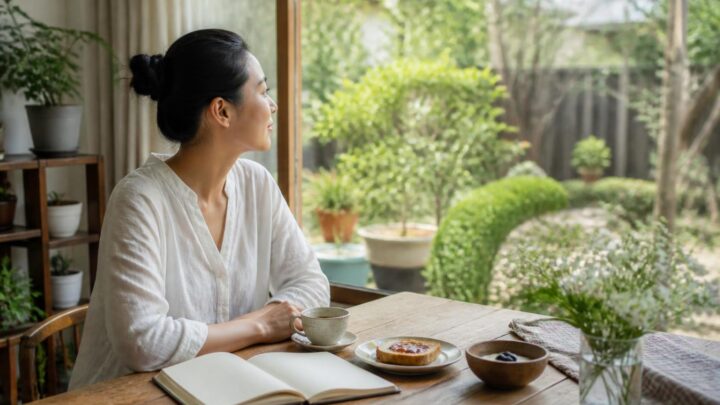
In the midst of a busy life, people often pay more attention to what is missing than to what they have. A job that has not turned out as hoped, an incomplete relationship, a delayed plan, or a goal that has not yet been reached can occupy much of their thoughts. When the mind is constantly directed toward these gaps, what is present can become so familiar that it is taken for granted. A meal with someone waiting for us, a body still strong enough to work, a sincere conversation, or a few quiet hours of rest can all pass by without being acknowledged.
Gratitude begins with looking back at such things. It does not require people to be cheerful in every circumstance, nor is it a way of denying difficulties. Gratitude is the ability to recognize the value of something that exists, even when it is small, ordinary, or imperfect. When practiced mindfully, gratitude can change the way we view life, thereby influencing how we choose, communicate, and face adversity.
Gratitude Does Not Mean Being Content with Everything
A common misunderstanding is that grateful people must always be satisfied with the present. In fact, these two states are not the same. A person can be grateful for a job that helps sustain their life while still wanting to learn more in order to find better opportunities. A person can value their family while still needing to express certain boundaries to protect respect within their relationships. A person can be thankful for what they have been through without therefore accepting forever a situation that causes harm.
Gratitude helps us see the foundation we already have before deciding to move forward; it does not force us to stop. As a result, the desire for change can arise from clarity rather than an absolute sense of deprivation. When people focus only on what they have not achieved, they can easily act from a state of haste, comparison, or a need to prove themselves. Conversely, when we recognize that we still have resources, experience, companions, or opportunities with which to begin, we often gain more calmness to choose an appropriate course of action.
From Grand Things Back to Familiar Details
Many people think that a special event is necessary before something is worth being grateful for. They wait until they achieve success, overcome an illness, receive help in a time of danger, or get major good news. Such moments can certainly make feelings of gratitude more pronounced, but if we wait only for major events, we will overlook the largest part of life: ordinary days.
Life is usually made up of recurring details. A loved one remembers our preferences, a colleague completes their part of the work on time, a shopkeeper remains kind, a room fills with light in the morning, and a familiar road brings us safely home. Not every detail needs to be exaggerated into a moving story, but each can be recognized for its true value. Gratitude does not make things greater than they really are; it helps us stop taking lightly the things that are already supporting us.
We can begin with a simple question at the end of the day: “What made my life a little more pleasant today?” The answer does not need to be profound. It could be a sufficient meal, a stretch of uninterrupted time, a difficult task that has been completed, or a moment of living at our own pace. Naming it specifically keeps gratitude from falling into vague expressions and helps us recognize our connection with the environment around us.
Gratitude Changes the Way We See Other People
In relationships between people, we often remember one disappointment more readily than many instances of support. One insensitive remark can cast a shadow over earlier acts of care. This does not mean that feelings of hurt are unjustified, but it shows that the mind needs a conscious effort to see a relationship more fully. If we focus only on mistakes, we may judge a person by the worst moment of their life.
Gratitude adds another perspective. It encourages us to remember the effort, goodwill, and times when others were present when needed. When we offer specific thanks, we do not merely make the recipient feel that their action has been noticed; we also gain a clearer understanding of what we have received. A meaningful expression of thanks usually goes beyond “thank you” and might say: “The way you listened yesterday helped me feel calmer,” or “Because you completed your part of the work on time, the whole group did not have to do it again.” Specificity makes gratitude sincere and keeps it from becoming a mechanical courtesy.
However, gratitude should not become an obligation that forces us to endure disrespect. Some people may have helped us but later use that help to control us or demand the right to make decisions on our behalf. In such cases, appreciating the good we have received and setting boundaries can still coexist. Mature gratitude does not erase the ability to judge.
Between Gratitude and Comparison, Which Is the Healthier Choice?
Comparison is one of the reasons that what we have can quickly lose its value. When we look at other people’s achievements, income, appearance, or lifestyles, we often see only what is visible and do not fully know the circumstances behind them. As a result, our own lives can easily be judged by a standard we did not choose for ourselves.
Gratitude does not require us to stop admiring others or abandon our goals. It simply reminds us to distinguish between learning and denying ourselves. We can see that someone is progressing further without concluding that we are meaningless. We can want a larger home while still appreciating the place that shelters us. We can want to improve our health without hating our present body. This perspective creates the necessary distance between aspiration and self-judgment.
When comparison arises, we can change the question from “Why am I not as good as them?” to “What do I truly want, and what small step is within my ability today?” The second question brings our attention back to reality. It turns a feeling of deficiency into information to consider, rather than allowing that feeling to determine our worth.
Practicing Gratitude Without Turning It into a Formality
Not everyone is suited to keeping a long journal or repeating affirmations every morning. What matters is not the form but the quality of attention. One simple approach is to choose a fixed time in the day to pause for a few minutes, such as before a meal, after turning off the computer, or before going to bed. During that time, recall one specific thing that supported you and one person connected to it.
Gratitude can also be practiced through action. Send a short message to someone who helped you, take care of an item you are using instead of constantly thinking about buying something new, complete your part of the work on time to reduce the burden on others, or spend time listening to a family member. When gratitude is transformed into behavior, it is no longer merely a private feeling but becomes a way of helping create a kinder living environment.
What should be avoided is turning gratitude into a compulsory inventory. There are days when people are so tired, sad, or disappointed that they cannot yet see anything positive. Such feelings need to be acknowledged instead of being hastily covered with optimistic statements. We can temporarily note only something very small, or simply acknowledge that we made it through a difficult day. This honesty is more important than creating a beautiful list that feels disconnected from our actual experience.
Gratitude and the Ability to Move Through Adversity
Adversity does not naturally become easier simply because we are grateful. A loss is still a loss, a failure can still be painful, and an injustice still needs to be recognized and addressed. However, gratitude can help people avoid allowing one event to consume the entire meaning of their lives. Alongside what has been lost, we may also recognize what needs to be protected, the lesson to be learned, or the companion who is still present.
In difficult circumstances, gratitude sometimes focuses not on the outcome but on the ability to continue. We may not know what the future will bring, but we can still acknowledge that today we found a necessary conversation, dared to ask for help, completed a basic task, or gave ourselves permission to rest. These small acknowledgments do not solve the entire problem, but they help us avoid losing the sense that we can still influence some part of our lives.
For this reason, gratitude is not a way of decorating a perfect life. It is better suited to a life containing joy and sorrow, gains and losses, and things that remain unfinished. When we learn to recognize what is supporting us, we gain a stronger foundation from which to repair what is not working, reject what is unsuitable, and pursue what truly matters.
Appreciating the Present in Order to Live More Proactively
Every day, people’s attention is pulled in many directions: toward what has happened, what remains unfinished, other people’s expectations, and an image of a better future. Gratitude brings us back to a fundamental question: right now, what is present and worthy of care? This question does not make the future less important. It simply helps us avoid sacrificing the whole present for a day that may never come.
Being grateful for a meal does not mean stopping our efforts to improve our lives. Being grateful for a relationship does not mean overlooking problems that need to be resolved. Being grateful for ourselves does not mean denying our shortcomings. It is a fairer way of seeing: acknowledging both what is not good and the resources we already have.
Ultimately, gratitude does not need to begin with a powerful emotion. It can begin by slowing down, correctly naming something familiar, and realizing that our lives are shaped not only by prominent achievements but also by countless quiet acts of care. When ordinary things are seen, the present is no longer a period to rush through. It becomes a part of life worth living fully.
Related articles

When There Is Too Much Information: The Art of Filtering to Understand Clearly and Live Mindfully
Every day, we take in far more information than our limited capacity for attention can handle. A few lines of news on our phones, conversations at work, short videos, advice from acquaintances, and countless opinions on social media are constantly competing for our attention. Much of this information is useful, but quite a bit of
Read more
The Pause Before a Decision: How to Think Slowly and Choose What Truly Matters
Some decisions are made in a few seconds but leave an impact that lasts for months or even years. Saying yes before having time to think, sending a message while angry, making an unexpected purchase out of fear of missing out, or rejecting something too hastily may all stem from the same habit: reacting as
Read more
Confirmation Bias: Why Do We Often See Only What We Want to Believe?
In a debate, two people may hear the same statement yet draw completely different conclusions. Each person feels that they are seeing the matter clearly and may even believe that the other person’s reasoning is baseless. This situation does not necessarily stem from one side deliberately lying or the other lacking intelligence. A more common
Read more
Living with Uncertainty: How to See Risk Clearly Without Letting Fear Lead the Way
No one can know for certain what tomorrow will bring. A plan that seems solid can still change because of work, health, finances, relationships, or events beyond anyone’s ability to predict. Even so, we often live as though thinking long enough, preparing thoroughly enough, or maintaining tight enough control could make every surprise disappear. The
Read more
Why Do We Find It Harder to Decide When We Have More Choices?
In modern life, we are often told that having many choices is a blessing. There are more products to compare, more careers to pursue, more places to live, more ways to learn, and more opportunities to change ourselves. In theory, the more options we have, the greater our chances of finding what suits us. Yet
Read more
Asking the Right Questions: A Skill That Opens the Way to Deeper Understanding
In many conversations, classrooms, and meetings, people tend to pay more attention to the answers than to the questions. Someone is considered knowledgeable when they can speak quickly, remember many facts, or offer opinions that seem certain. Yet before there can be a reliable answer, there is almost always a sufficiently clear question. Questions determine
Read more