

 Tiếng Việt
 日本語
 한국어
 中文 (中国)
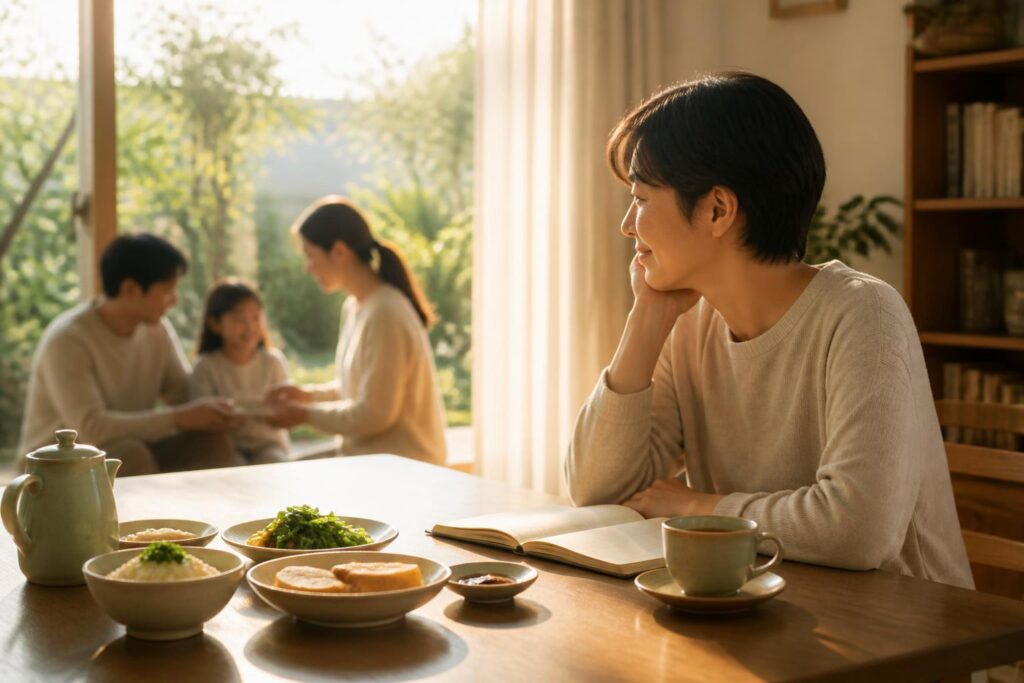
In modern life, people are often encouraged to keep moving forward. We set new goals, seek better opportunities, and try to improve our income, health, work, and relationships. The desire to progress is essential, but if we focus only on what is lacking, we can easily fall into the feeling that we are always behind others and never have enough. Gratitude opens up a different perspective: before asking what we will achieve next, let us recognize the things that are quietly sustaining our lives in the present.
Being grateful does not mean being passively satisfied or denying the difficulties that exist. A person can be grateful for their family while still wanting to improve the way they communicate; grateful for their job while still seeking a more suitable environment; appreciative of what they have while continuing to work to change their circumstances. The value of gratitude lies in helping people see things more fully, rather than magnifying what is lacking or allowing dissatisfaction to obscure everything good.
Gratitude Does Not Mean Having to Be Happy All the Time
One common misconception is that grateful people must always maintain a positive attitude. This understanding can easily turn gratitude into a source of pressure. When someone is tired, disappointed, or hurt, being reminded to “be grateful because there are still many people suffering more” does not always make the sadness feel lighter. On the contrary, it can make the person who is struggling feel that their emotions are not being acknowledged.
Healthy gratitude does not require people to deny their pain. It allows us to say clearly that today has been difficult, that a relationship is having problems, or that a failure has made us sad, while still recognizing that the day may also contain a kind conversation, someone willing to listen, or an opportunity to start again. These two truths can coexist. We can grieve and feel grateful, be disappointed and still appreciate what we have, or be dissatisfied with the present without viewing our entire lives as meaningless.
Distinguishing between these two things is very important. If gratitude is turned into a slogan that forces everyone to be cheerful, it makes emotions shallow. If it is understood as the ability to see multiple sides of a situation, it becomes a more solid source of emotional support. A grateful person is not someone who never encounters difficulties, but someone who does not allow difficulties to completely determine how they view life.
The Simple Things We Often Take for Granted
People tend to pay close attention to major events: a significant success, a special gift, a memorable trip, or a milestone recognized by many. Meanwhile, things that happen repeatedly every day are easily taken for granted. A meal prepared by someone, a message asking how we are doing, a familiar room, a body that can still rest after a long day, or a colleague willing to help when work becomes overwhelming can all become invisible because they appear so often.
But something familiar is not necessarily something unvaluable. A family that manages to maintain ordinary conversations, even though everyone is busy, is the result of care and consideration. A friendship that lasts for many years is often built through keeping promises, listening, and being present at the right moments, not only through happy occasions. A body that can walk, work, taste food, or enjoy a quiet morning is also the foundation that allows us to pursue many other plans.
When we practice looking back at simple things, we are not turning life into a perfect picture. We are simply adjusting our focus. Instead of allowing a single deprivation to overwhelm everything else, we see the resources that are already present. This perspective can help people become less caught up in comparison, because the value of a day does not lie only in whether we achieve more than someone else.
Gratitude Is Expressed Through Actions
Saying thank you is a good beginning, but gratitude should not stop at a polite phrase. If we truly recognize someone’s efforts, we can show it by listening to them more attentively, keeping our promises, sharing the workload, or taking the initiative to check in when they need support. A meaningful thank-you usually comes with attention to what the other person has done, rather than being uttered merely out of habit.
Within a family, gratitude can begin with noticing the tasks that are rarely mentioned. The person who cleans the house, prepares meals, cares for loved ones, or quietly handles unexpected issues does not always receive recognition. When one family member offers specific thanks and participates in shared responsibilities, the family atmosphere can change in a fairer direction. Gratitude then is no longer one person’s private feeling, but becomes a way for everyone to respect one another’s contributions.
At work, gratitude does not mean accepting every request or overlooking unreasonable demands. An employee can appreciate the opportunity to learn while still needing to discuss their workload; a manager can recognize the team’s efforts while still having to improve processes. Mature gratitude always goes hand in hand with clear boundaries. It encourages us to treat others kindly, but does not require us to sacrifice ourselves unconditionally.
How to Cultivate a Grateful Perspective
There is no need to begin with complicated exercises. At the end of the day, each person can spend a few minutes asking themselves: what helped me keep going today? The answer does not need to be extraordinary. It could be a filling meal, a safe journey home, a difficult task that was completed, a moment of rest, or a conversation that lifted their mood. Naming these things specifically helps shift attention away from a vague sense of deprivation.
We can also write a short thank-you message to someone who has supported us. It does not necessarily have to be sent immediately if we are not ready, but clearly expressing why we appreciate that person’s action makes the feeling more concrete. Instead of writing, “Thank you for everything,” we could say: “I am grateful that you patiently listened to me when I did not know how to deal with that situation.” A specific thank-you often helps both the speaker and the recipient understand the value of caring.
Observing our reactions throughout the day is another useful practice. When we catch ourselves constantly complaining, comparing ourselves with others, or assuming that someone is naturally obligated to do something for us, we can pause and consider what is happening. Are we too tired? Is an important need going unspoken? Have we become accustomed to receiving support and forgotten that the person providing it also needs time to rest? Gratitude does not require us to blame ourselves; it helps us understand more clearly the relationship between our needs, expectations, and the contributions of those around us.
Gratitude Helps Make Relationships More Sustainable
In many relationships, conflict does not arise only from a specific incident, but also from the feeling of not having been recognized for a long time. Someone may continue fulfilling their responsibilities while gradually becoming exhausted because their efforts are treated as self-evident. When acknowledgment appears at the right moment, it does not erase every disagreement, but it creates a foundation for both sides to communicate more calmly.
This does not mean that simply saying thank you will resolve every problem. A healthy relationship still requires honesty, responsibility, and the ability to correct mistakes. However, if we focus only on the other person’s faults and never acknowledge what they have done well, the conversation can easily turn into an indictment. Conversely, when we begin by showing appreciation, we can offer criticism without denying the other person’s entire value.
Gratitude also helps people realize that they are not as completely self-reliant as they may imagine. Behind an achievement there is often the work of many people: those who taught us knowledge, those who gave us opportunities, those who cared for us when we were vulnerable, those who offered advice when we went in the wrong direction, and those who performed quiet tasks to keep life running. Recognizing this interconnectedness does not diminish individual ability. On the contrary, it makes us more humble and more aware of our responsibility to the community.
Do Not Turn Gratitude into a Debt
In some circumstances, reminders to be grateful can be used to demand that others endure or remain silent. A person who has once received help does not therefore lose the right to say “no,” protect their legitimate interests, or leave a harmful relationship. Being grateful for something good in the past does not mean giving someone the right to control one’s entire future.
Distinguishing gratitude from indebtedness is essential. Gratitude arises from free choice, while a sense of indebtedness is often accompanied by pressure and fear. A sincere act of help should not become a tool for demanding unlimited submission. When gratitude exists within a relationship based on mutual respect, it brings people closer. When it is turned into an obligation to repay, it can hurt both the giver and the recipient.
A Way of Slowing Down to See More Clearly
Amid a life filled with information and expectations, gratitude is a way of bringing our attention back to the present. It does not promise that every difficulty will disappear, nor does it replace action to solve problems. What it offers is a calmer vantage point, so that we do not look only at what we do not have, but also recognize the resources, affection, and opportunities that are already present.
We can begin with something very small: expressing sincere thanks, participating in work that is often regarded as someone else’s responsibility, making time for an important person, or acknowledging our own efforts after a stressful day. When practiced regularly, gratitude gradually becomes a habit of observation. As a result, life does not necessarily have to change completely before it becomes more valuable. Sometimes, the first thing to change is simply the way we look at what has already been beside us.

ARTICLES IN THE SAME CATEGORY
How to Make Sound Decisions When There Is No Perfect Choice
When There Is Too Much Information: How to Cultivate Clear Thinking
Silence in Modern Life and How to Return to Ourselves
Knowing How to Set Boundaries So You Can Live Kindly Without Exhausting Yourself
The Art of Repairing a Relationship After Words Cause Hurt
A Page Can Change the Way We Understand Ourselves
ARTICLES IN THE SAME GENRE
The Things No One Applauds Still Make a Decent Life
When the Meal Slows Down, Family Grows Closer
Gratitude in Everyday Life: From an Emotion to a Sustainable Way of Living
Grateful for mother’s hands