
Roundups · 13 November, 2026
Gratitude in Modern Life: From a Fleeting Emotion to a Life Skill
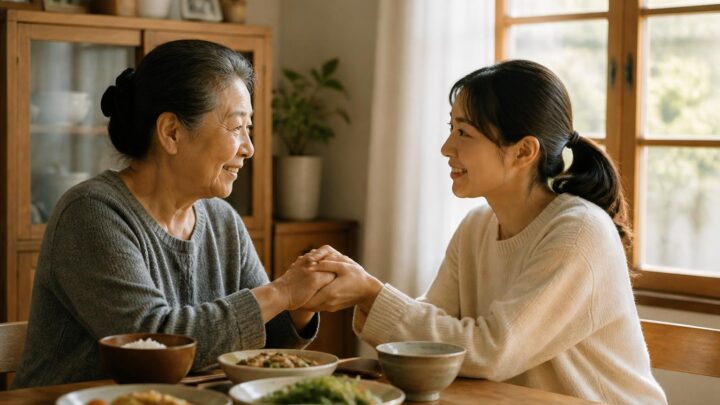
Gratitude Does Not Mean Denying Difficulties
In the rhythm of modern life, people are often encouraged to look ahead. We make plans, set goals, seek better opportunities, and constantly compare ourselves with images of success that appear every day. The desire to make progress is valuable, but if we focus only on what is still lacking, it is easy to forget what is already supporting us.
Gratitude begins with the ability to recognize those things. It may be someone who is always willing to listen, a home to return to, a body that is still trying to keep working, or an ordinary morning without any major disruption. These things may not make as strong an impression as a new achievement, but they quietly form the foundation of life.
Gratitude does not mean forcing ourselves to be cheerful in every circumstance. A disappointed person can still feel grateful; someone who is tired can still acknowledge another person’s help; someone facing loss still has the right to grieve without hiding it behind positive words. Genuine gratitude does not erase sadness. Instead, it helps people see their sadness within a broader picture.
From Taking Things for Granted to the Ability to Notice
Many good things in life become invisible because they appear so often. We get used to someone preparing meals, to calls asking how we are, to work being completed on time, and to the road continuing to open before us each day. Familiarity makes us assume that these things are self-evident, while behind them there are often the time, effort, and care of many people.
Therefore, gratitude is first and foremost a way of observing. Instead of asking only what we have achieved today, we can ask ourselves what helped us get through today. This question is not intended to create a sense of indebtedness; it helps us see the connection between ourselves and the world around us. No one creates every result entirely on their own. Each step forward usually involves the contributions of family, colleagues, friends, teachers, people who serve quietly, and even opportunities beyond our control.
When people recognize this, they are less likely to view success as proof of their absolute superiority. This humility does not diminish the value of individual effort. On the contrary, it helps us understand effort more accurately: trying is still very important, but effort always takes place within a network of support and certain conditions.
Gratitude in Relationships
In families and friendships, many rifts do not begin with an especially major event, but with the feeling of being taken for granted. Someone who continually cares for others without being acknowledged may gradually become exhausted. Someone who always takes the initiative to stay in touch but receives only silence in return may feel that they are no longer important. When contributions are overlooked for too long, affection can easily be replaced by resentment.
A timely thank-you does not solve every problem, but it lets others know that their efforts have been seen. That thank-you is even more meaningful when it is specific. Instead of merely saying something general, we can say that we appreciate how a family member patiently listened, how a colleague provided support in a moment of urgency, or how a friend stayed by our side when we were facing difficulties. Specificity makes gratitude genuine and helps the recipient understand the value of what they did.
However, gratitude should not be turned into a tool for asking others to endure indefinitely. No one is obligated to accept harm simply because they have received a few good things in the past. In a healthy relationship, gratitude goes hand in hand with boundaries, respect, and the ability to speak honestly about one’s needs. Appreciating someone does not mean giving up the right to protect oneself.
The Influence of Gratitude on the Way We View Life
When people regularly pay attention to what is worthy of appreciation, they tend to move away from a way of thinking that focuses only on what is lacking. This does not make those shortcomings disappear, but it changes how we respond to them. Someone who sees only failure may conclude that all effort is meaningless. Someone who can look back at what they have learned, the people who have helped them, and the abilities they still possess will have more grounds on which to begin again.
Gratitude also slows the desire to compare. In an environment where other people’s achievements are constantly before our eyes, we can easily feel that our own lives are inferior simply because we have not reached a certain image. Recognizing our own values, however small, helps us distinguish between genuine desires and the pressure to be like other people. We may still want to improve, but we no longer see the present as a meaningless period that must be quickly left behind.
This is especially important during periods when clear results have not yet appeared. Someone learning a new skill, rebuilding a career, or recovering from a failure often cannot measure progress through major achievements. At such times, being grateful for small steps—a willingness to persevere, a new lesson, a helpful conversation, or a day of not giving up—can help the journey continue.
Nurturing Gratitude Without Turning It into a Slogan
Gratitude does not need to begin with complicated rituals. What matters is consistency and sincerity. Each evening, a person can spend a few minutes recalling one thing that made that day more pleasant. It does not have to be extraordinary. A quiet meal, a short break, a completed task, or a kind conversation can all become an anchor for reflection.
We can also turn gratitude into concrete action. If we appreciate our parents, we can take the initiative to ask how they are instead of merely thinking about them. If we are grateful to our colleagues, we can share credit and offer support when possible. If we are touched by the kindness of a stranger, we can continue treating other people kindly. An emotion creates meaning only when it is translated into behavior.
Even so, practicing gratitude should not be turned into a moral test. There are days when people have only enough strength to complete the basics. There are times when pain is so great that we cannot yet see anything positive. At such moments, acknowledging that we are struggling is also a necessary form of honesty. Gratitude does not grow from coercion, but from a gaze that is patient enough with oneself.
Gratitude and Responsibility to the Community
Gratitude can also extend beyond the individual sphere. When we understand that our lives are shaped by the contributions of many people, we are more likely to use our opportunities responsibly. This can begin with simple, familiar actions such as keeping our promises, doing our share of the work, respecting other people’s time, not taking service for granted, and being willing to help when we are able.
A society that knows how to acknowledge people creates a sense that no one is being forgotten. When workers are respected, caregivers are seen, and small contributions are properly valued, cooperation has a better chance of being sustainable. Of course, thank-you notes and words of appreciation cannot replace fair policies or suitable working conditions. Recognition is still an important part of social culture, however, because it reminds us that behind every service, product, and convenience are human beings.
Conclusion
Gratitude is not an emotion that appears only when life is going well. It is a mental capacity that can be developed through the way we observe, speak, and act each day. Gratitude helps us recognize the foundations that support us, appreciate those who accompany us, view failure from a broader perspective, and become less swept up in the race of comparison.
The value of gratitude does not lie in making every day feel lighter. Its value lies in the fact that, even on heavy days, we can still find something worthy of acknowledgment, someone worthy of appreciation, or a small step worth continuing. From one sincere thank-you, people can rebuild their connection with others and with life itself.
Related articles

Pauses in Digital Life: Why We Need to Learn How to Do Nothing
The morning begins with the sound of a phone ringing. Before they have even managed to get out of bed, many people have already checked their messages, read a few lines on social media, looked at their work schedule, and responded to several notifications. By the end of the day, the body may have been
Read more
When Gratitude Becomes a Different Way of Looking at Life
Gratitude Begins with the Things Closest to Us In the midst of busy lives, people often find it easier to focus on what is missing than on what they have. A job that has not turned out as hoped, an incomplete relationship, a delayed plan, or an unfinished goal can occupy much of one’s thoughts
Read more
The Art of Staying Calm on a Day with Too Much to Do
Some days begin with a to-do list and end with the feeling that seemingly nothing has been completed. Messages waiting for replies, tasks that need handling, appointments to remember, family matters that cannot be postponed, and even thoughts that have not yet been put into words all appear in the mind at once. The harder
Read more
A Day Without Hurry Begins with How We Arrange the Little Things
There are mornings when we wake up with the feeling that we have already been left behind. Our phones are full of notifications, our desks hold too many things that have not been put away, and the day’s schedule is filled one appointment and task after another. Before we have even gotten out of bed,
Read more
A Tidy Room Can Open Up Breathing Space for the Mind
There are days when we come home exhausted, set our bag down in a corner, change clothes, and then sit quietly amid a room full of things. Everything is still there just as it was in the morning, but by the end of the day, the clutter seems to weigh more heavily. A chair covered
Read more
When There Are Too Many Choices, How Can We Live More Clearly?
In modern life, people are often told that the more choices we have, the more freedom we have. We can choose our jobs, where we live, how we learn, how we shop, how we communicate, and even the pace of life that suits us. Yet when faced with too many possibilities, not everyone feels comfortable.
Read more