
Zodiac Signs · 26 November, 2026
The Moon in the Birth Chart: Insights into Emotional Needs and Self-Care
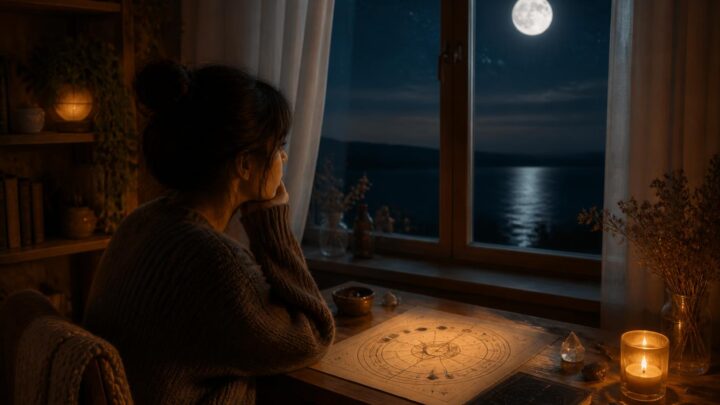
In daily life, a person may appear calm, rational, and proactive, while inwardly needing a great deal of peace, to be heard, or to have personal space. These differences between outward appearance and hidden needs are why many people turn to birth charts as a tool for self-observation. In the language of astrology, the Moon is often associated with emotions, habitual responses, memories, and a sense of security. This is not a scientific conclusion about personality, but rather a symbolic system that can prompt useful questions about oneself.
If the Sun sign is often mentioned when discussing identity and how a person wants to express themselves, the Moon directs attention toward a more private part of life. It concerns what happens when you are alone, tired, hurt, or no longer have enough energy to maintain your familiar image in front of others. Reading the Moon’s position in a mindful way can help each person recognize what they truly need, instead of simply trying to meet external expectations.
What does the Moon represent in astrology?
In common astrological interpretations, the Moon is related to the emotional world and reactions that occur almost automatically. It can be used to reflect on how a person receives care, processes sadness, seeks a sense of belonging, and establishes daily routines. The Moon is also often associated with childhood memories, the family atmosphere, and early experiences that contributed to shaping one’s understanding of safety.
However, this symbol should not be understood as a fixed sentence. Even with the same Moon placement, two people may live very differently because of their environment, upbringing, experiences, and personal choices. A birth chart can provide a language for asking questions, but it cannot replace self-awareness, sincere dialogue, or professional support when someone is experiencing psychological difficulties.
To determine the Moon sign, readers generally need their date, time, and place of birth. The more accurate the birth time, the more reliable the calculation of the position on the birth chart will be within the astrological system being used. If the birth time is uncertain, readers should remain cautious and avoid drawing overly specific conclusions from incomplete data alone.
Why are emotional needs often difficult to recognize?
Emotional needs do not always appear in the form of a clear desire. Some people say they need to be loved, when what they truly need is to feel respected. Some constantly seek busyness while their body and mind actually need rest. Others appear not to need anyone, but deep down fear becoming a burden if they have to rely on someone else.
Family habits and past experiences can teach us to hide our genuine needs. A child who was once criticized for expressing sadness may grow up believing they must always be strong. Someone who has often had to manage everything on their own may feel uncomfortable receiving help. When these reactions are repeated, they gradually become familiar ways of behaving and can easily be mistaken for fixed personality traits.
With the Moon placed in this context, reading a birth chart should be regarded as an opportunity to slow down and observe. Instead of asking whether you fit the description, you might ask: When I am under stress, what do I usually seek? Do I need closeness or space? Do I state my needs directly, or do I wait for others to guess? These questions have value even if the reader does not completely believe in astrology.
Reading the Moon through the four elements
One simple approach is to observe the element group of the Moon sign. This is only a general interpretive framework, not a formula for judging an entire person.
Fire signs are often associated with the need to feel alive, take initiative, and experience a sense of freedom. People with a Moon in this group may feel more at ease when they are able to act, test themselves, or inspire others. When repressed, they may become irritable or impatient. An appropriate self-care lesson may be to create activities that help release energy, while also learning to identify emotions before reacting too quickly.
Earth signs often suggest a need for stability, order, and things that can be anticipated. A reasonable routine, a comfortable living space, or a clear financial plan can provide a sense of steadiness. On the other hand, relying too heavily on control can make people in this group find it difficult to adapt to change. Self-care is not only about arranging everything neatly; it also means allowing yourself to rest and accepting that not every situation can be predicted.
Air signs are often associated with the need for exchange, understanding issues through reason, and maintaining flexibility in thought. When sad or confused, a meaningful conversation can help them reorganize their emotions. However, overanalyzing can sometimes become a way of avoiding genuine feelings. Journaling, paying attention to bodily signals, and correctly naming emotions can help balance the distance between thought and inner experience.
Water signs are often associated with sensitivity, empathy, and the need for deep connection. People in this group may easily notice the atmosphere in a room or the mood of the person they are facing. This ability to sense things is a strength, but it can also cause them to absorb too many emotions from their surroundings. Healthy boundaries, time alone, and distinguishing one’s own emotions from those of others are especially important.
From symbolism to things you can do in daily life
The practical value of learning about the Moon does not lie in finding a perfect label, but in the ability to turn awareness into small actions. If you realize that you become anxious when your schedule changes, you can prepare several alternative plans in advance instead of blaming yourself. If you realize that you often remain silent when hurt, you can practice saying something simple such as: I need more time to calm down, and then we can continue this conversation.
In relationships, understanding emotional needs helps reduce unspoken expectations. Not everyone expresses affection in the same way. One person may need words of affirmation, another may need time together, while someone else may feel cared for through concrete acts. Rather than assuming that the other person should understand automatically, expressing things clearly often creates an opportunity for both people to make adjustments.
At work, the Moon may suggest the conditions that help you maintain your energy. Some people work best when they have autonomy, some need a steady work rhythm, and others perform well in an environment with frequent exchange. This is not a reason to avoid every unfavorable circumstance, but a basis for designing a more sustainable way of working. Taking breaks between tasks, setting limits on response times, and maintaining a private space are also practical forms of emotional care.
What matters is not using the Moon sign to justify hurtful behavior. Being sensitive does not mean having the right to control others. Needing security does not mean the other person must meet every demand. Understanding yourself is the first step toward taking better responsibility for your words, decisions, and the way you show up in relationships.
Reading a birth chart with balance
Astrology can be appealing because it creates a feeling of being seen and named, but feeling that a description fits does not mean there is evidence that every part of it is true. People tend to remember the points that match and overlook those that do not. Therefore, a cautious approach is to treat interpretations as hypotheses to be tested against real-life experience, not as absolute truths.
If a description makes you think about prolonged sadness, anxiety, trauma, or difficulties in relationships, seek appropriate support from a qualified professional rather than relying only on a birth chart. Astrology may support gentle self-reflection, but it does not replace psychological counseling, medical care, or serious conversations with people you trust.
The Moon, considered as a symbol, reminds us that our inner lives need regular care, not attention only when we are already overwhelmed. Eating a meal on time, getting enough sleep, spending quiet time without screens, having an honest conversation, or writing down what we are feeling can all be starting points. When we understand our needs more clearly, we do not become selfish; instead, we become more capable of building healthy boundaries and giving care more freely.
Rather than seeking a definite prediction, use the theme of the Moon to return to familiar questions: What helps me feel safe? What do I usually do when I am hurt? Am I expecting other people to read my mind? The answers may change at different stages of life. This very change shows that people are not locked into a position on a birth chart, but always have the ability to learn, adjust, and grow.
Related articles
Moon Sign: A Key to Exploring the Inner Emotional World
When exploring a personal birth chart, many people usually begin with the Sun sign because it is the most familiar position in the system of the 12 zodiac signs. However, if you want to observe your emotions, habitual reactions, and the needs that are difficult to put into words, the Moon sign is also a
Read more
What Is the Ascendant and Why Does It Affect the Way You Enter Life
When studying a birth chart, many people usually begin with the Sun sign, since it is the most familiar position in articles about the twelve zodiac signs. However, knowing only the Sun sign means that we see just one part of the story. The Ascendant, also called the Rising sign, is the point located on
Read more
What Is the Ascendant and Why Does It Affect How You Appear to the World
When learning about Western astrology, many people often begin with the Sun sign, meaning the zodiac sign determined primarily by the date of birth. However, this position alone cannot fully describe how a person appears in daily life. Some people belong to the same Sun sign but create completely different impressions: one may be open
Read more
The Moon in the Natal Chart and How to Recognize Your Own Emotional Needs
When talking about the zodiac, many people usually start with their Sun sign, meaning the sign determined by their date of birth. However, in everyday experience, that prominent aspect of personality does not always explain how a person reacts when tired, hurt, or in need of protection. Some people are very open on the outside
Read more
The Four Elements in the Zodiac and the Art of Understanding Differences Between People
In conversations about the zodiac, people often begin with the familiar questions: What sign are you? What sign is the other person? Are the two of you compatible? This approach sparks curiosity, but it can sometimes reduce astrology to a personality classification chart. One person is labeled hot-tempered, while another is regarded as cold, practical,
Read more
The Zodiac as a Language for Self-Observation, Not a Predetermined Mold
In modern life, the zodiac appears in many places: in conversations among friends, in entertainment sections on social media, in articles about love, or in forecasts read at the beginning of the month. Some people see it as a way to relax, some find in its familiar descriptions a language for talking about themselves, while
Read more