

 Tiếng Việt
 日本語
 한국어
 中文 (中国)
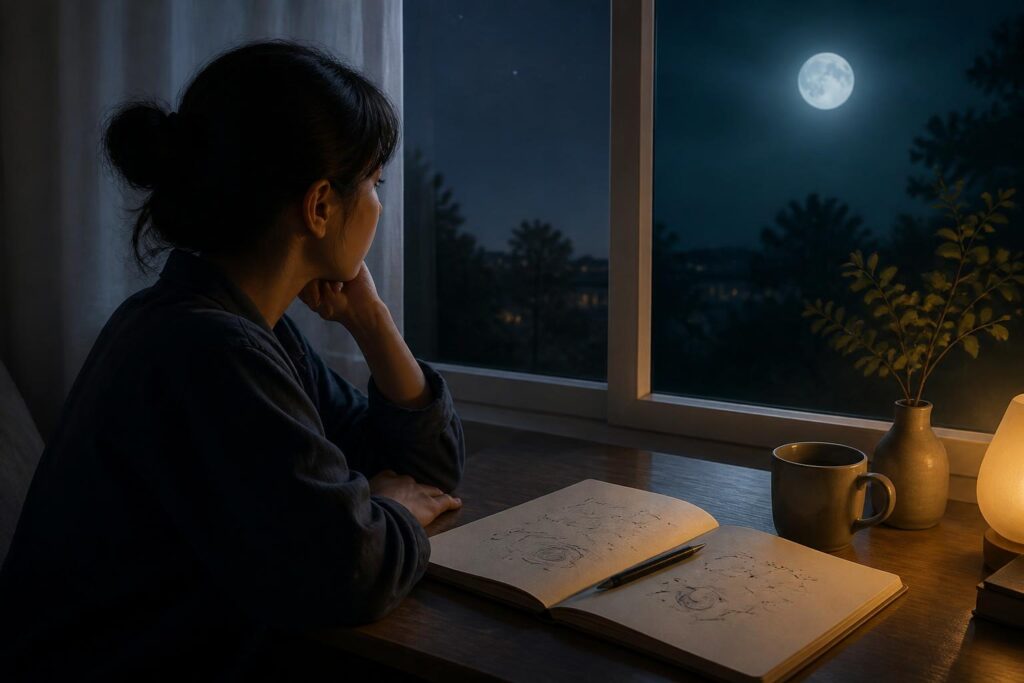
When discussing birth charts, many people often begin with the Sun sign because it is the most familiar placement. However, if we want to explore the quieter parts of life, the Moon is an especially noteworthy point. In the symbolic language of astrology, the Moon is associated with emotions, memories, the need to be cared for, and the way a person seeks a sense of security. It does not necessarily describe the image we intentionally present to the world, but more often suggests our natural reactions when we are tired, sensitive, or in a sufficiently private space.
The Moon is not an absolute explanation of personality. People are always influenced by their circumstances, upbringing, relationships, and their own ability to make choices. Therefore, learning about the Moon’s placement should be viewed as a method of self-observation. It can help us name certain needs that are difficult to express, recognize recurring emotional habits, and understand why the same event can produce very different reactions in different people.
What does the Moon represent?
In common interpretations, the Moon is associated with the part of us that often reacts before rational thought has time to take over. This may include the need to be heard, the desire for a stable home, attachment to family, the way we receive care, or the tendency to protect ourselves when we feel threatened. These themes may not appear clearly in the first few minutes of a conversation, but they strongly affect our sense of comfort and lasting security in a relationship.
The Moon is also often connected with memories and early experiences. The way a person was comforted, acknowledged, or neglected can create certain expectations in adult life. Although a birth chart should not be used to mechanically assert the causes of psychological patterns, the symbol of the Moon can still open up a useful question: what makes me feel that I have truly returned to myself?
That question is different from asking who we want to become in the eyes of others. A person may appear strong, decisive, and independent, while inwardly still needing stability, familiar routines, or someone trustworthy to confide in. Conversely, someone who usually presents a gentle exterior may need a great deal of personal space to process emotions. The Moon helps take conversations about personality deeper than outward appearances.
The Moon sign and how each person processes emotions
To determine the Moon sign, readers generally need a relatively accurate date, time, and place of birth, because the Moon moves much more quickly than many other points in a birth chart. However, astrological results should be used only as material for reflection. The Moon sign does not turn a person into a fixed type of personality, nor can it replace observing actual behavior and listening to personal experience.
People with the Moon in a Fire sign are often interpreted as having emotional needs connected with initiative, enthusiasm, and the feeling that they are living with purpose and momentum. They may recover well through taking action, creating, or pursuing something that excites them. When restrained for too long, they can easily feel stifled. An important lesson may lie in recognizing emotions before turning them into hasty reactions.
The Moon in an Earth sign is often associated with the need for stability, dependable routines, and concrete expressions of care. With this type of energy, a promise that is kept or a consistent caring habit may sometimes mean more than grand words. These people may not reveal their emotions immediately because they need time to verify their feelings and build trust. Flexibility is something they need to cultivate so that security does not turn into stubbornness.
The Moon in an Air sign often finds balance through dialogue, exchanging ideas, and the ability to view an issue from multiple perspectives. When emotions become tangled, naming what is happening or talking with the right person can help them regain the necessary distance. Even so, analyzing emotions without truly feeling them can also cause inner needs to be postponed. Growth here lies in allowing oneself to be moved without immediately turning everything into a rational conclusion.
The Moon in a Water sign is often interpreted through sensitivity, empathy, and a deep attachment to familiar people or spaces. These individuals may easily notice a change in the atmosphere of a room and sense what others have not yet put into words. This is a strength in caring for others, but it can also become a burden if they absorb too many surrounding emotions. Personal boundaries, time to rest, and the ability to distinguish their own feelings from those of others are very important.
What does the house containing the Moon say about where emotions tend to arise?
In addition to the zodiac sign, the house containing the Moon in a birth chart is also commonly used to examine the area of life where emotional needs are expressed more strongly. If the Moon is located in an area associated with family and private foundations, the person may be especially concerned with home, family history, or a sense of belonging. If it is in an area related to work, they may find reassurance in feeling useful and making a contribution. With a placement that emphasizes relationships, connection and feedback from a partner may become an important part of their emotional state.
These interpretations should not be turned into labels. A placement in a birth chart does not tell us with certainty what career a person will choose, whom they will love, or what events they will experience. Its value lies in its ability to prompt questions. For example, if we always feel anxious when plans change, what needs to be explored is not only where the Moon is located, but also what experience made uncertainty seem frightening. If we continually care for others but find it difficult to ask for help, the next question might be: am I equating my self-worth with the role of always being strong?
Aspects and inner conflicts
In a birth chart, the Moon does not stand alone. Aspects to other planets are often used by astrologers to describe harmony or tension between emotional needs and other parts of life. For example, a person may deeply need closeness while also valuing freedom; want to be acknowledged while fearing attention; or long for a stable routine while easily being swept up in new changes.
These conflicts are not necessarily unfavorable signs. They simply show that people are rarely as simple as a brief description suggests. Emotions may need time to reconcile different needs. Instead of asking which placement is good or bad, we can ask how to use that energy more consciously. Someone who needs both security and freedom can build flexible principles rather than forcing themselves to choose entirely one side.
Turning symbolism into a practice of self-observation
Reading about the Moon becomes more meaningful when accompanied by concrete observations in daily life. We can begin by recording when we are most likely to feel overwhelmed, what helps the body relax, and how we react when our expectations are not met. Some people need to talk in order to regain calm, while others need quiet. Some recover through physical activity, whereas others need a familiar meal, sufficient sleep, or a space free from interruption.
We can also observe how we seek care. Do we directly express our needs, or do we wait for others to understand them on their own? Do we allow ourselves to receive help, or do we feel safe only when we are the ones controlling everything? These questions are more useful than trying to prove that we perfectly match the description of a particular Moon sign.
In relationships, understanding the Moon can encourage clearer communication. Instead of saying that the other person does not care, we can explain that we need to be told in advance when plans change. Instead of silently hoping that our partner will guess how we feel, we can say specifically that we want to be listened to, hugged, given time alone, or invited to find a solution together. Astrology is only a starting point; honesty and respect are the foundation for having emotional needs met.
Do not use the Moon to put people in boxes
A common risk when learning about astrology is turning symbolic descriptions into unchangeable conclusions. Saying, “I am a person of this sign, so I cannot change,” may cause us to overlook our responsibility for personal growth. Feelings are real, but not every reaction to those feelings is appropriate. We can understand why we are sensitive while still learning to set boundaries. We can acknowledge our need for security while gradually becoming familiar with what is new.
For ongoing issues such as anxiety, insomnia, relationship trauma, or emotional collapse, seeking professional support remains more important than any astrological interpretation. A birth chart does not diagnose mental health conditions and cannot replace psychological counseling or medical care. The healthiest approach is to view astrology as a language for reflection, not a verdict on fate.
Listening to the inner self in order to live more harmoniously
The Moon in a birth chart reminds us that people are not shaped only by goals, achievements, and public images. Behind our daily choices are also needs for rest, belonging, understanding, and living at a pace that suits us. When we recognize these needs, we have the opportunity to care for ourselves more practically instead of constantly trying to become the version others expect us to be.
The greatest value in learning about the Moon sign is not finding a perfect descriptive label, but learning to observe ourselves with patience. We can take in the symbolism, compare it with our experiences, and retain what is genuinely useful. In the end, the emotional compass does not determine the path we must take. It simply helps us recognize what we need in order to move forward with awareness, kindness, and greater closeness to ourselves.

ARTICLES IN THE SAME CATEGORY
Mercury in the Natal Chart: Thought Patterns, Speech, and How We Connect
What Is the Ascendant? The First Layer and How We Enter the World
Venus in the Natal Chart: How We Love, Choose, and Nurture What Matters
The Moon in the Birth Chart: The Emotional Realm and the Need to Belong
The Moon in the Birth Chart: A Key to Understanding Emotional Needs and How We Seek a Sense of Security
What Is the Ascendant, and Why Does It Change How You Appear to the World?
ARTICLES IN THE SAME GENRE
The 12 Zodiac Signs and the Art of Saying ‘No’: Setting Healthy Boundaries at Work and in Relationships
Career strategies for the 12 zodiac signs in the digital era: practicalities and application suggestions
About Zodiac