

 Tiếng Việt
 日本語
 한국어
 中文 (中国)
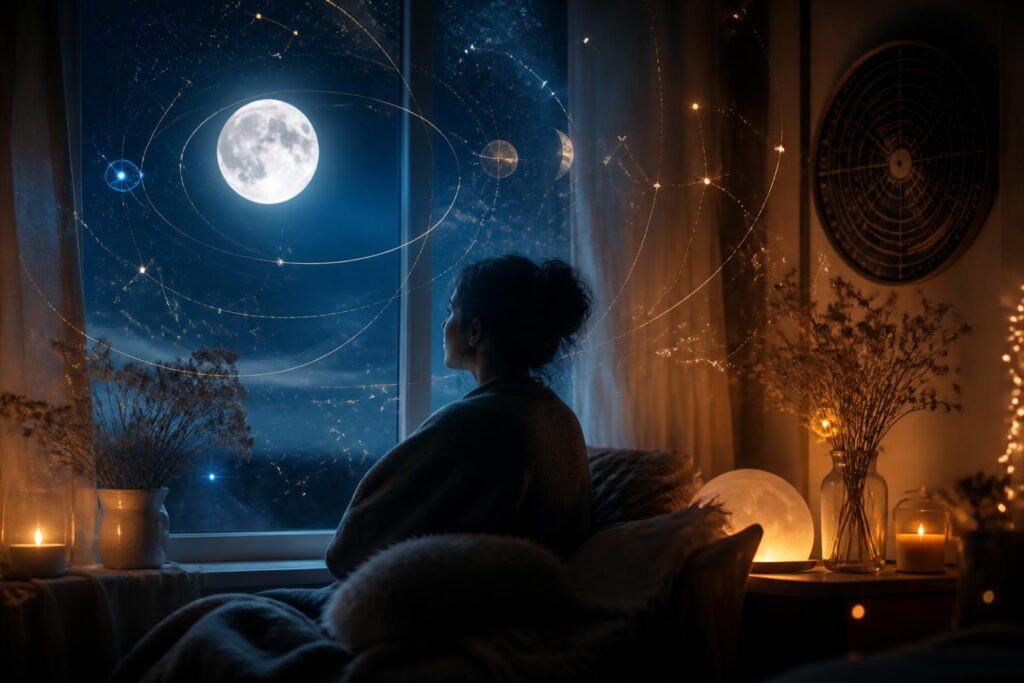
When talking about a birth chart, many people usually begin with the Sun sign because it is the most familiar placement. However, if we want to understand the very rapid reactions that take place within a person, the Moon is another point worth noting. In the language of astrology, the Moon is often associated with emotions, memories, habits, the need to be cared for, and the way we seek a sense of safety. It does not necessarily describe the image a person consciously presents to society, but instead offers insight into a more private part of the self, where natural reactions arise before reason has time to intervene.
Reading about the Moon does not mean using one placement in a birth chart to make a rigid conclusion that someone is sensitive, cold, vulnerable, or difficult to approach. Astrology can only be viewed as a symbolic language that helps each person observe themselves from a different perspective. The value of exploring it lies in its ability to raise useful questions: What makes me feel at ease? How do I usually react under pressure? Do I need to be listened to, or do I need personal space? And am I caring for my emotions in a healthy way, or am I merely trying to hide them?
What does the Moon represent?
In common interpretations of astrology, the Moon is connected with inner life and basic emotional needs. These may include the need to belong to a family, to be recognized, to be free, to control the rhythm of one’s life, or to connect deeply with others. Two people may both appear strong on the outside while needing very different things to feel safe. One person may need frequent conversations, while the other only truly becomes calm when they have quiet time and personal space.
The Moon is also often associated with habits formed early in life. When tired or under pressure, people tend to return to familiar ways of reacting. Some turn to food, music, sleep, or cleaning the house. Some want to call a loved one, while others withdraw and do not want to explain themselves. These behaviors are not automatically good or bad. What matters is recognizing them and considering whether they are helping us recover or merely postponing the need to face a problem.
In some approaches to reading a birth chart, the Moon is also placed alongside family experiences and the process of growing up. This does not mean that the Moon’s placement can recount an entire childhood or replace professional psychological understanding. Rather, it suggests how a person may have learned to express emotions, receive care, and respond to instability. These patterns can be adjusted as people mature, gain more experience, and proactively build a way of life that suits them better.
The Moon’s sign placement and how emotions are expressed
The zodiac sign where the Moon is located is often used to describe a person’s style of feeling and emotional response. For example, someone whose Moon belongs to a group of signs that value stability may feel more comfortable when their schedule is clear, their environment is familiar, and their relationships remain consistent. They may not like sudden changes, but that does not mean they lack the ability to adapt. Often, they simply need more time to prepare themselves mentally.
Someone whose Moon belongs to a group of signs oriented toward communication may process emotions by talking, asking questions, or seeking information. When sad, they may not necessarily want immediate consolation; they may need to understand what is happening and put a name to their feelings. Conversely, if they are not listened to, this need to analyze can easily be mistaken for intellectualization or a lack of empathy.
For placements that emphasize action, emotions may be released through physical activity, quick decisions, or immediately starting to solve a problem. People who respond this way often do not want to remain helpless for too long. However, they also need to learn to pause and recognize whether they are angry, afraid, or disappointed, rather than instantly turning every emotion into a task to be completed.
Moons inclined toward depth and connection often perceive the atmosphere within a relationship very clearly. They may be sensitive to a person’s tone of voice, gaze, or small changes in the other person’s attitude. This ability to observe helps them understand others, but it can also sometimes make them prone to overinterpreting when clear information is lacking. A direct and calm question is often more useful than constructing too many assumptions on one’s own.
The Moon in relationships
When entering a relationship, people are not only looking for attraction or shared interests. They also want to know whether they can be themselves, whether their vulnerable moments will be accepted, and whether conflicts can be handled without losing respect. The Moon in a birth chart is often used to reflect on these needs.
A person may say that they want a free and unrestrained love, yet in everyday life they may need regularity and specific check-ins. Another person may love deeply but not be accustomed to expressing their feelings because they show care through actions. If we look only at outward expressions, two people can easily misjudge each other’s needs. Understanding the Moon as a symbol can help us realize that love is not only about intention, but also about learning to communicate care in a language the other person can feel.
However, the Moon should not be used to justify controlling behavior, punitive silence, or demanding that others correctly guess every need. Emotions deserve respect, but emotions do not automatically give anyone the right to hurt another person. A healthy relationship requires both honesty and responsibility. Saying “I’m feeling insecure and need a clearer explanation” is different from forcing one’s partner to prove their feelings endlessly.
Under stress, which patterns do we usually return to?
One of the most practical ways to explore the Moon is to observe ourselves during times when we have little energy. When everything is going well, we may behave flexibly and experiment with many new approaches. But when we lose sleep, are rejected, face work pressure, or encounter disagreements in the family, automatic reactions tend to appear more clearly.
Try recording a few specific situations over a period of time. When anxious, do you seek reassurance from others? Do you tend to avoid difficult conversations, or do you immediately want to resolve them as quickly as possible? Do you become irritable because you need rest, or because you feel disrespected? Are you taking on too much responsibility and then silently waiting for others to notice your exhaustion? Questions like these are more valuable than trying to find a flattering or frightening personality label attached to a Moon placement.
Recognizing a pattern does not mean denying who you are. If you tend to withdraw when sad, you can begin by telling loved ones that you need some quiet time but still want to maintain the connection. If you often react hotheadedly, you can postpone the argument for a few minutes, drink some water, take a walk, or write down what you really want to say. If you often try to appear fine, you can practice using simple statements such as “I don’t have enough energy to deal with this today” or “I need to be listened to before we look for a solution.”
Caring for the Moon through everyday choices
Whether or not we believe strongly in astrology, observing our emotional needs can still lead to very concrete changes. A sense of safety sometimes comes not from one major answer, but from consistent things such as getting more sleep, eating on a regular schedule, maintaining a comfortable living space, reducing conversations that drain our energy, and making time for people who are able to respect our boundaries.
For some people, caring for their emotions means learning to express their needs instead of waiting for others to understand them on their own. For others, it means practicing stepping outside their comfort zone so that safety does not become a cage. Some people need to allow themselves to rest without feeling guilty; others need to accept that not every conflict has to be resolved on the same day. These choices do not depend entirely on the Moon sign. They are shaped by self-awareness, life circumstances, relationships, and each person’s ability to learn.
If an emotion persists and seriously affects sleep, work, health, or relationships, seeking an appropriate mental health professional or doctor remains necessary. A birth chart may offer a symbolic way to reflect, but it does not replace diagnosis, therapy, or medical advice.
Seeing the Moon as an invitation to understand yourself
The Moon in a birth chart can be seen as an invitation to return to the inner part of ourselves that is often neglected amid the busyness of life. It reminds us to pay attention to needs that are not always put into words, habits that appear under stress, and the ways we give or receive care. What matters is not finding a perfect description of ourselves, but using that observation to live more honestly and responsibly.
When we understand what we need in order to feel calm, we can communicate more clearly. When we recognize our automatic reactions, we have more opportunities to choose instead of repeating old patterns. And when we know that each person seeks safety in a different way, we can also become more patient with differences in family, love, and friendship. The Moon, therefore, is not only about sensitivity or unpredictable moods. From a positive perspective, it reminds each person to build a safe place first within themselves, and then bring that steadiness into the way they live with others.

ARTICLES IN THE SAME CATEGORY
Mercury Retrograde and the Art of Rechecking How We Communicate
Venus in the Birth Chart: The Language of Love, Values, and Attraction
Venus in the Birth Chart: How We Love, Choose, and Nurture Personal Values
The Moon in the Birth Chart: Emotional Needs and Where We Return
Mercury in the Birth Chart: Thinking, Speaking, and How Each Person Takes in the World
The Ascendant in the Birth Chart: First Impressions and How We Enter Life
ARTICLES IN THE SAME GENRE
The 12 Zodiac Signs and the Art of Saying ‘No’: Setting Healthy Boundaries at Work and in Relationships
Career strategies for the 12 zodiac signs in the digital era: practicalities and application suggestions
About Zodiac