

 Tiếng Việt
 日本語
日本語 한국어
한국어 中文 (中国)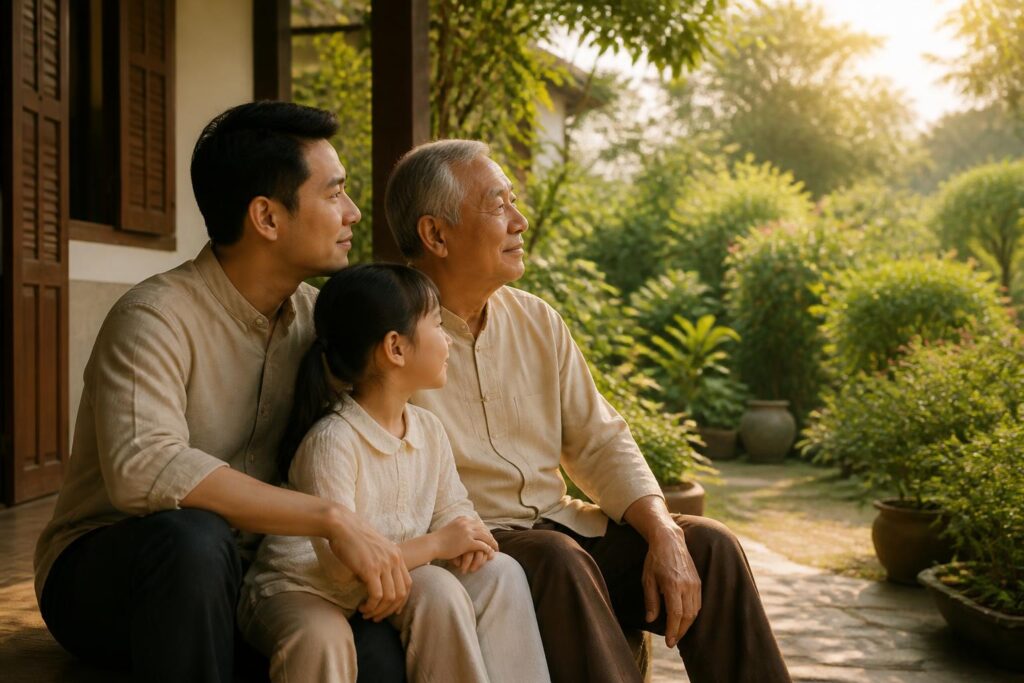
In a Tử Vi chart, some palaces are easily noticed because they relate directly to money, work, or relationships. The Phúc Đức Palace often feels more abstract. Nevertheless, it is one of the areas worth reflecting on when seeking to understand a person’s spiritual foundation, how they respond to adversity, and their ability to maintain inner peace amid life’s changes.
According to traditional interpretations, the Phúc Đức Palace can suggest multiple layers of meaning related to family patterns, the influence of previous generations, inner life, beliefs, and one’s perception of happiness. These matters should not be viewed as a fixed verdict. Tử Vi is truly useful only when it helps people recognize tendencies, ask questions about themselves, and proactively adjust the way they live.
What does the Phúc Đức Palace signify?
Phúc Đức is not simply an indicator of whether a person is “lucky.” If one uses the single word “blessing” to conclude that someone enjoys many advantages, that understanding is too narrow. This palace is often considered in relation to mental resilience, a sense of belonging within the family, the ability to enjoy simple things, and the way a person finds meaning in life.
Some people possess many favorable conditions but are constantly restless, frequently afraid of loss, or unable to feel joy. Conversely, some people go through no small number of challenges yet still retain their composure, know how to appreciate what they have, and find support in their spiritual lives. Viewed in this way, Phúc Đức is not only related to external circumstances but is also connected to each person’s ability to receive and respond to those circumstances.
The Phúc Đức Palace is also often associated with the imprint of the family and lineage. This may include values passed down through many generations, such as a spirit of learning, a habit of diligence, compassion, close family bonds, or a vocational tradition. Conversely, unhealthy patterns of behavior, prolonged silence in the face of hurt, or unresolved conflicts can also create psychological effects on later generations.
The influence of family and generational memory
When exploring the Phúc Đức Palace, one should not think only about whether grandparents and ancestors left behind assets. A more important legacy may sometimes lie in the way a family faces difficulties. A child raised in an environment where people know how to listen may develop a sense of safety and the ability to trust others. Someone who frequently witnesses arguments, control, or emotional invalidation may also carry that guardedness into adult relationships.
These influences are not an unchangeable destiny. A family may pass down certain habits and beliefs, but each person still has the ability to recognize what should be preserved and what needs to change. Tử Vi, when used responsibly, can become a tool for revisiting that question: What values am I inheriting, what patterns of behavior am I repeating, and what do I want to create differently for the next generation?
For example, a family that values sacrifice may nurture a sense of responsibility, but it may also cause one member to become accustomed to putting other people’s needs before their own. A family that emphasizes achievement may create motivation for improvement, yet it can also easily make children feel that they are worthy of love only when they achieve good results. Such negative aspects often do not appear immediately in words but emerge through a person’s feelings of guilt, anxiety, or difficulty resting.
Spiritual life and the ability to receive blessings
An important point when interpreting the Phúc Đức Palace is to distinguish between having favorable conditions and having the ability to feel happiness. Some people always wait for a perfect time before allowing themselves to rest, go out, or enjoy their achievements. But when that time arrives, they are swept into a new goal. In this case, the issue does not necessarily lie in a lack of blessings, but in a way of living that prevents the person from recognizing the good things already present.
The ability to receive blessings is often expressed through very ordinary things: knowing when to rest when tired, knowing how to accept help, being able to enjoy a peaceful meal, not turning every conversation into a comparison, or preserving a quiet space to listen to oneself. These are spiritual abilities that need to be cultivated, not privileges reserved for certain people.
Therefore, when the Phúc Đức Palace contains signs traditionally considered unfavorable, readers should not hastily conclude that they are unlucky or must live in fear. A more practical approach is to regard them as a reminder of the need to build a strong spiritual foundation. That foundation can be formed through a balanced lifestyle, healthy relationships, attention to psychological well-being, and the ability to resolve unresolved issues within the family.
The Phúc Đức Palace should not be interpreted in isolation
No single palace in a chart can represent an entire person. The Phúc Đức Palace needs to be considered within the chart as a whole and compared with actual circumstances, age, living environment, and personal choices. Looking only at a few stars and then making absolute conclusions can easily lead to an oversimplified understanding and may even cause the person consulting the chart to become dependent on predictions.
With a cautious approach, the interpreter may observe many aspects: family life, how the person recovers after failure, their degree of connection with the community, their attitude toward money and status, as well as their ability to maintain faith when facing upheaval. Other palaces can also provide additional perspectives on the self, parents, marriage, children, or career. A sign considered challenging in this palace can sometimes become a motivation for an individual to mature and proactively build a new set of habits and values.
It is also important to avoid using the Phúc Đức Palace to judge the morality of a family. The concept of blessings should not be turned into a measure of superiority or inferiority between people. Someone who encounters many advantages is not necessarily a better person, just as someone who experiences many losses is not receiving any kind of “sentence.” Life is always more complex than any symbolic diagram.
How to cultivate “blessings” in present-day life
If the Phúc Đức Palace is viewed as a suggestion about the foundation of peace, each person can begin with specific actions. First is learning to recognize one’s inner state. When we are frequently irritable, suffer from insomnia, feel tense, or experience emptiness, we need to pause and examine what pressures we are under instead of trying to conceal them through work and constant busyness.
Next is developing a way of communicating honestly without causing harm. Many families have a history of remaining silent in the face of problems, believing that if nothing is said, everything will pass on its own. In reality, suppressed matters often find ways to appear through distance, coldness, or repeated arguments. A calm conversation, a timely apology, or an agreement about personal boundaries can change the family atmosphere more than general advice ever could.
Doing good should also be understood with clear awareness. Helping others does not mean sacrificing without limits or overlooking every wrongdoing. Sustainable kindness needs to be accompanied by discernment, an understanding of boundaries, and self-respect. When a person knows how to live kindly without constantly seeking recognition, their spiritual life often becomes lighter.
In addition, caring for one’s living space, maintaining restful habits, reading, being close to nature, or spending time with trustworthy people are also ways to create a foundation of peace. These things may seem small, but it is their consistent repetition that creates a sense of stability. In its most immediate sense, blessing can begin with the ability to be present in the current moment instead of always waiting for a grand stroke of fortune.
Viewing the Phúc Đức Palace as an opportunity for growth
The value of the Phúc Đức Palace does not lie in helping us find an absolute answer to whether we are lucky or unlucky. Its value lies in its ability to open a dialogue with the deeper parts of life: What beliefs have nurtured us, what fears are we carrying, have we truly forgiven the past, and what do we want to leave behind for those who come after us?
Everyone can begin again in the way they create peace within themselves. A childhood marked by deprivation does not force us to repeat that deprivation. A family that once experienced many conflicts does not mean that later generations cannot learn to love differently. When we understand Tử Vi as a symbolic language rather than a sentence, we gain more opportunities to observe ourselves calmly and make conscious choices.
Ultimately, “blessings” are not only something received from the past. They are also something cultivated through every thought, word, and action in the present. Knowing how to cherish loved ones without losing oneself, knowing how to move forward without letting ambition control one, and knowing how to face hurt without turning it into a reason to hurt others—these are practical expressions of a life with a strong foundation. The Phúc Đức Palace can therefore be read as a gentle reminder that peace does not lie entirely beyond our reach; it is created each day through the way we live with ourselves, with our families, and with life.

ARTICLES IN THE SAME CATEGORY
The Wealth Palace in a Tử Vi Chart: A Perspective on Money, the Ability to Build, and Abundance
The Career House in a Tử Vi Chart: Seeing Work as a Journey of Maturation
The Fortune and Virtue Palace in Tử Vi: Spiritual Foundation and Resilience in the Face of Adversity
The Wealth Palace in Tử Vi: Understanding How to Build and Preserve Material Value
The Career Palace in Tử Vi: Reading the Career Path Through Abilities and Choices
The Phúc Đức Palace in Tử Vi: The Spiritual Foundation and How to Nurture Inner Peace
ARTICLES IN THE SAME GENRE
Forgiveness Does Not Mean Reopening a Closed Door
When Attention Is Fragmented: How to Regain the Ability to Focus in a Distracted Life
Knowing What Is Right Is Still Not Enough: Why It Is Difficult for People to Change Their Habits
Familiarity Is Not the Truth: Recognizing Reasoning Traps in Everyday Life
Greenland and the Great Test of the World Order