
Roundups · 10 November, 2026
When Slowing Down Is a Way of Moving Forward
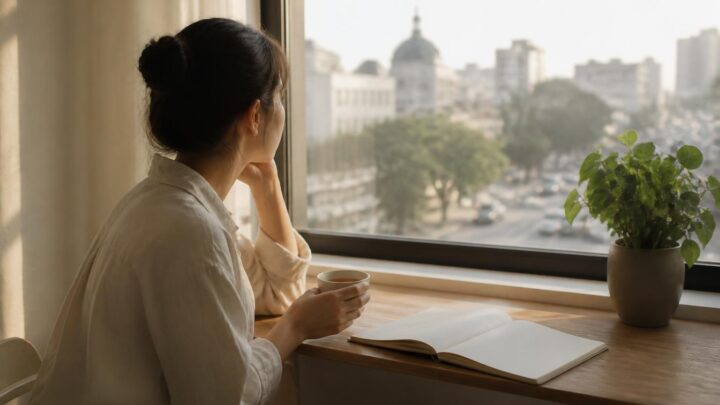
There are periods when people become so busy that they no longer recognize what they are living for. A day begins with unread notifications, continues with a packed work schedule, and ends with a feeling of exhaustion but still no peace of mind. We complete many tasks, respond to many people, and move from one appointment to another, yet when night falls, it is difficult to say exactly what truly mattered that day. A fast-paced life is often seen as a sign of ability, ambition, and the capacity to seize opportunities. However, faster does not always mean more effective, and being busy does not always mean making progress.
In this context, slowing down can be a necessary choice. Slowing down does not mean abandoning goals, avoiding responsibilities, or ignoring the changes around us. It is an intentional pause that allows us to observe ourselves, rearrange our priorities, and act with greater clarity. Just as travelers need to stop and look at a map before continuing, we sometimes need to pause to understand where we are going and why we need to go in that direction.
Why do people easily mistake busyness for progress?
Being busy creates the feeling that we are in control of our lives. When the to-do list is always full, the phone is constantly receiving notifications, and the schedule is packed from morning to night, we can easily believe that every passing hour is being used productively. That feeling is not entirely wrong, because many responsibilities in life genuinely require hard work and timely responses. The problem arises when doing more becomes an end in itself, while the question of whether the work is truly worth doing is pushed to the very end.
A person may spend hours handling urgent but unimportant tasks, responding to every request while having no time left for essential responsibilities. Someone else may constantly open apps, read snippets of information, and switch from one task to another, yet find it difficult to concentrate long enough to complete something that requires deep thought. That pace keeps the mind in a constant state of reaction. We reply before fully understanding, make decisions before considering them, and agree before knowing whether we have enough time and energy.
When busyness continues for a long time, people also tend to use others’ perceptions as their measure. An empty schedule may sometimes be viewed as a sign of falling behind, while someone who is always rushing around is automatically regarded as successful. As a result, many people are reluctant to rest because they fear being judged as lacking in effort. They fail to realize that proper rest and purposeful work are not opposites. On the contrary, a restored mind is often better able to see a problem clearly than one that is constantly stretched to its limits.
Slowing down is not standing still
It is important to distinguish slowing down from procrastination. Procrastination often arises from avoidance, fear, or indecision. Intentional slowing down, on the other hand, is an act of observing and preparing. People who slow down still know what they need to do; they simply do not rush ahead when they do not yet understand the direction. They may spend extra time reading a proposal carefully before replying, thinking before having a difficult conversation, or examining their feelings before making a decision that affects others.
In many situations, a brief pause can prevent an impulsive reaction from becoming a major conflict. When angry, immediately sending a harsh message may bring a momentary sense of relief but leave lasting consequences. If we wait until our emotions have settled, we have a chance to express what we want to say without turning the conversation into a contest over who can hurt the other more. Slowing down in this case does not take away our directness. It allows directness to be accompanied by responsibility.
At work, slowing down can also mean taking time to define objectives, agree on criteria, and examine initial assumptions. A carefully prepared plan does not guarantee that everything will be perfect, but it helps reduce mistakes caused by haste. In personal life, slowing down may mean realizing that we are shopping to compensate for exhaustion, accepting something because we are afraid of disappointing someone else, or pursuing a desire simply because many people are encouraging it.
Pausing helps us recognize what matters
When everything happens too quickly, what is loud often overwhelms what is important. A new message can more easily capture our attention than a conversation that needs to be nurtured. A task that can be completed immediately is more likely to be prioritized than a long-term goal whose results have not yet appeared. Other people’s desires can easily overshadow our own genuine needs. Only by reducing our speed do we have a chance to distinguish between the call that needs to be heard and mere temporary pressure.
A simple way to begin is to ask ourselves three questions: Does this really need to be done right now? Does it contribute to what I value? If I continue making choices this way for a long time, what kind of person will I become? These questions do not provide answers on our behalf, but they force us to step away from the habit of reacting automatically. Sometimes, the answers make us realize that we need to continue. At other times, they show that a commitment is no longer suitable or that a goal needs to be adjusted.
Slowing down also clarifies limits that are often overlooked. The body may send signals through insomnia, prolonged stress, or a feeling of exhaustion. Relationships may reveal distance through conversations that revolve only around work and responsibilities. The mind may speak up through irritability over minor things. These signs should not immediately be regarded as weakness. They may be reminders that our current way of operating is demanding more than a person can recover from.
How can we bring slowness into everyday life?
Slowing down does not necessarily have to begin with a major change. A short period without screens at the beginning or end of the day can make a difference in how we enter our work and fall asleep. During that time, we can sit quietly, take a walk, brew a cup of tea, care for plants, or simply allow the mind not to take in any more information. The value of these activities does not lie in the achievements they produce, but in the way they return to us the ability to be present with ourselves.
When working, we can choose one important task to focus on for a suitable period instead of constantly switching between multiple tasks. Before a new day begins, rather than making an overly long list, identify one or two main priorities and leave some space for unexpected situations. A schedule with room to breathe is often more realistic than one so full that even a small change creates a sense of failure.
In communication, slowing down may mean listening to the entire sentence before preparing a response. Not every conversation needs immediate advice. Often, the other person needs to be understood more than they need to be fixed. Asking a clear question, repeating what we have heard, and acknowledging the other person’s feelings can help a conversation go further than familiar reactions. Such listening does not make us lose our own perspective; it simply helps that perspective form on a more complete foundation.
In personal decisions, we can create a waiting period for impulsive choices. This is not to turn everything into an endless process of deliberation, but to give our initial emotions a chance to settle. After that pause, if the decision still aligns with our values and abilities, we can act with greater steadiness. If our thoughts have changed, that too is valuable information.
Slow down to live more deeply, not to live less
Many people fear that if they slow down, they will miss opportunities. This fear has a basis in a constantly changing world, where some choices genuinely require a quick response. However, living slowly does not mean waiting for everything to come on its own or rejecting every opportunity. It means knowing when to move quickly and when to be cautious. A mature person is not someone who always moves at a fixed speed, but someone who can adjust their pace according to the circumstances and their goals.
Some opportunities can only be recognized when we are calm enough to see them. A conversation with a loved one, an idea that appears while walking, or a sign that our current work is no longer suitable can easily be overlooked if the mind is always full. Life is not made up only of major milestones. It is also shaped by how we eat a meal, listen to someone tell a story, look back at a mistake, and choose to treat someone kindly in a situation where no one is forcing us to.
Slowing down also helps people become less dependent on external recognition. When we no longer have to prove that we are always busy, we can consider goals that fit our actual circumstances. Some people choose a more stable job instead of chasing prestige. Some spend more time with their families even though it does not produce an achievement that is easy to display. Some learn to say no to an invitation in order to protect their health and peace of mind. These choices may not always be immediately understood by others, but they can make life more genuine.
A sustainable pace of life requires both effort and rest
No one can live slowly in every situation. Work, family, finances, and unexpected responsibilities still require initiative. Therefore, what we need to seek is not a formula for separating ourselves from the pace of modern life, but a more sustainable rhythm. In that rhythm, effort has a time to begin and end, rest is not treated as a reward that must wait until everything is finished, and failure is not immediately regarded as proof of inadequacy.
Each person can build that rhythm from small things: reviewing what is truly worth prioritizing, reducing unnecessary commitments, setting aside time to recover, paying closer attention to the task at hand, and allowing oneself not to have an immediate answer all the time. Change may happen slowly, but it is a manageable pace that enables it to last.
In a world that constantly urges people to move faster, knowing how to slow down is a form of awareness. It reminds us that the value of a day lies not only in the number of tasks completed, but also in the quality of our presence, the relationships we care for, and the choices that align with what we believe is right. Slowing down does not make the road shorter, but it helps us avoid going too far from ourselves. And sometimes, moving forward begins with pausing long enough to recognize which direction is truly worth choosing.
Related articles

When There Are Too Many Choices, How Can We Live More Clearly?
In modern life, people are often told that the more choices we have, the more freedom we have. We can choose our jobs, where we live, how we learn, how we shop, how we communicate, and even the pace of life that suits us. Yet when faced with too many possibilities, not everyone feels comfortable.
Read more
When Attention Becomes an Asset: The Art of Living Slowly Amid the Information Flow
Each day begins with a chain of small signals: the sound of an alarm, a screen lighting up, a few new messages, a to-do list, and information that seems never-ending. Before we have time to realize what we are thinking, we have already been pulled into the rhythm of other people. A new piece of
Read more
The Power of Small Promises in a Peaceful Life
Small Things That Create a Sense of Security In everyday life, people tend to pay attention to big promises. They may be promises to change, to always be there, to do something important for the family, or to start over after a difficult period. Yet the feeling of trust between people is usually not created
Read more
The Art of Living Slowly Amid a Day of Too Many Choices
On an ordinary day, we may have to answer dozens of messages, handle numerous tasks, choose what to eat, keep up with countless pieces of information, and constantly react to unexpected events. This pace of life is often seen as a sign of dynamism, but being busy does not always mean being effective. Some days
Read more
Creating a Pause Amid the Busy Pace of Life
Modern life is often measured by the number of tasks completed. The more appointments fill our days, the more quickly we reply to messages, and the more continuously we handle tasks, the easier it is to feel that we are living efficiently. Yet behind that busyness lies a question that is rarely asked: are we
Read more
Gratitude in Everyday Life: A Way of Looking Again at What We Have
In the fast pace of life, people often find it easier to notice what is missing than what is present. An unfinished plan, insufficient funds, a relationship that has not turned out as hoped, or a missed opportunity can occupy a great deal of space in one’s thoughts. When the mind is constantly focused on
Read more